
Supplier Management Software for Kenyan Businesses: Features, Benefits and Best Practices
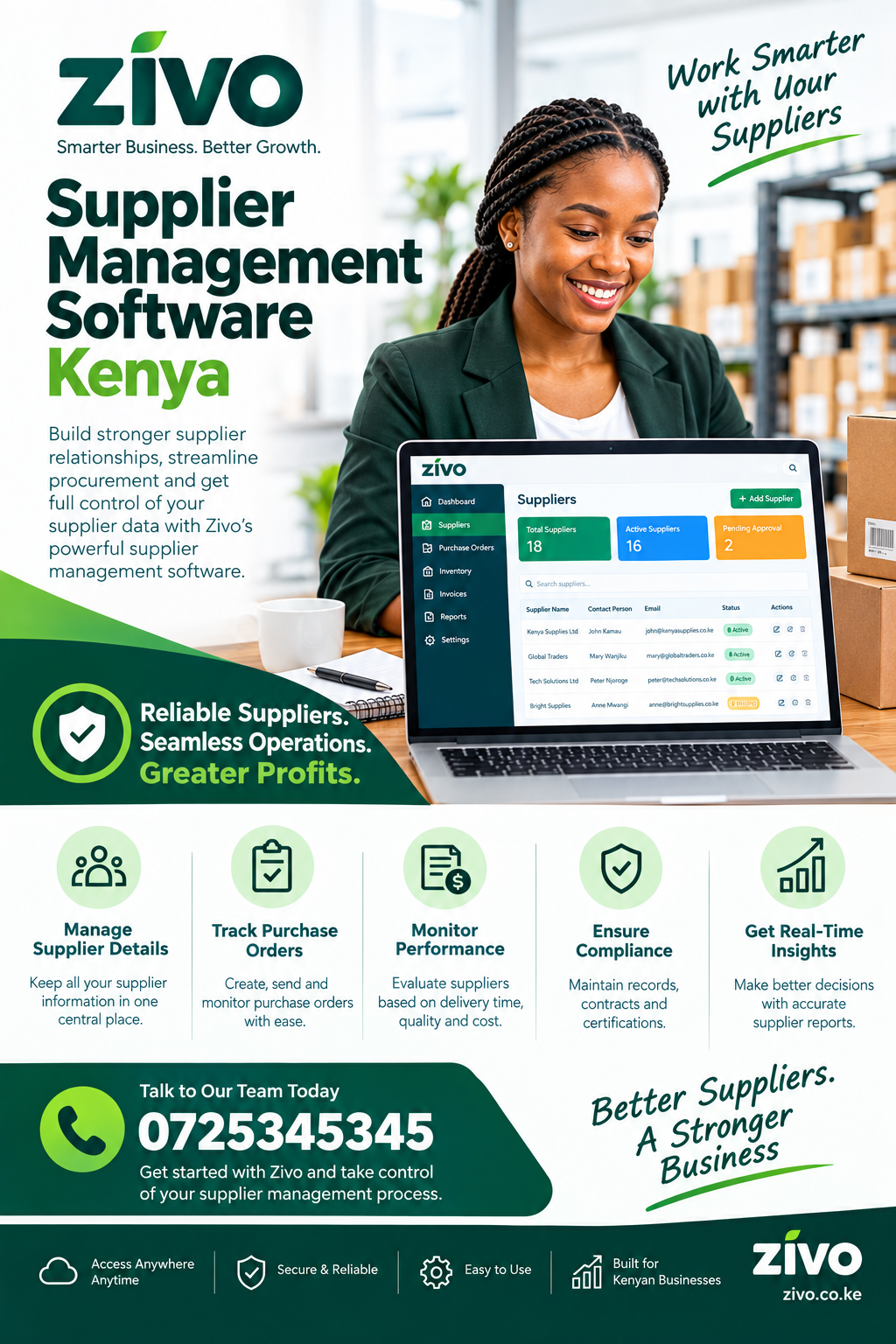
Supplier management is the organised process of selecting suppliers, keeping accurate supplier records, monitoring performance, managing documents, communicating requirements, and reviewing commercial relationships. For Kenyan businesses, this can involve local manufacturers, distributors, service providers, importers, contractors, and specialist vendors. A structured system gives procurement teams one place to coordinate information instead of relying on scattered spreadsheets, email threads, paper files, and messaging apps. Businesses can use Supplier Management Software Kenya to organise this lifecycle from one place.
A practical supplier process begins before a purchase order is issued. A business needs to know who a supplier is, what the supplier provides, which documents have been submitted, what terms were agreed, and how previous orders performed. When this information is available to authorised staff, purchasing decisions become easier to trace and routine administration takes less time.
Supplier Management Software Kenya helps bring these activities into a central workflow. Instead of treating supplier records as static contact lists, the business can organise onboarding, documentation, purchasing activity, performance reviews, approvals, and communication around a consistent process.
What Supplier Management Means for Kenyan Businesses
Supplier management covers much more than storing names and telephone numbers. It includes the complete relationship between a business and the organisations that provide products or services. A procurement team may need to register a new supplier, verify documents, approve the relationship, negotiate terms, raise purchase orders, monitor deliveries, resolve quality issues, and review performance.
For Kenyan businesses, these responsibilities can become complicated when procurement is spread across several departments. A retail business may deal with wholesalers, manufacturers, transport providers, maintenance contractors, technology vendors, and professional service providers at the same time. Each supplier can have different requirements, contacts, pricing arrangements, and documentation.
Supplier Management Software Kenya gives businesses a structured way to organise these relationships. Instead of keeping supplier details in disconnected spreadsheets and email conversations, procurement teams can work from centralised information.
Supplier records can include:
- Supplier name and business category
- Contact persons and communication details
- Products or services supplied
- Payment information
- Contract details
- Tax and registration information
- Certificates and supporting documents
- Purchase history
- Performance records
- Notes and issue history
This creates a stronger foundation for procurement because employees can find relevant information without repeatedly asking colleagues for the latest version.
Why Supplier Management Deserves a Formal System
Many growing businesses start supplier administration with spreadsheets because they are inexpensive and familiar. The problem appears when supplier numbers increase, several employees place orders, documents expire, or managers need a quick view of purchasing activity. A spreadsheet can store information, but it does not automatically provide a complete workflow for approvals, reminders, accountability, and supplier performance.
Supplier Management Software Kenya can support a more controlled process by connecting supplier information with day-to-day procurement activities. A purchasing officer can work from current records, while managers can review approvals and supplier activity without requesting separate updates from every department.
Formal supplier management also reduces dependence on individual employees. If one buyer is away, another authorised employee should be able to understand supplier status, previous transactions, agreed terms, and outstanding actions. This continuity is particularly useful for SMEs where procurement responsibilities may be shared across finance, operations, and administration.
Teams evaluating this approach can use Supplier Management Software Kenya as a central reference for the supplier lifecycle.
A formal system can also make accountability clearer. When an important supplier record is changed, the organisation should be able to determine who made the change and, where appropriate, who approved it. This becomes increasingly important as purchasing volumes grow.
Supplier Management Software Kenya can provide a structured view of supplier activity for procurement leaders who need to understand what is happening across the organisation.
Key Features to Look For
A useful supplier platform should solve practical problems rather than simply provide a long feature list. Businesses should consider supplier profiles, onboarding workflows, document management, approval controls, purchase order links, performance tracking, communication history, reporting, and user permissions.
Supplier Management Software Kenya can be particularly valuable when supplier information is connected to purchasing records. Staff can work from a shared source of information and managers can see which supplier-related tasks are complete, pending, or overdue.
Important capabilities may include:
- Supplier profiles containing contacts, categories, payment details, tax information, and relevant notes.
- Digital supplier onboarding with defined approval steps.
- Document storage for contracts, certificates, quotations, and compliance records.
- Expiry reminders for documents that need renewal.
- Supplier performance records covering delivery, quality, responsiveness, and reliability.
- Approval workflows for supplier creation and changes.
- Search and filtering so staff can quickly find the right supplier.
- Reports for management review and procurement planning.
- Role-based access to protect sensitive commercial information.
Used consistently, Supplier Management Software Kenya can make supplier information easier to retrieve and review.
The most useful features will depend on the size and structure of the business. A small company with a limited supplier base may need straightforward records, document management, approvals, and reporting. A larger organisation may require more advanced workflows, integrations, multiple user roles, and detailed performance reporting.
Supplier Onboarding and Verification
Supplier onboarding establishes the information a business needs before working with a vendor. A clear process can request company details, contact information, product categories, banking information, tax documentation, certifications, references, and other records relevant to the relationship.
With Supplier Management Software Kenya, onboarding can be organised as a defined sequence instead of an informal exchange of documents. Procurement staff can identify incomplete applications, route them for review, and retain approved information for future transactions.
Verification should match the supplier category and risk level. A supplier providing office stationery may require a different review from a contractor handling specialised equipment or a vendor supporting a critical operational process. A sensible system allows the business to apply appropriate checks without making every supplier follow an unnecessarily complicated procedure.
An organised implementation of Supplier Management Software Kenya can reduce fragmented supplier administration.
Supplier onboarding should also establish ownership. Someone should be responsible for reviewing submissions, while another authorised person may need to approve the supplier before purchasing begins. Defining these responsibilities reduces the possibility of unapproved vendors entering the procurement process.
Businesses can configure Supplier Management Software Kenya around the approvals and records they already use.
Managing Supplier Documents
Supplier documentation can become difficult to control when files are saved in different folders or attached to old email conversations. Teams may know that a document exists but struggle to determine whether the latest version has been approved or whether an expiry date has passed.
Supplier Management Software Kenya can centralise supplier documents and make them easier to associate with the relevant vendor record. This helps procurement teams find contracts, quotations, certificates, registration documents, and other files when they are needed.
A document workflow should also make ownership clear. Someone should be responsible for checking important documents, updating expired records, and escalating missing information. Automated reminders can help, but they should complement a defined internal responsibility rather than replace it.
Good supplier governance is easier to maintain when Supplier Management Software Kenya supports defined responsibilities.
Businesses should establish document categories that make sense for their operations. For some suppliers, registration and tax documentation may be important. For others, licences, certifications, insurance information, contracts, or technical documentation may be more relevant.
Procurement teams can use Supplier Management Software Kenya to bring recurring supplier tasks into a common workflow.
Purchase Orders and Supplier Coordination
Supplier management works best when supplier records connect naturally with purchasing. A purchase order normally identifies the supplier, items or services required, quantities, prices, delivery expectations, and approval details. Keeping this information connected to the supplier relationship improves visibility.
Using Supplier Management Software Kenya alongside a structured purchase order process can help teams review what has been ordered from a supplier and whether the supplier is meeting agreed expectations. This is useful when procurement staff need to compare current activity with historical transactions.
Clear purchase order communication also reduces misunderstandings. Suppliers can receive consistent instructions, while internal teams can refer to approved records when checking deliveries, invoices, or outstanding commitments.
An effective Supplier Management Software Kenya workflow should remain simple enough for routine purchasing activity.
Purchase order processes should also define who can approve spending. Different organisations may use approval limits based on department, purchase value, category, or management level. The software should support the organisation’s established controls rather than encourage employees to bypass them.
Businesses can review Supplier Management Software Kenya usage periodically to identify process gaps.
Supplier Performance Management
Price is only one part of supplier performance. A supplier may offer attractive pricing but regularly deliver late, provide inconsistent quality, or respond slowly when problems arise. Procurement teams therefore need a broader view of supplier performance.
Supplier Management Software Kenya can help businesses record performance indicators such as delivery timeliness, quality issues, order accuracy, responsiveness, and adherence to agreed terms. The exact metrics should reflect the supplier category and what matters to the organisation.
Regular reviews turn supplier management into an ongoing process. Instead of waiting until a major problem occurs, managers can identify recurring issues and discuss corrective actions with the supplier. Performance records can also provide useful context when contracts are renewed or sourcing alternatives are considered.
Management reporting becomes more useful when Supplier Management Software Kenya captures consistent supplier information.
Possible supplier performance indicators include:
- Delivery timeliness
- Product or service quality
- Order accuracy
- Responsiveness
- Resolution of complaints
- Compliance with agreed specifications
- Adherence to contract terms
- Invoice accuracy
Businesses do not need to measure every possible indicator. The better approach is to select metrics that directly relate to the supplier’s role and the organisation’s operational priorities.
Cost Control and Better Procurement Visibility
Supplier information affects purchasing costs in several ways. Businesses may lose visibility when different departments buy similar items from different vendors, when negotiated terms are not consistently applied, or when price information is stored in isolated files.
Supplier Management Software Kenya can give procurement and finance teams a shared view of supplier relationships and purchasing activity. This does not automatically guarantee lower prices, but it can make patterns easier to identify and support more informed negotiations.
Useful management questions include: Which suppliers receive the highest purchasing volumes? Which categories have many suppliers? Where are price changes occurring? Which suppliers have repeated delivery problems? Which agreements are approaching renewal? A good reporting system should help answer these questions from current records.
Procurement teams should define measurable objectives before introducing Supplier Management Software Kenya.
For example, a business may want to reduce the time needed to onboard suppliers, improve the completeness of supplier records, reduce expired documents, or improve the speed at which supplier issues are escalated.
Supplier Communication and Collaboration
Supplier relationships depend on clear communication. Purchase requirements, delivery schedules, quality concerns, invoice queries, and contract matters can all create unnecessary delays when communication is fragmented.
With Supplier Management Software Kenya, businesses can maintain a more organised supplier history and make relevant information easier for authorised staff to access. This is useful when a supplier issue needs to be reviewed by procurement, finance, operations, or management.
Good communication also means defining responsibilities. A supplier should know who receives orders, who handles delivery questions, and who approves changes. Internally, staff should know which communication belongs in the formal procurement record.
Training should show employees how Supplier Management Software Kenya supports the tasks they perform every day.
A central supplier record can be particularly useful when employees change roles. Instead of relying on personal email accounts or individual notebooks, the organisation can retain a structured history that authorised staff can access.
Supplier reviews can become more structured when Supplier Management Software Kenya provides a shared record.
Reporting and Management Decisions
Managers need more than a list of supplier names. They need information that supports decisions about cost, risk, performance, purchasing activity, and upcoming obligations.
Supplier Management Software Kenya can support reporting around supplier categories, order activity, document status, performance reviews, and other information captured by the organisation. Dashboards and reports are most useful when they answer specific management questions rather than presenting large volumes of unstructured data.
Before selecting a system, define the reports the business actually needs. Procurement managers may focus on supplier performance and spending patterns, while finance teams may need supplier details that support invoice processing and reconciliation. Operations managers may care more about delivery reliability and service continuity.
Managers can use reports from Supplier Management Software Kenya to focus attention on unresolved supplier issues.
Useful reports might show:
| Report | Possible Use |
|---|---|
| Supplier activity | Review purchasing relationships |
| Supplier performance | Identify delivery and quality trends |
| Document status | Find missing or expiring records |
| Supplier categories | Understand the vendor base |
| Purchase activity | Review procurement patterns |
| Open supplier issues | Track unresolved problems |
| Contract renewals | Prepare for upcoming reviews |
Reports should be actionable. If a dashboard shows a problem, the user should know what action needs to follow.
Kenyan SME Considerations
Kenyan SMEs often operate with lean teams, which makes efficient administration important. A supplier process should therefore be practical enough for staff to use consistently without requiring a large IT department.
Supplier Management Software Kenya should fit the way the business already purchases goods and services. Consider the number of suppliers, purchasing frequency, approval structure, departments involved, document requirements, and reporting needs before choosing a platform.
Businesses should also consider connectivity, mobile accessibility, user training, data protection, integration requirements, and the ability to export or retrieve business records when necessary. These factors can affect whether a system remains useful after implementation.
For growing organisations, Supplier Management Software Kenya can provide a foundation for more consistent supplier administration.
Kenyan businesses may also work with suppliers across different counties and regions. A central supplier system can help maintain consistent information even when purchasing activity is geographically distributed.
Teams can adapt Supplier Management Software Kenya to different supplier categories and approval requirements.
Supplier Segmentation and Risk
Not every supplier should be managed in exactly the same way. A business can classify suppliers by spend, operational importance, product category, geographic coverage, and risk. A critical supplier may provide goods that would interrupt operations if unavailable, while a routine supplier may be easily replaced.
Segmentation makes workflows more practical. High-value or high-risk suppliers can receive more frequent reviews, stronger documentation requirements, and closer monitoring. Lower-risk suppliers can follow a simpler process. This approach helps procurement teams spend attention where it matters most.
A supplier database should make categories easy to search and report on. For example, management might want to see all suppliers serving a particular branch, all suppliers in a specific product category, or all critical vendors whose contracts are approaching review. Structured fields make these questions easier to answer than free-form notes.
Supplier Management Software Kenya can help organise supplier categories and support more structured review processes.
Supplier segmentation can also support contingency planning. If several important products depend on one supplier, the business can identify that concentration and investigate alternatives before a disruption occurs. The objective is not to remove every risk, but to make important dependencies visible.
Contract and Renewal Management
Supplier contracts often contain information that procurement teams need long after the agreement is signed. This can include pricing terms, service levels, delivery commitments, renewal dates, notice periods, warranties, and responsibilities for resolving disputes.
A supplier management platform can provide a central place to associate contracts with supplier records. When renewal dates are visible, procurement teams have more time to review performance and negotiate changes rather than discovering an expiry at the last minute.
Renewal planning should begin before the contractual deadline. Teams can review spend, supplier performance, outstanding issues, market alternatives, and changes in business requirements. This creates a more deliberate procurement process.
Contract management should also distinguish between the existence of a document and the business obligations contained in it. Storing a contract is useful, but teams should know which dates, approvals, deliverables, and review points require action.
During implementation, Supplier Management Software Kenya should be tested with realistic supplier scenarios.
Procurement Workflow Automation
Automation is useful when a task follows a repeatable rule. Supplier onboarding approvals, document reminders, review schedules, and notifications are examples of activities that may be structured into workflows.
With Supplier Management Software Kenya, repetitive administrative steps can be organised so that staff do not have to remember every action manually. For example, a newly created supplier record might move to an approval queue, while an approaching document expiry can generate a reminder for the responsible employee.
Automation should be designed carefully. A process that contains too many unnecessary alerts can create notification fatigue. The best workflows are specific about who needs to act, what action is required, and when it is due.
Businesses should also review automated workflows periodically. Procurement policies change, supplier categories evolve, and staff responsibilities move. A workflow that was appropriate last year may need adjustment after organisational changes.
Clear policies make it easier for employees to use Supplier Management Software Kenya consistently.
Data Quality and Supplier Master Records
Supplier data quality has a direct effect on procurement efficiency. Duplicate records can make purchasing reports misleading, while outdated contact details can delay urgent communication. Inconsistent supplier names can also make it difficult to identify total purchasing activity.
A supplier master record should have defined fields and ownership. The organisation can decide which information is mandatory, who may edit it, and which changes require approval. This creates a more reliable foundation for purchasing and finance processes.
Supplier Management Software Kenya can support structured supplier records, but the organisation still needs a data governance routine. Someone should periodically review duplicates, inactive suppliers, incomplete fields, and unusual changes.
Good data practices become increasingly important as a business grows. A process that works with 30 suppliers may become difficult with 300. Establishing consistent records early can prevent larger cleanup projects later.
Regular data checks help keep Supplier Management Software Kenya useful as supplier relationships change.
Integrating Supplier Management With Finance
Procurement and finance frequently depend on the same supplier information. Finance needs accurate vendor details for invoice processing and payment, while procurement needs reliable information for sourcing, ordering, and contract management.
A connected workflow can reduce situations where procurement and finance hold different versions of supplier information. Changes to important records can follow an approval process so that the business has clearer accountability.
For Kenyan businesses, payment processes may involve bank transfers, mobile money arrangements, or other approved payment channels depending on the organisation and supplier. The exact method should follow the company’s controls and applicable requirements. Supplier records should therefore be managed carefully, especially where payment details are involved.
The finance connection also supports reconciliation and reporting. When supplier information is consistent, teams can more easily investigate invoice questions, purchase commitments, and differences between expected and actual transactions.
An organisation can scale its supplier processes more easily when Supplier Management Software Kenya is configured thoughtfully.
Supporting Multi-Branch and Growing Businesses
A growing business may have several branches or departments purchasing from overlapping supplier groups. Without shared records, each location can develop its own contacts, terms, and processes.
Supplier Management Software Kenya can provide a common supplier framework while allowing authorised users to work with the suppliers relevant to their responsibilities. Central visibility can help head office understand supplier relationships across branches, while local teams can continue handling day-to-day purchasing.
Multi-branch businesses should define which supplier information is centralised and which decisions remain local. Some organisations may negotiate centrally but allow branches to place routine orders. Others may give departments greater independence while maintaining common supplier standards.
As supplier volumes increase, reporting becomes more important. Management may need to compare supplier activity across branches, identify duplicate vendors, monitor service issues, and understand where procurement practices differ.
Procurement managers can use Supplier Management Software Kenya to support more consistent supplier governance.
Measuring the Value of Supplier Management
The value of a supplier management system should be measured using business outcomes, not simply the number of features activated. Before implementation, identify problems that the organisation wants to improve.
Possible measures include the time required to onboard a supplier, the percentage of supplier records that are complete, the number of expired documents, the time needed to locate supplier information, the frequency of duplicate supplier records, and the number of unresolved supplier issues.
Supplier Management Software Kenya can support these measurements when the relevant activities are captured consistently. A dashboard is useful only when the underlying data is maintained properly.
Management should review results after implementation and compare them with the original objectives. If staff continue to keep separate spreadsheets for critical information, the business may need to adjust the workflow or training rather than simply adding more features.
Before expanding usage, teams can review how effectively Supplier Management Software Kenya is supporting current procurement needs.
Staff Adoption and Change Management
Technology works best when employees understand why a process is changing and how the new workflow helps them. Supplier management affects procurement, finance, operations, administration, and sometimes senior management, so adoption should not be treated as a procurement team’s issue alone.
Training should use realistic examples. Staff can practise creating a supplier record, checking required documents, sending a request for approval, recording a supplier issue, and generating a report. Short task-based training is often easier to apply than a long demonstration of every available feature.
Supplier Management Software Kenya should fit the team’s daily routine. If users have to enter the same information repeatedly or navigate unnecessary steps, adoption may suffer. Collect feedback during the rollout and simplify processes where possible.
A clear internal policy can reinforce the system. It can state when a supplier must be registered, who approves a new supplier, what documentation is required, and how performance issues are recorded.
Long-term value from Supplier Management Software Kenya comes from combining useful workflows with disciplined data management.
Common Supplier Management Mistakes
One common mistake is keeping incomplete supplier profiles. Missing contacts, unclear payment terms, or outdated documents can slow down procurement and finance processes.
Another mistake is failing to connect supplier management with purchasing. Supplier Management Software Kenya is most useful when supplier records support the wider procurement workflow rather than operating as an isolated database.
Businesses can also make the mistake of measuring only price. Delivery reliability, quality, communication, responsiveness, and compliance can be equally important depending on the supplier.
Finally, avoid implementing too many approval steps without considering operational reality. Controls should reduce risk while allowing routine purchases to move efficiently.
Businesses should ensure that Supplier Management Software Kenya aligns with internal approval and security controls.
How to Choose the Right Platform
Start by documenting the current supplier process from onboarding to payment and performance review. This reveals where information is duplicated, where approvals are delayed, and where managers lack visibility.
When evaluating Supplier Management Software Kenya, ask vendors to demonstrate the workflows your team actually performs. A live demonstration of supplier onboarding, document review, approval, purchase order linkage, and reporting can be more useful than a generic feature presentation.
Consider usability, implementation support, integration options, scalability, user permissions, reporting, data ownership, and ongoing support. Pricing should be assessed against the scope of the system and the operational problems it is expected to address.
Useful evaluation questions include:
- Can the system handle the number of suppliers we expect to manage?
- Can different departments access the same supplier record appropriately?
- Can we track supplier documents and expiry dates?
- Can we record and review supplier performance?
- Can supplier information connect with purchasing and finance workflows?
- Can managers obtain useful reports without manual spreadsheet work?
- What training and implementation support is available?
Careful configuration helps Supplier Management Software Kenya reflect the organisation’s actual procurement process.
Practical Example for a Kenyan Business
Consider a Nairobi-based distributor that buys stock from several local and regional suppliers. Previously, the procurement officer kept supplier contacts in one spreadsheet, contracts in email folders, and performance notes in separate documents.
After introducing Supplier Management Software Kenya, the business can structure supplier onboarding, centralise documents, connect vendors to purchase orders, and record delivery or quality issues against the relevant supplier. Finance and procurement can work from consistent supplier information while management reviews reports during regular procurement meetings.
The value comes from the connected process. The business does not simply have another database; it has a clearer way to manage supplier information throughout the purchasing lifecycle.
Supplier-related information is easier to manage when Supplier Management Software Kenya is part of the wider procurement workflow.
Building a Sustainable Procurement Process
A sustainable supplier process is one that staff can maintain as the organisation grows. It should be clear enough for new employees to learn, flexible enough to accommodate different supplier categories, and controlled enough to protect important information.
Supplier Management Software Kenya can become part of this operating framework when supplier records, procurement workflows, documents, approvals, and performance reviews are connected. The system should support the company’s policy rather than forcing staff to create workarounds outside the platform.
Businesses should review the process at regular intervals. Look for duplicate records, inactive suppliers, repeated approval delays, frequently missing documents, and supplier issues that recur without resolution. These patterns can reveal weaknesses in the underlying process.
The strongest supplier management routines combine technology with clear accountability. Software can organise information and automate tasks, but people still define standards, evaluate relationships, approve changes, and act on what the reports reveal.
Supplier teams can use Supplier Management Software Kenya to keep these responsibilities visible as the organisation expands.
Operational Checklist for Procurement Teams
A simple operating checklist can keep supplier records useful after implementation. Procurement teams can review new supplier requests, confirm required documentation, verify approvals, check duplicate records, monitor upcoming renewals, review supplier performance, and close inactive supplier relationships where appropriate.
Supplier Management Software Kenya can support this checklist by making each activity easier to track and report. The exact checklist should reflect the organisation’s procurement policy and supplier risk profile.
Managers can also schedule periodic data reviews. A quarterly or monthly review may identify records that have become outdated, suppliers that are no longer active, documents approaching expiry, and recurring service problems.
The goal is a supplier process that remains accurate and useful rather than becoming another digital archive that nobody maintains. Consistent ownership, clear workflows, and practical reporting help keep the information relevant.
Supplier Relationships and Continuous Improvement
Supplier management is not only about monitoring suppliers; it is also about improving the relationship. Regular discussions can identify opportunities to simplify ordering, improve packaging, reduce delivery errors, clarify specifications, and plan for changing demand.
A supplier record should therefore support useful history. Procurement teams can refer to previous orders, performance observations, corrective actions, and agreed changes when preparing for the next review.
Supplier Management Software Kenya can help maintain continuity when different employees participate in the relationship. A new procurement officer should not have to reconstruct years of supplier history from personal email folders. Central records provide context for future decisions.
Continuous improvement works best when both sides understand the issue being addressed. Instead of recording a general statement that a supplier performed poorly, teams can document the specific problem, date, impact, response, and agreed corrective action. This creates a more useful record for the next review.
Teams can use Supplier Management Software Kenya to preserve relevant supplier history and make review discussions more structured.
Questions to Ask Before Buying
A structured buying process helps prevent businesses from selecting a platform based only on a sales demonstration. Begin by listing the procurement problems that need to be solved and the workflows that must be supported.
When reviewing Supplier Management Software Kenya, ask for a demonstration using a realistic supplier scenario. The vendor should show how a supplier is created, how documents are captured, how approvals work, how supplier performance is recorded, and how management reports are generated.
Ask about implementation, data migration, training, support, user limits, integrations, security controls, backups, and data export. Clarify which features are included in the proposed package and which may require additional configuration.
It is also useful to involve the people who will actually use the system. Procurement staff can test day-to-day workflows, finance can assess supplier information requirements, and managers can assess reporting. This gives the evaluation a practical rather than purely technical focus.
Supplier Management Software Kenya should be evaluated against real business requirements rather than a generic feature checklist.
Implementation: A Practical Approach
Successful implementation starts with clean supplier data. Before migration, remove duplicate records, standardise supplier names, identify incomplete profiles, and decide which historical documents should be retained.
Once the data is prepared, configure Supplier Management Software Kenya around actual business processes. Define who can create suppliers, who approves them, who can change payment information, who reviews documents, and who monitors performance.
A staged rollout can reduce disruption. Start with a manageable supplier group or procurement category, test the workflow, collect feedback, then expand. Training should focus on real tasks such as creating a supplier, uploading a document, raising an issue, reviewing performance, and producing a report.
Supplier data becomes more actionable when Supplier Management Software Kenya connects records with operational activity.
Implementation should also include a review period. During the first weeks or months, managers can identify confusing steps, missing fields, duplicate records, and reporting gaps. Adjusting the process early can improve adoption.
Security and Access Control
Supplier records can contain commercially sensitive information. Access should therefore reflect each employee’s responsibilities. Not every user needs permission to edit supplier banking details or approve a new supplier.
Supplier Management Software Kenya should be assessed for role-based access, audit trails, secure authentication, backup practices, and controls around sensitive records. The business should also establish internal procedures for staff who join, change roles, or leave.
Security is not only a software feature. Strong internal controls matter as well. Staff should understand how supplier information is handled, which changes require approval, and how suspicious requests are escalated.
With clear ownership, Supplier Management Software Kenya can support reliable supplier records across departments.
Frequently Asked Questions
What is supplier management software?
Supplier management software is a digital system used to organise supplier records, onboarding, documents, approvals, performance information, purchasing relationships, and related workflows.
Why should Kenyan businesses use supplier management software?
It can help Kenyan businesses centralise supplier information, reduce manual administration, improve visibility, and create clearer processes for onboarding, documentation, purchasing, and performance reviews.
Can supplier management software support SMEs?
Yes. SMEs can use it to establish consistent supplier processes without relying entirely on spreadsheets and individual employee knowledge. The system should be matched to the size and complexity of the business.
What supplier documents should be stored?
Depending on the business and supplier type, records may include contracts, quotations, registration documents, certificates, tax-related documents, banking information, and other compliance records.
Can supplier management software track performance?
Many systems can record performance indicators such as delivery timeliness, quality, responsiveness, order accuracy, and issue history. The business should define metrics that fit its procurement needs.
Should supplier management connect with purchase orders?
Connecting supplier records with purchase orders can improve visibility because procurement teams can see purchasing activity alongside supplier information and performance history.
How often should supplier performance be reviewed?
The frequency depends on supplier importance, risk, transaction volume, and contract terms. Critical suppliers may require more frequent reviews than low-risk vendors.
What should businesses consider before implementation?
Review current processes, clean supplier data, define user roles, identify required reports, establish approval rules, plan training, and determine which systems need to integrate.
How can businesses improve supplier data quality?
Businesses can establish mandatory fields, assign ownership for supplier records, remove duplicates, review inactive vendors, and periodically check documents and contact details.
What makes supplier management effective?
Effective supplier management combines accurate data, clear responsibilities, defined approval processes, regular performance reviews, useful reporting, and technology that supports the actual procurement workflow.