
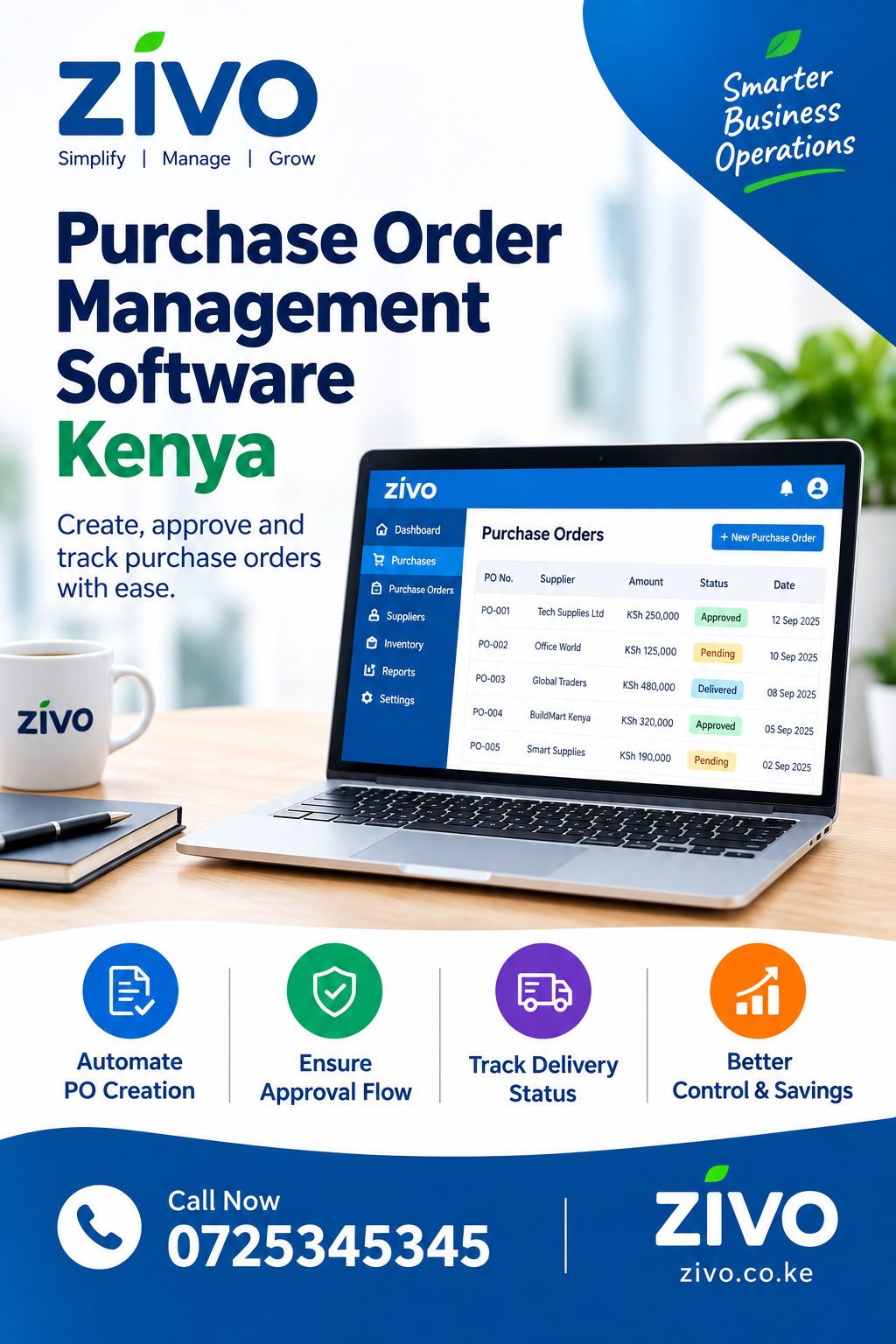
 Purchase Order Management Software Kenya: A Practical Guide to Better Procurement
For Kenyan businesses managing multiple suppliers, purchase requests, quotations, deliveries and invoices, Purchase Order Management Software Kenya provides a structured way to control purchasing from request to completion. Instead of relying on scattered spreadsheets, emails, WhatsApp messages and paper documents, businesses can organize purchase orders in one system. This guide explains how purchase order management works, the features businesses should look for, how it supports procurement teams, and how Kenyan SMEs can use technology to improve purchasing accuracy and accountability.
Procurement affects almost every part of a business. A company may need office supplies, inventory, equipment, packaging materials, spare parts, professional services or other resources to operate. When purchasing is handled informally, it becomes difficult to know who requested an item, who approved it, which supplier was selected, how much was agreed upon and whether the order was actually delivered.
A well-designed procurement process solves much of this confusion. Purchase orders create a formal record of what a business intends to buy. When those orders are created, approved, tracked and matched with supplier documentation electronically, procurement becomes easier to monitor.
For businesses searching for Purchase Order Management Software Kenya, the main objective should not simply be to replace paper purchase orders. The objective should be to create a complete purchasing workflow that improves visibility, reduces avoidable errors and gives managers reliable information for decision-making.
What Is Purchase Order Management?
Purchase order management is the process of creating, approving, sending, tracking and closing purchase orders. A purchase order normally contains information such as the supplier, items or services required, quantities, agreed prices, delivery details and payment terms.
Businesses can manage purchase orders manually, but manual processes become increasingly difficult as transaction volumes increase. A procurement officer might create an order in a spreadsheet, send it by email, receive confirmation separately and then update another document after delivery. Each additional step creates an opportunity for information to be lost or entered incorrectly.
With Purchase Order Management Software Kenya, businesses can centralize this workflow. A purchase request can move through approval before an official purchase order is created. The resulting order can then be monitored until the supplier fulfils it.
This creates a traceable purchasing process. Instead of asking several employees for updates, a manager can refer to the purchasing record to understand the status of an order.
Purchase Orders Versus Purchase Requests
A purchase request is usually an internal request to buy something. A purchase order is a formal document issued to a supplier.
For example, an employee may request ten office chairs. The procurement team reviews the request, obtains supplier information, confirms pricing and seeks the required approval. Once approved, a purchase order can be issued to the selected supplier.
A structured workflow supported by Purchase Order Management Software Kenya helps separate these stages. This distinction is important because not every request should automatically become a supplier order.
Why Purchase Order Management Matters for Kenyan Businesses
Kenyan businesses operate across many sectors, including retail, distribution, manufacturing, construction, hospitality, professional services, healthcare and technology. Each sector has different purchasing requirements, but they share a common need: accurate control over business spending.
For a growing SME, procurement may initially be managed by one person. As the organization expands, purchasing responsibilities can be distributed across departments, branches and managers. Without a standard process, different employees may follow different procedures.
Using Purchase Order Management Software Kenya can help establish a consistent process. Employees can follow defined steps for requesting purchases, securing approval, creating orders and recording supplier fulfilment.
This becomes particularly valuable when a business has many transactions. A procurement team needs to distinguish approved orders from pending requests, partially fulfilled orders from completed orders and cancelled purchases from active commitments.
Better Visibility Into Purchasing
One of the biggest problems with manual procurement is limited visibility. A manager may know that money is being spent but not have a clear picture of all outstanding orders.
With Purchase Order Management Software Kenya, purchasing information can be organized into records that are easier to review. Management can see which orders are pending, which suppliers have received orders and which purchases require follow-up.
Visibility also helps finance teams. An approved purchase order represents a purchasing commitment that may eventually result in an invoice or payment. Keeping these records organized supports better coordination between procurement and finance.
Stronger Internal Accountability
Procurement involves company money, so accountability matters. A good purchasing process should make it clear who requested an item, who approved it and which supplier received the order.
Purchase Order Management Software Kenya can support this type of accountability by maintaining transaction records. Depending on the system, businesses can also use user permissions and approval workflows to control who can perform specific actions.
The purpose is not to make procurement unnecessarily complicated. Instead, the process should ensure that important purchasing decisions are visible to the appropriate people.
Key Features to Look For
Businesses should evaluate purchase order systems according to their actual procurement workflow. A solution that looks impressive but does not fit daily operations can create more work rather than less.
When evaluating Purchase Order Management Software Kenya, consider features such as purchase request management, purchase order creation, approval workflows, supplier records, order tracking, reporting and document management.
The following features are particularly useful.
Purchase Request Management
The purchasing process often begins before a purchase order exists. An employee or department identifies a requirement and submits a request.
A system supporting Purchase Order Management Software Kenya should make it possible to capture relevant information before the purchase is approved. This can include the requested item, quantity, department, purpose and other information required by the organization.
A structured request process reduces the chances of informal purchases being made without authorization.
Purchase Order Creation
Creating purchase orders manually can be time-consuming, particularly when the same supplier is used frequently.
Purchase Order Management Software Kenya can simplify order creation by storing supplier information and allowing users to prepare standardized purchase orders. The business can then issue the order using consistent information.
Standardization matters because purchase orders are business documents. They should clearly communicate what is being ordered and under what conditions.
Approval Workflows
Not every purchase should require the same level of approval. A small routine purchase may have a simple approval process, while a significant expenditure may require management authorization.
With Purchase Order Management Software Kenya, businesses can structure approval workflows according to their internal policies. The specific workflow will depend on the organization.
For example, a department manager might approve routine purchases, while larger purchases require a senior manager or finance approval.
Supplier Management
Supplier information is central to procurement. Businesses need accurate records of suppliers, including contact details and purchasing history.
Purchase Order Management Software Kenya can help organize supplier-related purchasing information alongside purchase orders. This makes it easier for procurement teams to identify previous orders and review supplier activity.
Keeping supplier records organized also reduces repetitive data entry.
Order Status Tracking
Once an order is issued, the procurement team needs to know what happens next. Has the supplier acknowledged the order? Has the delivery been made? Was the order fulfilled completely?
A system built around Purchase Order Management Software Kenya can provide status information for active orders. Common statuses may include draft, pending approval, approved, sent, partially received, completed or cancelled.
The exact status options should match the business’s workflow.
Purchase Order Management and Supplier Communication
Procurement does not happen in isolation. Businesses communicate with suppliers before, during and after an order.
A formal purchase order provides a common reference point. Instead of relying entirely on informal conversations, the business can refer to a documented order containing agreed information.
Purchase Order Management Software Kenya can help businesses maintain clearer purchasing records. When a supplier asks about an order, the procurement team can refer to the relevant record instead of searching through multiple conversations.
This is especially useful for businesses handling many suppliers simultaneously.
Reducing Misunderstandings
Suppose a business orders 100 units of a product, but a supplier delivers 80. If the order is clearly documented, the procurement team has a reference for determining what was originally requested.
Using Purchase Order Management Software Kenya makes it easier to maintain that reference electronically. The purchasing record can contain the original quantity, agreed price and other relevant information.
Clear documentation does not eliminate every supplier dispute, but it provides evidence of what the business ordered.
Controlling Procurement Spending
Procurement and financial management are closely connected. Businesses need to understand not only what they have purchased but also what they have committed to purchase.
Purchase Order Management Software Kenya can give management a clearer view of purchasing commitments. When purchase orders are organized, decision-makers can identify outstanding orders and consider them when reviewing cash requirements.
This does not replace accounting or financial planning. Rather, it provides procurement information that can complement financial records.
Avoiding Unauthorized Purchases
Unauthorized purchasing can occur when employees order goods without following internal procedures.
A formal purchasing workflow supported by Purchase Order Management Software Kenya can require requests to pass through the appropriate approval process before orders are issued.
This is particularly useful in organizations where several departments make purchases. Employees know where requests should go, while managers have greater visibility into what is being ordered.
Reducing Duplicate Orders
Duplicate orders can happen when two employees independently order the same item or when a previous request is forgotten.
Purchase Order Management Software Kenya can provide a central record of purchasing activity. Before creating another order, authorized users can review existing requests and purchase orders.
Centralized records therefore support better coordination across procurement teams.
Purchase Orders and Inventory Management
For businesses that sell or store physical goods, procurement and inventory are directly connected.
A company may purchase products for resale, raw materials for manufacturing or supplies for internal operations. If purchase orders are disconnected from inventory processes, it becomes harder to know what stock is expected.
Purchase Order Management Software Kenya can help businesses organize purchase information that may be useful when planning stock replenishment.
For example, a retailer may notice that a particular product is running low. The procurement team can review existing purchase orders before placing another order. This can reduce the possibility of unnecessary duplicate purchases.
Supporting Stock Replenishment
Stock management requires a balance. Ordering too little can lead to shortages, while ordering too much can tie up cash and storage capacity.
A procurement system such as Purchase Order Management Software Kenya can support the administrative side of replenishment by keeping supplier orders organized.
Businesses can then combine purchasing information with their inventory records and sales data to make more informed decisions.
Purchase Orders and Invoice Processing
The purchasing process does not end when a purchase order is created. Eventually, the supplier may issue an invoice.
The procurement and finance teams need to determine whether the invoice relates to a legitimate purchase and whether the goods or services were delivered as expected.
Purchase Order Management Software Kenya can help keep purchase order information organized for this review. Where the system supports the relevant workflow, staff can compare order details with receiving and invoice information.
This type of matching helps businesses identify discrepancies before payments are processed.
Handling Price Differences
Suppose a purchase order records a particular price, but a supplier invoice contains a different amount. The difference needs to be investigated.
A system using Purchase Order Management Software Kenya can provide a clear purchase record that procurement and finance staff can review.
The difference may be legitimate because of an agreed change, tax treatment, delivery costs or another reason. The important point is that the business has a documented starting point for the review.
M-Pesa and Kenyan Payment Processes
M-Pesa is widely used for business payments in Kenya, alongside bank transfers, cards and other payment methods. The exact payment method used by a business depends on its suppliers, policies and transaction requirements.
Purchase Order Management Software Kenya does not necessarily replace a payment platform. Instead, it can form part of the procurement process by organizing what the business has authorized to purchase.
This distinction is important. A purchase order records a purchasing commitment; a payment record shows that money was actually paid.
Keeping these concepts separate can improve financial control.
Supporting Local Procurement Teams
Kenyan procurement teams may deal with local suppliers, regional suppliers and international vendors. Each relationship can involve different delivery schedules, payment arrangements and documentation requirements.
Purchase Order Management Software Kenya can provide a standardized internal process even when suppliers operate differently.
The business can establish its own purchasing procedures and apply them consistently to different supplier relationships.
Purchase Order Reporting
Reports turn transaction records into useful management information. A procurement manager may want to know how much has been ordered, which suppliers receive the most orders or how many purchase orders remain outstanding.
With Purchase Order Management Software Kenya, businesses can organize purchase information for reporting and analysis.
Useful procurement reports may include:
- Outstanding purchase orders
- Approved purchase orders
- Orders by supplier
- Orders by department
- Orders by date
- Purchases by category
- Partially fulfilled orders
- Cancelled purchase orders
- Supplier purchasing history
The exact reports available depend on the software.
How Reporting Helps Management
A manager does not need to examine every transaction individually to understand procurement activity.
A reporting function within Purchase Order Management Software Kenya can summarize purchasing activity and help identify areas that require attention.
For example, management may notice that a department is submitting unusually frequent orders for the same category of goods. That observation can lead to a review of purchasing practices or supplier arrangements.
Reports therefore help move procurement from transaction processing toward informed management.
Purchase Order Management for SMEs
Small and medium-sized enterprises often operate with limited administrative resources. Employees may handle several responsibilities at once, making manual procurement difficult to maintain.
Purchase Order Management Software Kenya can help SMEs standardize purchasing without requiring every transaction to be managed through separate spreadsheets and paper files.
The system should remain simple enough for employees to use consistently. A complicated workflow that nobody follows is less useful than a straightforward process that employees understand.
Growing With the Business
A business may begin with a handful of suppliers and gradually expand. As the supplier base grows, procurement complexity increases.
Purchase Order Management Software Kenya can support a more organized purchasing process as transaction volumes increase.
The important consideration is scalability. Businesses should assess whether the system can continue supporting their processes as they add employees, departments, products or locations.
Multi-Department Procurement
In larger organizations, different departments may have separate purchasing requirements.
A finance department may buy accounting supplies, an operations team may purchase equipment, a sales team may require marketing materials and a warehouse may order stock.
Purchase Order Management Software Kenya can help centralize these purchasing activities while preserving information about the requesting department.
Centralization can make management reporting easier and reduce confusion about outstanding orders.
Branch-Based Businesses
Businesses operating multiple branches may also benefit from centralized procurement records.
For example, a retail company with several locations may need each branch to submit purchasing requests while head office maintains approval authority.
Purchase Order Management Software Kenya can support this type of workflow when the selected system provides the required organizational controls.
The business should define which purchases branches can approve independently and which require central approval.
Automating Routine Procurement Tasks
Automation is valuable when it reduces repetitive administrative work without removing necessary human oversight.
Purchase Order Management Software Kenya can help automate parts of the purchase order process, such as generating standardized documents, routing requests for approval or updating order statuses.
Automation should be used carefully. Businesses still need people to evaluate whether a purchase is necessary, whether a supplier is appropriate and whether pricing makes sense.
The objective is to automate administration, not eliminate responsible decision-making.
Approval Notifications
Approvals can become a bottleneck when requests sit in an inbox or on a desk.
A system supporting Purchase Order Management Software Kenya may provide notifications or workflow visibility that helps responsible users identify pending actions.
Faster approvals can help procurement teams move legitimate purchases forward while maintaining authorization controls.
Security and Access Control
Procurement data can contain sensitive commercial information, including supplier details, prices, purchasing volumes and internal approval records.
Businesses should therefore consider security when selecting Purchase Order Management Software Kenya.
Useful controls may include user accounts, role-based permissions, audit records, secure authentication and controlled access to purchasing information.
The appropriate security features will depend on the system and the organization’s requirements.
Audit Trails
An audit trail can help show what happened to a purchase order over time.
For example, a business may need to determine when an order was created, who approved it and whether its status later changed.
Purchase Order Management Software Kenya can provide this type of visibility when audit functionality is included.
Audit records can be particularly useful when reviewing unusual transactions or investigating discrepancies.
Choosing the Right Purchase Order System
There is no single purchase order solution that fits every organization. Businesses should begin by documenting their procurement process.
Before evaluating Purchase Order Management Software Kenya, ask:
- How are purchases currently requested?
- Who approves different types of purchases?
- How many suppliers does the business use?
- How are purchase orders currently created?
- How are deliveries recorded?
- How are supplier invoices checked?
- What reports does management need?
- Does the business have multiple branches?
- What accounting or business systems need to work alongside procurement?
- What security and user-access requirements exist?
These questions help businesses evaluate software based on real needs rather than a generic feature checklist.
Ease of Use Matters
A procurement platform is only effective if employees actually use it.
When assessing Purchase Order Management Software Kenya, consider how easy it is for an employee to submit a request, how quickly an approver can review it and how easily procurement staff can create an order.
User experience should be considered alongside technical functionality.
A system that requires excessive manual steps may discourage employees from following the official process.
Training Employees
Introducing procurement software requires employee training.
Staff should understand:
- When to submit a purchase request
- What information to provide
- Who approves requests
- When a purchase order is required
- How suppliers are selected
- How deliveries are recorded
- How exceptions are handled
A well-planned rollout can make Purchase Order Management Software Kenya easier to adopt.
Common Procurement Problems Software Can Address
Businesses often introduce purchase order software because their existing process has become difficult to control.
Common problems include:
- Missing purchase documents
- Unapproved purchases
- Duplicate orders
- Incorrect quantities
- Supplier communication gaps
- Delayed approvals
- Limited reporting
- Poor visibility into outstanding orders
- Difficulty matching invoices with orders
- Inconsistent purchasing procedures
Purchase Order Management Software Kenya can address these problems when the underlying workflow is configured correctly.
Software is not a substitute for good procurement policies. Instead, it gives those policies a structured environment in which to operate.
Common Mistakes When Implementing Purchase Order Software
Technology alone does not guarantee better procurement. Businesses can still create problems if implementation is rushed.
One common mistake is digitizing an unclear process without first deciding who should approve purchases.
Another is creating too many approval steps, causing routine purchases to become unnecessarily slow.
Businesses should also avoid entering poor-quality supplier data into the new system.
A structured implementation of Purchase Order Management Software Kenya should begin with process mapping and clear responsibilities.
Avoiding Excessive Complexity
Procurement controls should be appropriate to the size and risk of each purchase.
A simple office supply purchase should not necessarily require the same process as a major equipment acquisition.
When configuring Purchase Order Management Software Kenya, businesses should aim for controls that are practical and proportionate.
The right workflow allows employees to complete legitimate purchases efficiently while ensuring important spending receives appropriate review.
The Role of Procurement Policies
Software works best when it supports documented procurement policies.
A company may establish rules concerning approved suppliers, spending limits, competitive quotations, emergency purchases, purchase approvals and required documentation.
Purchase Order Management Software Kenya can then be configured around these internal procedures where the system supports the required controls.
The policy provides the rules; the software provides the workflow and records.
Purchase Orders and Supplier Performance
Businesses can use purchasing records to understand supplier activity.
For example, procurement teams may track how often orders are placed, whether orders remain outstanding and how frequently discrepancies occur.
Purchase Order Management Software Kenya can provide an organized record that supports supplier reviews.
However, supplier performance should be evaluated using appropriate evidence rather than assumptions based on one transaction.
Building Better Supplier Relationships
Good supplier relationships depend on clear communication and consistent processes.
A supplier is more likely to understand a business’s requirements when purchase orders clearly identify what is needed.
Purchase Order Management Software Kenya can help businesses standardize purchasing documentation and maintain a clearer record of supplier transactions.
That consistency can make routine procurement easier for both sides.
Digital Procurement in Nairobi and Beyond
Businesses in Nairobi operate alongside organizations across counties and towns throughout Kenya. Procurement requirements vary according to industry, size and location.
A business with suppliers in Nairobi may have different delivery arrangements from one sourcing products from several counties.
Purchase Order Management Software Kenya can support standardized purchasing records regardless of where suppliers operate, provided the software meets the organization’s operational requirements.
The benefit of digital records becomes especially apparent when procurement teams need to access information without searching through physical files.
Cloud-Based Access and Collaboration
Many modern business systems provide web-based access, allowing authorized users to work with information from different locations.
For organizations considering Purchase Order Management Software Kenya, cloud access may be useful where procurement, finance and management teams are not always in the same office.
The organization should still evaluate internet requirements, user permissions, data security, support and backup arrangements before selecting a system.
Cost Considerations
The cost of procurement software should be evaluated against the business’s actual requirements.
Businesses should consider factors such as the number of users, required features, implementation requirements, support and any integration needs.
When comparing Purchase Order Management Software Kenya, businesses should avoid choosing solely on the lowest advertised price.
A cheaper system may not provide the workflow, reporting or controls the business actually needs.
Measuring Return on Investment
The value of procurement software can be considered in terms of administrative time, purchasing visibility, reduced errors and improved control.
A business can establish its baseline before implementation and then monitor relevant operational indicators after deployment.
Purchase Order Management Software Kenya should therefore be evaluated according to measurable business needs rather than software features alone.
Practical Example of a Purchase Order Workflow
Consider a Kenyan distribution company that needs additional packaging materials.
The warehouse identifies the requirement and submits a purchase request. The procurement officer reviews the request and confirms that the items are necessary.
The request is routed to the appropriate manager for approval. Once approved, the procurement team creates a purchase order for the selected supplier.
Using Purchase Order Management Software Kenya, the business can maintain the request, approval and purchase order as part of an organized process.
When the supplier delivers the materials, the receiving team records the delivery. Finance can then review the relevant documentation before processing the supplier invoice.
This example illustrates how purchase order management connects departments that might otherwise work from separate records.
Benefits for Finance Teams
Finance teams need reliable information about purchasing commitments.
A purchase order provides information about an intended purchase, while an invoice provides information about a supplier’s billing.
Purchase Order Management Software Kenya can help finance and procurement teams maintain a shared reference for approved purchasing activity.
This can make it easier to investigate differences between what was ordered, what was received and what was billed.
Benefits for Procurement Managers
Procurement managers are responsible for maintaining purchasing discipline while ensuring that departments receive the resources they need.
A system supporting Purchase Order Management Software Kenya can give procurement managers better visibility into requests, approvals and supplier orders.
Instead of spending large amounts of time searching for information, managers can focus more attention on supplier relationships, purchasing strategy and process improvement.
Benefits for Business Owners
Business owners need confidence that company money is being spent according to established procedures.
Purchase Order Management Software Kenya can help provide greater visibility into purchasing activity and approval processes.
This can be particularly useful as a company grows and the owner is no longer personally involved in every purchasing decision.
Centralized records allow management to maintain oversight without manually checking every transaction.
Benefits for Employees
Employees also benefit from clear purchasing procedures.
When staff know where to submit requests and what information is required, they spend less time wondering how to initiate purchases.
Purchase Order Management Software Kenya can provide a defined workflow that makes purchasing responsibilities easier to understand.
Clear processes can also reduce the risk of employees making purchases outside the organization’s approved procedure.
Future-Ready Procurement Practices
Procurement continues to become more data-driven as businesses adopt digital systems.
Organizations can use purchasing data to identify frequently purchased products, review supplier activity and understand spending patterns.
Purchase Order Management Software Kenya can form part of this broader digital business environment.
The most important consideration is that technology should support clear business processes rather than become a separate administrative burden.
Questions to Ask a Software Provider
Before adopting a procurement platform, ask the provider practical questions.
For example:
- Can users create purchase requests?
- Can approval workflows be configured?
- Can suppliers be managed centrally?
- Can purchase orders be edited before approval?
- Can users track order status?
- Can partial deliveries be recorded?
- Are reports available?
- Can different user roles be created?
- How is data secured?
- What support is available?
- Can the system integrate with other business processes?
These questions can help businesses assess whether Purchase Order Management Software Kenya fits their operational needs.
Why a Centralized Procurement Record Matters
A centralized purchasing record creates one source of reference for procurement activity.
Without centralization, one employee may have an email, another may have a spreadsheet and another may hold a paper document.
Purchase Order Management Software Kenya can bring relevant purchasing information into a structured environment.
This does not mean every business process must be placed in one system. Rather, purchase order information should be accessible to the people responsible for procurement, approval and financial review.
Improving Procurement Accuracy
Accuracy is important at every stage of purchasing.
An incorrect quantity can result in a shortage or excess stock. An incorrect supplier can cause delays. An incorrect price can create invoice discrepancies.
Using Purchase Order Management Software Kenya can reduce some forms of manual duplication by allowing businesses to maintain purchasing information in a structured format.
However, employees still need to review data carefully before orders are finalized.
Supporting Better Business Decisions
Good procurement information can contribute to broader business planning.
Management may use purchasing records to understand recurring costs, supplier relationships and upcoming commitments.
Purchase Order Management Software Kenya can make this information easier to organize and review.
When purchasing data is accurate and accessible, management can have a clearer picture of operational requirements and financial commitments.
A Step-by-Step Implementation Approach
Businesses planning to introduce procurement software can use a simple implementation process.
Step 1: Map the Current Process
Document how purchases currently move from request to payment.
Step 2: Identify Problems
Look for delays, duplicate work, missing approvals and information gaps.
Step 3: Define Approval Rules
Determine who can approve different types or values of purchases.
Step 4: Prepare Supplier Data
Clean and organize supplier records before importing them.
Step 5: Configure Workflows
Set up the required request, approval and purchase order processes.
Step 6: Train Users
Explain the new process clearly to employees.
Step 7: Monitor Usage
Review whether employees are following the workflow and identify areas for improvement.
A structured approach makes Purchase Order Management Software Kenya easier to introduce and manage.
Frequently Asked Questions
1. What is purchase order management software?
Purchase order management software is a business system used to create, approve, track and manage purchase orders. It helps organize purchasing information and can connect procurement activities with supplier and financial processes.
2. Why should a Kenyan SME use purchase order software?
An SME can use Purchase Order Management Software Kenya to establish a consistent purchasing process, improve visibility into orders and maintain better records as transaction volumes grow.
3. Can purchase order software help with supplier management?
Yes. A suitable system can organize supplier information alongside purchase orders and purchasing history. This can make it easier for procurement teams to review supplier activity.
4. Can purchase orders be approved digitally?
Many procurement systems support digital approval workflows. The exact approval capabilities depend on the software selected and how the business configures its purchasing process.
5. Does purchase order software replace accounting software?
Not necessarily. Purchase order software and accounting systems can serve different purposes. Procurement software focuses on purchasing workflows, while accounting software manages financial records. Some business platforms may connect these processes.
6. Can purchase order software support multiple departments?
Yes, depending on the system. A suitable Purchase Order Management Software Kenya solution can support purchasing requests from different departments and route them through appropriate approval workflows.
7. How can purchase order software reduce procurement errors?
Centralized records, standardized order documents, approval workflows and reduced manual duplication can help reduce certain procurement errors. Businesses still need appropriate policies and employee review.
8. What should I consider before choosing purchase order software?
Consider your purchasing workflow, approval structure, supplier volume, reporting requirements, number of users, integrations, security needs, support requirements and expected business growth.
9. Is purchase order software useful for businesses with many suppliers?
Yes. As supplier numbers increase, centralized purchasing records can become increasingly valuable. Purchase Order Management Software Kenya can help businesses organize orders and supplier-related procurement information.
10. Can purchase order management improve financial control?
It can support financial control by creating records of approved purchasing commitments and making procurement activity easier to review. It should complement, rather than replace, appropriate financial policies and accounting processes.
What Makes an Effective Purchase Order Process?
An effective process should be clear, consistent and proportionate to the organization’s needs.
It should answer basic questions:
- Who can request a purchase?
- Who can approve it?
- When is a purchase order required?
- Which suppliers can be used?
- How are deliveries confirmed?
- How are invoices checked?
- Who can cancel or amend an order?
- How are purchasing records retained?
A system such as Purchase Order Management Software Kenya can help operationalize these rules.
The technology should make the process easier to follow rather than introduce unnecessary complexity.
Purchase Order Management for Business Growth
Growth creates new procurement challenges. A company with ten employees may have a very different purchasing process from a company with 100 employees.
As the business grows, responsibilities become distributed. More suppliers may be introduced, purchasing volumes may increase and managers may need more detailed reports.
Purchase Order Management Software Kenya can help provide the structure required to manage this increased activity.
Businesses should review their procurement process periodically to ensure that controls remain practical as operations change.
Building a More Organized Procurement Environment
The goal of procurement technology is not simply to create more documents. It is to make purchasing information easier to manage.
A well-organized system allows employees to understand what needs to happen next, managers to see what requires approval and procurement teams to track supplier orders.
Purchase Order Management Software Kenya can contribute to this structure by centralizing key purchase order activities.
The result can be a procurement process that is easier to monitor and easier to improve.
Final Considerations Before Choosing a Solution
Before making a decision, businesses should identify the problems they want to solve.
If the biggest issue is missing approvals, prioritize workflow controls. If the problem is supplier confusion, focus on supplier and order records. If reporting is weak, evaluate dashboards and procurement reports.
A solution such as Purchase Order Management Software Kenya should be assessed against these practical requirements.
The best implementation is one that fits the organization’s actual purchasing process and can be adopted consistently by the people responsible for procurement.
Conclusion
Purchase order management is an important part of controlling business procurement. As organizations grow, informal purchasing processes can become difficult to monitor, especially when multiple employees, departments and suppliers are involved.
Purchase Order Management Software Kenya can provide a structured environment for purchase requests, approvals, supplier orders, delivery tracking and procurement reporting. It can also help connect purchasing teams with finance, inventory and management processes.
For Kenyan SMEs and larger organizations, the most important step is to define the purchasing process before selecting technology. Identify approval requirements, supplier management needs, reporting expectations and areas where manual processes create unnecessary work.
A suitable Purchase Order Management Software Kenya solution should make those processes clearer, more consistent and easier to monitor.
Businesses should also consider user adoption, security, scalability, integration and ongoing support. Software should support procurement policies rather than replace them.
When purchasing information is centralized and properly managed, employees can work with clearer procedures, managers can gain better visibility and procurement teams can spend less time searching for information.
For organizations ready to improve how they handle supplier orders and purchasing commitments, Purchase Order Management Software Kenya can be an important component of a broader business management strategy.
The practical objective is simple: create a purchasing process where every important order has a clear record, appropriate approval and an identifiable status.
That approach can help Kenyan businesses build stronger procurement controls while keeping day-to-day purchasing organized and manageable.