
A Practical Guide to Loan Collection Software for Kenyan Lenders
For lenders, SACCOs, microfinance teams, asset-finance providers, digital lenders, and other businesses managing repayments, Loan Collection Software Kenya can provide a structured way to organize borrowers, repayment schedules, follow-ups, payment records, and arrears. The real value is not simply replacing a spreadsheet. A useful collection system gives the team a clear picture of who owes money, what is overdue, what action is due next, which promises have been made, and whether payments have actually been matched to the correct account. This guide explains what to look for, how the workflow should operate, and how Kenyan lending teams can improve collections without losing control of customer information.
What is loan collection software?
Loan Collection Software Kenya is software designed to help a lender manage the process of following up, recording, receiving, reconciling, and reporting loan repayments. Instead of treating collections as a series of phone calls and scattered spreadsheets, the system connects borrower records, loan accounts, due dates, payment activity, arrears, collection actions, and staff responsibilities.
A collection workflow normally starts before an account becomes seriously overdue. The system should make upcoming instalments visible, identify missed payments quickly, and give collectors enough context to make a useful follow-up. It should then preserve the outcome of that interaction. If a borrower promises to pay on Friday, for example, that promise should not live only in a collector’s notebook or WhatsApp chat. It should become a dated action that another authorized team member can understand.
This distinction matters because collections are operational work. A lender needs more than a list of debtors. It needs a repeatable process that answers practical questions:
- Who is overdue today?
- How much is outstanding?
- How many days has the account been overdue?
- What was the last payment?
- What did the customer promise?
- Who owns the next follow-up?
- Has the payment been matched correctly?
- Which accounts need escalation?
- What amount was recovered during a given period?
A well-designed platform makes those questions easier to answer from one controlled record.
Why loan collection needs a structured system in Kenya
Kenyan lenders often work in an environment where customer communication and payment activity are highly mobile. M-Pesa is central to many commercial payment workflows, while phone calls, SMS, email, and WhatsApp may all be used for customer communication. That convenience can also create fragmented records when payment references, conversations, spreadsheets, and accounting entries are maintained separately.
Loan Collection Software Kenya helps bring the collection process into a more consistent operating model. The exact features vary by provider, but the principle is simple: the borrower, obligation, payment, and follow-up should remain connected.
For a growing lending operation, the problems caused by manual processes become visible quickly. One collector may maintain a spreadsheet, another may use a notebook, and a finance officer may rely on a separate payment statement. When a borrower asks for an updated balance, staff may spend several minutes reconstructing the account before they can answer.
That time is costly. It also creates room for errors.
A controlled system can help the team establish a daily collection queue. Accounts can be grouped by due date, arrears age, outstanding amount, assigned collector, product, branch, or other business rules. Managers can review the queue without waiting for every collector to submit a separate spreadsheet.
The goal is not to automate every human decision. Good collection management combines automation with judgment. A reminder can be automated; a sensitive customer conversation may require a person. A report can highlight a high-risk account; a manager can decide the appropriate next step.
The core collection workflow
A practical Loan Collection Software Kenya workflow can be understood as a sequence rather than a single feature.
1. Create a complete borrower record
The first requirement is a reliable borrower profile. It should contain the information the lender legitimately needs for identification, communication, account management, and servicing.
Depending on the lending model, this can include:
- Borrower name and contact details
- KYC information
- Customer or account reference
- Loan products
- Guarantor or related-party information where relevant
- Supporting documents
- Repayment history
- Current balance
- Assigned staff member
- Notes and collection actions
The objective is context. A collector should not have to search five places before understanding who the customer is and what happened previously.
A clear workflow is easier to maintain when Loan Collection Software Kenya keeps the relevant account information together.
2. Maintain the repayment schedule
A repayment schedule is the backbone of collections. It establishes what was expected, when it was expected, and how the account should change when a payment is received.
The system should make instalments easy to view and should distinguish between upcoming, due, partially paid, and overdue amounts. Where the lending product supports different repayment frequencies, the workflow should accommodate the relevant schedule.
This helps a team move from reactive collection to planned collection.
3. Record payments accurately
Payment recording is where collections and finance meet. A payment should not merely reduce a number on a spreadsheet. It should have enough information to support reconciliation and an audit trail.
Useful payment fields can include:
- Payment date
- Amount
- Payment channel
- Transaction reference
- Customer or loan reference
- Receipt information
- Allocation status
- Staff or system entry information
For Kenyan lenders using mobile-money workflows, transaction references are particularly useful when matching incoming funds to the correct borrower account.
4. Identify arrears early
A strong collection system should make arrears visible without requiring a manager to manually calculate them each morning.
The dashboard might separate:
| Account status | Typical action |
|---|---|
| Upcoming | Reminder or monitoring |
| Due today | Collection follow-up |
| One or more days overdue | Immediate follow-up |
| Part-paid | Confirm balance and next payment |
| Promise to pay | Track promise date |
| Long overdue | Escalation according to policy |
The labels and rules should reflect the lender’s own policies. The important point is that staff should see the work that needs attention.
5. Assign collection actions
A collector should know what to do next. Loan Collection Software Kenya can support assigned actions such as calling a borrower, sending a reminder, verifying a payment, updating a promise to pay, or escalating an account.
Assignment improves accountability. If ten overdue accounts appear on a report but nobody owns the next action, the report has limited operational value.
A good workflow therefore combines the account with a task, owner, deadline, and outcome.
Key features to look for
When evaluating Loan Collection Software Kenya, avoid choosing based only on a long feature list. Ask whether the features actually support your collection process.
Borrower management
The borrower record should be searchable and easy for authorized users to understand. If a customer has multiple loans or payment interactions, the relationship between those records should remain clear.
Loan and repayment tracking
The system should show the loan amount, repayment terms, schedule, payments, outstanding balance, and arrears status in a coherent view.
For asset-finance businesses, the workflow may also need KYC, asset details, disbursement references, and additional servicing information.
Arrears management
Arrears should be visible by customer, account, product, collector, branch, or other useful dimension. Managers should be able to identify aging accounts and prioritize work.
Collection reminders
Reminders can help staff maintain a consistent follow-up rhythm. Depending on the platform, these may be internal reminders, customer messages, or scheduled communication.
Automation should support policy rather than replace it. A reminder that is sent at the wrong time or without customer context can damage the customer relationship.
Promise-to-pay tracking
A promise-to-pay feature is valuable because it converts a conversation into a measurable commitment. Record the promised amount, expected date, responsible collector, and eventual outcome.
Managers can then distinguish between accounts that are overdue with no response and accounts where a borrower has committed to a specific payment.
Payment references and reconciliation
Payment matching is one of the most important controls in a collection workflow. An unallocated payment can make one account appear overdue while another account is incorrectly shown as paid.
A good system should make exceptions visible and give finance staff a controlled way to resolve them.
Statements and receipts
Borrowers may need a clear statement showing transactions and balances. Internal teams also need receipts and records that support customer service and financial review.
Role-based access
Collections data can be sensitive. Different staff may require different levels of access. A collector may need borrower and account information, while a finance manager may require broader reporting access.
Role-based controls help reduce unnecessary exposure and support better governance.
Audit-friendly history
Managers should be able to understand what happened to an account. Changes, payments, actions, and important notes should not disappear without explanation.
How M-Pesa fits into loan collections
For Kenyan lending teams, Loan Collection Software Kenya should be evaluated alongside the lender’s payment process. M-Pesa may be a major channel for receiving repayments, but collecting money is only part of the workflow.
The important question is what happens after the payment arrives.
A strong process looks something like this:
- A borrower receives a payment instruction.
- The borrower pays through the approved channel.
- The transaction is captured with its reference.
- The payment is matched to the correct borrower or loan.
- The outstanding balance is updated.
- A receipt or confirmation is available.
- The collection record becomes part of the financial report.
- Any unmatched exception is assigned for review.
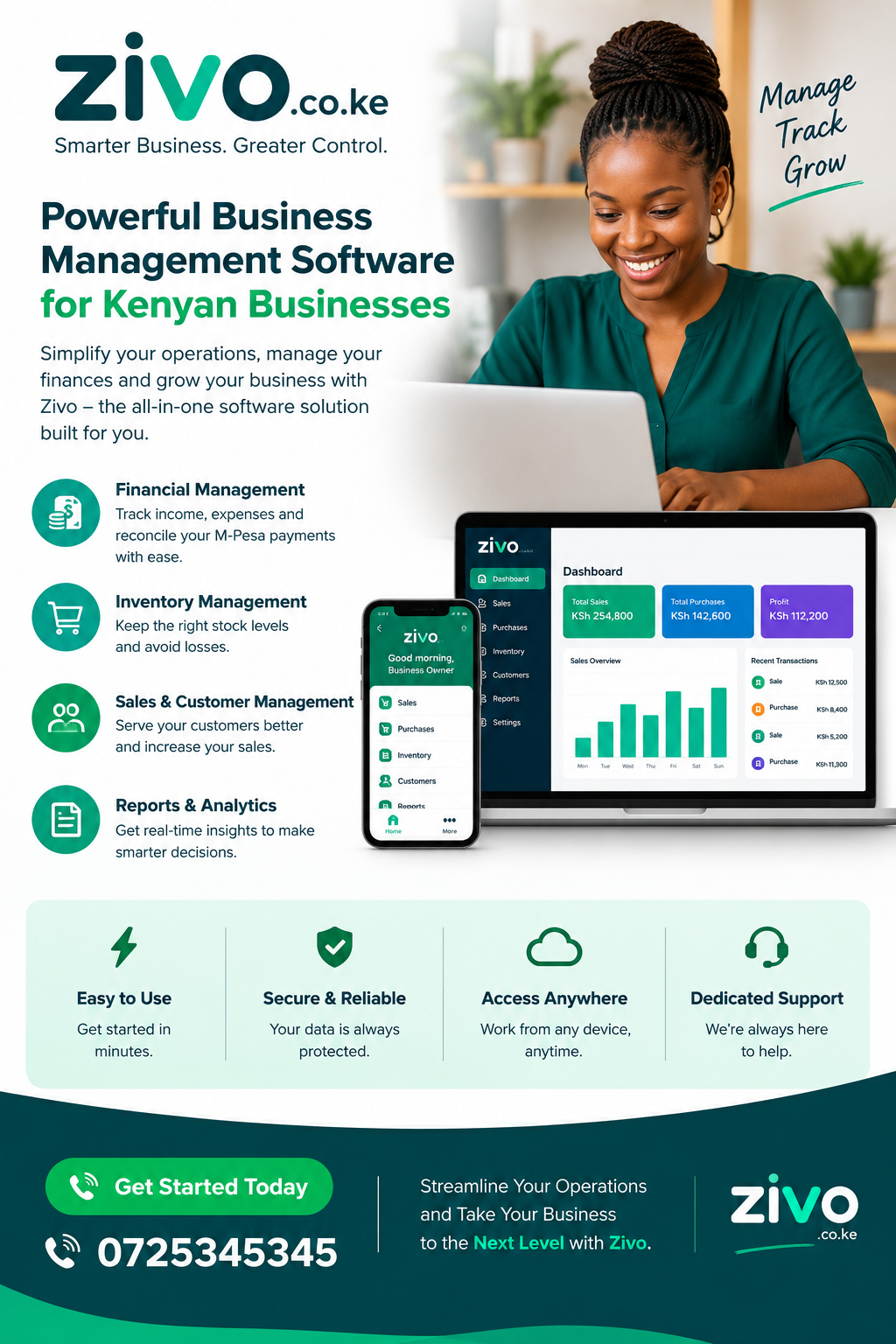
Zivo describes its broader payment workflow around invoices, M-Pesa collection, receipts, statements, and reconciliation. Its lending workspace also emphasizes borrower records, collection reminders, assigned actions, payment context, and audit-friendly customer history.
For asset-finance and fleet-lending teams, Zivo specifically describes repayment schedules, loan statements, collections reminders, payment references, borrower KYC, approvals, and disbursement records as part of its lending workflow.
The lesson is broader than one product: payment collection should connect to the account record rather than becoming an isolated finance event.
Moving beyond spreadsheets
Spreadsheets are useful. They are inexpensive, familiar, and flexible. A small lender can use one successfully for a period of time.
The difficulty appears when the process becomes dependent on manual updates from several people.
Consider a team with three collectors. Each morning, they receive a list of accounts. One updates payment information immediately, another waits until afternoon, and the third records notes in a separate workbook. The finance officer then combines the information at the end of the day.
The spreadsheet may still look organized, but the operating picture is no longer real-time.
Loan Collection Software Kenya can reduce that fragmentation by keeping the customer, payment, and collection action in a connected workflow.
A lender should not abandon spreadsheets simply because software is available. Instead, ask whether the spreadsheet has become a bottleneck. Warning signs include:
- Duplicate borrower records
- Manual balance calculations
- Frequent formula errors
- Delayed payment updates
- Missing collection notes
- Difficult staff handovers
- Multiple versions of the same file
- Limited audit history
- Time-consuming monthly reporting
- Difficulty knowing which collector owns an account
When several of these problems appear together, a dedicated system becomes easier to justify.
A practical daily collection process
The value of Loan Collection Software Kenya becomes clearer when you examine a normal working day.
Morning: build the queue
The collection manager reviews accounts due today, overdue accounts, promises due, and unresolved payment exceptions.
The team can then prioritize accounts based on internal rules.
Midday: follow up
Collectors work through assigned actions. Each interaction produces an outcome: contacted, no answer, promise made, payment confirmed, dispute raised, wrong number, or escalation required.
The exact labels should be defined by the lender.
Afternoon: reconcile
Finance reviews payments received and checks exceptions. Any payment that cannot be confidently allocated is assigned for investigation.
End of day: review
Managers look at completed actions, payments collected, promises due, unresolved exceptions, and accounts requiring further attention.
This is more useful than a simple “amount collected today” figure because it explains the work behind the number.
A well-configured Loan Collection Software Kenya should make this recurring process easier to manage.
Collections dashboards and management reports
A collection manager needs more than individual account screens. Loan Collection Software Kenya should provide reporting that supports decisions.
Useful reports may include:
- Total outstanding balance
- Overdue balance
- Aging by days overdue
- Amount collected during a period
- Collection rate by product
- Collector activity
- Promise-to-pay performance
- Payment exceptions
- Accounts with repeated missed payments
- Recovery by branch
- Recovery by loan type
A simple aging table can help management focus:
| Aging category | Management question |
|---|---|
| Not yet due | Are reminders being handled early enough? |
| 1–7 days overdue | Is first follow-up happening quickly? |
| 8–30 days overdue | Which accounts need stronger intervention? |
| 31–60 days overdue | Are promises being honored? |
| 61–90 days overdue | Which accounts require escalation? |
| 90+ days overdue | What approved recovery strategy applies? |
These categories are examples, not universal regulatory classifications. Each lender should align reporting with its own policies, product terms, and applicable requirements.
Improving collector productivity
A collection team can spend much of its day searching for information. Software can reduce that administrative load.
Instead of opening a customer profile, then a spreadsheet, then a payment statement, then a messaging application, a connected workflow can present the important context together.
Loan Collection Software Kenya can help collectors work from prioritized queues rather than manually scanning hundreds of rows.
Productivity improvements can come from:
- Saved customer records
- Searchable loan accounts
- Automatic due-date views
- Assigned collection tasks
- Reminder workflows
- Payment references
- Customer statements
- Standardized notes
- Manager dashboards
The point is not to make collectors call more people. It is to help them spend more time on useful collection activity and less time reconstructing information.
Communication and borrower experience
Collections should be firm, professional, and respectful. A software system cannot define a lender’s customer-service culture, but it can support consistency.
A useful communication process should help staff know:
- What amount is due
- What date it relates to
- What the customer’s current balance is
- When the last payment was received
- Whether a promise was made
- What communication has already occurred
This context matters. Repeatedly asking a borrower for a payment that has already been made creates frustration and can undermine trust.
WhatsApp may also be relevant for lenders that use it for customer communication. Zivo’s lending offering describes WhatsApp-ready borrower follow-up alongside collection reminders and assigned actions.
However, communication should follow the lender’s approved procedures and applicable legal and privacy requirements. Software should make compliant processes easier, not encourage aggressive or indiscriminate messaging.
Data security and access control
Loan information should be treated as sensitive business data. A lender should understand how a prospective platform protects customer records.
Ask vendors:
- How is access controlled?
- Can roles be customized?
- Are important changes logged?
- How are backups handled?
- How can records be exported?
- What happens when an employee leaves?
- Which third-party services process data?
- How are payment credentials or secrets handled?
- What support process exists for incidents?
Zivo publicly describes role-based workspace access, secure tokens for public payment-related links, managed infrastructure, backups, and workspace separation. Its trust center also states that independent penetration-test reporting or security certification is not currently published, which is useful information for a buyer conducting due diligence.
Do not treat a vendor’s security page as a substitute for your own due diligence. Ask for the documentation relevant to your risk profile.
Compliance and responsible collections
Collection software should support lawful and responsible recovery practices. The technology should not be used to harass borrowers, expose private information, misrepresent balances, or contact people in inappropriate ways.
A lender should establish internal rules covering:
- Approved communication channels
- Contact frequency
- Customer verification
- Dispute handling
- Payment correction
- Escalation
- Staff permissions
- Data retention
- Complaint handling
- Record keeping
The exact legal obligations depend on the lender, product, customer relationship, and applicable Kenyan requirements. Where the issue is legal or regulatory, obtain professional advice rather than assuming that software configuration alone makes a process compliant.
Choosing software for a small lending business
A smaller lender does not necessarily need the most complicated platform.
Start by documenting the current process. Write down:
- How borrowers are onboarded
- How loans are approved
- How schedules are created
- How payments arrive
- How payments are matched
- How overdue accounts are identified
- How collectors receive their work
- How promises are recorded
- How management receives reports
Then identify the three biggest operational problems.
If payment matching is the problem, prioritize reconciliation.
If collectors lose track of promises, prioritize collection tasks and reminders.
If management cannot see arrears clearly, prioritize dashboards and aging reports.
If borrower records are fragmented, prioritize a unified customer record.
This problem-first approach is usually better than buying a system because it has the longest feature list.
A lender evaluating Loan Collection Software Kenya should confirm that the product addresses its actual operational bottlenecks.
Choosing software for a growing lender
A larger operation needs stronger controls.
Look for:
- Multiple user roles
- Branch or team visibility
- Detailed audit history
- Scalable borrower records
- Product-level reporting
- Payment reconciliation
- Collection assignment
- Workflow automation
- Export options
- Integration capability
- Support arrangements
- Clear service commitments
Ask vendors to demonstrate a real workflow instead of giving a generic presentation.
For example, give them a test scenario:
“A borrower has a KES 50,000 balance, misses an instalment, makes a partial payment, promises to clear the remainder in five days, then pays using M-Pesa.”
Ask the vendor to show every step from overdue status to payment allocation and final reporting.
A good demo should expose gaps quickly.
When comparing Loan Collection Software Kenya options, realistic demonstrations are more valuable than generic feature presentations.
How to calculate the business value
The business case for Loan Collection Software Kenya should not rely on vague claims such as “save time” or “increase efficiency.”
Measure the current process.
For example, calculate:
- Hours spent preparing collection lists each week
- Hours spent reconciling payments
- Number of unmatched transactions
- Number of duplicate borrower records
- Number of missed follow-ups
- Time spent preparing monthly reports
- Amount of overdue balances
- Recovery amount by collector
- Cost of administrative errors
Then compare the current cost with the cost of the proposed system and implementation.
A simple example:
Suppose four staff members each spend five hours per week preparing lists, checking payments, and compiling collection reports. That is 20 staff-hours every week. If a connected workflow reduces that administrative effort substantially, management can quantify the value in time rather than relying on a general productivity claim.
The actual financial benefit will vary by business, so use your own figures.
The practical value of Loan Collection Software Kenya is therefore best assessed using the lender’s own operating data.
Implementation: how to avoid disruption
Buying Loan Collection Software Kenya is only the first step. Implementation determines whether staff actually use it.
Phase 1: Clean the data
Review borrower names, phone numbers, loan references, balances, schedules, and payment records.
Do not migrate duplicate or obviously incorrect records without review.
Phase 2: Define the workflow
Agree on what “due,” “overdue,” “promise to pay,” “paid,” “part-paid,” and “escalated” mean inside the organization.
Phase 3: Set permissions
Give each employee only the access needed for their role.
Phase 4: Test payment matching
Use realistic payment references and exceptions. Confirm that finance staff know how to resolve unmatched payments.
Phase 5: Train collectors
Training should focus on daily work rather than software menus. Show collectors how to find an account, understand the balance, record a conversation, create a follow-up, and close an action.
Phase 6: Run a pilot
Start with a manageable group of accounts or one team. Compare results with the existing process before expanding.
Phase 7: Review after launch
After several weeks, examine missing fields, incomplete actions, duplicate accounts, unresolved exceptions, and staff feedback.
Good Loan Collection Software Kenya implementation starts with accurate records and clearly defined ownership.
Common mistakes when selecting collection software
One mistake is choosing software because the interface looks attractive. A polished screen does not guarantee a strong collection workflow.
Another is focusing entirely on automated messages. Collections are not just messaging. They involve account accuracy, payment allocation, customer history, follow-up ownership, and management reporting.
A third mistake is ignoring finance. The collections team may know that a borrower paid, but if the payment is not correctly posted and reconciled, the account can still appear overdue.
A fourth mistake is failing to test exceptions. Buyers often test a normal payment but not a partial payment, duplicate reference, wrong account, reversed transaction, or payment received without enough identifying information.
A fifth mistake is not defining ownership. Software cannot solve an organizational problem if nobody is responsible for the next action.
A sixth mistake is migrating poor-quality data without cleanup.
A seventh mistake is overlooking staff adoption. If collectors continue using personal notes and private spreadsheets, the official system will quickly become incomplete.
These are the details that determine whether Loan Collection Software Kenya works in daily operations rather than only during a sales demo.
How automation should be used
Automation is valuable when the rule is clear.
Good candidates include:
- Upcoming-payment reminders
- Internal overdue alerts
- Assigned follow-up tasks
- Daily collection queues
- Statement generation
- Payment notifications
- Exception alerts
- Management summaries
Human judgment remains important for disputes, hardship cases, sensitive accounts, and unusual payment situations.
The strongest operating model is usually “automate the predictable, review the exceptional.”
Well-configured Loan Collection Software Kenya should support the team without encouraging unnecessary automation.
Zivo’s lending workflow as a practical example
Zivo positions its lending workspace around borrower records, customer communication, collection reminders, assigned actions, payment context, and controlled customer history. Its asset-finance workflow adds KYC records, loan products, approvals, disbursement references, repayment schedules, loan statements, and payment references.
That makes it relevant to a lender evaluating Loan Collection Software Kenya as part of a broader operational system.
The important consideration is fit. A lender should verify that the product supports its specific loan products, approval structure, payment channels, reporting requirements, user roles, and collection policies.
Zivo also publishes pricing for its broader business platform, including a free starting plan and paid plans with additional payment, WhatsApp, finance, and workflow capabilities. However, pricing for a particular lending deployment should be confirmed directly because configuration and requirements can differ.
A good vendor evaluation should therefore combine a product demonstration, a test scenario, security review, data migration plan, support review, and commercial assessment.
A lender can use these questions to judge whether Loan Collection Software Kenya fits its size, products, and collection model.
Questions to ask a software provider
Before signing a contract for Loan Collection Software Kenya, ask the vendor these questions.
Does the system support our loan structure?
Confirm whether it handles your repayment frequencies, fees, interest approach, partial payments, and product types.
Can we see the complete borrower history?
Ask to see borrower information, loan details, payments, actions, notes, and statements in a coherent view.
How are payments matched?
Understand whether matching is manual, automated, or a combination. Ask how exceptions are handled.
Can managers assign collectors?
Confirm whether accounts can be allocated to staff and whether managers can monitor completion.
Can we track promises to pay?
If this is important to your team, ask the vendor to demonstrate it using a realistic scenario.
What reports are available?
Request actual sample reports rather than a generic promise of “advanced reporting.”
What happens if we need to export our data?
Understand the available formats, process, fees, and limitations before signing.
What support do we receive?
Ask about response targets, support channels, escalation, onboarding, and training. Zivo, for example, publishes support targets by package and distinguishes response targets from guaranteed resolution times.
A useful Loan Collection Software Kenya workflow should make the next step obvious to the person responsible for the account.
Signs your lending operation has outgrown manual collection
Your business may be ready for dedicated software when:
- Collectors spend more time preparing lists than following up.
- Finance repeatedly asks collectors to explain payment records.
- Management cannot see current arrears without combining spreadsheets.
- Customers dispute balances because records are inconsistent.
- Promises to pay are frequently forgotten.
- Payment exceptions remain unresolved for too long.
- Staff cannot easily take over an account from another collector.
- Monthly reports require substantial manual work.
- You have multiple versions of borrower data.
None of these signs means a spreadsheet is “bad.” They indicate that the operating process has become more complex than the manual tool can comfortably support.
A connected Loan Collection Software Kenya workflow can reduce the need for repeated manual checks.
What a good collection dashboard should show
A manager should be able to open Loan Collection Software Kenya and quickly understand the state of the portfolio.
At minimum, consider displaying:
- Amount due today
- Amount overdue
- Number of overdue accounts
- Promises due today
- Payments received
- Unmatched payments
- Accounts by aging bucket
- Collector workload
- Recovery activity
- Accounts needing escalation
The dashboard should lead to action. A number without a way to investigate it is less useful than a slightly simpler metric connected to the underlying accounts.
Measuring collection performance
Do not judge the collection team only by total cash received.
Useful performance indicators can include:
Collection rate: the amount collected compared with the amount that was expected during a defined period.
Roll rate: the movement of accounts from one delinquency stage to another.
Promise kept rate: the share of promises that result in the agreed payment.
Contact effectiveness: how often collection attempts produce a meaningful outcome.
Exception rate: how frequently incoming payments cannot be matched automatically or confidently.
Collector productivity: completed actions and meaningful outcomes relative to workload.
The exact definitions should be standardized internally. Consistency is more important than using impressive terminology.
These are the details a buyer should test when comparing Loan Collection Software Kenya platforms.
The role of customer statements
A clear statement can reduce unnecessary disputes. It should make the customer’s financial position understandable and show relevant transactions.
For lenders, a useful statement may show:
- Opening balance
- Charges or scheduled amounts
- Payments
- Adjustments where applicable
- Current balance
- Due dates
- Reference information
Zivo’s wider finance capabilities include customer statements, payments, invoices, expenses, payment accounts, and reporting, while its lending workspace emphasizes loan statements and repayment context.
A statement should reflect the actual account record. It should never be used to conceal an unresolved reconciliation issue.
Why connected records matter
One of the strongest reasons to adopt Loan Collection Software Kenya is the ability to connect events.
A borrower submits information. A loan is approved. Funds are disbursed. Instalments become due. A payment arrives. The payment is matched. A receipt is issued. An overdue balance changes. A collector follows up. A promise is made. Another payment arrives.
When those events are disconnected, staff have to rebuild the story.
When they are connected, the history becomes easier to understand.
This principle applies beyond lending. Zivo describes its broader platform as keeping customer, payment, expense, and operational records connected rather than scattered across phones and spreadsheets.
For a lender, that connected approach can make daily collection work easier to control.
The value of Loan Collection Software Kenya increases when finance and collections work from the same underlying record.
Future-proofing your collection operation
Do not select software only for today’s number of borrowers. Think about how the workflow will change as the business grows.
Ask:
- Will we add new loan products?
- Will we add collectors?
- Will we open another branch?
- Will we need more detailed reporting?
- Will payment volume increase?
- Will customers use more than one payment channel?
- Will we need integrations?
- Will managers need stronger approval controls?
- Will we need to audit historical collection activity?
Scalability is not only about server capacity. It is also about whether the operating process remains understandable when the number of accounts and staff increases.
A simple implementation checklist
Before going live, confirm the following:
Data
- Borrower records are cleaned.
- Loan references are unique.
- Balances have been checked.
- Repayment schedules are correct.
- Historical payments are handled appropriately.
Workflow
- Due and overdue statuses are defined.
- Collector ownership is clear.
- Promise-to-pay procedures are documented.
- Escalation rules are approved.
Payments
- Payment channels are tested.
- References are captured.
- Matching rules are understood.
- Exceptions have an owner.
Security
- User roles are configured.
- Former staff access is removed.
- Sensitive information is protected.
- Backup and export procedures are understood.
Reporting
- Daily collection reports are tested.
- Aging reports are checked.
- Manager dashboards match the underlying accounts.
- Finance reports reconcile to payment records.
People
- Collectors are trained.
- Managers know how to review activity.
- Finance understands reconciliation.
- A support contact is known.
Strong governance should be part of any Loan Collection Software Kenya rollout.
Frequently asked questions
1. What is Loan Collection Software Kenya?
Loan Collection Software Kenya is a system that helps lenders organize borrower information, repayment schedules, overdue accounts, payment records, collection actions, reminders, and reporting in a controlled workflow.
2. Can Loan Collection Software Kenya help track overdue loans?
Yes. A suitable collection platform should make overdue accounts visible and allow the lender to prioritize follow-ups, assign actions, monitor promises, and review recovery activity.
3. Can loan collection software work with M-Pesa?
It can, depending on the platform and integration. Kenyan lenders should confirm exactly how payment references are captured, matched, reconciled, and reported before choosing a solution.
4. Is Loan Collection Software Kenya suitable for SACCOs and microfinance businesses?
It can be, provided the system supports the institution’s actual loan products, repayment schedules, member or borrower records, reporting, permissions, and collection policies. The right approach is to test a realistic workflow before purchase.
5. Does collection software replace loan officers?
No. It should support loan officers and collectors by reducing administrative work, improving visibility, and making follow-ups more consistent. Human judgment remains important.
6. How does software help with promises to pay?
A good workflow records the promised amount, expected date, responsible staff member, and outcome. This prevents important commitments from remaining only in conversation notes.
7. How much does loan collection software cost in Kenya?
Pricing varies according to users, borrowers, integrations, modules, support, and transaction volume. Buyers should compare total operating cost rather than looking only at the monthly subscription.
8. Can small lenders start with a simple system?
Yes. A small lender can begin with borrower records, repayment tracking, collections actions, payment recording, and essential reporting, then add more automation as the operation grows.
9. What should I test during a software demo?
Use a real-world scenario: create a borrower, create a loan, record a missed instalment, record a partial payment, create a promise to pay, match a payment reference, generate a statement, and produce an arrears report.
10. What is the biggest benefit of a connected collection workflow?
The main benefit is visibility. Staff can understand the borrower, obligation, payment history, outstanding balance, and next action without rebuilding the account from multiple disconnected sources.
A lender should still retain human oversight when using Loan Collection Software Kenya for customer-facing actions.
Final thoughts
The strongest Loan Collection Software Kenya solution is not necessarily the one with the largest feature list. It is the one that fits the lender’s actual workflow and makes the important information easier to trust.
For Kenyan lending businesses, that means paying close attention to borrower records, repayment schedules, arrears visibility, payment references, M-Pesa workflows, collection assignments, customer communication, reconciliation, reporting, access controls, and audit history.
Start by documenting how collections work today. Identify where information gets lost, where staff repeat work, where payments become difficult to match, and where managers lack visibility. Then test prospective software against those specific problems.
A connected workflow can give collectors a clearer daily queue, finance teams better payment context, and managers a more reliable view of outstanding accounts. The result is not simply more software. It is a more disciplined collection process.
If you are evaluating Loan Collection Software Kenya for a Kenyan lending operation, treat the decision as an operational project rather than a software purchase. Test real scenarios, verify payment handling, review security and access controls, confirm reporting, plan data migration, train users, and measure the results after launch. That approach gives the business a much better chance of turning technology into a practical improvement in loan recovery and customer service. It also gives decision-makers a clearer basis for judging whether Loan Collection Software Kenya is delivering measurable operational value.
Loan Collection Software Kenya
Loan Collection Software Kenya
Loan Collection Software Kenya
Loan Collection Software Kenya
Loan Collection Software Kenya
Loan Collection Software Kenya
Loan Collection Software Kenya
Loan Collection Software Kenya
Loan Collection Software Kenya
Loan Collection Software Kenya
Loan Collection Software Kenya
Loan Collection Software Kenya
Loan Collection Software Kenya
Loan Collection Software Kenya
Loan Collection Software Kenya
Loan Collection Software Kenya
Loan Collection Software Kenya
Loan Collection Software Kenya
Loan Collection Software Kenya
Loan Collection Software Kenya