
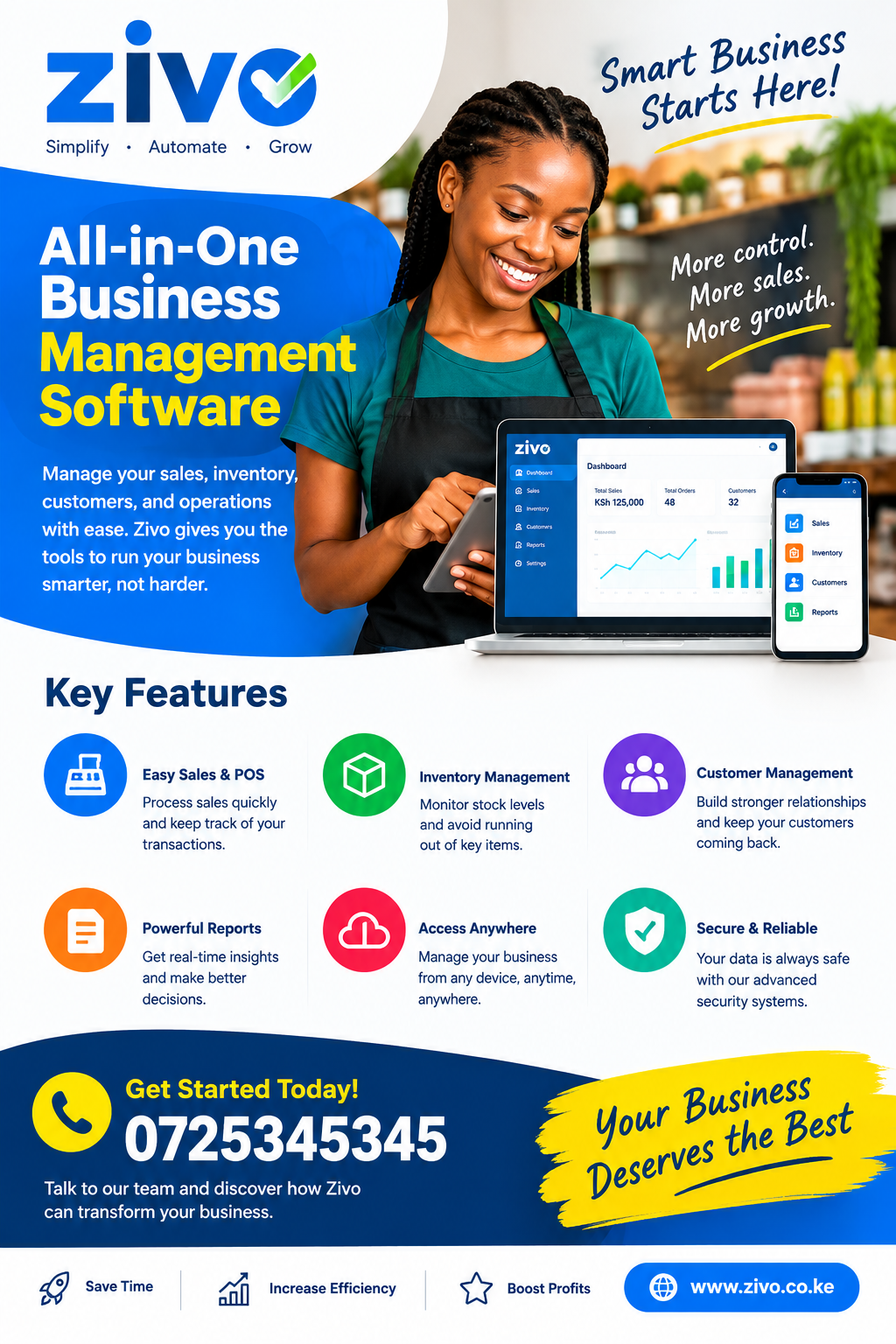
Supplier Payment Scheduling Software Kenya: A Practical Guide to Better Cash Flow and Supplier Relationships
Managing supplier payments is one of the most important responsibilities in a growing business. A company may generate sales, receive customer payments and maintain a healthy order book, yet still experience financial pressure because supplier invoices are paid at the wrong time. Some payments are forgotten, others are made before they are due, and some remain pending because managers cannot easily see which bills require attention. Supplier Payment Scheduling Software Kenya helps businesses organize these obligations, plan payment dates, monitor outstanding invoices and coordinate outgoing payments more effectively.
For Kenyan businesses, supplier payment planning is particularly important when dealing with multiple vendors, changing cash balances, M-Pesa transactions, bank transfers, credit arrangements and daily operating expenses. A retailer may need to pay wholesalers while preserving money for rent and staff salaries. A restaurant may have to settle food suppliers without affecting funds needed for utilities and wages. A distributor may receive customer payments at different times while managing several supplier credit periods.
Using Supplier Payment Scheduling Software Kenya can help businesses bring these responsibilities into one organized process. Instead of relying entirely on notebooks, spreadsheets, email reminders and individual employees’ memories, a business can maintain structured payment records and review upcoming obligations before making financial commitments.
This guide explains how supplier payment scheduling works, the problems it addresses, the features to consider, and the practical steps Kenyan businesses can take to improve payment planning. It also covers cash flow management, invoice verification, supplier communication, automation, reporting, security and common implementation mistakes.
1. What Is Supplier Payment Scheduling?
Supplier payment scheduling is the process of determining when a business should pay each supplier, how much it owes, which payment method it will use and what funds must be available before the payment date.
The process begins when a business receives goods or services and obtains an invoice. The invoice is checked against the relevant order or delivery record, approved by the appropriate employee and entered into the accounts payable records. The business then identifies the due date, payment terms and priority before placing the obligation on a payment schedule.
For example, a Nairobi-based electronics retailer might have three outstanding supplier invoices:
- A wholesaler invoice of KSh 85,000 due in five days.
- An equipment supplier invoice of KSh 42,000 due in ten days.
- A packaging supplier invoice of KSh 18,000 due in fourteen days.
The retailer needs to determine which payments can be made immediately, which should remain scheduled for their contractual due dates, and how much money should be reserved for other business expenses.
A well-organized process helps the retailer avoid overlooking an invoice or spending funds that are already committed to a supplier.
How software supports the process
Supplier Payment Scheduling Software Kenya provides a structured way to record supplier obligations, track due dates and review planned payments. Depending on the system, employees may also be able to record approvals, attach invoice documents, categorize expenses and monitor payment status.
The software does not automatically make every payment decision correctly. Its usefulness depends on accurate records, suitable approval rules and reliable information about available funds. However, it can make the payment process easier to monitor and control.
Supplier payment scheduling versus basic bookkeeping
Bookkeeping records financial transactions that have occurred and the obligations a business has incurred. Payment scheduling adds a forward-looking element by helping management determine when those obligations should be settled.
A bookkeeping record may show that a supplier is owed KSh 60,000. A payment schedule should also show when the amount is due, whether the invoice has been approved, whether the funds are available and whether the payment has already been initiated.
This distinction matters because a business needs to understand both its current financial position and its upcoming commitments.
2. Why Kenyan Businesses Need Better Supplier Payment Planning
Businesses frequently deal with suppliers before receiving full payment from their own customers. This creates a timing challenge even when the business is profitable.
A wholesale distributor may sell goods to customers on credit while its suppliers require payment within seven or fourteen days. A construction company may receive project payments in stages while purchasing materials continuously. A salon may need to restock beauty products while managing daily operating expenses.
Supplier Payment Scheduling Software Kenya can support these businesses by making upcoming financial obligations easier to review before money is committed elsewhere.
Preventing missed payment deadlines
A missed supplier payment can lead to follow-up calls, interrupted deliveries, strained relationships or penalties where the agreement provides for them.
The consequences depend on the supplier and the contract, but repeated delays can make future purchasing more difficult. A supplier might reduce the credit period, require deposits or request payment before releasing goods.
Payment reminders and a clear schedule help employees identify approaching deadlines before they become urgent.
Protecting working capital
Working capital supports routine business activities, including inventory purchases, wages, transport and utility bills. Paying every supplier immediately may leave insufficient money for other obligations.
On the other hand, delaying every payment until the last possible moment can create operational risks.
A balanced schedule allows managers to consider due dates, available cash, contractual terms and business priorities together.
Improving supplier confidence
Suppliers value customers who communicate clearly, respect agreed terms and provide reliable payment information.
A business does not necessarily need to pay every invoice early to maintain a good relationship. It needs to meet its agreed commitments and communicate promptly when circumstances change.
Supplier Payment Scheduling Software Kenya can help establish a consistent process for identifying obligations, preparing payment information and documenting completed transactions.
Supporting business growth
As a business expands, it may purchase from more suppliers, operate additional branches and employ more people. The payment process that worked for ten monthly invoices may become unreliable when the business handles hundreds.
A structured system helps create repeatable procedures that employees can follow as transaction volumes increase.
3. Common Supplier Payment Problems
Before selecting a payment scheduling system, businesses should understand where their current process is failing.
Forgotten invoices
Invoices may arrive through email, WhatsApp, printed documents or supplier portals. When employees store them in different places, some obligations may not enter the payment schedule.
A central invoice register reduces dependence on individual employees remembering which documents they received.
Duplicate payments
Duplicate payments can occur when two employees process the same invoice or when an invoice is recorded again because the original payment confirmation is difficult to find.
A supplier register, unique invoice references and payment history can help identify duplicates before money is sent.
Poor visibility of upcoming obligations
A business may know its current bank balance without knowing how much of that money is already committed to suppliers.
This creates a misleading impression of available cash. A balance of KSh 300,000 may appear comfortable until the business accounts for KSh 220,000 in supplier invoices due within the next week.
Supplier Payment Scheduling Software Kenya can help businesses organize those obligations into a schedule that management can review alongside other expected expenses.
Incomplete approval records
When payment approvals happen through informal conversations, it may be difficult to establish who authorized a transaction.
A documented approval workflow creates a clearer record of responsibility. It can also help businesses identify invoices that are waiting for confirmation rather than assuming they are ready for payment.
Inaccurate supplier information
Incorrect bank details, outdated contact information and inconsistent supplier names can create delays or payment errors.
Supplier records should be reviewed periodically, especially when payment instructions change. Any change to bank details should be independently verified through an established contact channel.
Unclear payment status
An invoice marked as paid in one spreadsheet may still be pending in the bank account. Conversely, a payment may have been completed while the accounts payable record remains outstanding.
Businesses need to distinguish between scheduled, approved, initiated, completed, failed and disputed payments. These statuses should reflect the actual process supported by the system.
4. Essential Features to Look For
Not every business requires a complicated financial management platform. The right features depend on transaction volume, the number of suppliers, approval requirements and existing accounting procedures.
When comparing Supplier Payment Scheduling Software Kenya, prioritize features that solve real operational problems rather than selecting a system simply because it has the longest feature list.
Centralized supplier records
The system should allow employees to maintain supplier names, contact details, payment terms and relevant account information in an organized location.
Useful supplier records may include:
- Official business name.
- Supplier contact person.
- Telephone number and email address.
- Agreed credit period.
- Preferred payment method.
- Relevant account details.
- Invoice and payment history.
- Notes about disputed transactions.
Access to sensitive information should be limited to authorized employees.
Invoice tracking
Invoice tracking allows a business to see which documents have been received, checked, approved, scheduled and settled.
Useful fields include invoice number, invoice date, due date, amount, supplier, purchase order reference and current status.
A search function is especially helpful when an employee needs to locate a specific invoice quickly.
Payment calendar
A payment calendar presents obligations by date. Managers can use it to identify busy payment periods, plan approvals and review upcoming cash requirements.
Calendar views are most useful when they show both individual invoices and total scheduled amounts for a selected period.
Approval workflows
Businesses may require different levels of approval depending on the transaction amount or expense category.
For example, a small recurring purchase may be approved by a department manager, while a large equipment invoice may require authorization from a finance manager or director.
The system should support approval rules appropriate to the organization’s size and internal controls.
Payment reminders
Reminders help employees identify invoices approaching their due dates.
A good reminder system should avoid creating unnecessary notifications. It should distinguish between an invoice awaiting approval and one that is approved but awaiting payment.
Payment history and reporting
A payment history allows employees to review what was paid, when it was paid and which invoice the transaction settled.
Reports can help management examine upcoming obligations, overdue invoices, payment timing and supplier spending.
5. Managing Cash Flow Before Scheduling Payments
Payment scheduling works best when it is connected to realistic cash flow planning. A calendar alone cannot guarantee that money will be available on every due date.
Businesses should review expected customer receipts, current bank balances, cash expenses and other commitments before finalizing their payment plans.
Prepare a short-term cash forecast
A weekly cash forecast can be sufficient for many small businesses, while companies with higher transaction volumes may need daily monitoring.
A simple forecast includes:
| Cash flow item | Example amount |
|---|---|
| Opening available cash | KSh 250,000 |
| Expected customer receipts | KSh 180,000 |
| Supplier payments | KSh 140,000 |
| Salaries and wages | KSh 90,000 |
| Rent and utilities | KSh 35,000 |
| Other operating expenses | KSh 20,000 |
| Forecast closing balance | KSh 145,000 |
These figures are illustrative, not a recommended financial allocation. Actual results depend on receipt timing, transaction fees, taxes and other obligations.
The closing balance should be compared with the minimum reserve the business needs to operate safely.
Distinguish profit from cash availability
A business can report a profit while struggling to pay suppliers because some customer invoices remain unpaid.
Similarly, a large customer payment may temporarily increase the bank balance even though the money is needed for upcoming inventory purchases.
Managers should not assume that accounting profit or the current account balance represents unrestricted cash.
Supplier Payment Scheduling Software Kenya can help organize payment commitments, but reliable forecasts still depend on realistic assumptions and updated financial information.
Use payment priorities carefully
When cash is limited, businesses should review contractual due dates, operational importance, supplier agreements and the consequences of delayed payment.
A practical priority assessment considers:
- Which invoices are already overdue?
- Which payments are due in the next few days?
- Which suppliers provide essential goods or services?
- Which invoices are disputed or awaiting verification?
- What other obligations must be protected?
- Which suppliers should be contacted before a delay occurs?
Priority should never be used as an excuse to ignore contractual obligations. When a payment cannot be made on time, the business should communicate with the supplier and agree on an appropriate way forward.
6. Integrating M-Pesa and Bank Payment Processes
Kenyan businesses commonly use a combination of mobile money, bank transfers and other payment arrangements. The most appropriate method depends on the supplier, transaction size, commercial agreement and available payment services.
A scheduling platform should help employees document the intended payment method and connect payment records to the relevant invoice.
Recording M-Pesa payments
Where M-Pesa is an approved payment channel, businesses should retain the transaction reference, amount, date, recipient information and invoice reference.
Employees should confirm that the payment went to the correct recipient and that the transaction status is successful.
An SMS confirmation should not be treated as a complete accounting record on its own if the business requires additional supporting documents or reconciliation.
Managing bank transfers
Bank transfers may be suitable for larger supplier invoices, recurring obligations and suppliers who prefer payment into a business account.
The payment process should include verification of account details, appropriate authorization and confirmation that the transfer has been completed.
Businesses should avoid sharing banking credentials or allowing an invoice approver to bypass established authorization controls.
Understanding integration limitations
Not every software product connects directly to M-Pesa or bank services. Some platforms provide payment scheduling and recordkeeping only, while others may support particular integrations.
Before purchasing a system, ask the provider which payment channels are supported, whether the integration is direct, what permissions are required and whether transaction confirmations return automatically.
Never assume that a payment will be executed automatically simply because it appears on a software calendar.
7. A Step-by-Step Supplier Payment Scheduling Process
A clear process makes payment scheduling easier to implement and maintain.
Step 1: Register every supplier invoice
Record each invoice as soon as it is received. Include the supplier name, invoice number, amount, issue date and payment due date.
Where available, link the invoice to the purchase order and delivery confirmation.
Step 2: Verify the invoice
Check that the goods or services were received and that the amount agrees with the relevant purchase records.
Confirm that discounts, agreed prices, quantities and applicable taxes have been recorded correctly.
Do not schedule an invoice for payment simply because a document has arrived.
Step 3: Identify exceptions
Flag duplicate invoices, disputed quantities, incorrect amounts and missing delivery confirmations.
Assign responsibility for resolving each exception. An invoice should not remain indefinitely in an unclear status.
Step 4: Obtain approval
Send the verified invoice through the required authorization process.
The approver should understand the supplier, purpose, amount and supporting documentation before approving payment.
Step 5: Review the cash forecast
Check upcoming customer receipts, available balances and other commitments.
Determine whether the planned payment fits the cash forecast and whether any timing adjustments need to be discussed with the supplier.
Step 6: Schedule the payment
Enter the intended payment date, payment method, amount and approval status.
If the software supports payment batches, group suitable invoices while retaining a clear reference for each transaction.
Step 7: Execute and verify payment
An authorized employee should initiate the transaction through the appropriate payment channel.
Afterward, verify the transaction status and retain the payment reference.
Step 8: Reconcile the invoice
Match the completed payment to the invoice and the relevant bank or mobile money record.
Update the invoice status only after confirming that the payment was successful.
Step 9: Review outstanding obligations
At the end of the week, examine unpaid invoices, upcoming due dates, failed transactions and unresolved disputes.
This review helps management identify issues before they affect supplier relationships.
8. Choosing Software for a Small or Growing Business
The right solution should match the business’s real needs, not its imagined future requirements.
A small retailer with ten suppliers may need a simple invoice register, due-date reminders and basic reports. A distributor with several branches may require multi-user access, detailed approvals and consolidated reporting.
When assessing Supplier Payment Scheduling Software Kenya, compare the system against a defined list of operational requirements.
Assess the number of users
Determine who needs to enter invoices, approve expenses, initiate payments and view reports.
Some employees may need access to invoice details without being permitted to change supplier banking information or authorize transactions.
Check multi-branch requirements
Businesses operating several branches should establish whether each location can submit invoices while finance staff review obligations centrally.
The system should make it possible to identify the branch responsible for an expense without losing visibility across the business.
Review usability
A system that employees find difficult to use may create incomplete records and inconsistent procedures.
Request a demonstration and test common tasks, including entering an invoice, locating a due date, recording an approval and retrieving a payment history.
Consider support and training
Ask how the provider handles onboarding, technical problems, software updates and user questions.
A clear support arrangement matters because payment records are part of the business’s daily financial operations.
Examine data export options
Businesses should understand how to export supplier records, invoice information and payment history.
Data portability is important for accounting reviews, audits, management reporting and future system changes.
9. Understanding the Cost of Supplier Payment Software
Software costs vary depending on the provider, subscription structure, number of users, transaction volume and available integrations.
Some products charge a recurring subscription. Others may use tiered packages or charge separately for particular features and services.
Businesses should obtain current quotations rather than relying on assumed market prices.
Compare the total cost
A useful cost comparison includes:
- Initial setup fees.
- Monthly or annual subscriptions.
- Additional user charges.
- Integration costs.
- Training and onboarding.
- Support fees.
- Data migration costs.
- Applicable transaction fees.
The cheapest package may not be the best value if it lacks approval controls or creates substantial manual work.
Estimate the operational benefit
A business can assess the value of software by estimating the time currently spent collecting invoices, following up approvals, preparing payment lists and reconciling transactions.
For example, if finance staff spend several hours each week searching for invoices and confirming payment status, centralizing records may reduce that workload.
However, savings should be measured after implementation. Software does not automatically eliminate errors, and the business must account for training and process changes.
Ask for a practical demonstration
Before committing, request a demonstration using realistic scenarios.
Ask the provider to show how the system handles a disputed invoice, a partially paid bill, a duplicate invoice and a failed payment.
These situations reveal more about the system’s practical value than a presentation focused exclusively on attractive dashboards.
10. Internal Controls and Financial Security
Supplier payments involve sensitive financial information, so security and accountability should be part of the selection process.
A scheduling system should support appropriate controls, but software alone cannot eliminate fraud or human error.
Separate responsibilities
Where practical, separate invoice creation, invoice approval and payment execution.
For example, one employee may enter an invoice, another may verify delivery, and an authorized manager may approve the payment.
Smaller businesses with limited staff can introduce alternative checks, such as independent review of bank statements and periodic examination of supplier records.
Verify changes to payment details
Fraudsters may impersonate suppliers and request that future payments be redirected to a different bank account.
Any change in payment instructions should be verified through a trusted contact method already on record, not solely through the message requesting the change.
High-value payments may require an additional approval step.
Use access permissions
Each employee should have only the permissions required for their responsibilities.
Review user access when employees change roles or leave the organization. Strong authentication should be used where available.
Maintain audit records
Audit records help establish who created, edited, approved or processed a payment-related entry.
Businesses should check whether the platform records relevant changes and how long those records remain available.
Protect financial data
Ask the provider about data encryption, backups, recovery procedures, access management and incident response.
Businesses should also maintain their own internal procedures for reporting suspicious transactions and handling compromised accounts.
11. Using Reports to Improve Supplier Management
Reports help managers identify patterns that may not be obvious when reviewing individual invoices.
A useful payment report should be understandable, accurate and relevant to business decisions.
Accounts payable ageing
An ageing report groups outstanding invoices according to how long they have remained unpaid or how far they are past their due dates.
Common categories include current invoices and those overdue by different periods, such as 1–30 days or 31–60 days. The exact categories should suit the business’s reporting needs.
This report helps finance staff identify old balances and investigate why particular invoices remain outstanding.
Upcoming payment obligations
A forward-looking report shows amounts due over the next week, fortnight or month.
Managers can compare these obligations against expected customer receipts and other expenses.
Supplier spending analysis
Supplier spending reports show how much the business purchases from individual suppliers over a selected period.
This information may support budgeting, purchasing decisions and supplier negotiations.
It can also reveal unusual changes that require investigation.
Payment timeliness
A payment timeliness report compares actual payment dates with agreed due dates.
The business can use the results to identify recurring delays and examine whether the underlying causes are late approvals, cash shortages, missing documentation or operational inefficiencies.
Exception reports
Exception reports highlight items requiring action, such as:
- Invoices without approval.
- Payments past their due dates.
- Duplicate invoice references.
- Failed transactions.
- Unmatched payments.
- Missing supporting documents.
- Supplier records requiring verification.
An exception report is useful only when someone is responsible for reviewing and resolving the items it identifies.
12. Practical Examples Across Kenyan Industries
Different industries have different payment patterns, but the basic principles of invoice verification, scheduling and reconciliation remain similar.
Retail businesses
Retailers purchase inventory from wholesalers, distributors and manufacturers. Payment deadlines can vary depending on the supplier relationship and credit agreement.
A payment schedule helps the owner distinguish between stock purchases due immediately and invoices that have longer credit periods.
It can also support planning around seasonal demand, when inventory purchases may rise before sales receipts increase.
Restaurants and food businesses
Restaurants purchase ingredients, beverages, packaging and cleaning materials. Some suppliers deliver frequently, while others invoice weekly or monthly.
A centralized schedule can help the restaurant review outstanding bills before placing additional orders.
Management should also consider the perishability of inventory, delivery frequency and the financial consequences of a supplier interruption.
Construction companies
Construction businesses may purchase cement, steel, timber, fittings, equipment and specialist services from multiple suppliers.
Payment obligations may depend on delivery milestones, purchase orders or agreed project terms.
A scheduling process can help finance staff associate invoices with the relevant project and confirm that the required goods or services were received.
Transport and logistics businesses
Transport operators may purchase fuel, spare parts, tyres, maintenance services and vehicle-related supplies.
Payment schedules help distinguish recurring expenses from occasional repairs and larger maintenance obligations.
Where costs are associated with particular vehicles or routes, recording the relevant reference can improve expense analysis.
Professional service firms
Consultancies and other service providers may pay for software subscriptions, office supplies, outsourced services and specialist contractors.
The main challenge may be managing recurring invoices and ensuring that the business continues to pay for services it actually uses.
A regular review can identify duplicate subscriptions, outdated supplier records and services that are no longer needed.
Multi-branch businesses
Businesses with multiple locations often face a coordination problem: branches incur expenses, but finance teams need a consolidated view of what is due.
A suitable system can standardize invoice submission and approval while allowing management to compare expenditure across locations.
The company should decide which decisions belong to branch managers and which require central authorization.
13. Common Implementation Mistakes to Avoid
Even a suitable software product can deliver poor results when the implementation process is weak.
Entering incomplete data
A payment schedule is only as reliable as its underlying records.
Missing due dates, incorrect invoice amounts and duplicate supplier names can undermine reporting.
Before importing existing records, remove duplicates, standardize supplier names and confirm important outstanding balances.
Automating an unreliable process
Automation can make a bad process faster without making it better.
If employees routinely approve invoices without checking delivery documents, automating those approvals may increase risk.
Review the current process before deciding which steps should be automated.
Ignoring employee training
Employees need to understand how invoices are entered, who approves them, how disputes are handled and when payment records are updated.
Training should cover ordinary tasks as well as exceptions.
Assuming scheduled means paid
A scheduled payment is a planned transaction, not proof that money has reached the supplier.
The business should retain clear distinctions between scheduled, approved, initiated and completed payments.
Failing to reconcile transactions
Unreconciled payments can leave invoices incorrectly marked as outstanding or settled.
Regular reconciliation is essential for accurate accounts payable records.
Choosing unnecessary features
A business may pay for advanced functionality that it rarely uses while neglecting basic invoice tracking and approval requirements.
Start with essential needs and expand the system as the business grows.
14. How to Measure the Success of Payment Scheduling
After implementation, businesses should assess whether the new process is producing measurable improvements.
Useful indicators include:
On-time payment rate: The proportion of invoices paid by their agreed due dates.
Overdue invoice value: The total amount outstanding beyond the relevant due dates.
Invoice processing time: The average time between invoice receipt and approval.
Duplicate payment incidents: The number of confirmed duplicate payments over a defined period.
Reconciliation completion: The proportion of completed payments matched to the appropriate invoices and financial records.
Supplier dispute resolution time: The time taken to investigate and resolve invoice discrepancies.
Forecast accuracy: The difference between forecast cash balances and actual results.
Establish a baseline before introducing the software. Review the same indicators after implementation to identify improvements and areas that still require attention.
For example, if overdue invoices decline but invoice processing time remains high, the business may need to improve its approval process rather than replace its payment calendar.
The objective is not simply to produce more reports. It is to use reliable information to make better decisions.
15. A Practical Implementation Plan
Businesses can introduce supplier payment scheduling gradually rather than attempting to change every financial process at once.
Week one: Review the existing process
Document how invoices arrive, who checks them, who approves payments and how completed transactions are recorded.
Identify the most common problems and agree on the improvements that matter most.
Week two: Clean supplier and invoice records
Compile outstanding invoices, verify due dates and remove duplicate entries.
Confirm supplier contact information and establish a process for verifying changes to payment instructions.
Week three: Configure the system
Set up users, access permissions, invoice categories, approval rules and payment statuses.
Test the process with a small group of real business transactions before expanding its use.
Week four: Train employees and review results
Train relevant staff and establish a regular review of upcoming payments.
Check for missing information, duplicate records and unclear responsibilities. Adjust the process based on actual experience.
After the initial implementation, continue reviewing the system regularly. Supplier terms, transaction volumes and business priorities can change over time.
16. Frequently Asked Questions
What is Supplier Payment Scheduling Software Kenya?
It is software used to organize supplier invoices, payment due dates, approvals and planned outgoing payments for businesses operating in Kenya. Depending on the product, it may also provide cash flow reports, supplier records, reminders and payment reconciliation tools.
How does supplier payment scheduling improve cash flow?
It helps businesses see upcoming financial commitments before spending available funds elsewhere. Managers can compare payment deadlines with expected customer receipts and operating expenses, then plan payments according to contractual terms and available cash.
Can small businesses benefit from supplier payment software?
Yes. Small businesses can benefit when they have several suppliers, recurring invoices or multiple employees involved in purchasing and payments. A simple solution may be sufficient if it provides reliable invoice tracking, due-date reminders and clear payment records.
Does the software automatically pay suppliers?
Not necessarily. Some systems support payment initiation or particular integrations, while others focus on scheduling and recordkeeping. Businesses should confirm the provider’s supported payment channels, authorization requirements and transaction capabilities before purchasing.
Can supplier payment software work with M-Pesa?
Some products may support M-Pesa-related workflows or integrations, while others may require employees to record transactions manually. Confirm the exact integration, available transaction data and reconciliation capabilities with the provider.
How does the system help prevent duplicate payments?
It can centralize invoice records, maintain invoice references and show previous payment activity. Some systems also provide duplicate warnings. Employees should still verify invoices and investigate suspicious entries before authorizing payment.
What should a business check before choosing a supplier payment system?
Review invoice management, payment calendars, approval workflows, supplier records, reporting, access controls, integration options, customer support and total cost. Test realistic scenarios before committing to a subscription.
Is supplier payment scheduling suitable for businesses with several branches?
Yes, provided the selected product supports the required multi-user or multi-branch workflow. Businesses should confirm whether branch expenses can be submitted centrally, how approvals are assigned and whether management can review consolidated payment obligations.
How often should a supplier payment schedule be reviewed?
Many businesses benefit from a weekly review, with more frequent monitoring when transaction volumes are high or cash balances are tight. Urgent invoices, failed transactions and material changes in expected receipts should be reviewed promptly.
Does payment scheduling replace accounting software?
Not always. A scheduling tool may complement an accounting system rather than replace it. Businesses should establish which platform holds the authoritative financial records and how invoices, payment references and reconciliation information move between systems.
17. Making Supplier Payments a More Reliable Business Process
Supplier payments influence purchasing continuity, cash availability and the confidence suppliers have in a business. When invoices are scattered across email accounts, spreadsheets and paper files, finance teams spend valuable time locating documents and checking what needs to be paid.
A structured process makes it easier to identify obligations, verify invoices, obtain approval, plan payment dates and confirm completed transactions. It also gives management a clearer view of upcoming cash requirements.
Supplier Payment Scheduling Software Kenya can be part of that process when its features match the business’s operational requirements. The most important considerations are accurate invoice records, realistic cash forecasts, appropriate approval controls, reliable reconciliation and clear responsibility for every outstanding obligation.
Kenyan businesses should also evaluate their existing payment methods and determine whether software integrations are necessary. M-Pesa and bank transactions should be documented carefully, while changes to supplier payment instructions should be verified through trusted channels.
Before choosing a platform, review the current payment process, identify the main problems and compare available solutions against specific requirements. Request a demonstration, understand the full cost and check whether the software supports the reports and controls the business needs.
The objective is not to automate every financial decision. It is to help employees make informed decisions using accurate, accessible information.
With consistent procedures and appropriate technology, businesses can reduce avoidable payment delays, improve financial visibility and maintain more dependable supplier relationships while protecting the cash needed for daily operations.
Supplier Payment Scheduling Software Kenya
Supplier Payment Scheduling Software Kenya
Supplier Payment Scheduling Software Kenya
Supplier Payment Scheduling Software Kenya
Supplier Payment Scheduling Software Kenya
Supplier Payment Scheduling Software Kenya
Supplier Payment Scheduling Software Kenya
Supplier Payment Scheduling Software Kenya
Supplier Payment Scheduling Software Kenya
Supplier Payment Scheduling Software Kenya
Supplier Payment Scheduling Software Kenya
Supplier Payment Scheduling Software Kenya
Supplier Payment Scheduling Software Kenya
Supplier Payment Scheduling Software Kenya
Supplier Payment Scheduling Software Kenya
Supplier Payment Scheduling Software Kenya
Supplier Payment Scheduling Software Kenya
Supplier Payment Scheduling Software Kenya
Supplier Payment Scheduling Software Kenya
Supplier Payment Scheduling Software Kenya
Supplier Payment Scheduling Software Kenya
Supplier Payment Scheduling Software Kenya
Supplier Payment Scheduling Software Kenya
Supplier Payment Scheduling Software Kenya
Supplier Payment Scheduling Software Kenya
Supplier Payment Scheduling Software Kenya
Supplier Payment Scheduling Software Kenya
Supplier Payment Scheduling Software Kenya
Supplier Payment Scheduling Software Kenya
Supplier Payment Scheduling Software Kenya
Supplier Payment Scheduling Software Kenya
Supplier Payment Scheduling Software Kenya
Supplier Payment Scheduling Software Kenya
Supplier Payment Scheduling Software Kenya
Supplier Payment Scheduling Software Kenya
Supplier Payment Scheduling Software Kenya
Supplier Payment Scheduling Software Kenya
Supplier Payment Scheduling Software Kenya
Supplier Payment Scheduling Software Kenya
Supplier Payment Scheduling Software Kenya
Supplier Payment Scheduling Software Kenya
Supplier Payment Scheduling Software Kenya
Supplier Payment Scheduling Software Kenya
Supplier Payment Scheduling Software Kenya
Supplier Payment Scheduling Software Kenya