
WhatsApp Sales CRM Kenya: The Complete Guide to Growing Sales Through WhatsApp
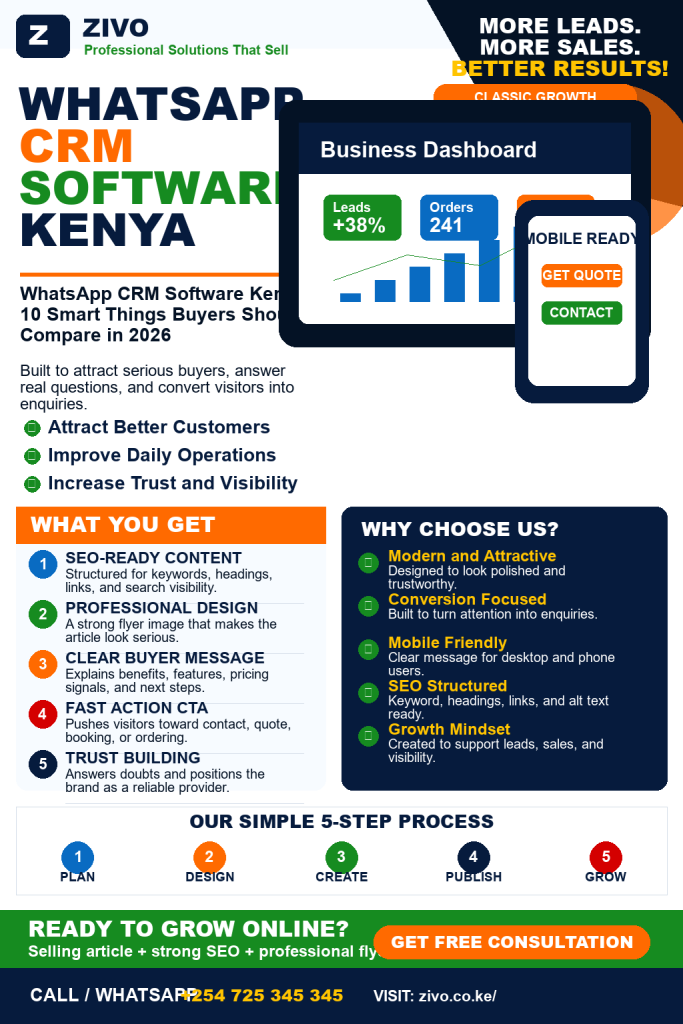
WhatsApp has become one of the most important communication channels for businesses in Kenya. Customers use it to ask questions, request prices, compare products, make inquiries, share documents, and communicate with sales teams. For businesses, this creates a major opportunity to turn everyday conversations into measurable sales.
However, managing sales conversations through ordinary WhatsApp chats can become difficult as a business grows. Messages can be missed, customer details can become scattered, sales representatives may forget to follow up, and managers may have little visibility into the sales process.
This is where a WhatsApp sales CRM Kenya solution can make a major difference.
A WhatsApp sales CRM combines customer relationship management with WhatsApp communication. Instead of treating WhatsApp as just a messaging application, businesses can use it as part of a structured sales process.
For Kenyan businesses, this can mean managing leads, conversations, follow-ups, sales pipelines, customer information, automated messages, and team activities from a centralized platform.
This guide explains how WhatsApp CRM technology works, why businesses need it, the features to look for, and how Zivo can help businesses turn WhatsApp conversations into organized sales opportunities.
What Is a WhatsApp Sales CRM?
A WhatsApp sales CRM Kenya platform is a customer relationship management system that helps businesses manage sales conversations and customer relationships through WhatsApp.
Traditional CRM systems help businesses store customer information, track leads, manage sales opportunities, and monitor customer interactions.
A WhatsApp-enabled CRM adds another important layer: direct communication through WhatsApp.
This means a sales representative can communicate with a customer while the business maintains structured records of the conversation and sales journey.
Instead of having customer information spread across WhatsApp chats, notebooks, spreadsheets, email accounts, and different applications, the business can bring important information into one organized system.
A modern system can help businesses:
- Capture leads
- Store customer information
- Organize WhatsApp conversations
- Assign leads to sales representatives
- Track sales opportunities
- Schedule follow-ups
- Automate repetitive messages
- Monitor sales performance
- Manage customer inquiries
- Analyze conversations
- Improve response times
The main goal is simple: make WhatsApp conversations easier to manage and turn more customer conversations into sales.
Why WhatsApp Is Important for Kenyan Businesses
WhatsApp is already part of everyday communication in Kenya.
Customers are comfortable using WhatsApp to contact businesses because it is convenient, familiar, and accessible through smartphones.
A customer looking for a product may prefer to send a WhatsApp message rather than fill out a long website form.
A potential buyer may ask for a price through WhatsApp.
A customer may send a screenshot of a payment confirmation.
A real estate prospect may request property photos.
A retailer may receive product questions through WhatsApp.
A school may communicate with parents.
An insurance company may answer customer questions.
A travel company may handle booking inquiries.
All these interactions can become sales opportunities.
The challenge is organizing them.
This is why a WhatsApp sales CRM Kenya platform can be particularly valuable for businesses that already receive a large number of customer messages.
The Problem With Managing Sales Through Ordinary WhatsApp
WhatsApp is excellent for communication, but ordinary WhatsApp chats are not designed to function as a complete sales management system.
Imagine a company with five sales representatives.
Each salesperson has their own phone and WhatsApp conversations.
A customer sends an important inquiry on Monday.
The salesperson becomes busy and forgets to respond.
Another customer asks for a quotation.
The message gets buried under newer conversations.
A third customer says they will buy next week.
Nobody records the follow-up date.
A manager then asks, “How many active leads do we have?”
The sales team may not have an accurate answer.
A WhatsApp sales CRM Kenya platform solves this problem by turning conversations into structured sales records.
Instead of relying on memory, the business can create a process for capturing, assigning, following up, and converting leads.
Centralizing Customer Conversations
One of the biggest benefits of CRM technology is centralization.
Businesses can receive messages from many customers without forcing the sales team to search through separate devices.
A centralized system can help teams organize conversations based on customer, sales representative, product, stage, or priority.
For example, a business could have sales stages such as:
New Lead
Contacted
Qualified
Quotation Sent
Negotiation
Ready to Buy
Won
Lost
This makes it easier to understand where every prospect is in the sales process.
A WhatsApp sales CRM Kenya solution can therefore turn WhatsApp from an informal communication channel into an organized sales pipeline.
Lead Management Through WhatsApp
Lead management is one of the most important parts of sales.
A lead is a potential customer who has shown interest in a product or service.
Leads can come from advertisements, websites, social media, referrals, landing pages, QR codes, or direct WhatsApp messages.
Without a structured process, some leads may never receive proper follow-up.
A CRM can help capture important lead information such as:
- Customer name
- Phone number
- Product of interest
- Source of the lead
- Sales representative
- Lead status
- Expected purchase date
- Follow-up date
- Notes
- Previous interactions
This gives sales teams a clearer picture of their opportunities.
With a WhatsApp sales CRM Kenya platform, businesses can also connect customer conversations with their broader sales records.
Automated Lead Assignment
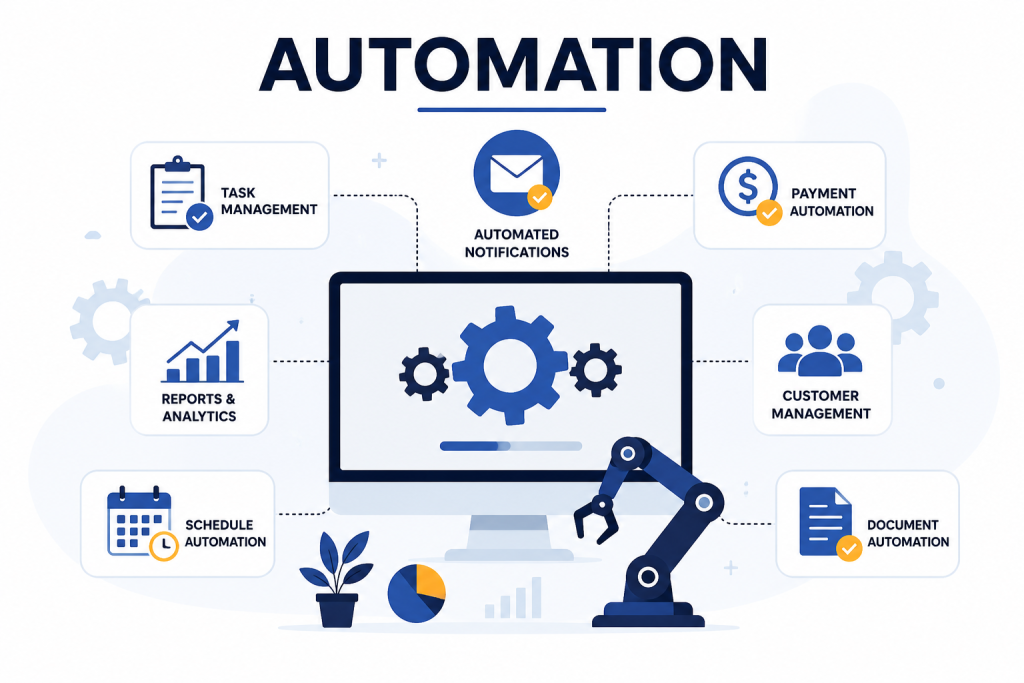
When many customers contact a business at the same time, deciding who should handle each conversation can become difficult.
A CRM can help automate lead assignment.
For example, leads could be distributed based on:
- Sales representative
- Product category
- Location
- Customer type
- Language
- Availability
- Sales territory
This prevents customers from being left without a response.
It can also make sales teams more accountable because managers can see which representative is handling each lead.
WhatsApp Sales Follow-Up
Many sales are lost not because the customer was uninterested, but because nobody followed up.
A customer may say:
“I will confirm tomorrow.”
“Let me discuss it with my partner.”
“I need to check my budget.”
“Call me next week.”
These are not necessarily lost opportunities.
They are follow-up opportunities.
A WhatsApp sales CRM Kenya system can help sales teams record these commitments and schedule reminders.
When the follow-up date arrives, the salesperson can receive a notification.
This reduces reliance on memory.
Why Follow-Up Matters
Sales follow-up is especially important for businesses with products or services that require consideration before purchase.
Examples include:
- Real estate
- Insurance
- Education
- Travel
- Financial services
- Automobiles
- Construction
- Software
- Professional services
- Electronics
- Furniture
A customer may not buy immediately.
A structured follow-up process keeps the conversation active without making the customer feel forgotten.
Automated WhatsApp Messages
Automation can save sales teams considerable time.
A business can create approved message templates for common situations.
For example:
“Thank you for contacting us. How can we help you today?”
“Your quotation is ready.”
“We are following up regarding your inquiry.”
“Would you like to schedule a demonstration?”
“Thank you for choosing our service.”
Automated messages should be carefully designed so they remain useful and relevant.
The objective is not to send unnecessary messages.
The objective is to help customers receive timely information while allowing sales representatives to focus on conversations that require human attention.
Shared WhatsApp Sales Inbox
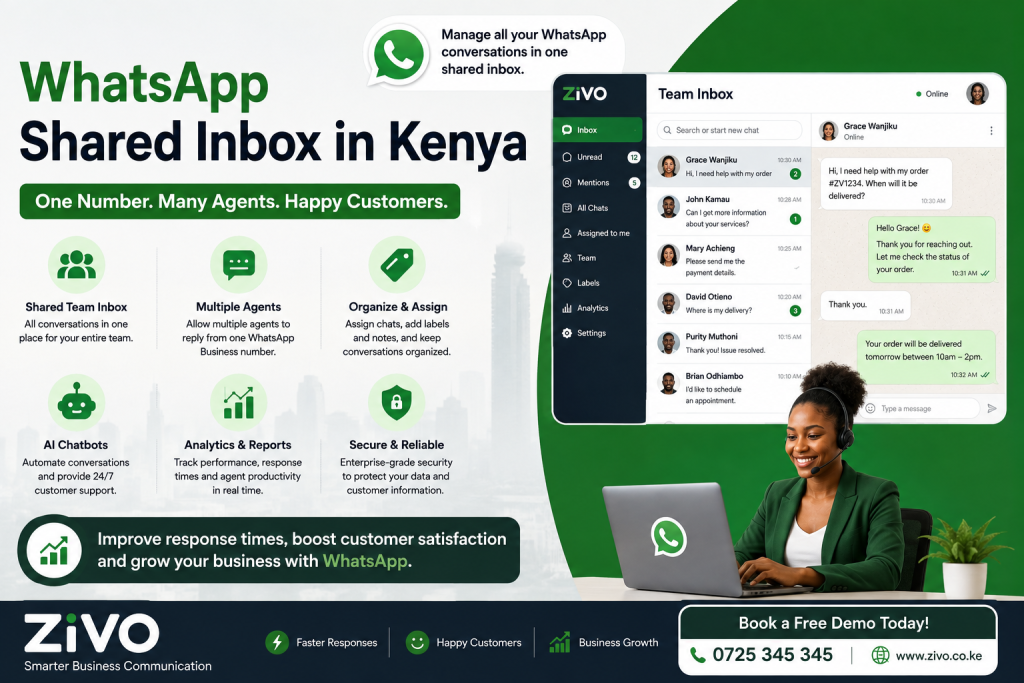
A shared inbox can be useful for businesses with multiple sales representatives.
Instead of every salesperson managing separate customer conversations, the team can work from a centralized environment.
This can help prevent duplicate responses.
It can also make it easier for managers to monitor conversations and reassign customers when a salesperson is unavailable.
A WhatsApp sales CRM Kenya solution with a shared inbox can therefore improve teamwork and customer response times.
Managing Sales Pipelines
A sales pipeline represents the journey a customer takes from initial inquiry to purchase.
For example:
Lead → Qualification → Product Interest → Quotation → Negotiation → Purchase
Without a pipeline, sales representatives may know their individual customers but managers may struggle to understand overall sales performance.
CRM software creates visibility.
A manager can see how many leads are at each stage.
This can help answer important questions:
How many new leads came in this week?
How many received quotations?
How many are close to buying?
How many opportunities have gone cold?
How much potential revenue is in the pipeline?
These insights can improve sales planning.
WhatsApp CRM for Small Businesses
Small businesses often assume CRM software is only for large companies.
That is not true.
A small business may have only two or three salespeople but still lose customers because of poor follow-up.
For example, a furniture shop may receive 30 WhatsApp inquiries every day.
Customers ask about prices, colors, delivery, sizes, and availability.
If conversations are managed manually, salespeople can easily forget to follow up.
A WhatsApp sales CRM Kenya platform can give even a small business a structured approach to customer management.
WhatsApp CRM for Real Estate
Real estate is one of the industries that can benefit significantly from WhatsApp CRM.
Property buyers and tenants frequently communicate with agents through WhatsApp.
A prospect may ask for:
- Property photos
- Location
- Price
- Amenities
- Payment terms
- Viewing dates
- Availability
A real estate agent may manage dozens of prospects simultaneously.
CRM technology can organize these inquiries and help agents follow up.
A WhatsApp sales CRM Kenya platform can also help real estate teams track prospects based on property interest and buying stage.
WhatsApp CRM for E-Commerce
Online retailers can also benefit from WhatsApp sales management.
Customers may ask:
“Is this product available?”
“How much is delivery?”
“Do you have another color?”
“Can I pay through M-Pesa?”
“Can you deliver to Mombasa?”
These questions can represent immediate sales opportunities.
A CRM helps the business track these conversations and prevent potential customers from being forgotten.
WhatsApp CRM for Schools and Education Businesses
Educational institutions and training businesses often receive inquiries through WhatsApp.
Potential students may ask about:
- Courses
- Fees
- Admission requirements
- Class schedules
- Online learning
- Registration
- Certificates
A CRM can help institutions organize these inquiries and guide prospects through the enrollment process.
WhatsApp CRM for Insurance Businesses
Insurance sales often require several conversations.
Customers may ask for quotations, coverage information, payment options, or policy details.
A sales CRM can help agents track where each prospect is in the decision-making process.
Automated reminders can also help agents follow up with prospects who requested quotations but have not completed the process.
WhatsApp CRM for Financial Services
Financial service providers also receive large volumes of customer inquiries.
Customers may ask about loans, savings products, investments, insurance, or other services.
Because these conversations can contain important customer information, businesses should ensure that their CRM and communication processes follow applicable privacy and security requirements.
Improving Sales Team Accountability
Managers need to know whether sales teams are following up with customers.
A WhatsApp sales CRM Kenya system can provide visibility into activities such as:
- Leads received
- Leads assigned
- Messages sent
- Follow-ups completed
- Opportunities created
- Quotations sent
- Deals won
- Deals lost
This allows managers to identify both high-performing processes and areas that need improvement.
Sales Analytics and Reporting
Data is one of the most valuable benefits of CRM software.
A business can analyze its sales activity and identify trends.
Reports might show:
- Number of leads
- Conversion rate
- Average response time
- Sales by representative
- Sales by product
- Lead sources
- Lost opportunities
- Follow-up performance
- Revenue pipeline
This information helps businesses make decisions based on actual sales activity rather than assumptions.
Faster Customer Response
Customers expect fast responses.
If a prospect sends a WhatsApp message and waits for several hours while a competitor responds within minutes, the competitor may win the sale.
A WhatsApp sales CRM Kenya system can help businesses improve response times by centralizing conversations, assigning leads, and notifying sales representatives about new inquiries.
Faster responses can create a better customer experience.
Integrating WhatsApp With Other Business Processes
WhatsApp should not operate in isolation.
The most useful CRM systems connect conversations with other business activities.
For example:
WhatsApp → Lead → CRM → Quotation → Payment → Customer
This creates a more complete customer journey.
Depending on the software, businesses may also integrate CRM with websites, payment systems, marketing campaigns, customer support tools, and other applications.
Why Zivo Is Relevant for Kenyan Businesses
For businesses looking to organize WhatsApp conversations around sales, Zivo provides a platform focused on business communication, customer engagement, automation, and WhatsApp-based workflows.
A WhatsApp sales CRM Kenya approach can be particularly useful for organizations that already receive significant customer inquiries through WhatsApp but need better systems for managing those conversations.
Instead of treating every WhatsApp message as an isolated conversation, businesses can create structured customer journeys.
This can help sales teams respond faster, follow up more consistently, and understand which conversations are generating business opportunities.
Choosing the Right WhatsApp CRM
Businesses should not choose software based only on the number of features.
Consider the following factors.
Ease of Use
Salespeople should be able to learn the system quickly.
If the platform is too complicated, employees may return to informal communication methods.
WhatsApp Integration
Check exactly how WhatsApp is integrated and what features are supported.
Automation
Look for useful automation that reduces repetitive work.
Lead Management
The system should make it easy to capture and organize prospects.
Pipeline Management
Sales teams need a clear way to track opportunities.
Reporting
Managers should have access to useful performance data.
Team Collaboration
Shared inboxes and lead assignment can improve teamwork.
Scalability
The platform should support business growth.
Customer Support
Good support can make implementation easier.
WhatsApp CRM and Customer Experience
Sales technology should not make conversations feel robotic.
Customers still want human interaction.
The best approach combines automation with human support.
Automation can handle repetitive tasks.
Salespeople can handle complex questions, negotiations, complaints, and relationship building.
A WhatsApp sales CRM Kenya platform should therefore be used to support sales representatives rather than completely replace them.
Protecting Customer Data
Customer data should be handled responsibly.
Businesses may store names, phone numbers, purchase information, conversations, quotations, and other details.
Before selecting a CRM platform, businesses should evaluate:
- Data security
- Access controls
- User permissions
- Authentication
- Data retention
- Backup procedures
- Privacy practices
Businesses should also ensure their customer communication practices comply with applicable Kenyan data protection requirements.
Common Mistakes Businesses Make With WhatsApp Sales
Using Personal Numbers
When sales representatives use personal WhatsApp accounts, customer information can become tied to individual employees.
This creates continuity problems when employees leave.
No Follow-Up System
A conversation is not a sales process.
Without reminders and pipeline stages, promising leads can be forgotten.
Sending Too Many Automated Messages
Automation should provide value.
Excessive messaging can frustrate customers.
No Sales Reporting
If managers cannot measure conversations and conversions, they cannot easily identify what is working.
Treating Every Lead the Same
Different customers have different needs.
CRM systems can help businesses segment and prioritize leads.
How to Implement WhatsApp CRM Successfully
Implementing a CRM should be treated as a business project.
Step 1: Define Your Sales Process
Identify how customers move from inquiry to purchase.
Step 2: Identify Your Lead Sources
Determine where WhatsApp leads come from.
Step 3: Create Sales Stages
Build a pipeline that reflects your actual sales process.
Step 4: Create Message Templates
Prepare useful responses for common questions.
Step 5: Assign Team Responsibilities
Determine who handles each type of inquiry.
Step 6: Train Employees
Show the sales team how to use the platform.
Step 7: Monitor Performance
Review response times, follow-ups, conversions, and customer feedback.
Step 8: Improve Continuously
Use data to identify bottlenecks and improve the sales process.
Measuring WhatsApp Sales Performance
Once a CRM is implemented, businesses should monitor key performance indicators.
Important metrics include:
Lead Response Time
How quickly does the sales team respond to new inquiries?
Lead Conversion Rate
What percentage of WhatsApp leads become customers?
Follow-Up Rate
How many prospects receive the required follow-up?
Sales Pipeline Value
How much potential revenue is currently being pursued?
Customer Acquisition Cost
How much does the business spend to acquire each customer?
Sales Cycle Length
How long does it take to convert a prospect into a customer?
These metrics can help managers understand whether WhatsApp is generating measurable business results.
The Future of WhatsApp Sales CRM Kenya
WhatsApp-based selling is likely to become even more important as businesses become increasingly digital.
Customers want convenience.
They want quick answers.
They want to communicate using channels they already understand.
Businesses therefore need systems that can meet customers where they are.
Artificial intelligence may also play a bigger role in the future.
AI assistants can help answer common questions, qualify leads, recommend products, summarize conversations, and route customers to the right sales representative.
However, human salespeople will remain important for relationship building and complex sales.
The future is likely to be a combination of automation and human communication.
Why Businesses Should Start Now using WhatsApp Sales CRM Kenya
Businesses that already receive many WhatsApp inquiries should not wait until conversations become impossible to manage.
A growing number of messages is a positive sign because it indicates customer interest.
The challenge is converting that interest into organized sales opportunities.
A WhatsApp sales CRM Kenya solution can provide the structure required to manage this growth.
Businesses can move from informal conversations to measurable sales processes.
Final Conclusion
WhatsApp has become an important sales channel for businesses across Kenya.
Customers use it to ask questions, request quotations, compare products, seek services, and make purchasing decisions.
However, businesses cannot depend on ordinary WhatsApp chats forever if they want to build a scalable sales operation.
A WhatsApp sales CRM Kenya solution can help transform conversations into structured sales opportunities.
It can help businesses capture leads, assign conversations, automate routine communication, schedule follow-ups, manage pipelines, monitor sales performance, and improve customer experiences.
For small businesses, this can mean fewer missed opportunities.
For growing companies, it can mean better team coordination.
For large organizations, it can mean greater visibility and automation.
The most important factor is not simply having WhatsApp.
It is having a process for turning WhatsApp conversations into measurable business results.
Businesses should therefore evaluate their current sales workflow and identify where leads are being lost.
Are customers waiting too long for responses?
Are salespeople forgetting follow-ups?
Are managers unable to see active opportunities?
Are customer conversations scattered across personal phones?
Are promising leads disappearing without explanation?
If the answer to any of these questions is yes, it may be time to introduce a structured CRM approach.
Zivo can help businesses build more organized WhatsApp-based customer communication and sales workflows. Learn more at Zivo.
With the right combination of WhatsApp, CRM technology, automation, analytics, and human sales expertise, Kenyan businesses can create a more efficient customer journey.
A WhatsApp sales CRM Kenya platform is not simply a messaging tool. It can become an important part of a modern sales strategy.
Businesses that organize their conversations today can create stronger customer relationships, improve follow-up, increase sales visibility, and build a foundation for sustainable growth.
Frequently Asked Questions
What is a WhatsApp sales CRM?
A WhatsApp sales CRM combines WhatsApp communication with customer relationship management tools, allowing businesses to organize leads, conversations, follow-ups, sales opportunities, and customer information.
Why should Kenyan businesses use WhatsApp Sales CRM Kenya?
WhatsApp is widely used by Kenyan consumers and businesses. CRM technology helps companies organize the large number of customer conversations that can come through the platform.
Can WhatsApp Sales CRM Kenya automate follow-ups?
Yes. Depending on the platform, businesses can create reminders, templates, workflows, and automated messages for specific stages of the customer journey.
Can multiple salespeople use one WhatsApp Sales CRM Kenya?
Many CRM platforms support team inboxes and multiple users, allowing businesses to distribute and manage customer conversations across sales representatives.
Can WhatsApp Sales CRM Kenya help increase sales?
CRM technology can improve lead organization, response times, follow-up consistency, and sales visibility. These improvements can contribute to better conversion rates.
Is WhatsApp Sales CRM Kenya suitable for small businesses?
Yes. Small businesses can benefit from centralized conversations, lead tracking, reminders, automation, and sales reporting.
Can a WhatsApp Sales CRM Kenya be used for real estate?
Yes. Real estate companies can use CRM systems to manage property inquiries, viewing requests, quotations, follow-ups, and prospects.
How do I choose the right WhatsApp Sales CRM Kenya?
Evaluate WhatsApp integration, ease of use, lead management, automation, team collaboration, sales pipeline features, reporting, security, scalability, pricing, and customer support.
Is WhatsApp Sales CRM Kenya suitable for WhatsApp sales?
Zivo is focused on business communication and WhatsApp-based customer engagement. Businesses can explore its platform to determine whether its available features match their sales and customer communication requirements.
Start Turning WhatsApp Conversations Into Sales
WhatsApp already gives businesses direct access to their customers. The next step is creating a system that makes those conversations organized, measurable, and actionable.
A CRM can help sales teams stop relying on memory and scattered chats.
It can help managers understand sales activity.
It can help businesses follow up consistently.
Most importantly, it can help companies create a smoother customer journey from the first WhatsApp message to the final purchase.
For businesses in Kenya looking to modernize their customer communication and sales operations, explore Zivo and discover how WhatsApp-focused business automation can support a more organized and scalable sales process.