
Customer Service Chatbot Kenya: The Complete Guide for Modern Businesses
Customer service has become one of the most important factors influencing how customers view a business. People want fast answers, convenient communication, and support whenever they need it. As more Kenyan businesses move their operations online, traditional customer support methods are increasingly being combined with automation.
A customer service chatbot Kenya solution can help businesses respond to customers automatically through channels such as WhatsApp, websites, and other digital platforms. Instead of requiring an employee to answer every basic question manually, a chatbot can handle common requests, provide information, collect customer details, and transfer complex conversations to human agents.
For businesses dealing with hundreds or thousands of customer inquiries, this technology can significantly improve how support teams operate.
A customer service chatbot Kenya can operate around the clock, respond within seconds, manage multiple conversations simultaneously, and reduce the amount of repetitive work handled by customer service employees.
This guide explains what customer service chatbots are, how they work, their benefits, common use cases, implementation considerations, challenges, and how Kenyan businesses can use them to improve customer experience.
What Is a Customer Service Chatbot?
A customer service chatbot Kenya is an automated software solution designed to communicate with customers and provide assistance without requiring a human employee to handle every interaction.
The chatbot can be connected to communication channels such as WhatsApp, a business website, Facebook Messenger, or other supported platforms.
Depending on its capabilities, it can answer frequently asked questions, provide product information, collect customer details, check order information, schedule appointments, generate leads, and direct customers to the appropriate department.
For example, a customer visiting a business website might ask:
“Do you deliver to Mombasa?”
The chatbot could immediately provide information about delivery areas.
Another customer might ask:
“What time do you open?”
The chatbot can provide business hours without requiring an employee to respond.
These simple interactions can save employees considerable time.
Why Customer Service Chatbots Are Becoming Important in Kenya
Kenyan consumers increasingly use digital channels to communicate with businesses.
Customers may contact companies through WhatsApp, websites, social media, email, and other online platforms.
This creates an opportunity for businesses to provide faster service, but it also creates a challenge.
More communication channels mean more messages to manage.
A business may receive inquiries from customers throughout the day while its customer service team has limited capacity.
A customer service chatbot Kenya can help address this challenge by handling routine questions automatically.
Instead of forcing employees to answer the same questions repeatedly, businesses can allow automation to handle common requests while employees focus on conversations that require human judgment.
How a customer service chatbot Kenya Works
A customer service chatbot Kenya typically works by receiving a customer’s message, understanding the request, and generating an appropriate response.
Traditional chatbots may rely on predefined questions, buttons, keywords, and decision trees.
More advanced chatbots can use artificial intelligence and natural language processing to understand different ways customers ask the same question.
For example, customers may ask:
“How much is delivery?”
“What’s the delivery fee?”
“How much do you charge for delivery?”
“Do I pay for shipping?”
A modern chatbot can potentially recognize that these questions have similar meanings and provide the appropriate information.
The system can also be connected to business databases, CRMs, payment systems, booking platforms, or other applications depending on the business requirements.
24/7 Customer Support
One of the biggest advantages of a customer service chatbot Kenya is continuous availability.
Human customer service teams usually work according to shifts or business hours.
A chatbot can continue responding after employees have gone home.
This can be valuable for businesses that receive inquiries at night, during weekends, or on public holidays.
A customer may want to know whether a product is available at 10 p.m.
Instead of waiting until the next morning, the customer can receive an automated answer immediately if the required information is available to the chatbot.
This improves convenience and can reduce customer frustration.
Faster Customer Responses
Customers generally do not like waiting for simple answers.
If someone asks a business about its opening hours, product availability, delivery options, or location, they may expect an immediate response.
A customer service chatbot Kenya can answer these types of questions within seconds.
Fast responses are particularly valuable when customers are comparing different businesses.
If one company responds immediately while another takes several hours, the faster company may have an advantage.
For this reason, chatbot automation can become an important part of a modern customer experience strategy.
Handling Multiple Conversations
Human agents have a natural limit to the number of conversations they can handle simultaneously.
When message volumes increase, businesses may need additional employees.
A customer service chatbot Kenya can handle many conversations simultaneously, allowing businesses to manage higher volumes without requiring a proportional increase in customer service staff.
For example, an online retailer running a major promotion may suddenly receive hundreds of inquiries.
The chatbot can answer common questions about:
- Prices
- Product availability
- Delivery
- Payment options
- Return policies
- Order status
Human agents can then concentrate on complex issues.
Reducing Repetitive Customer Service Work
Customer service employees often answer the same questions every day.
Examples include:
“Where are you located?”
“What time do you open?”
“What payment methods do you accept?”
“Do you deliver?”
“How long does delivery take?”
“Do you have this product?”
A customer service chatbot Kenya can automate many of these repetitive interactions.
This allows employees to spend more time solving difficult problems and building relationships with customers.
Automation should not be viewed simply as a way to replace employees.
Instead, it can be used to remove repetitive work and allow human teams to focus on higher-value activities.
Customer Service Chatbots for WhatsApp
WhatsApp is an important communication channel for many businesses in Kenya.
Customers often prefer sending a WhatsApp message instead of making a phone call or filling out a form.
A customer service chatbot Kenya connected to WhatsApp can help businesses respond automatically to common customer questions.
For example, a customer could send:
“Hello, I want to know the price of your service.”
The chatbot can provide the relevant information.
The customer can then choose to speak with a sales representative if they need additional assistance.
This combination of automation and human support can create a smoother customer journey.
Customer Service Chatbots for E-Commerce
Online stores can receive many customer questions every day.
Customers may want to know:
- Product availability
- Prices
- Sizes
- Colors
- Delivery areas
- Payment methods
- Return policies
- Order status
A customer service chatbot Kenya can provide immediate answers to many of these questions.
For example, a customer can ask whether a particular product is available.
If the chatbot is connected to an inventory system, it may be able to provide current availability.
This reduces the workload on customer service employees and helps customers make purchasing decisions faster.
Customer Service Chatbots for Real Estate
Real estate companies also receive large numbers of inquiries.
Potential buyers and tenants may ask about:
- Property prices
- Locations
- Bedrooms
- Amenities
- Availability
- Viewing appointments
- Payment plans
A customer service chatbot Kenya can collect initial information from prospects before transferring them to an agent.
For example, the chatbot could ask:
“What type of property are you looking for?”
“What is your budget?”
“Which area do you prefer?”
“When would you like to move?”
The information can then be passed to a real estate representative.
This helps agents focus on more qualified prospects.
Customer Service Chatbots for Hotels
Hotels receive inquiries throughout the day.
Guests and potential guests may ask about:
- Room availability
- Rates
- Check-in times
- Check-out times
- Restaurant services
- Amenities
- Location
- Booking policies
A customer service chatbot Kenya can provide answers to common questions and potentially help customers begin the booking process.
Human hotel employees can then handle special requests, complaints, group reservations, and other complex matters.
Customer Service Chatbots for Financial Businesses
Banks, insurance companies, SACCOs, fintech companies, and other financial businesses can also use chatbot technology.
Customers may ask about products, services, application processes, operating hours, or general account information.
However, financial businesses need to pay particular attention to security and privacy.
A customer service chatbot Kenya used in financial services should be designed with appropriate authentication, access controls, data protection, and escalation procedures.
Sensitive transactions should be handled according to the organization’s security and regulatory requirements.
Customer Service Chatbots for Schools and Universities
Educational institutions receive many repetitive questions from students, parents, applicants, and staff.
Questions may concern:
- Admission
- Courses
- Fees
- Application deadlines
- Registration
- Class schedules
- Campus locations
- Accommodation
A customer service chatbot Kenya can provide immediate answers to common administrative questions.
This can reduce pressure on admissions and administration teams.
When a question requires human intervention, the chatbot can direct the person to the appropriate department.
Customer Service Chatbots for Healthcare Organizations
Healthcare organizations can use chatbots for administrative and general information.
For example, a chatbot can help customers find:
- Opening hours
- Clinic locations
- Appointment procedures
- Available services
- Contact information
A customer service chatbot Kenya should be carefully designed when used by healthcare organizations.
A chatbot should not be treated as a replacement for qualified healthcare professionals, particularly when customers have urgent or complex medical concerns.
Human escalation should always be available where appropriate.
Lead Generation Through Chatbots
Customer service and sales are increasingly connected.
A customer who asks a question may also be a potential buyer.
A customer service chatbot Kenya can help identify these opportunities by asking qualifying questions.
For example:
“What service are you interested in?”
“What is your budget?”
“When do you need the service?”
“Which location are you interested in?”
The chatbot can collect these details and send the lead to a sales representative.
This creates a bridge between customer support and sales.
Automated Customer Information Collection
Businesses often need information before they can provide assistance.
A customer may need to provide:
- Name
- Phone number
- Order number
- Account number
- Product
- Location
- Service required
A customer service chatbot Kenya can collect this information systematically.
Instead of an employee asking the same questions manually, the chatbot can gather the necessary information before the conversation reaches an agent.
This can reduce handling time.
Customer Service Chatbots and CRM Systems
A chatbot becomes more powerful when connected to a customer relationship management system.
A CRM stores customer information, sales opportunities, communication history, and other relevant data.
A customer service chatbot Kenya connected to a CRM can help businesses create a more complete view of the customer.
For example, when a returning customer contacts the company, the support team may be able to see previous interactions and relevant customer information.
This reduces the need for customers to repeat information.
Human Handover Is Important
Automation should never make customers feel trapped.
A good customer service chatbot Kenya should provide a clear way for customers to speak with a human when necessary.
For example, the chatbot can say:
“I can help with common questions. If you need to speak with an agent, select the option below.”
Human escalation is especially important for:
- Complaints
- Complex technical issues
- Sensitive matters
- Refund disputes
- Special requests
- Unusual situations
The best customer service strategy combines automation with human expertise.
Benefits of Customer Service Chatbots for Kenyan Businesses
There are many potential benefits to implementing a customer service chatbot Kenya.
1. Faster Responses
Customers receive answers quickly.
2. 24/7 Availability
The business can provide automated assistance outside normal working hours.
3. Lower Workload
Employees spend less time answering repetitive questions.
4. Higher Scalability
Businesses can manage increasing conversation volumes.
5. Better Lead Management
Potential customers can be captured and qualified automatically.
6. Consistent Information
Approved responses can be delivered consistently.
7. Better Customer Experience
Customers can get information through a convenient digital channel.
8. Improved Productivity
Employees can focus on complex and valuable tasks.
Improving Customer Experience With Automation
The purpose of a customer service chatbot Kenya should not simply be to reduce costs.
Customer experience should remain the main priority.
A good chatbot should be easy to use.
Customers should not have to navigate complicated menus.
The chatbot should provide clear answers.
When it cannot help, it should quickly connect the customer to a human.
Businesses should regularly review chatbot conversations to identify questions that the system cannot answer effectively.
This allows the chatbot to improve over time.
AI-Powered Customer Service Chatbots
Traditional chatbots often rely on predefined menus.
Artificial intelligence has expanded what chatbots can do.
An AI-powered customer service chatbot Kenya can potentially understand natural language, recognize the intent behind customer messages, and respond more flexibly.
For example, instead of requiring a customer to select “Order Status,” the customer could simply type:
“Where is my order?”
The AI system may recognize the customer’s intention and provide the appropriate response.
However, AI systems must still be monitored.
Businesses should ensure that important information is accurate and that sensitive requests are escalated appropriately.
Customer Service Chatbot vs Human Support
Chatbots and humans each have strengths.
A chatbot is strong at:
- Speed
- Repetition
- Availability
- Scalability
- Basic information
- Automated workflows
Human agents are strong at:
- Empathy
- Complex problem solving
- Negotiation
- Judgment
- Sensitive complaints
- Personalized assistance
A customer service chatbot Kenya should therefore complement human agents rather than eliminate human interaction completely.
The strongest customer service model is often a hybrid approach.
Cost Savings and Operational Efficiency
Customer support can become expensive as a company grows.
Businesses may need to hire additional agents to handle increased demand.
A customer service chatbot Kenya can help reduce the volume of routine conversations reaching human agents.
This does not mean that every interaction should be automated.
Instead, automation can be used to handle simple requests while employees focus on conversations that require expertise.
This can improve operational efficiency.
Improving Response Times
Response time is an important customer service metric.
Businesses can monitor:
- First response time
- Average response time
- Resolution time
- Customer satisfaction
- Number of escalations
A customer service chatbot Kenya can reduce first response time because customers receive an automated response immediately.
This can be particularly useful for businesses that receive inquiries outside working hours.
Customer Service Chatbots and Sales Conversion
Customer service interactions can directly influence sales.
Imagine a potential customer visits an online store and asks:
“Do you deliver to Kisumu?”
If the customer waits several hours for a response, they may leave.
A customer service chatbot Kenya can answer immediately.
The chatbot can then provide product information, delivery details, and potentially direct the customer toward completing a purchase.
Faster communication can help reduce missed opportunities.
Customer Service Chatbots and Data Collection
Every customer interaction can provide useful information.
Businesses can analyze conversations to understand:
- Common customer questions
- Popular products
- Frequent complaints
- Customer preferences
- Service problems
- Sales opportunities
A customer service chatbot Kenya can help collect structured information that businesses can use to improve their products and services.
For example, if hundreds of customers ask about the same missing feature, the business has evidence that the feature may deserve attention.
Security and Data Protection
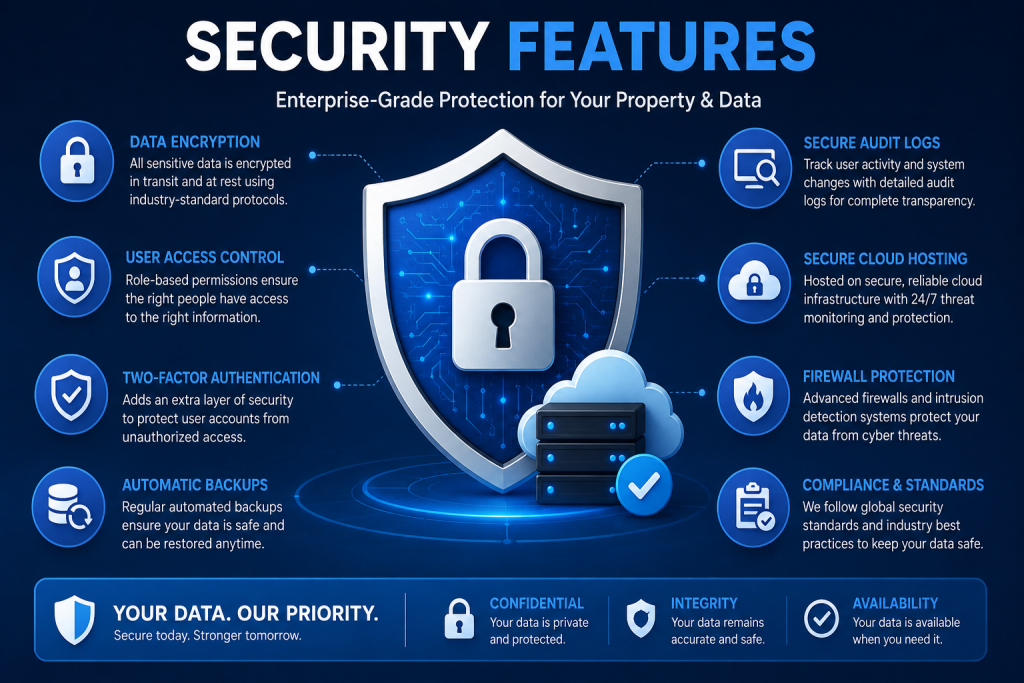
Businesses must take customer information seriously.
A chatbot may process names, phone numbers, order details, conversations, and other information.
A customer service chatbot Kenya should therefore be implemented with appropriate security measures.
Businesses should consider:
- Access controls
- User authentication
- Data encryption
- Secure integrations
- Data retention
- Backup procedures
- Privacy policies
- Staff permissions
Companies should also ensure their practices comply with applicable Kenyan data protection requirements.
Common Mistakes When Implementing a Chatbot
Businesses sometimes introduce chatbot technology without properly planning the customer journey.
Common mistakes include:
Making the chatbot too complicated
Customers should be able to find answers quickly.
Hiding the human option
Customers should be able to reach human support when necessary.
Providing outdated information
The chatbot’s knowledge must be reviewed regularly.
Automating everything
Some conversations require human judgment.
Ignoring customer feedback
Businesses should monitor conversations and improve the chatbot based on real customer needs.
Failing to train employees
Human agents need to understand how chatbot escalation works.
How to Implement a Customer Service Chatbot
Businesses can follow a structured process when introducing a customer service chatbot Kenya.
Step 1: Identify Common Questions
Review existing customer conversations.
Find questions that appear repeatedly.
Step 2: Select the Communication Channels
Decide whether the chatbot will operate on WhatsApp, a website, or other platforms.
Step 3: Create Knowledge Content
Prepare accurate answers to common questions.
Step 4: Build Conversation Flows
Design clear paths for customers.
Step 5: Add Human Escalation
Create a process for transferring complex conversations.
Step 6: Connect Business Systems
Where appropriate, connect the chatbot to CRM, inventory, booking, or other systems.
Step 7: Train Employees
Teach customer service teams how to manage escalated conversations.
Step 8: Test Before Launch
Test common questions, unusual questions, incorrect inputs, and escalation scenarios.
Step 9: Monitor Performance
Review chatbot conversations and customer feedback.
Step 10: Improve Continuously
Update responses and workflows based on actual customer behavior.
Choosing the Right Chatbot Solution
Not every chatbot platform is the same.
When evaluating a customer service chatbot Kenya, businesses should consider several factors.
WhatsApp Integration
If most customers use WhatsApp, reliable WhatsApp integration should be a major consideration.
AI Capabilities
Businesses should determine whether they need simple rule-based automation or more advanced AI.
CRM Integration
The chatbot should ideally work with the business’s customer management processes.
Analytics
Businesses need data to understand chatbot performance.
Human Handover
There should be an easy process for transferring conversations to agents.
Scalability
The solution should support future growth.
Security
Customer information should be appropriately protected.
Ease of Use
Employees should be able to manage the system without unnecessary complexity.
Cost
Businesses should compare implementation and ongoing costs with the expected benefits.
Industries That Can Benefit From Chatbots
Almost any customer-facing industry can potentially benefit from a customer service chatbot Kenya.
Examples include:
- Retail
- E-commerce
- Real estate
- Hospitality
- Travel
- Education
- Healthcare administration
- Insurance
- Financial services
- Telecommunications
- Logistics
- Professional services
- Automotive
- Construction
- Property management
The exact use cases differ by industry.
Measuring Chatbot Success
Businesses should establish measurable goals before implementing a customer service chatbot Kenya.
Useful metrics include:
Automated Resolution Rate
How many inquiries are solved without human intervention?
Response Time
How quickly does the chatbot respond?
Escalation Rate
How many conversations require human support?
Customer Satisfaction
Are customers happy with the experience?
Lead Conversion
How many chatbot interactions result in sales?
Cost Per Conversation
How much does the business spend to handle each interaction?
Customer Retention
Does better support encourage customers to continue using the business?
These measurements help determine whether automation is delivering real value.
The Future of Customer Service Chatbots in Kenya
The future of customer service is likely to become increasingly conversational.
Businesses will continue using digital communication channels to interact with customers.
Artificial intelligence will make chatbots more capable of understanding natural language and context.
Integration with CRM, payment, inventory, booking, and business management systems will make chatbots more useful.
A customer service chatbot Kenya may eventually become more than a question-and-answer tool.
It can become a digital assistant that helps customers complete tasks.
For example, customers could potentially use conversational interfaces to:
- Place orders
- Check balances
- Schedule appointments
- Track deliveries
- Request quotations
- Make bookings
- Submit support tickets
- Receive personalized recommendations
This represents a major shift from simple automated replies toward complete conversational business processes.
Why Businesses Should Start With Simple Automation
Businesses do not need to automate everything immediately.
A practical approach is to start with the most common customer questions.
For example, begin with:
- Business hours
- Location
- Pricing
- Delivery
- Product availability
- Contact information
Once the system performs well, the business can gradually add more advanced workflows.
This reduces implementation risks and gives employees time to adapt.
Customer Service Chatbot Kenya for Growing Businesses
Small businesses often begin with one person answering customer messages.
As the business grows, this becomes difficult.
More customers mean more conversations.
More conversations mean more opportunities for missed messages.
A customer service chatbot Kenya can help growing companies build a more structured support process before communication becomes overwhelming.
Instead of waiting until customer service becomes a major problem, businesses can introduce automation as part of their growth strategy.
Final Conclusion
Customer expectations are changing.
People want businesses to respond quickly, communicate conveniently, and provide support when they need it.
For Kenyan businesses, digital channels such as WhatsApp and websites provide powerful opportunities to improve customer communication.
A customer service chatbot Kenya can help businesses respond to common questions, support customers around the clock, automate repetitive tasks, collect information, qualify leads, and reduce pressure on human support teams.
However, chatbot technology should not be treated as a complete replacement for people.
Human customer service remains essential for complex problems, complaints, sensitive situations, negotiations, and personalized assistance.
The most effective approach is usually a combination of automation and human support.
The chatbot handles simple and repetitive interactions.
The human team handles complex and valuable conversations.
This creates a customer service model that is faster, more scalable, and more flexible.
Businesses should start by identifying their most common customer questions and deciding which interactions can safely be automated.
They should then select a platform that supports their communication channels, integrates with important business systems, provides analytics, protects customer data, and allows smooth human escalation.
As artificial intelligence continues to improve, the role of the customer service chatbot Kenya will become even more important.
Businesses that adopt conversational technology strategically can improve response times, reduce repetitive workloads, capture more sales opportunities, and create better customer experiences.
The goal is not simply to have a chatbot.
The goal is to build a customer service system that makes it easier for customers to get help and easier for employees to provide it.
With the right strategy, a customer service chatbot Kenya can become an important part of a modern digital customer experience.
Frequently Asked Questions
What is a customer service chatbot?
A customer service chatbot is software that automatically communicates with customers and provides answers, information, and assistance through digital channels.
Is a customer service chatbot useful for Kenyan businesses?
Yes. Businesses that receive large numbers of customer inquiries through WhatsApp, websites, or other digital channels can use chatbots to automate routine interactions.
Can a chatbot work 24/7?
Yes. A properly configured chatbot can provide automated assistance outside normal business hours.
Can a chatbot replace human customer service?
A chatbot can handle many routine interactions, but human agents remain important for complex, sensitive, and unusual customer issues.
Can a chatbot work on WhatsApp?
Yes. Businesses can implement chatbot solutions that operate through WhatsApp, subject to the available integration and platform requirements.
Can chatbots generate sales leads?
Yes. A chatbot can ask qualifying questions, collect contact information, provide product information, and transfer promising leads to sales representatives.
How much does a chatbot cost?
The cost varies depending on the platform, number of conversations, integrations, AI capabilities, development requirements, and ongoing support.
Is customer data safe with a chatbot?
Security depends on how the chatbot and connected systems are designed. Businesses should evaluate security controls, data handling practices, permissions, and applicable privacy requirements before implementation.
What should a chatbot do when it cannot answer?
It should provide a clear path to human assistance rather than leaving the customer without a solution.
What is the best way to implement a chatbot?
Start with common repetitive questions, create clear conversation flows, provide human escalation, test the system, monitor performance, and continuously improve it using customer feedback.
Start Modernizing Your Customer Service
The way businesses communicate with customers is changing.
Customers no longer want to wait unnecessarily for simple answers. They want convenient communication through channels they already use.
A customer service chatbot Kenya can help businesses meet these expectations while allowing employees to focus on more complex customer needs.
Whether the business operates in retail, real estate, hospitality, education, financial services, e-commerce, logistics, or professional services, chatbot technology can create opportunities to improve communication.
The key is to use automation strategically.
Automate repetitive questions.
Provide immediate information.
Capture useful customer details.
Connect conversations with business systems.
And always give customers access to human assistance when they need it.
When these elements work together, businesses can create a customer service experience that is faster, more responsive, and more scalable.
The future of customer service is not simply about replacing people with technology.
It is about giving people better technology so they can serve customers more effectively.
For businesses ready to modernize their customer communication, investing in a customer service chatbot Kenya can be an important step toward building a stronger digital customer experience.