
WhatsApp Business Solution: The Complete Guide for Modern Businesses
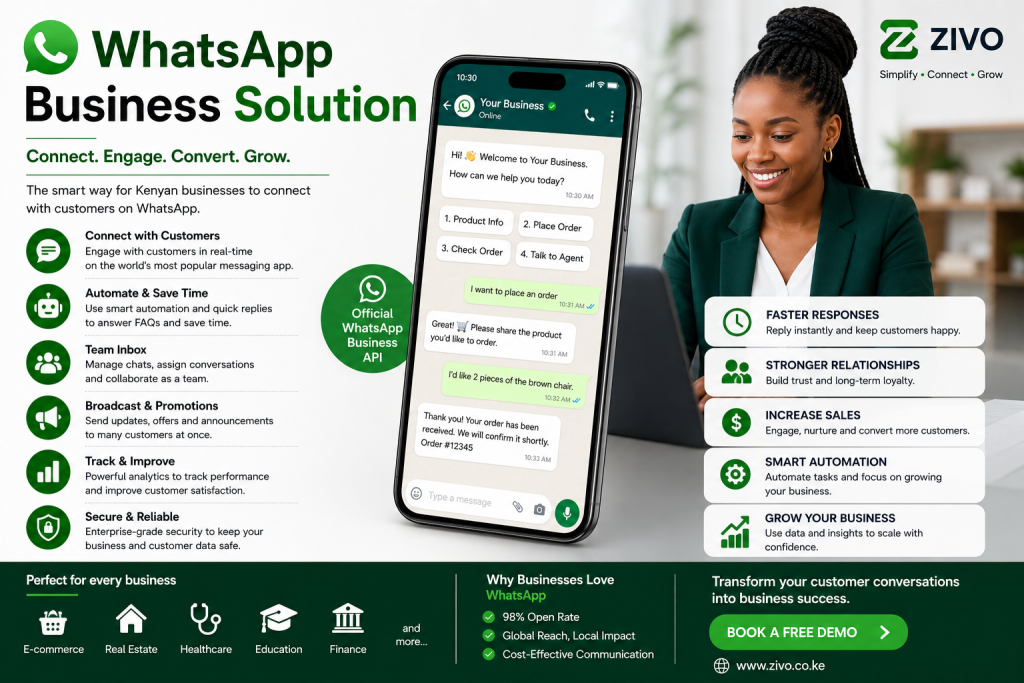
Business communication has changed significantly in recent years. Customers expect companies to respond quickly, provide accurate information, process requests efficiently, and remain available through convenient communication channels.
For many businesses, WhatsApp has become an important part of this communication strategy. Customers use WhatsApp to ask questions, request prices, place orders, make inquiries, book services, follow up on deliveries, and seek customer support.
However, using an ordinary WhatsApp account can become difficult when a business starts receiving hundreds or thousands of customer messages.
This is where a WhatsApp Business solution becomes valuable.
A professional solution can help businesses organize conversations, automate customer support, manage leads, send notifications, assign chats to employees, collect customer information, and connect WhatsApp with other business systems.
Instead of treating WhatsApp as just a messaging application, businesses can turn it into a powerful customer service, sales, marketing, and communication platform.
This guide explains what a WhatsApp Business solution is, how it works, its benefits, key features, industry applications, case studies, testimonials, service options, implementation process, and why businesses should consider adopting one.
What Is a WhatsApp Business Solution?
A WhatsApp Business solution is a business communication system that uses WhatsApp to help organizations communicate with customers in a more structured and automated way.
It can combine WhatsApp messaging with tools such as:
- Customer service automation
- Chatbots
- Shared inboxes
- CRM systems
- Sales management
- Lead qualification
- Notifications
- Order updates
- Appointment booking
- Customer databases
- Analytics
- Payment workflows
- Ticket management
The exact capabilities depend on the software provider and the integrations available.
The main objective is to help businesses manage customer conversations professionally while reducing repetitive manual work.
A small company may use WhatsApp to answer customer questions, while a larger organization may use it to manage customer support, sales, notifications, and automated workflows.
Why Businesses Need a WhatsApp Business Solution
Traditional business communication often involves phone calls, emails, websites, SMS, and physical offices.
These channels are still useful, but customers increasingly want instant digital communication.
WhatsApp provides an opportunity to meet customers where they are.
However, managing a large volume of WhatsApp messages manually can create serious operational challenges.
Messages can be missed.
Employees may give inconsistent answers.
Customer inquiries can remain unanswered.
Sales leads may not receive follow-up.
Managers may have no visibility into conversations.
A WhatsApp Business solution helps address these problems by creating a centralized communication environment.
The Problem With Managing WhatsApp Manually
Imagine an online business receiving 300 WhatsApp messages every day.
One employee handles the account.
Customers ask about prices, delivery, availability, payments, returns, and product information.
The employee must answer every question manually.
This can create several problems.
Missed Messages
When multiple customers message at the same time, some conversations may be overlooked.
Slow Responses
Customers may wait hours before receiving an answer.
Repetitive Work
Employees repeatedly answer the same questions.
Poor Follow-Up
A potential customer may request a quotation and never receive another message.
Limited Team Collaboration
Other employees may not know what conversations are taking place.
Lack of Reporting
Management may have no clear data about customer service performance.
A professional system provides the structure needed to solve these challenges.
Key Features of a WhatsApp Business Solution
Businesses should choose a platform based on their actual communication requirements.
Shared Team Inbox
A shared inbox allows multiple authorized employees to manage conversations from one centralized interface.
Instead of giving every employee access to a separate phone, the company can organize customer conversations by team or department.
For example:
Sales → Sales team
Customer support → Support team
Billing → Accounts team
Complaints → Customer service team
This improves accountability.
Automated Replies
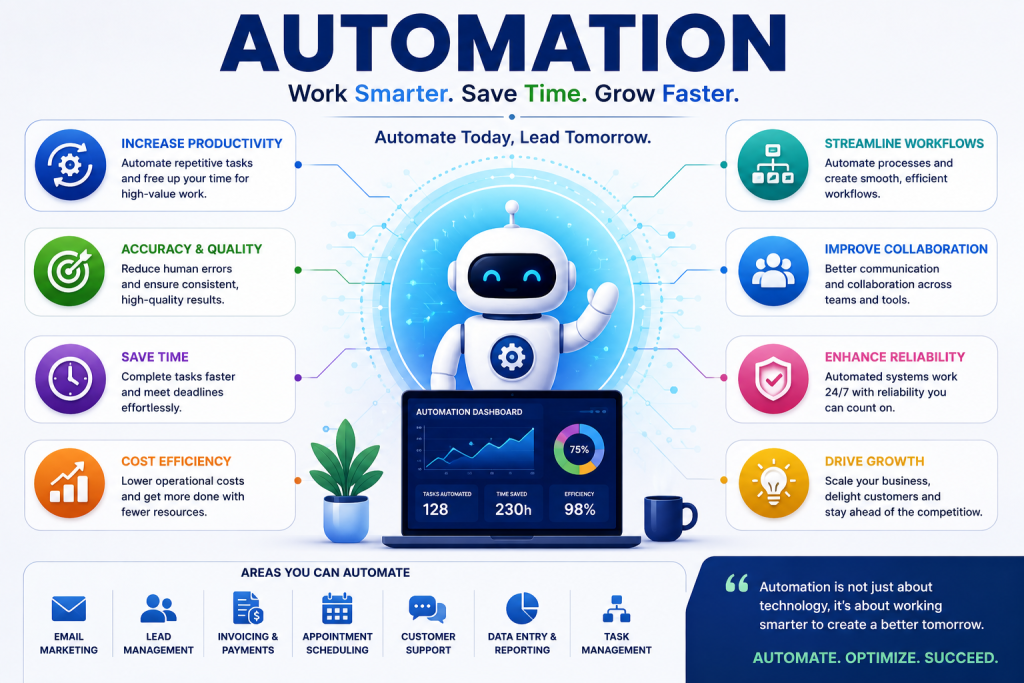
Many customer questions are repetitive.
Customers may frequently ask:
- What are your prices?
- Where are you located?
- What time do you open?
- Do you deliver?
- Which payment methods do you accept?
- Do you have this product?
- How can I book?
A WhatsApp Business solution can automate responses to common questions.
This allows employees to focus on more complex conversations.
WhatsApp Chatbots
Chatbots can guide customers through structured conversations.
For example:
Welcome to our business. How can we help?
- View Products
- Make an Order
- Speak to Support
- Request a Quote
- Track an Order
The customer chooses an option and follows the relevant process.
AI-powered chatbots can also understand natural language, depending on the technology used.
Customer Profiles
A centralized platform can store information about customers.
This may include:
- Customer name
- Phone number
- Previous conversations
- Purchases
- Support requests
- Preferences
- Lead status
This allows employees to provide more personalized service.
Lead Management
WhatsApp conversations can generate valuable sales leads.
A system can help businesses identify new prospects and track their progress.
Leads can be categorized as:
- New
- Contacted
- Qualified
- Quotation Sent
- Negotiation
- Won
- Lost
This prevents promising prospects from disappearing inside old conversations.
Ticket Management
Customer complaints and support requests can be converted into tickets.
Each ticket can have a status such as:
- New
- Open
- Assigned
- In Progress
- Waiting
- Resolved
- Closed
This makes it easier to ensure customer issues are not forgotten.
Automated Notifications
Businesses can use WhatsApp to send useful notifications.
These may include:
- Order confirmations
- Delivery updates
- Appointment reminders
- Payment confirmations
- Booking information
- Account notifications
- Service updates
Automation can reduce the number of customers who need to contact support for basic updates.
Analytics and Reporting
Business owners need to understand how WhatsApp is performing.
Analytics may show:
- Number of conversations
- Response time
- Resolution time
- Agent performance
- Lead volume
- Ticket volume
- Customer inquiries
- Conversion rates
This data can support better decision-making.
Benefits of a WhatsApp Business Solution
A WhatsApp Business solution can provide significant benefits for businesses of different sizes.
Faster Customer Support
Automation allows businesses to answer common questions immediately.
Customers do not have to wait for an employee to become available.
Improved Productivity
Employees spend less time answering repetitive questions.
This allows them to focus on more valuable activities.
Better Team Collaboration
Multiple employees can work together through a centralized system.
Improved Lead Conversion
Sales teams can respond to prospects faster and maintain better follow-up.
Better Customer Experience
Customers receive quicker and more organized communication.
Reduced Missed Opportunities
Centralized conversations make it easier to identify unanswered inquiries.
Better Accountability
Managers can see which employees are handling customer conversations.
Scalability
A business can manage increasing communication volumes without depending entirely on manual processes.
WhatsApp Business Solution for Small Businesses
Small businesses often operate with limited resources.
One person may handle sales, customer service, administration, and marketing.
As customer inquiries increase, the workload can become overwhelming.
A WhatsApp Business solution can automate common customer questions and organize conversations.
For example, a small clothing business can automatically answer questions about:
- Product prices
- Available sizes
- Colors
- Delivery
- Payment methods
- Opening hours
The business owner can then focus on fulfilling orders and managing the business.
WhatsApp Business Solution for E-Commerce
E-commerce businesses rely heavily on communication.
Customers may discover products through social media and immediately contact the seller on WhatsApp.
They may ask whether a product is available, how much it costs, or whether delivery is available in their location.
A WhatsApp Business solution can help answer these questions automatically.
The platform can also support order updates and customer notifications where appropriate integrations are available.
This can reduce friction during the buying process.
WhatsApp Business Solution for Real Estate
Real estate companies receive inquiries from potential buyers, tenants, landlords, and investors.
Common questions include:
- Which properties are available?
- What is the price?
- Where is the property located?
- How many bedrooms does it have?
- Is parking available?
- Can I schedule a viewing?
- What documents are required?
A WhatsApp Business solution can provide initial information and collect lead details.
For example, a chatbot can ask a potential tenant about:
- Preferred location
- Property type
- Budget
- Number of bedrooms
- Preferred move-in date
The information can then be passed to a real estate agent.
WhatsApp Business Solution for Hotels
Hotels can use WhatsApp throughout the guest journey.
Potential guests may ask about:
- Room availability
- Prices
- Facilities
- Check-in times
- Restaurants
- Transport
- Hotel location
After booking, guests may need information about their reservation.
A WhatsApp Business solution can automate many routine inquiries and help hotel staff manage conversations more efficiently.
Hotels can also send booking confirmations and reminders through approved communication workflows.
WhatsApp Business Solution for Schools
Schools and educational institutions receive many questions from students and parents.
These may involve:
- Admission requirements
- Fees
- Courses
- Registration
- Opening dates
- School locations
- Application procedures
Automated WhatsApp communication can answer common administrative questions.
More complicated matters can be transferred to admissions or administrative staff.
WhatsApp Business Solution for Healthcare Organizations
Healthcare organizations can use WhatsApp to manage appropriate administrative communication.
Patients may need information about:
- Opening hours
- Appointments
- Locations
- Available services
- Booking procedures
A WhatsApp Business solution can help automate these interactions.
However, organizations should apply appropriate privacy, security, and data protection measures when handling sensitive information.
AI and automation should not replace qualified medical professionals.
WhatsApp Business Solution for Financial Services
Banks, financial companies, SACCOs, insurance companies, and other financial organizations may receive high volumes of customer inquiries.
WhatsApp can provide an additional communication channel for appropriate customer service activities.
A WhatsApp Business solution can help route inquiries to the correct departments.
For sensitive financial information, organizations should use appropriate authentication and security processes.
Case Study 1: Kenyan Online Retailer
Consider a hypothetical online retailer receiving approximately 400 WhatsApp inquiries every week.
Before implementing a WhatsApp Business solution, three employees shared responsibility for customer communication.
Customers often asked the same questions about prices, delivery, and product availability.
During busy periods, some customers waited several hours for responses.
The retailer implemented a centralized WhatsApp system with automated responses and a shared inbox.
Common questions were handled automatically.
Complex conversations were assigned to employees.
The business also introduced automated order notifications.
The result was a more organized customer service process and less repetitive work for employees.
This is an illustrative case study and should be replaced with verified customer data before publication.
Case Study 2: Property Management Company
Imagine a property management company managing 500 rental units.
Tenants regularly contact the company through WhatsApp about rent, maintenance, balances, and general inquiries.
Previously, conversations were handled by individual employees.
Important maintenance requests were sometimes lost in long chat histories.
The company introduced a WhatsApp Business solution with ticket management and agent assignment.
Tenant maintenance requests could now be converted into tickets.
Managers could monitor unresolved issues.
The system also allowed employees to view relevant customer conversations.
This improved accountability and reduced the likelihood of requests being forgotten.
This example is illustrative.
Case Study 3: Hotel in Mombasa
Consider a hotel in Mombasa receiving frequent WhatsApp inquiries from potential guests.
The hotel received questions about room types, rates, facilities, availability, and check-in times.
A WhatsApp Business solution was implemented to automate common questions.
Potential guests could receive basic information immediately.
When a customer wanted to make a reservation or had a special request, the conversation was transferred to hotel staff.
The hotel also used WhatsApp notifications to communicate booking information.
This created a smoother communication process.
This is an illustrative example.
Customer Testimonials
“Our team is more organized.”
“Previously, customer conversations were spread across individual phones. Now our team can manage customer inquiries from one centralized platform.”
— Customer Service Manager, Nairobi
“We respond much faster.”
“Automation handles many of the questions we receive every day. Our employees can focus on customers who need personalized assistance.”
— Business Owner, Kenya
“It has improved our follow-up.”
“We used to lose track of potential customers after the first conversation. Having organized lead information has made our sales follow-up much better.”
— Sales Manager, Kenya
These testimonials are illustrative examples and should be replaced with verified customer testimonials before publication.
Service Description
A professional WhatsApp Business solution service should be customized around the company’s communication requirements.
A complete service can include the following.
WhatsApp Integration
Connect the business’s approved WhatsApp communication channel to the customer service or business management platform.
Chatbot Development
Design automated conversations for frequently asked questions and routine processes.
AI Integration
Where appropriate, integrate artificial intelligence to help understand natural language and provide more flexible responses.
Shared Inbox
Give customer service and sales teams centralized access to conversations.
Customer Management
Create customer profiles and maintain conversation histories.
Lead Management
Track prospects from the first WhatsApp inquiry through the sales process.
Ticket Management
Convert complaints and support requests into trackable tickets.
Automated Notifications
Send confirmations, reminders, updates, and other useful business messages.
CRM Integration
Connect WhatsApp conversations with CRM platforms where supported.
Analytics
Monitor customer service and sales activity.
Staff Training
Train employees on how to manage conversations, assign tickets, escalate issues, and use the platform effectively.
A good service should not simply connect WhatsApp to software.
It should create a communication system that supports the business’s goals.
WhatsApp Business Solution for Sales
WhatsApp can become a powerful sales channel when properly organized.
A potential customer may send a simple question such as:
“How much is this?”
That conversation can become a sales opportunity.
The sales team can provide information, answer objections, send product details, provide a quotation, and follow up.
A WhatsApp Business solution can help ensure that leads do not disappear inside ordinary chat histories.
Sales teams can categorize prospects and monitor the sales pipeline.
WhatsApp Business Solution for Customer Support
Customer service teams can use WhatsApp to provide faster support.
Instead of asking customers to call a support center, businesses can allow them to send messages.
Support agents can view the conversation history and understand the customer’s problem.
Tickets can be assigned and monitored until resolution.
This creates a more structured customer support process.
Automating Frequently Asked Questions
Every business has repetitive questions.
For example:
Customer: “What time do you open?”
Automated response: “We are open Monday to Saturday from 8:00 AM to 6:00 PM.”
Another customer may ask:
Customer: “Do you deliver?”
Automated response: “Yes. We deliver within selected locations. Please share your location so we can assist.”
This simple automation can save employees significant time.
WhatsApp and Customer Engagement
A WhatsApp Business solution can also help companies maintain customer engagement.
Businesses can send useful updates, reminders, product information, appointment confirmations, and other relevant messages.
The goal should be quality rather than quantity.
Customers should receive messages that are useful and expected.
Businesses should also follow applicable WhatsApp policies and messaging requirements.
Integrating WhatsApp With Business Systems
WhatsApp becomes more powerful when connected with other business applications.
Possible integrations include:
- CRM
- E-commerce
- Inventory
- Accounting
- Booking
- Property management
- Payment systems
- Help desk software
For example, an e-commerce business could connect WhatsApp with its order management system.
A customer could ask about an order and receive relevant information based on the available integration.
A property management company could connect customer communication with tenant records.
These integrations reduce the need to switch between different platforms.
How to Choose the Right WhatsApp Business Solution
Businesses should evaluate several factors.
Ease of Use
The system should be simple for employees to learn.
Scalability
It should handle increasing customer volumes.
Automation
Look for flexible automation capabilities.
Team Management
Multiple employees should be able to work together.
Reporting
Management should have access to useful data.
Integration
Consider compatibility with existing business systems.
Security
Customer information must be appropriately protected.
Support
Choose a provider that offers reliable technical assistance.
WhatsApp Business Solution vs Normal WhatsApp
Normal WhatsApp is useful for personal communication and small-scale business messaging.
However, growing businesses often need more advanced capabilities.
| Feature | Normal WhatsApp | Business Solution |
|---|---|---|
| Basic messaging | Yes | Yes |
| Multiple agents | Limited | Yes |
| Shared inbox | Limited | Yes |
| Automation | Limited | Advanced |
| Chatbots | Limited | Yes |
| Ticket management | No | Yes |
| Lead management | Limited | Yes |
| Analytics | Limited | Yes |
| CRM integration | Limited | Available depending on platform |
| Automated notifications | Limited | Yes |
The right choice depends on the size and complexity of the business.
Measuring Business Communication Performance
Businesses should track important metrics.
Response Time
How long does it take to answer customers?
Resolution Time
How long does it take to solve customer problems?
Conversation Volume
How many customer conversations are received?
Lead Conversion
How many WhatsApp leads become customers?
Customer Satisfaction
Are customers happy with the support they receive?
Agent Performance
Which employees are handling the most conversations and resolving the most issues?
These measurements can help management improve customer communication.
Common Mistakes Businesses Should Avoid
Automating Everything
Some conversations require human involvement.
Customers should have a clear way to reach an employee.
Complicated Chatbots
Customers should not be forced through unnecessary menus.
Incorrect Information
Automated responses should be reviewed regularly.
Ignoring Customer Follow-Up
A chatbot does not replace the need for sales and customer service follow-up.
Sending Too Many Messages
Businesses should avoid overwhelming customers with unnecessary communication.
Failing to Train Employees
Staff should understand how to use the system correctly.
Security and Data Protection
A WhatsApp Business solution can process significant amounts of customer information.
Businesses should therefore take security seriously.
Important considerations include:
- Secure authentication
- User permissions
- Access control
- Data protection
- Secure integrations
- Staff training
- Data backups
- Account management
Employees should only have access to information necessary for their responsibilities.
The Future of WhatsApp for Business
Business communication is becoming increasingly automated.
Artificial intelligence, CRM integration, chatbots, analytics, and payment systems are changing how companies interact with customers.
WhatsApp can become more than a messaging channel.
It can become a complete digital customer journey.
A customer could potentially discover a product, ask questions, receive recommendations, place an order, receive payment instructions, receive delivery updates, and contact support through WhatsApp, depending on the integrations available.
This makes WhatsApp an increasingly important component of digital business strategy.
Why Businesses Should Adopt WhatsApp Business Technology
The purpose of adopting a WhatsApp Business solution should be to solve real business problems.
If your employees spend hours answering repetitive questions, automation can help.
If sales leads are being lost, lead management can help.
If customers are waiting too long for answers, automated responses can help.
If managers lack visibility into customer conversations, shared inboxes and analytics can help.
The technology should be selected based on the business’s actual needs.
Frequently Asked Questions
What is a WhatsApp Business solution?
It is a business communication system that enables organizations to manage WhatsApp conversations using tools such as automation, chatbots, shared inboxes, customer management, notifications, ticketing, and analytics.
Can multiple employees use it?
Yes. Depending on the platform, multiple authorized employees can manage conversations through a centralized interface.
Can it automate customer service?
Yes. Frequently asked questions, notifications, routing, and other repetitive processes can be automated.
Can it help with sales?
Yes. WhatsApp can be used for lead generation, qualification, follow-up, quotations, and customer communication.
Can it integrate with CRM systems?
Many solutions support CRM integrations, although the available integrations vary by provider.
Is it suitable for small businesses?
Yes. Small businesses can use automation to reduce repetitive work and improve customer communication.
Can it be used in Kenya?
Yes. Kenyan businesses across industries can use WhatsApp-based business communication solutions for customer service, sales, marketing, and notifications.
Is a WhatsApp Business solution secure?
Security depends on the provider, configuration, integrations, access controls, and business practices. Organizations should evaluate security carefully before implementation.
Getting Started With a WhatsApp Business Solution
The implementation process should begin with identifying the company’s biggest communication challenges.
Start by reviewing customer conversations.
Identify common questions.
Determine which interactions can be automated.
Identify which conversations require human assistance.
Then create workflows.
For example:
Customer inquiry → Automated response → Information collection → Lead qualification → Employee assignment → Follow-up → Conversion
For customer support:
Customer complaint → Ticket creation → Department assignment → Investigation → Resolution → Customer confirmation → Ticket closure
This structured approach can make WhatsApp communication significantly more effective.
Conclusion
WhatsApp has become an important communication channel for modern businesses.
Customers want convenient ways to ask questions, make purchases, receive updates, and obtain support.
However, managing a growing number of WhatsApp conversations manually can create missed messages, slow responses, poor follow-up, and unnecessary administrative work.
A WhatsApp Business solution can help businesses overcome these challenges.
With shared inboxes, automation, chatbots, customer profiles, lead management, ticketing, notifications, analytics, and integrations, companies can transform WhatsApp from a simple messaging tool into a powerful business communication platform.
The benefits can extend across industries.
Retailers can use it to support customers and process orders.
Real estate companies can use it to qualify leads.
Hotels can communicate with guests.
Schools can answer administrative questions.
Property managers can support tenants.
Professional service providers can manage inquiries.
The key is to design the solution around the customer’s journey.
Automation should handle repetitive tasks.
Human employees should handle conversations that require empathy, judgment, or personalized assistance.
When these capabilities work together, businesses can provide faster and more consistent customer service while improving employee productivity.
Ready to Transform Your Business Communication?
If your company is still managing customer conversations through a single phone, scattered employee accounts, or manual follow-ups, it may be time to move to a more professional system.
A WhatsApp Business solution can help you centralize customer communication, automate repetitive questions, manage leads, track support requests, send notifications, and measure performance.
Instead of allowing valuable customer conversations to disappear inside ordinary chats, turn WhatsApp into a structured business communication channel.
Take the Next Step
Modernize your customer communication with a professional WhatsApp business platform.
Make WhatsApp work harder for your business.
Automate routine conversations. Improve customer service. Capture more opportunities. Grow your business.