
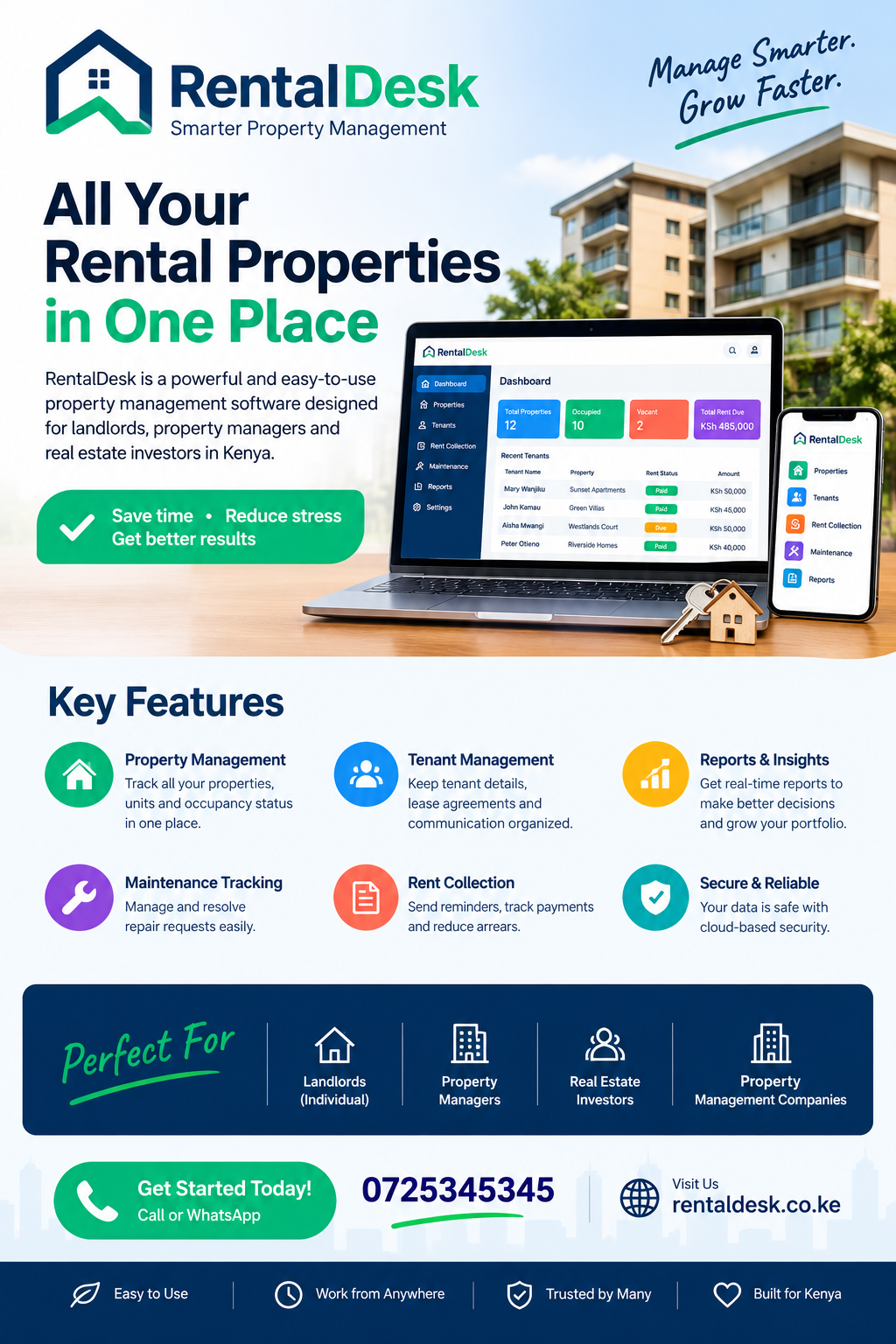
Customer Relationship Management Software Kenya: A Complete Guide for Businesses
Running a successful business requires more than attracting new customers. Businesses must also understand their customers, follow up on enquiries, manage sales opportunities, resolve complaints and encourage repeat purchases. Customer Relationship Management Software Kenya gives businesses a structured way to manage these activities, maintain organised customer records and build stronger relationships throughout the customer journey. For Kenyan entrepreneurs, small and medium-sized enterprises, retailers, service providers and growing companies, choosing the right customer management solution can make daily operations easier and improve the quality of customer service.
Customers expect timely responses, accurate information and convenient ways to communicate with businesses. When enquiries arrive through phone calls, WhatsApp, email, social media and physical visits, keeping track of every conversation becomes difficult. Information can get lost, sales opportunities may be forgotten, and customers might have to repeat the same questions to different employees.
A properly implemented CRM system helps solve these problems by bringing customer information, communication history, sales activities and follow-up tasks into one organised environment. This guide explains how businesses can select, implement and use customer relationship management technology to improve customer experiences, increase sales efficiency and support sustainable growth in Kenya.
What Is Customer Relationship Management Software?
Customer Relationship Management (CRM) software is a digital system that helps a business organise information about its customers and manage interactions throughout the relationship. Instead of keeping separate records in notebooks, spreadsheets, email inboxes and individual employees’ phones, a business can use a central platform to manage customer details and activities.
For example, a Nairobi-based supplier may receive an enquiry from a supermarket, send a quotation, arrange a follow-up call and eventually receive an order. A CRM system can record the enquiry, assign responsibility to a salesperson, store communication notes and remind the salesperson to contact the prospect again.
The same approach works for consultants, distributors, professional service providers, online shops, educational businesses and many other organisations.
Customer Relationship Management Software Kenya is relevant to businesses that need a clearer picture of who their customers are, what they need and how employees should respond to them.
How a CRM system works
Most CRM systems follow a straightforward process:
- Capture customer information: Record names, telephone numbers, email addresses, business details and other relevant information.
- Organise enquiries: Categorise new leads according to their needs, source, location or potential value.
- Track communication: Keep useful notes about calls, emails, meetings, quotations and customer requests.
- Manage sales opportunities: Monitor prospects as they move from initial contact to negotiation and purchase.
- Schedule follow-ups: Set reminders for calls, meetings, quotations and outstanding customer questions.
- Review performance: Use reports to understand sales activity, conversion rates and customer service performance.
The result is a more organised approach to customer management. Employees spend less time searching for information and more time helping customers make informed purchasing decisions.
Who needs customer relationship management software?
CRM technology can benefit businesses of different sizes and across multiple industries.
- Small businesses managing enquiries without dedicated sales teams.
- Retailers maintaining customer information and encouraging repeat purchases.
- Distributors coordinating sales representatives and business accounts.
- Service providers handling appointments, quotations and client projects.
- Property businesses tracking prospective tenants and customer enquiries.
- Online businesses communicating with customers across several channels.
- Larger organisations coordinating sales, marketing and customer support teams.
A company does not need hundreds of employees to benefit from CRM. Even a business with two or three people can gain value from organised customer records and consistent follow-up procedures.
Why Kenyan Businesses Need Better Customer Management
Kenyan businesses operate in competitive markets where customers can compare products, request quotations from several suppliers and switch providers when service is unreliable. Businesses therefore need systems that help them respond consistently and maintain accurate information.
Customer Relationship Management Software Kenya can support this effort by helping teams manage enquiries, record customer preferences and monitor opportunities without depending entirely on memory or scattered records.
Managing enquiries from multiple channels
Customers may contact a business through WhatsApp, Facebook, Instagram, telephone calls, email, a website contact form or a physical office. These channels make communication convenient, but they can also create disconnected records.
Consider a business that receives 30 enquiries in one day. If each enquiry is stored in a different employee’s phone, management may struggle to identify which customers received responses, which need quotations and which are ready to purchase.
A central CRM record helps employees organise enquiries and establish clear follow-up responsibilities.
Reducing missed sales opportunities
A customer who requests a quotation may not buy immediately. They may need approval from a manager, compare prices or wait until the following month.
Without a follow-up process, the salesperson might forget the enquiry. A CRM system can record the expected decision date and create a reminder to contact the prospect.
This approach is particularly useful for businesses selling equipment, software, wholesale products, professional services and other offerings that require several conversations before a purchase.
Improving customer retention
Acquiring a customer is only one part of running a business. Maintaining a positive relationship after the first sale is equally important.
Businesses can use customer records to remember previous purchases, document service issues, schedule renewals and identify customers who have not purchased recently. These insights make communication more relevant and help staff provide a consistent experience.
Creating accountability among employees
When customer interactions are recorded properly, managers can see whether enquiries are being handled and whether outstanding tasks have been completed.
Customer Relationship Management Software Kenya can help businesses assign leads to specific employees, establish follow-up deadlines and review progress using documented activities rather than relying solely on verbal updates.
The purpose is not simply to monitor employees. It is to make responsibilities clear and help managers identify problems early enough to provide support.
Essential Features to Look for in a CRM System
Not every CRM platform offers the same capabilities. Some focus mainly on sales pipelines, while others provide broader customer service, marketing or operational tools. The best choice depends on the business’s current challenges and future plans.
1. Centralised customer database
A customer database should provide an organised place to store relevant customer information.
Useful fields may include:
- Customer or company name.
- Telephone number and email address.
- Business location.
- Customer category.
- Previous purchases or enquiries.
- Communication history.
- Assigned salesperson.
- Follow-up date.
- Relevant notes and preferences.
Employees should be able to search records quickly and update information when circumstances change.
Customer Relationship Management Software Kenya can be especially valuable when several employees need access to the same customer records, provided access permissions are configured appropriately.
2. Lead management
Lead management helps businesses track prospective customers from the moment they express interest.
A typical lead record contains the customer’s details, the product or service they are interested in, the source of the enquiry and the next action required.
For instance, a company offering business software might classify leads as website enquiries, referrals, social media contacts or direct sales prospects. This makes it easier to determine where potential customers are coming from and which sources deserve further attention.
3. Sales pipeline tracking
A sales pipeline displays the stages a prospect passes through before becoming a customer.
| Sales stage | Meaning | Recommended action |
|---|---|---|
| New enquiry | The business has received a lead | Respond and gather requirements |
| Contacted | Initial communication has occurred | Understand the customer’s needs |
| Qualified | The prospect appears suitable | Confirm budget, timing and decision process |
| Quotation sent | Pricing or a proposal has been shared | Schedule a follow-up |
| Negotiation | Details are being discussed | Resolve objections and clarify terms |
| Won | The customer has agreed to purchase | Complete the sale and record the outcome |
| Lost | The opportunity did not proceed | Record the reason where appropriate |
A well-maintained pipeline gives managers a clearer view of current opportunities and helps sales representatives prioritise their work.
4. Task reminders and follow-up scheduling
A reminder feature helps employees remember important activities. These may include calling a prospect, responding to a complaint, sending a quotation or checking whether a delivery arrived.
Customer Relationship Management Software Kenya can support more consistent follow-up when reminders are linked to customer records and assigned to responsible employees.
The business should establish realistic deadlines and ensure reminders are easy to update when a customer’s circumstances change.
5. Communication history
A useful CRM system records important interactions in one place. Depending on the platform and integrations available, this may include call notes, emails, meetings, messages and support cases.
A complete history helps another employee understand the customer’s situation if the original salesperson is unavailable.
Businesses should verify which communication channels are supported automatically and which require manual notes or third-party integrations.
6. Reporting and analytics
Reports help managers understand how effectively the business attracts and retains customers.
Useful measurements include:
- Number of new leads received.
- Number of enquiries contacted.
- Conversion rate from lead to customer.
- Value of open sales opportunities.
- Average time taken to respond.
- Number of overdue follow-ups.
- Repeat-purchase rate.
- Reasons sales opportunities are lost.
Reports should answer practical management questions rather than simply produce large amounts of data.
7. User permissions and data security
Customer records may contain personal information, business contacts and commercially sensitive discussions. A CRM should allow authorised access to information according to employee responsibilities.
Features worth reviewing include user permissions, authentication controls, backups, activity logs and data export options.
Customer Relationship Management Software Kenya should be assessed alongside the organisation’s privacy obligations and internal security procedures, rather than selected solely because it offers many features.
How CRM Software Improves Sales Performance
Sales performance depends on the quality of customer conversations, the relevance of offers and the consistency of follow-up. CRM technology helps organise these activities so sales representatives can concentrate on opportunities that deserve attention.
Prioritising promising leads
Not every enquiry represents the same level of purchasing interest. One prospect may be comparing prices for a future purchase, while another is ready to place an order immediately.
Businesses can use transparent qualification criteria to prioritise leads. Relevant factors may include the customer’s requirements, purchasing timeline, budget, suitability and level of engagement.
A CRM should help employees make informed decisions without treating automated lead scores as guaranteed predictions of buying behaviour.
Improving quotation follow-ups
Sending a quotation does not guarantee a sale. Customers may have questions about payment terms, delivery, product specifications or implementation.
A CRM can record when the quotation was sent, its expiry date where applicable and the agreed follow-up date.
For example, a distributor in Mombasa may send quotations to hotels, restaurants and retailers. Recording the next action for each prospect reduces the risk of enquiries being abandoned simply because the sales team became busy.
Understanding why sales are lost
Recording the reasons opportunities are lost can reveal patterns that management might otherwise miss.
Possible reasons include:
- Price did not fit the customer’s budget.
- The requested product was unavailable.
- A competitor offered a better fit.
- The customer postponed the purchase.
- The business responded too slowly.
- The solution did not meet the customer’s requirements.
Customer Relationship Management Software Kenya can help businesses organise these observations into reports, depending on the reporting functions available.
Managers can then investigate recurring problems and improve pricing, service delivery, product availability or sales training.
Using CRM to Strengthen Customer Service
Customer service does not end when a payment is received. Customers may need assistance with installation, product use, repairs, returns, billing questions or future purchases.
A CRM system can connect these interactions to the customer’s existing record.
Responding to complaints consistently
A useful complaint-handling process records the issue, its urgency, the person responsible and the expected resolution date.
For example, a customer who reports a delayed delivery should not have to explain the entire situation every time they contact the company. Employees should be able to review previous notes and provide an accurate update.
Where the CRM supports service tickets, businesses can use ticket statuses to distinguish new complaints, issues being investigated and cases awaiting customer confirmation.
Personalising customer communication
Customer records can help employees understand previous purchases, product preferences and the types of support a customer has requested.
Personalisation should be based on relevant, accurate information. It should not involve collecting unnecessary personal details or making intrusive assumptions.
Customer Relationship Management Software Kenya can form part of a customer-focused workflow when the platform supports the required records and the business uses those records responsibly.
Measuring customer service quality
Managers can review response times, unresolved complaints, recurring issues and customer feedback to identify opportunities for improvement.
However, fast responses alone do not guarantee good service. A complete assessment should also consider whether the answer was accurate, the problem was resolved and the customer received appropriate follow-up.
Integrating CRM With Other Business Systems
A CRM system becomes more useful when it works alongside the tools a business already uses. Integration can reduce duplicate data entry and help employees follow a transaction from initial enquiry to completed order.
Accounting and invoicing
A sales team may need to know whether a quotation was accepted, an invoice was issued or a payment was recorded.
Integration with accounting or invoicing software can make this information easier to access. Before purchasing, confirm whether the connection is available, whether it synchronises information automatically and whether it requires additional fees.
Inventory and order management
Retailers and distributors need accurate information about stock availability, order status and fulfilment.
Connecting customer records with inventory or order management can help sales representatives provide more reliable answers. For example, they may be able to check whether an item is available before promising a delivery date.
Customer Relationship Management Software Kenya should be considered within the wider business workflow when a company needs customer management to work alongside other digital operations.
Email and messaging
Email integration can help sales teams maintain a record of relevant correspondence. Messaging integrations may help organise customer enquiries from supported channels.
Businesses should verify the exact integration before assuming that a CRM can automatically import WhatsApp messages, social media conversations or call recordings.
Payment systems and M-Pesa
M-Pesa is an important payment method for many Kenyan businesses. Connecting customer management with payment or invoicing tools may help staff identify outstanding balances and confirm transaction information.
However, a CRM is not automatically a payment processor. Businesses must verify whether their chosen platform supports the necessary integration and ensure that payment information is handled securely.
Website lead capture
A website form can send new enquiries directly into a CRM, reducing manual entry and making it easier to assign leads promptly.
A business should test the complete process, including form submission, data accuracy, duplicate handling, notifications and employee assignment.
Customer Relationship Management Software Kenya is most effective when the chosen integrations support real operational needs rather than adding unnecessary complexity.
CRM Applications Across Different Kenyan Industries
Customer management requirements vary by industry. A retailer may prioritise repeat purchases, while a consulting firm may focus on proposals, meetings and long sales cycles.
Retail and wholesale businesses
Retailers can use customer records to document enquiries, manage business accounts and identify customers who purchase regularly.
Wholesale suppliers may need account-level records, quotation histories, sales representative assignments and delivery follow-ups.
A CRM can also help teams segment business customers by product category, purchasing frequency or location, provided the categories are useful and properly maintained.
Professional services
Consultants, marketing agencies, accountants and other service providers often manage multiple conversations before a client signs an agreement.
CRM records can help them track discovery calls, proposals, project requirements and renewal dates. Employees can also review earlier discussions before a client meeting.
Hospitality and food businesses
Hotels, caterers and restaurants may use CRM capabilities to record corporate enquiries, event requests, customer feedback and repeat-business opportunities.
A restaurant, for example, could maintain records of corporate catering enquiries and follow up on proposals for upcoming events. It should collect only information necessary for the service and respect customers’ communication preferences.
Property and rental businesses
Property professionals may use customer management tools to track prospective tenants, viewing appointments, landlord enquiries and service requests.
A CRM can record the stage of each enquiry and remind an agent to follow up after a property viewing. Detailed lease administration, rent accounting and maintenance tracking may require separate property management functionality.
Technology and software companies
Software businesses frequently manage demonstrations, technical questions, quotations, onboarding and renewals.
CRM records can help sales and support teams coordinate communication, particularly when several employees work with the same client.
Customer Relationship Management Software Kenya can be evaluated against the specific customer workflows an organisation needs to manage, rather than assuming that every industry requires an identical configuration.
Choosing the Right CRM for a Small or Medium-Sized Business
The best CRM is not necessarily the one with the largest feature list. It is the one that solves important business problems and remains practical for employees to use.
Identify the main business problem
Before comparing vendors, list the problems that need to be solved.
For example:
- Enquiries are being forgotten.
- Customer records are scattered across several devices.
- Sales representatives struggle to remember follow-ups.
- Managers cannot see the status of quotations.
- Complaints are not being resolved consistently.
- Customer information is duplicated.
Choose a system that addresses these problems directly.
Compare essential features
Prepare a short list of requirements and compare each platform against it.
| Requirement | Questions to ask |
|---|---|
| Customer database | Can employees search, update and categorise records? |
| Lead management | Can new enquiries be assigned and tracked? |
| Sales pipeline | Can stages be customised to match the sales process? |
| Reminders | Can tasks and follow-up dates be assigned? |
| Reporting | Are the required sales and service reports available? |
| Mobile access | Can authorised employees work from their phones? |
| Integrations | Does the system connect to essential business tools? |
| Security | Can access be restricted according to roles? |
| Support | Is training and technical assistance available? |
| Data export | Can the business retrieve its records if it changes systems? |
Customer Relationship Management Software Kenya can be part of a structured software evaluation, but the business should confirm the provider’s actual capabilities, pricing and support arrangements before making a purchase.
Check usability
A complicated system may be ignored even when it has powerful features.
Ask the employees who will use the CRM to test common tasks, including creating a contact, recording a call, updating an opportunity and scheduling a follow-up.
If these actions require too many steps, the business should consider a simpler configuration or another product.
Evaluate mobile accessibility
Many Kenyan business owners and sales representatives work away from a desk. Mobile access can be important when visiting customers, attending meetings or responding to enquiries while travelling.
Test the mobile experience on the devices employees actually use. Confirm whether offline access is available if required, and check how synchronisation works when connectivity returns.
Review pricing and total cost
CRM pricing may depend on the number of users, subscription tier, available features and integrations.
Other costs may include implementation, staff training, data migration, customisation and technical support.
A low advertised subscription price may not represent the full cost of ownership. Ask the provider for a written breakdown of recurring and one-time expenses.
Understanding CRM Pricing and Return on Investment
Businesses should evaluate CRM spending in relation to the problems the system is expected to solve.
A useful assessment considers saved employee time, reduced administrative errors, improved follow-up, better reporting and any measurable improvement in customer retention or sales conversion.
Calculate the current cost of manual processes
Suppose a business has three employees who collectively spend six hours each week searching for customer details, updating spreadsheets and checking follow-up tasks.
If a CRM reduces that work, the business can estimate the time released for other activities. The actual benefit will depend on the employees’ responsibilities and how effectively the new workflow is implemented.
The business should also account for subscription charges, training, implementation and ongoing administration.
Measure business outcomes
Before implementation, record a baseline for a few important indicators:
- Average time to respond to new enquiries.
- Percentage of leads receiving follow-up.
- Number of overdue tasks.
- Sales conversion rate.
- Number of unresolved customer complaints.
- Repeat-purchase rate, where relevant.
Review these indicators after implementation and compare results over a reasonable period. Changes should not automatically be attributed to the CRM because pricing, marketing, staff changes and seasonal demand can also affect performance.
Customer Relationship Management Software Kenya should be assessed according to measurable operational value rather than assumptions that buying software will automatically increase revenue.
Data Protection and Customer Privacy in Kenya
Customer information must be managed responsibly. Names, telephone numbers, email addresses and identifiable interaction histories may constitute personal data under Kenya’s Data Protection Act, 2019.
Businesses should consider their legal obligations when collecting, storing, using and sharing customer information. Requirements can vary depending on the nature of the organisation, the data involved and the processing activities.
Collect only necessary information
A business should define which customer details are genuinely required for its services.
For example, a company that provides equipment maintenance may need a customer’s contact details, equipment information and service history. It may not need unrelated personal information.
Collecting less unnecessary information can simplify administration and reduce exposure if records are accessed improperly.
Establish appropriate access controls
Not every employee needs access to every customer record.
Sales representatives may need their assigned leads, while managers may need broader reporting access. Administrative staff may require access to particular fields for billing or customer support.
Access should reflect genuine responsibilities, and permissions should be reviewed when employees change roles or leave the organisation.
Review providers and data handling
Before selecting a CRM vendor, ask where data is stored, how backups work, which security controls are provided and how data can be retrieved or deleted.
Also establish how the provider handles incidents, subcontractors and requests involving customer information.
Customer Relationship Management Software Kenya should be considered alongside privacy, security and governance requirements when assessing customer data workflows. Businesses should consult the Office of the Data Protection Commissioner or qualified legal professionals when they need guidance on their specific compliance obligations.
Train employees in responsible communication
Employees should know how customer information may be used and shared.
They should avoid downloading unnecessary customer lists to personal devices, sending confidential information to unauthorised recipients or using customer details for unrelated purposes.
Marketing communication should follow applicable legal requirements, including appropriate consent or other lawful grounds where relevant and respect for customer objections.
Common CRM Implementation Mistakes to Avoid
Purchasing software is only one part of implementation. Businesses must also establish useful processes, assign responsibilities and encourage consistent use.
Choosing software before understanding the workflow
A company may select a platform because another business recommends it, only to discover that it does not support important processes.
Start by documenting how enquiries currently arrive, who handles them, what information is recorded and what happens after a quotation is sent.
This makes it easier to select software that fits the organisation.
Importing inaccurate or duplicate records
Old spreadsheets may contain outdated telephone numbers, incomplete customer names and repeated contacts.
Importing everything without review can make the CRM harder to use.
Before migration, remove unnecessary records, standardise important fields and establish a process for identifying duplicates.
Failing to train employees
Employees may resist a new system if they do not understand why it matters or how it affects their work.
Training should focus on daily tasks and practical benefits. Demonstrate how to create a lead, record a customer conversation, update a sales opportunity and close a completed task.
Customer Relationship Management Software Kenya should be evaluated within a realistic implementation plan that accounts for the people, processes and tools needed to use it effectively.
Making the system unnecessarily complicated
Too many mandatory fields, excessive pipeline stages and unnecessary notifications can discourage employees from maintaining accurate records.
Start with a simple configuration. Add more fields or automation only when there is a clear operational reason.
Ignoring data quality after launch
Customer records become unreliable when employees stop updating them.
Assign responsibility for reviewing duplicates, correcting errors and maintaining important fields. Managers should make record quality part of normal operations rather than waiting until reports become unusable.
A Practical Step-by-Step CRM Implementation Plan
A phased rollout gives a business time to test its processes before introducing the system to every department.
Step 1: Document existing customer processes
Map the customer journey from first enquiry to purchase and after-sales service.
Identify the points where information is lost, delays occur or responsibilities are unclear.
Step 2: Define measurable objectives
Choose a small number of realistic goals. Examples include improving follow-up completion, reducing the number of unresolved enquiries or making sales reports more reliable.
Avoid vague objectives such as becoming more digital without specifying the expected operational improvement.
Step 3: Select a suitable platform
Compare shortlisted platforms using the requirements established earlier. Ask vendors to demonstrate realistic scenarios using the workflows the business needs.
Confirm contract terms, subscription costs, integrations, security controls and data export arrangements.
Step 4: Prepare customer records
Clean existing data before importing it. Standardise names, contact fields and categories, and remove duplicates where appropriate.
Keep a secure copy of the original records according to the business’s retention and backup procedures.
Step 5: Configure the system
Create the necessary customer fields, sales stages, user permissions, reminders and reports.
Avoid adding unnecessary features during the first phase.
Step 6: Train a small group
Select a few employees to test the system with realistic examples.
Collect feedback about usability, missing information and confusing processes. Correct important problems before expanding access.
Step 7: Launch and monitor adoption
Provide clear instructions and make support available during the transition.
Review whether employees are recording enquiries, updating opportunities and completing follow-up tasks consistently.
Step 8: Improve the workflow
After the initial rollout, review the system against the original objectives.
Remove features that create unnecessary work, improve reports that are difficult to interpret and introduce additional automation only when the basic process is working reliably.
How Automation Can Improve Customer Relationship Management
Automation can reduce repetitive administrative work, but it should support human judgement rather than replace it completely.
Automated task creation
When a new lead is recorded, a system may automatically create a task for the assigned salesperson.
Similarly, a quotation stage may trigger a reminder after a defined period. The business should allow employees to adjust deadlines when the customer’s needs require a different approach.
Customer segmentation
Segmentation groups customers according to useful characteristics, such as product interest, business category or purchase history.
This can help businesses send more relevant offers and avoid treating every customer as if they had identical needs.
Segmentation criteria should be appropriate for the business purpose and comply with applicable privacy obligations.
Follow-up notifications
Notifications can alert employees to overdue tasks, new enquiries or unresolved support requests.
Too many notifications, however, can create distraction. Businesses should prioritise alerts that require action and review whether employees find them useful.
Automated reporting
Scheduled reports can help managers review sales activity, outstanding opportunities and service performance without manually compiling spreadsheets.
The reports should use clearly defined metrics and reliable data. Automation cannot compensate for incomplete records or inconsistent processes.
Customer Relationship Management Software Kenya can be assessed against these workflow requirements, with particular attention to which automation features are included and which require additional configuration or integrations.
CRM and Digital Growth for Kenyan SMEs
Digital growth is not simply about acquiring more software. It involves creating reliable processes that allow a business to serve more customers without losing control of its operations.
A small company might begin with a basic customer database and a straightforward follow-up process. As the business grows, it may introduce pipeline reporting, team assignments, communication integrations and more advanced analytics.
Supporting business expansion
When a business enters a new town or hires additional sales representatives, customer information needs to remain accessible to authorised staff.
A central system can help employees work from shared records instead of maintaining separate lists.
Managers can also compare activity across branches or teams if the selected platform supports the required reporting.
Improving consistency across locations
Businesses operating in Nairobi, Kisumu, Nakuru, Eldoret and other locations may need consistent processes for handling customer enquiries.
A CRM can help establish shared definitions, responsibilities and reporting procedures while allowing teams to account for local customer needs.
Making informed marketing decisions
Customer records can reveal which products attract enquiries, which lead sources generate qualified opportunities and which customer segments return for repeat purchases.
These findings can guide marketing decisions, but they should be interpreted carefully. A high number of enquiries does not necessarily mean a channel produces profitable customers.
Customer Relationship Management Software Kenya can be considered as part of a broader digital growth strategy when its functions align with the business’s sales and customer service requirements.
Questions to Ask a CRM Vendor Before Buying
A demonstration should help you understand what the software can actually do, not just what its marketing materials promise.
Ask the vendor the following questions:
- Which features are included in the quoted subscription?
- How many users can access the system?
- Can sales stages and customer fields be customised?
- Does the system support the mobile devices used by our team?
- Which accounting, invoicing and communication integrations are available?
- Are integrations included in the subscription or charged separately?
- How are customer records backed up?
- What user permissions and security controls are available?
- Can our business export its data in a usable format?
- What onboarding and technical support are included?
- How are subscription renewals, price changes and cancellations handled?
- Can we test the system before committing to a longer contract?
Request clear answers in writing for important contractual and technical matters.
Customer Relationship Management Software Kenya should be compared with alternative solutions using the same evaluation criteria so that the final decision reflects practical requirements rather than marketing claims.
Frequently Asked Questions
1. What is Customer Relationship Management Software Kenya used for?
Customer Relationship Management Software Kenya helps businesses organise customer records, track enquiries, manage sales opportunities, schedule follow-ups and maintain communication histories. Depending on the product, it may also support reporting, customer service, marketing workflows and integrations with other business systems.
2. Is CRM software suitable for small businesses in Kenya?
Yes. Small businesses can use CRM software to organise customer information and avoid missed follow-ups without needing a large sales department. A simple system with contact records, reminders and a basic sales pipeline may be sufficient at the beginning. The business should select a solution that fits its budget and operational needs.
3. Can CRM software integrate with M-Pesa?
Some CRM solutions can connect with payment systems or other applications that support M-Pesa-related workflows. However, integration is not available automatically in every CRM. Businesses should confirm the supported integration, payment information synchronisation, setup requirements and additional costs with the provider.
4. How much does CRM software cost in Kenya?
Pricing varies by vendor, number of users, subscription tier, integrations, customisation and support requirements. Some providers offer free or entry-level plans, while advanced business systems may involve recurring subscription fees and implementation costs. Request a detailed quotation before comparing solutions.
5. What is the difference between CRM and accounting software?
CRM software primarily manages customer relationships, leads, sales activities and communication. Accounting software focuses on financial records, invoicing, expenses, payments and financial reporting. Some business platforms combine these functions, while others integrate separate applications to connect customer information with financial transactions.
6. How long does it take to implement a CRM system?
Implementation time depends on the number of users, complexity of workflows, condition of existing records and required integrations. A small business using a straightforward configuration may launch relatively quickly, while a larger organisation may need more time for migration, testing, training and customisation. A phased rollout helps reduce disruption.
7. Is customer data secure in a CRM system?
Security depends on the platform’s controls and the business’s own practices. Look for appropriate user permissions, authentication, backups, audit logs and clear data handling arrangements. Businesses must also consider their obligations under applicable Kenyan data protection laws and train employees to handle customer information responsibly.
8. Can a CRM system help increase sales?
A CRM can support sales improvement by making follow-ups more consistent, helping representatives prioritise suitable opportunities and revealing weaknesses in the sales process. However, software does not guarantee higher revenue. Results also depend on product quality, pricing, customer demand, employee skills and the effectiveness of the sales strategy.
9. What should a business consider when choosing a CRM?
Consider ease of use, customer database functionality, lead management, pipeline tracking, reminders, reporting, mobile access, integrations, security, support and total cost. Test the system using realistic tasks before purchasing, and verify that customer records can be exported if you decide to change providers.
10. Can a CRM replace customer service employees?
A CRM supports customer service employees by organising information and workflows, but it does not automatically replace human communication. Staff are still needed to understand complex requests, resolve sensitive complaints, exercise judgement and build trust. Automation should handle suitable repetitive tasks while leaving appropriate decisions to people.
Conclusion: Building Stronger Customer Relationships Through Better Systems
Sustainable business growth depends on understanding customers, responding to their needs and maintaining reliable communication throughout the customer journey. Disorganised records and inconsistent follow-ups can make these activities difficult, particularly when a business receives enquiries through several channels.
The right CRM system provides a structured way to manage customer information, coordinate sales activities, monitor service requests and measure performance. It can also help employees work together more effectively by giving authorised team members access to consistent, up-to-date records.
For Kenyan businesses, the best approach is to identify the most important operational challenges before comparing available solutions. Evaluate usability, pricing, reporting, integrations, mobile access, security and data portability. Train employees, maintain accurate records and measure results against clearly defined objectives.
Customer Relationship Management Software Kenya should ultimately be assessed according to how well a solution supports the business’s real customer management needs. A carefully selected and properly implemented CRM can help a business respond more consistently, make better-informed decisions and create a stronger foundation for long-term customer relationships.
The most important step is to begin with a manageable process, involve the people who will use the system and improve the workflow as the business learns what works. When technology supports a clear customer service strategy, it becomes a practical tool for better organisation, stronger relationships and sustainable growth.
Customer Relationship Management Software Kenya
Customer Relationship Management Software Kenya
Customer Relationship Management Software Kenya
Customer Relationship Management Software Kenya
Customer Relationship Management Software Kenya
Customer Relationship Management Software Kenya
Customer Relationship Management Software Kenya
Customer Relationship Management Software Kenya
Customer Relationship Management Software Kenya
Customer Relationship Management Software Kenya
Customer Relationship Management Software Kenya
Customer Relationship Management Software Kenya
Customer Relationship Management Software Kenya
Customer Relationship Management Software Kenya
Customer Relationship Management Software Kenya
Customer Relationship Management Software Kenya
Customer Relationship Management Software Kenya
Customer Relationship Management Software Kenya
Customer Relationship Management Software Kenya
Customer Relationship Management Software Kenya
Customer Relationship Management Software Kenya
Customer Relationship Management Software Kenya
Customer Relationship Management Software Kenya
Customer Relationship Management Software Kenya
Customer Relationship Management Software Kenya
Customer Relationship Management Software Kenya
Customer Relationship Management Software Kenya
Customer Relationship Management Software Kenya
Customer Relationship Management Software Kenya
Customer Relationship Management Software Kenya
Customer Relationship Management Software Kenya
Customer Relationship Management Software Kenya
Customer Relationship Management Software Kenya
Customer Relationship Management Software Kenya
Customer Relationship Management Software Kenya
Customer Relationship Management Software Kenya
Customer Relationship Management Software Kenya
Customer Relationship Management Software Kenya
Customer Relationship Management Software Kenya
Customer Relationship Management Software Kenya