
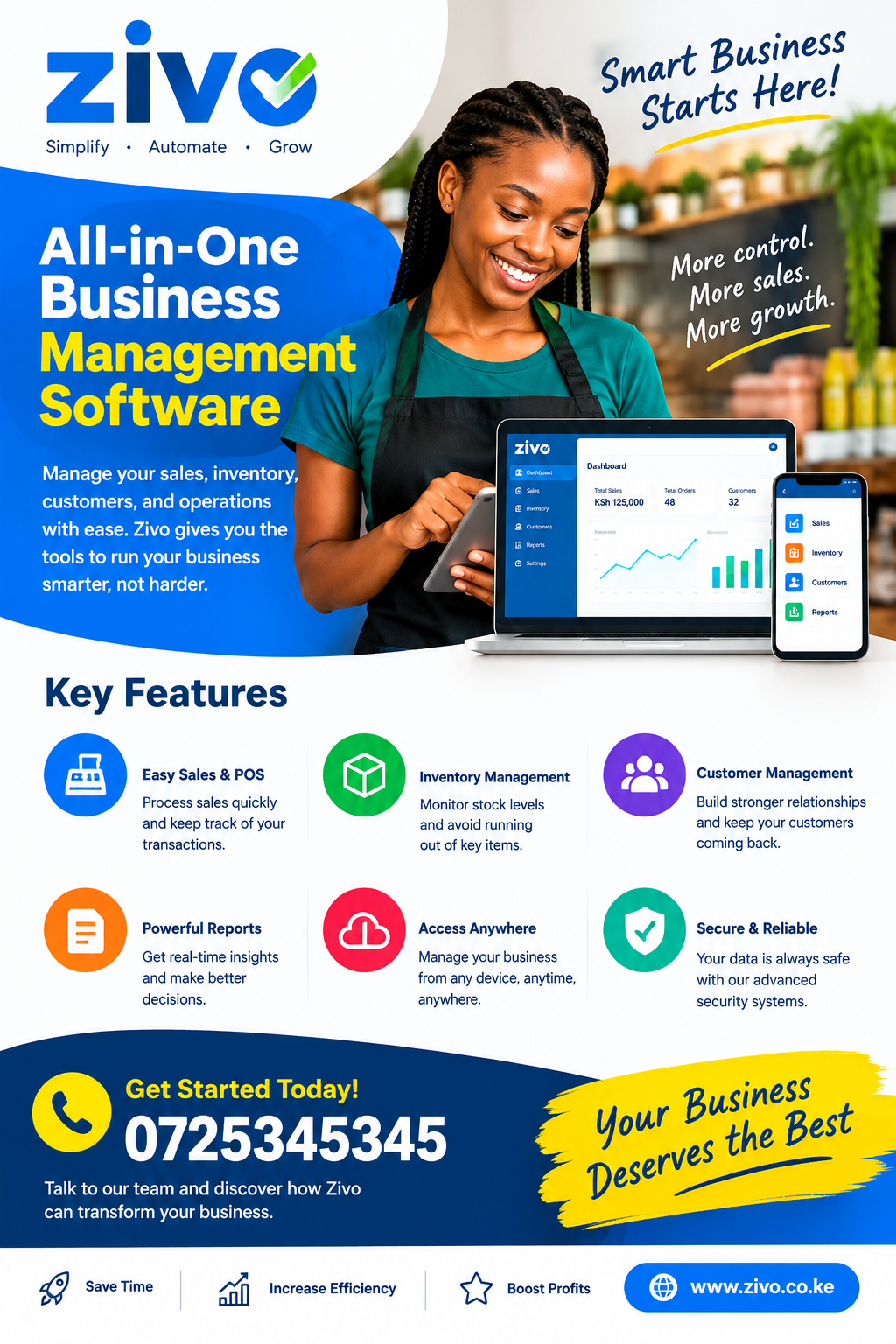
Procurement Management Software Kenya: A Complete Guide to Smarter Purchasing
Every business that purchases goods or services needs a reliable way to control spending, evaluate suppliers, approve requests, and keep accurate purchasing records. From small retailers and growing enterprises to manufacturers, schools, hotels, construction companies, and service providers, procurement decisions directly affect operating costs and business performance. Procurement Management Software Kenya offers businesses a way to organize these activities, improve accountability, and make purchasing decisions using accurate information rather than scattered paperwork and spreadsheets.
Procurement involves much more than ordering products. It includes identifying business needs, requesting quotations, comparing suppliers, preparing purchase orders, approving expenditure, receiving deliveries, checking invoices, and maintaining records for future reference. When these activities happen through disconnected systems, employees may struggle to track requests, managers may approve unnecessary purchases, and finance teams may find it difficult to reconcile payments.
A well-structured procurement process helps businesses know what they need, why they need it, who approved the purchase, which supplier was selected, and how much was spent. The right digital solution can bring these activities together and make information easier to access.
This guide explains how Procurement Management Software Kenya can support Kenyan businesses, the essential features to consider, the benefits of digitizing procurement, and the practical steps organizations can take when choosing a purchasing management system.
1. Understanding Procurement Management in Kenyan Businesses
Procurement management is the process of planning, requesting, purchasing, receiving, and recording the goods and services an organization requires to operate. It covers routine purchases, supplier contracts, equipment acquisition, office supplies, raw materials, maintenance services, and other business expenses.
A structured procurement process helps an organization balance three important priorities:
-
Getting the right products and services.
-
Obtaining reasonable prices and suitable supplier terms.
-
Maintaining accountability for every purchasing decision.
For example, a Nairobi-based distribution company may purchase packaging materials, fuel, office supplies, spare parts, and delivery equipment. Without a central system, different departments might place orders independently, use different suppliers for identical products, or exceed their allocated budgets.
A coordinated purchasing process makes it easier to consolidate requests, compare quotations, monitor spending, and establish consistent purchasing procedures.
Businesses exploring Procurement Management Software Kenya should first identify where their existing procurement process experiences delays, unnecessary expenditure, missing documentation, or limited visibility.
Common procurement challenges
Many organizations encounter similar problems when purchasing is managed manually.
Poor recordkeeping: Paper forms, email conversations, and spreadsheets may contain different versions of the same purchase information.
Delayed approvals: Requests can remain unattended when managers are unavailable or approval responsibilities are unclear.
Uncontrolled spending: Departments may make purchases without checking available budgets or confirming whether the items are already in stock.
Supplier inconsistencies: Employees may choose suppliers without comparing prices, delivery timelines, product quality, and payment terms.
Limited reporting: Management may struggle to determine how much the organization spends on particular categories, suppliers, projects, or departments.
Difficult audits: Finding quotations, invoices, approvals, and delivery records can require considerable time when documents are stored in different locations.
Addressing these challenges requires clear procedures, reliable documentation, and tools that support the entire purchasing cycle.
2. What Is Procurement Management Software?
Procurement management software is a digital system used to coordinate purchasing activities, supplier information, approval workflows, purchase orders, and procurement records.
Depending on its capabilities, the system may also support budget monitoring, inventory checks, contract tracking, invoice matching, reporting, and integration with accounting applications.
Instead of relying entirely on manual communication, employees can submit purchase requests through a defined process. The relevant manager reviews the request, the procurement team obtains supplier quotations, and an authorized person approves the purchase before an order is issued.
The software then helps preserve the transaction history, making it easier to follow the request from initiation to delivery and payment.
Businesses evaluating Procurement Management Software Kenya should distinguish between basic purchasing tools and comprehensive procurement systems. A basic application may only record orders, while a broader platform may manage requests, supplier evaluation, approvals, contracts, and reporting.
How the procurement process works digitally
A typical digital procurement workflow follows these stages:
-
Purchase request: An employee identifies a business requirement and submits a request with quantities, descriptions, estimated costs, and the reason for purchasing.
-
Review and approval: The responsible manager checks the request against business needs, purchasing policies, and budget limits.
-
Supplier sourcing: The procurement team identifies suitable suppliers and requests quotations where appropriate.
-
Quotation comparison: Prices, product specifications, quality, delivery times, warranties, and payment conditions are evaluated.
-
Purchase order creation: An authorized employee prepares an order containing the agreed items, quantities, prices, and delivery information.
-
Goods or services receipt: The organization confirms whether the supplier delivered what was ordered.
-
Invoice verification: The relevant team compares the invoice with the purchase order and delivery documentation.
-
Payment and recordkeeping: The finance team processes the approved payment and retains the supporting records.
A digital system helps establish a consistent sequence while preserving the information needed for management review.
3. Why Kenyan Businesses Need Better Procurement Processes
Procurement decisions influence profitability, service delivery, customer satisfaction, and the ability to maintain daily operations. Even a business with strong sales can experience financial pressure if it purchases inefficiently or fails to monitor supplier costs.
For example, a restaurant that frequently runs out of cooking oil may make emergency purchases at higher prices. A construction company that orders materials too early may tie up cash in unused stock. A retailer that purchases identical goods from multiple suppliers without comparing terms may miss opportunities to negotiate better prices.
A well-organized purchasing process helps management identify these patterns and take corrective action.
Organizations adopting Procurement Management Software Kenya can work toward better purchasing visibility, clearer responsibilities, and more consistent documentation.
Supporting business growth
As an organization expands, its procurement requirements usually become more complicated. More employees may submit requests, more suppliers may be involved, and purchasing decisions may affect several locations or departments.
A process that works for a small team may become difficult to manage when transaction volumes increase.
A suitable procurement system can help standardize purchasing procedures across branches, establish approval limits, centralize supplier information, and generate reports for management.
Improving financial control
Procurement and financial management are closely connected. Every purchase affects available cash, operating expenses, inventory, or project budgets.
When purchase requests are checked before approval, organizations can reduce unnecessary spending and identify requests that require further justification.
A procurement platform can also help managers compare planned spending with actual commitments. However, its usefulness depends on accurate records, clear financial policies, and appropriate user permissions.
4. Essential Features to Look for in Procurement Software
Not every business requires the same procurement features. A small professional services company may need straightforward purchasing approvals and supplier records, while a manufacturer may require inventory coordination, contract management, and more advanced reporting.
The best approach is to identify the features that solve existing operational problems without introducing unnecessary complexity.
Purchase requisition management
Purchase requisitions allow employees to formally request the goods or services they need.
A useful requisition module should capture:
-
Item or service description.
-
Required quantity.
-
Estimated cost.
-
Department or project.
-
Business justification.
-
Required delivery date.
-
Supporting documents.
-
Requested approval.
Standardized requests help procurement teams understand requirements before contacting suppliers.
Approval workflows
Approval workflows define who must authorize a purchase and under what conditions.
For example, an organization may allow department supervisors to approve small purchases while requiring senior management approval for larger commitments.
A configurable workflow can route requests according to the amount, department, project, or purchasing category.
When comparing Procurement Management Software Kenya, ask whether the system supports multiple approval levels, approval limits, request status tracking, and a history of authorization decisions.
Supplier management
Supplier management provides a central record of vendors and their business information.
Depending on the platform, supplier records may include contact details, products supplied, quotations, contractual terms, delivery history, payment conditions, and relevant compliance documents.
Organized supplier information helps businesses compare vendors and maintain consistent purchasing relationships.
Purchase order management
Purchase orders document the items or services a business intends to purchase from a supplier.
A purchase order should clearly state quantities, agreed prices, specifications, delivery requirements, and applicable terms.
The software should help employees prepare orders consistently, track their status, and connect them to the original request and supporting quotation.
Budget monitoring
Budget controls help organizations evaluate proposed purchases before making commitments.
A procurement system may allow users to assign budgets to departments, projects, or spending categories. Depending on the functionality, it can warn users when requests approach an allocation limit or require additional authorization for exceptions.
Before choosing Procurement Management Software Kenya, establish whether budget monitoring is available and whether it updates automatically or requires information from a separate accounting system.
Reporting and analytics
Procurement reports help management understand how purchasing activities affect business performance.
Useful reports may include:
-
Spending by supplier.
-
Purchases by department.
-
Orders awaiting approval.
-
Outstanding purchase orders.
-
Supplier delivery performance.
-
Purchases by product category.
-
Budget versus actual expenditure.
-
Purchase request processing times.
Reporting becomes more useful when information is complete, consistently categorized, and regularly reviewed.
5. Automating Purchase Requests and Approvals
Manual approval processes often depend on emails, paper signatures, telephone calls, and personal follow-ups. These methods can work for simple operations, but they become difficult to track as the organization grows.
A digital workflow gives employees a defined channel for submitting requests and allows authorized managers to review the relevant information.
For example, an employee in a Mombasa branch may request replacement equipment. Instead of sending a paper form to headquarters, the employee submits the request electronically. The system routes it to the responsible supervisor, who checks the justification and budget before approving or rejecting it.
The procurement team can then proceed according to company policy.
Businesses considering Procurement Management Software Kenya should look for workflow flexibility rather than assuming that every business follows an identical approval structure.
Reducing unnecessary delays
Approval automation can make pending requests easier to identify. Managers can see which items require attention, while procurement employees can avoid repeatedly asking colleagues for status updates.
Useful workflow capabilities include:
-
Notifications for pending approvals.
-
Clear request statuses.
-
Defined approval responsibilities.
-
Escalation rules where supported.
-
Rejection reasons and revision requests.
-
Time-stamped approval records.
Automation does not guarantee that every request will be approved quickly. Managers still need to review requests promptly, and organizations must establish sensible approval limits.
Maintaining accountability
A reliable approval history helps management determine who submitted a request, who authorized the expenditure, and whether the purchase followed the required procedure.
This information is particularly valuable when investigating unusual expenditure or preparing for internal reviews.
6. Supplier Evaluation and Relationship Management
Suppliers affect product quality, operational continuity, delivery reliability, and the total cost of purchasing. Selecting a vendor based solely on the lowest quoted price can create problems if the supplier delivers late, provides unsuitable products, or offers unfavorable payment terms.
Supplier evaluation should therefore consider several factors.
Comparing supplier quotations
A quotation comparison should assess more than the headline price. Relevant considerations include:
| Evaluation factor | What to examine |
|---|---|
| Price | Unit price, total cost, and additional charges |
| Quality | Specifications, durability, and quality requirements |
| Delivery | Lead time, reliability, and delivery location |
| Payment terms | Deposit requirements, credit terms, and due dates |
| Warranty | Coverage, exclusions, and support arrangements |
| Reliability | Past delivery performance and responsiveness |
| Compliance | Required documentation and applicable obligations |
A digital procurement record can preserve quotations and comparison notes so that the reason for selecting a supplier remains clear.
Monitoring supplier performance
Organizations can assess suppliers using measures such as on-time delivery, order accuracy, defect rates, responsiveness, and adherence to agreed terms.
These indicators help procurement teams identify reliable vendors and address recurring problems.
Businesses using Procurement Management Software Kenya should check whether supplier performance can be tracked through reports or recorded through structured evaluations.
Building stronger supplier relationships
Reliable suppliers may help businesses manage changing demand, resolve delivery problems, and maintain product availability.
Clear purchase orders, accurate forecasts, timely communication, and prompt resolution of invoice discrepancies contribute to better relationships.
Supplier management should also include periodic reviews. A vendor that performed well last year may no longer offer the best terms or meet current requirements.
7. Procurement Software and Inventory Management
Procurement and inventory management are closely related because purchasing decisions depend on what an organization already has available.
If employees cannot see current stock levels, they may order products that are already in storage. On the other hand, poor visibility can lead to stock shortages, emergency orders, and interrupted operations.
A procurement platform with inventory integration can help employees check available quantities before submitting requests.
For example, a retailer with several branches may need to replenish fast-moving products. Inventory records can help the procurement team identify which items require replenishment and determine suitable quantities.
Organizations researching Procurement Management Software Kenya should determine whether the software integrates with their inventory system or requires stock information to be entered manually.
Avoiding unnecessary purchases
A stock check before purchase approval can reduce duplicate orders and help employees use available resources more effectively.
However, inventory data must be accurate. If damaged goods, reserved stock, or pending deliveries are not recorded correctly, the system may suggest purchasing decisions based on incomplete information.
Planning replenishment
Businesses can use historical demand, supplier lead times, minimum stock levels, and expected sales to plan future purchases.
A manufacturer may need raw materials several weeks before production. A supermarket may require more frequent replenishment of high-demand products.
The procurement process should reflect these differences rather than relying on one purchasing rule for every item.
Coordinating purchasing across branches
Businesses operating in multiple locations can sometimes transfer available stock between branches instead of placing new orders.
A connected procurement and inventory process makes it easier to identify these opportunities, provided the organization has accurate records of stock availability and transfer costs.
8. Cost Control and Budget Management
Procurement is an important part of controlling business expenditure. Small purchasing inefficiencies can accumulate into significant costs when they occur repeatedly across departments or branches.
Cost control begins with understanding what the organization needs, how much it can spend, and which purchasing decisions provide the best overall value.
A suitable Procurement Management Software Kenya solution can help organize spending information and make deviations from purchasing plans easier to identify.
Establishing procurement budgets
Businesses should create budgets that reflect expected operating needs, project commitments, and financial priorities.
Each department should understand its purchasing limits and the process for requesting exceptions.
A procurement system can support these policies by recording budget allocations and linking purchases to the relevant department or project.
Identifying spending patterns
Procurement reports can reveal recurring purchases, suppliers receiving a large share of expenditure, and categories experiencing unexpected cost increases.
For example, a business may discover that several departments independently purchase office supplies every week. Consolidating these orders could simplify administration and create an opportunity to negotiate delivery or volume terms.
Any potential saving should be evaluated against storage costs, cash flow, product expiry, and actual consumption.
Measuring procurement performance
Useful performance indicators include:
-
Average time required to approve a request.
-
Percentage of purchases made through approved procedures.
-
Purchase order accuracy.
-
Supplier delivery reliability.
-
Spending against budget.
-
Number of emergency purchases.
-
Frequency of invoice discrepancies.
-
Document completeness.
Organizations should establish a baseline before introducing new software. This makes it easier to evaluate whether process changes produce measurable improvements.
9. Purchase Orders, Invoices, and Financial Records
Purchasing involves several documents that must agree with one another. A purchase request explains the business need, a quotation records the supplier’s offer, a purchase order confirms the order, a delivery record documents receipt, and an invoice requests payment.
When these documents are disconnected, the finance team may struggle to determine whether a payment is correct.
A procurement platform can link relevant documents to a single transaction, making verification easier.
Businesses exploring Procurement Management Software Kenya should consider how the system handles invoice references, supplier documentation, purchase order records, and financial exports.
Matching orders with deliveries and invoices
A common control is to compare the purchase order, delivery confirmation, and supplier invoice before payment.
For instance, if a business orders 100 units but receives only 90, the receiving record should reflect the quantity delivered. The finance team can then investigate the discrepancy rather than automatically treating the invoice as fully supported.
Some systems automate parts of this process, while others require employees to perform the checks manually.
Improving accounting coordination
Procurement and accounting systems serve related but different purposes. Procurement manages the purchasing process, while accounting records financial transactions and supports financial reporting.
Integration can reduce duplicate data entry and improve consistency, but businesses should confirm which information moves between systems and whether synchronization occurs automatically.
Supporting audit preparation
A complete purchasing record makes it easier to retrieve approvals, quotations, orders, delivery evidence, invoices, and payment references.
This improves internal oversight and can help an organization respond to legitimate audit requests.
10. The Importance of Procurement Software for Small Businesses
Small businesses often have limited administrative staff. The same employee may handle purchasing, stock management, supplier communication, and invoice preparation.
Although spreadsheets can support basic recordkeeping, they may become difficult to maintain when transaction volumes increase or several employees need access to the same information.
A practical Procurement Management Software Kenya solution can help small organizations establish consistent procedures without creating an unnecessarily complicated administrative structure.
Benefits for small enterprises
Small businesses may benefit from:
-
Centralized supplier details.
-
Standardized purchase requests.
-
Clear approval responsibilities.
-
Better visibility into pending orders.
-
Easier retrieval of purchasing documents.
-
More consistent expenditure reporting.
-
Reduced dependence on individual employees’ records.
For a small shop, the initial priority might be tracking supplier orders and purchase costs. A growing distributor may later need multiple approval levels, branch-level reporting, and integration with stock records.
Choosing a system that fits business size
A smaller organization should avoid purchasing an advanced platform simply because it offers many features.
Instead, it should identify the most frequent procurement problems and choose software that addresses them directly.
Ease of use matters. If employees find the system confusing, they may continue making purchases outside the official process, reducing the accuracy of procurement records.
11. Industry Applications of Procurement Management Software
Procurement requirements differ across industries. Understanding these differences helps organizations identify the workflows that matter most.
Retail and wholesale businesses
Retailers and wholesalers purchase goods for resale, packaging materials, cleaning supplies, equipment, and other operating requirements.
Their procurement processes often depend on stock availability, supplier prices, delivery reliability, and demand forecasts.
A retailer may need to coordinate purchases across several outlets while monitoring stock movement and supplier performance.
Manufacturing companies
Manufacturers require raw materials, components, packaging, maintenance supplies, and production equipment.
Procurement delays can affect production schedules, while excess purchasing can tie up working capital.
Useful capabilities may include supplier lead-time tracking, material requirements, purchase order monitoring, and coordination with production planning.
Construction and property businesses
Construction projects may involve cement, steel, electrical components, plumbing materials, machinery, professional services, and subcontractors.
Purchases may need to be assigned to specific projects, sites, cost categories, or approved budgets.
A well-documented procurement process helps project managers monitor commitments and investigate differences between planned and actual expenditure.
Property management organizations also purchase maintenance services, cleaning materials, security services, and replacement equipment.
Schools and educational institutions
Schools and colleges may purchase learning materials, computers, laboratory equipment, furniture, food supplies, and maintenance services.
Structured procurement procedures help departments document their needs and ensure that purchases receive the required authorization.
Hotels and restaurants
Hospitality businesses purchase food ingredients, beverages, linen, cleaning products, kitchen equipment, and maintenance services.
Many of these items have changing demand or expiry considerations, so purchasing decisions should account for stock levels, consumption patterns, and delivery frequency.
Healthcare facilities
Healthcare facilities may procure medical supplies, protective equipment, laboratory materials, cleaning products, and equipment maintenance services.
Their requirements can involve strict quality specifications, supplier verification, product traceability, and specialized storage considerations.
Procurement software should support the facility’s documented procedures and applicable regulatory obligations rather than replacing professional oversight.
12. Procurement Management Software Kenya for Multi-Branch Organizations
Organizations operating across several locations need a reliable way to coordinate purchasing while maintaining appropriate local responsibilities.
Without a standardized system, different branches may use different suppliers, approval processes, document formats, and purchasing categories. This makes consolidated reporting difficult.
A suitable Procurement Management Software Kenya platform can help businesses establish shared procedures while allowing authorized employees to manage branch-specific requirements.
Centralized and decentralized procurement
Centralized procurement means that major purchasing decisions are managed by a central team. This can improve standardization, increase visibility, and support consolidated supplier negotiations.
Decentralized procurement allows branches or departments to make certain purchasing decisions locally. This may be useful when products must be obtained quickly or local suppliers provide better access.
Many organizations use a hybrid approach. High-value purchases may require headquarters approval, while routine low-value purchases can be handled by branch managers within established limits.
Managing interdepartmental requests
A centralized workflow helps departments submit requests in a consistent format.
For example, the IT department may request computers, the facilities team may request maintenance materials, and the sales department may request promotional items.
The procurement team can review these requests, compare supplier options, and coordinate orders according to organizational priorities.
Consolidated reporting
Management can compare expenditure by branch, department, supplier, and category when purchasing records follow consistent standards.
Such reports can highlight unusual spending patterns and help identify opportunities to coordinate orders across locations.
13. Data Security and Procurement Accountability
Procurement systems contain business-sensitive information, including supplier contacts, prices, negotiated terms, internal budgets, and purchase approvals.
Protecting this information is essential for maintaining confidentiality and preventing unauthorized transactions.
Organizations evaluating Procurement Management Software Kenya should review the platform’s security controls before implementation.
User access controls
Not every employee should have the same permissions.
For example, an employee may be allowed to submit requests without being permitted to approve them. Procurement officers may manage supplier records, while finance employees may access invoices and payment-related information.
Role-based access helps separate responsibilities and reduces the risk of unauthorized changes.
Audit trails
An audit trail records important activities, such as creating a request, modifying a purchase order, approving expenditure, or updating supplier information.
These records help management investigate discrepancies and understand how decisions were made.
Organizations should confirm which activities the system records, how long records are retained, and whether authorized administrators can review the history.
Backups and recovery
Businesses should understand how procurement records are backed up and how information can be restored if data is lost or a service interruption occurs.
They should also establish internal procedures for handling system outages, protecting access credentials, and reporting suspicious activity.
Kenyan data protection considerations
Businesses processing personal information must consider applicable Kenyan data protection requirements, including obligations that may arise under the Data Protection Act, 2019.
The specific requirements depend on the information being processed, the organization’s role, and the nature of the processing. Organizations should obtain appropriate advice when assessing their obligations.
Security should be evaluated alongside functionality, usability, support, and total operating cost.
14. Integrating Procurement with Other Business Systems
Procurement rarely operates independently. It connects with inventory, accounting, budgeting, project management, and sometimes customer order management.
Integration can reduce repeated data entry and help teams work with consistent information.
Before choosing Procurement Management Software Kenya, businesses should identify which existing systems need to exchange information and whether the proposed platform supports those connections.
Accounting integration
Accounting integration may transfer supplier invoices, purchase totals, tax-related information, and transaction references into the finance system.
The business should confirm whether the integration supports its accounting procedures and whether financial information requires review before posting.
Inventory integration
Inventory integration can update stock records when goods are received and help procurement employees determine whether replenishment is necessary.
Organizations should clarify how the system handles returns, damaged items, partial deliveries, stock transfers, and goods reserved for particular orders.
Budget and project integration
Businesses managing multiple projects may need purchases assigned to project codes or cost centers.
Connecting procurement records with budget information can help project managers track expenditure and outstanding purchasing commitments.
Integration questions to ask
Before signing a contract, ask the provider:
-
Which systems can the platform integrate with?
-
Is the integration included in the quoted price?
-
Does data synchronize automatically or require manual exports?
-
How are duplicate records and failed transfers handled?
-
Can the integration be tested before implementation?
-
Who provides technical support when an integration fails?
These questions help prevent unexpected implementation costs and operational disruptions.
15. How to Choose the Right Procurement Software in Kenya
Selecting procurement software requires a clear understanding of the organization’s needs, budget, existing systems, and expected growth.
A platform that works well for one company may be unsuitable for another because procurement policies, transaction volumes, supplier arrangements, and reporting requirements differ.
Use the following process to compare available options.
Step 1: Assess current procurement challenges
Document how employees currently submit purchase requests, obtain quotations, approve orders, receive goods, verify invoices, and maintain records.
Identify the steps that cause the greatest delays or errors.
Step 2: Define essential requirements
Separate essential features from optional improvements.
For example, a business may require approval workflows, supplier records, and purchase order tracking immediately. Advanced forecasting or complex contract management may be unnecessary during the first phase.
Step 3: Evaluate usability
Ask employees who will use the system to participate in demonstrations.
They should be able to understand how to submit requests, approve purchases, record deliveries, and retrieve information without excessive difficulty.
Step 4: Check reporting capabilities
Review sample reports and confirm whether they answer management’s actual questions.
The ability to export useful information may also matter when preparing financial reports or sharing data with other departments.
Step 5: Confirm security and access controls
Ask about authentication, user permissions, audit trails, backup procedures, and the handling of sensitive business information.
Confirm that the proposed controls meet the organization’s requirements.
Step 6: Compare the total cost
Do not compare software using subscription price alone.
Consider implementation, training, customization, integrations, support, additional users, data migration, and any other applicable charges.
Step 7: Test before full deployment
Where possible, conduct a pilot using a department or purchasing category.
Evaluate whether the software improves the process, produces accurate reports, and works with the organization’s actual procedures.
Step 8: Review support and scalability
Confirm the provider’s support channels, response arrangements, training resources, and approach to future upgrades.
The software should remain practical as purchasing volumes, employee numbers, and reporting requirements change.
16. Procurement Software Pricing and Budget Considerations
There is no single price that applies to every procurement platform. Costs depend on the provider, functionality, number of users, transaction volumes, deployment method, integrations, customization, and support arrangements.
Some systems charge recurring subscription fees, while others may involve implementation charges or customized commercial arrangements.
Businesses considering Procurement Management Software Kenya should request a detailed quotation based on their specific requirements rather than relying on assumptions about typical prices.
Questions to include in a quotation request
Ask the provider to explain:
-
Initial setup and implementation charges.
-
Monthly or annual subscription fees.
-
User limits and additional-user charges.
-
Supplier and transaction limits, if applicable.
-
Training and onboarding costs.
-
Integration and customization charges.
-
Data migration requirements.
-
Technical support arrangements.
-
Backup and data export options.
-
Contract duration and renewal conditions.
Evaluating return on investment
A procurement system may create value by reducing administrative effort, improving purchase visibility, identifying duplicate orders, and strengthening compliance with internal procedures.
However, expected benefits should be measured rather than assumed.
For example, a company can compare the time employees spend processing purchase requests before and after implementation. It can also monitor emergency purchases, invoice discrepancies, and spending outside approved procedures.
A return-on-investment assessment should compare verified benefits with the complete cost of implementing and maintaining the system.
17. Common Procurement Software Implementation Mistakes
Even a capable platform can deliver disappointing results if the organization introduces it without adequate preparation.
Automating an unclear process
Software cannot automatically resolve every weakness in purchasing policy.
If employees do not know who approves a request or what documentation is required, the organization should clarify those rules before configuring the workflow.
Ignoring employee training
Employees need to understand how the new process works and why the organization is introducing it.
Training should cover everyday tasks, approval responsibilities, document handling, and the procedure for reporting errors.
Migrating incomplete data
Importing outdated supplier details, inconsistent product names, or incorrect opening balances can undermine confidence in the new system.
Before migration, review the data, remove unnecessary duplicates, and confirm important records with the relevant employees.
Selecting too many features
A system with numerous advanced functions may be difficult to implement if the organization has limited time and technical resources.
Start with the most important purchasing activities, then introduce additional features as users become comfortable.
Failing to monitor performance
After implementation, management should review whether the system is actually being used and whether procurement outcomes are improving.
A system that employees routinely bypass will not provide complete purchasing visibility.
Businesses considering Procurement Management Software Kenya should create an implementation plan with measurable goals, assigned responsibilities, and scheduled reviews.
18. Best Practices for Effective Procurement Management
Good procurement outcomes depend on both technology and sound management practices.
Establish a clear procurement policy
Document the organization’s purchasing rules, approval limits, supplier selection procedures, and required records.
Employees should know which purchases require quotations, when competitive evaluation is necessary, and who can authorize commitments.
Separate important responsibilities
Where practical, different employees should handle request initiation, approval, receipt confirmation, and payment authorization.
This separation reduces the risk of errors and makes unauthorized purchasing easier to detect.
Smaller organizations with limited staff can use alternative review controls where full separation is not practical.
Maintain accurate supplier records
Update supplier contact information, payment terms, product details, and relevant documentation when changes occur.
Periodically review suppliers to identify outdated records, duplicated entries, and recurring performance problems.
Monitor purchasing regularly
Management should review procurement reports on a schedule that suits the organization’s transaction volume and risk.
High-value purchases may require closer oversight than routine low-value transactions.
Keep supporting documents together
Retain requests, quotations, approvals, purchase orders, delivery records, invoices, and other relevant documentation according to the organization’s recordkeeping policy and applicable requirements.
Encourage continuous improvement
Collect feedback from procurement staff, department managers, suppliers, and finance employees.
Use that feedback to simplify workflows, improve reporting, and address recurring delays.
19. The Future of Procurement Management in Kenya
Business procurement continues to evolve as organizations adopt digital tools, improve their data practices, and seek greater visibility into spending.
Future procurement improvements may include more advanced reporting, automated document processing, supplier risk monitoring, demand forecasting, and artificial intelligence-assisted analysis.
These technologies can support decision-making, but they do not eliminate the need for human judgment, reliable information, or appropriate authorization.
Greater use of data-driven decisions
Procurement teams can use historical purchasing data to identify frequently purchased items, compare supplier prices, review delivery performance, and estimate future requirements.
Reliable data can help businesses plan purchases more carefully and avoid reacting only when supplies run low.
More connected business operations
Integration between procurement, accounting, inventory, and operational systems can help organizations maintain a more consistent view of purchasing commitments.
The quality of these benefits depends on accurate records, effective integration, and clear responsibility for resolving data discrepancies.
Responsible use of automation
Automated recommendations should be reviewed in light of business priorities, supplier reliability, contractual terms, and purchasing policies.
For high-value or sensitive purchases, human approval and documented decision-making remain important.
Businesses should evaluate emerging features according to their practical usefulness, reliability, security, and total cost.
20. Preparing Your Business for Procurement Digitization
Before introducing a new purchasing platform, an organization should prepare its people, procedures, and records.
A phased approach can reduce disruption and make it easier to identify problems early.
Start by documenting the existing process and identifying the most frequent purchasing bottlenecks. Next, establish the approval rules and reporting requirements the new system must support.
Review supplier records and agree on consistent naming conventions for products, departments, projects, and spending categories.
Select a small group of users to test the system. Their feedback can reveal confusing screens, missing information fields, or unnecessary approval steps before the platform is introduced across the organization.
Businesses evaluating Procurement Management Software Kenya should also establish how success will be measured. Useful indicators may include processing time, purchasing compliance, order accuracy, document completeness, and the frequency of emergency purchases.
Once the system is introduced, provide employees with clear instructions and a channel for reporting issues. Review progress regularly and adjust workflows when evidence shows that a change would improve efficiency or accountability.
Successful digitization is not simply about moving forms online. It involves creating a dependable purchasing process in which employees understand their responsibilities and managers can make informed decisions.
21. Frequently Asked Questions About Procurement Software
1. What is Procurement Management Software Kenya?
Procurement Management Software Kenya refers to digital tools businesses can use to organize purchasing activities in Kenya. Depending on the platform, these tools may manage purchase requests, approvals, supplier information, quotations, purchase orders, delivery records, and procurement reports.
The purpose is to improve visibility, consistency, and accountability throughout the purchasing process.
2. Which businesses can use procurement management software?
Retailers, wholesalers, manufacturers, construction companies, schools, hotels, healthcare facilities, professional service providers, and other organizations can benefit from structured procurement tools.
The appropriate solution depends on purchasing complexity, transaction volumes, supplier arrangements, and internal approval requirements.
3. Can procurement software help reduce business costs?
It can help businesses identify duplicate orders, compare supplier quotations, monitor budgets, and improve purchasing documentation.
However, cost savings are not guaranteed. Results depend on how effectively the business uses the system, the quality of its data, and the purchasing decisions employees make.
4. Does procurement software support supplier management?
Many procurement systems include supplier records, quotation management, supplier comparisons, and purchasing history.
More advanced platforms may also support supplier evaluations, contract tracking, and delivery performance reports. Businesses should confirm the specific capabilities of each product.
5. Can procurement software integrate with accounting systems?
Some platforms integrate with accounting applications to transfer approved purchasing information, invoices, or supplier transaction records.
Integration capabilities vary, so businesses should verify compatibility, supported data fields, synchronization arrangements, and any additional charges before purchasing.
6. Is procurement software suitable for small businesses?
Yes. Small businesses can use procurement tools to establish consistent purchasing procedures, maintain supplier records, and track approvals.
A small business should begin with features that address its immediate needs and expand its use of the system as operations grow.
7. How much does procurement software cost in Kenya?
Pricing depends on the provider, features, number of users, implementation requirements, integrations, and support arrangements.
Businesses should request quotations that identify recurring fees and additional costs, then compare the total cost with their operational requirements and expected benefits.
8. How does procurement software improve accountability?
It can maintain records of requests, approvals, purchase orders, supplier quotations, and delivery confirmations.
Role-based permissions and activity logs can help organizations establish who performed particular actions and whether purchases followed internal procedures.
9. How long does procurement software implementation take?
Implementation time depends on the complexity of the organization, the amount of data involved, the number of integrations, and the level of customization required.
A straightforward system may be introduced more quickly than a platform covering multiple branches, complex approval rules, and several connected business applications.
10. What should a business consider before choosing procurement software?
A business should assess its current challenges, required features, ease of use, reporting needs, security controls, integration options, total cost, and provider support.
Testing the system with actual purchasing workflows can help management determine whether the solution fits its operations.
Conclusion
Effective procurement management helps businesses maintain control over spending, obtain suitable goods and services, and preserve accurate records of purchasing decisions. When procurement relies on disconnected documents and informal approvals, organizations can experience delays, duplicate orders, inconsistent supplier selection, and limited financial visibility.
Procurement Management Software Kenya can help organizations establish a more structured approach by connecting purchase requests, approvals, supplier information, purchase orders, and reporting within a coordinated process.
The greatest benefit comes from matching the software to the organization’s actual needs. Businesses should assess their purchasing challenges, establish clear procedures, compare suitable platforms, review security and integration capabilities, and train employees before full implementation.
Small businesses may prioritize simple purchasing records and approval workflows, while larger organizations may require branch-level controls, advanced reporting, supplier evaluations, and integration with inventory and accounting systems.
Procurement software should also be supported by accurate information, clear responsibilities, regular performance reviews, and appropriate financial controls. Technology alone cannot guarantee lower costs or eliminate errors, but it can give management better information with which to improve decisions.
For Kenyan businesses seeking stronger purchasing oversight, more organized supplier relationships, and better visibility into expenditure, a carefully selected procurement management system can be a valuable investment in operational efficiency and sustainable growth.
Procurement Management Software Kenya
Procurement Management Software Kenya
Procurement Management Software Kenya
Procurement Management Software Kenya
Procurement Management Software Kenya
Procurement Management Software Kenya
Procurement Management Software Kenya
Procurement Management Software Kenya
Procurement Management Software Kenya
Procurement Management Software Kenya
Procurement Management Software Kenya
Procurement Management Software Kenya
Procurement Management Software Kenya
Procurement Management Software Kenya
Procurement Management Software Kenya
Procurement Management Software Kenya
Procurement Management Software Kenya
Procurement Management Software Kenya
Procurement Management Software Kenya
Procurement Management Software Kenya
Procurement Management Software Kenya
Procurement Management Software Kenya
Procurement Management Software Kenya
Procurement Management Software Kenya
Procurement Management Software Kenya
Procurement Management Software Kenya
Procurement Management Software Kenya
Procurement Management Software Kenya
Procurement Management Software Kenya
Procurement Management Software Kenya
Procurement Management Software Kenya
Procurement Management Software Kenya
Procurement Management Software Kenya
Procurement Management Software Kenya
Procurement Management Software Kenya
Procurement Management Software Kenya
Procurement Management Software Kenya
Procurement Management Software Kenya
Procurement Management Software Kenya