
WhatsApp Business Software for Marketing: The Complete Guide for Kenyan Businesses
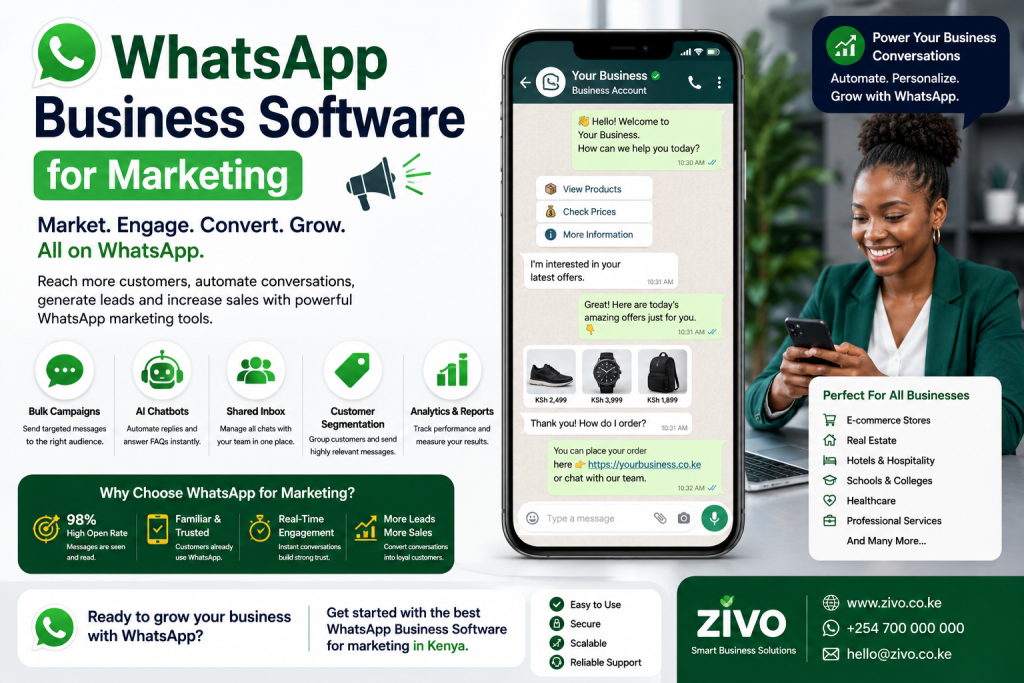
Marketing has changed dramatically over the last few years. Customers no longer want to wait for emails or spend time navigating complicated websites before communicating with a business. They want fast, convenient, and direct communication.
For many businesses, WhatsApp has become one of the most useful channels for connecting with customers, promoting products, answering questions, following up on leads, and building relationships. However, managing hundreds or thousands of WhatsApp conversations manually can become difficult.
This is where WhatsApp Business Software for marketing becomes valuable.
WhatsApp Business Software for marketing allows businesses to organize customer conversations, automate messages, manage leads, send campaigns, provide customer support, and measure marketing performance from a centralized platform.
Instead of relying on one employee to respond to every WhatsApp message, businesses can use automation, shared inboxes, chatbots, customer segmentation, and analytics to create a more efficient marketing process.
This guide explains how WhatsApp Business Software for marketing works, its benefits, important features, practical use cases, implementation strategies, and how Kenyan businesses can use it to generate more leads and improve customer engagement.
What Is WhatsApp Business Software?
WhatsApp Business Software for marketing is a technology solution designed to help businesses use WhatsApp as part of their marketing and customer communication strategy.
While the standard WhatsApp Business application can be useful for small businesses, growing organizations often need more advanced capabilities.
These can include:
- Automated messages
- Bulk campaigns
- Customer segmentation
- Shared team inboxes
- Chatbots
- Lead management
- CRM integration
- Automated follow-ups
- Customer profiles
- Campaign analytics
- Payment integrations
- Product catalogs
- Appointment booking
- Customer support workflows
The purpose is to turn WhatsApp from a simple messaging application into a structured business communication and marketing channel.
Why WhatsApp Is Important for Marketing
The success of WhatsApp Business Software for marketing is closely connected to the popularity of WhatsApp as a communication platform.
Customers are already familiar with WhatsApp. They use it to communicate with friends, family, colleagues, businesses, and service providers.
This familiarity gives businesses an advantage.
Instead of asking customers to download a new application, businesses can communicate through a platform many customers already understand.
For a business, this can make marketing conversations more natural.
A potential customer can see a promotional message, ask a question, receive additional information, and continue toward a purchase without leaving the conversation.
How WhatsApp Business Software Supports Marketing
Traditional marketing often involves sending a message and hoping customers respond.
With WhatsApp Business Software for marketing, businesses can create more interactive customer journeys.
For example:
Marketing message → Customer response → Automated qualification → Product information → Sales representative → Purchase → Follow-up
This creates a continuous communication process.
A customer who clicks on a campaign can be guided through the next steps automatically.
The business can also collect useful information about customer interests and use that information to improve future campaigns.
Automated Marketing Messages
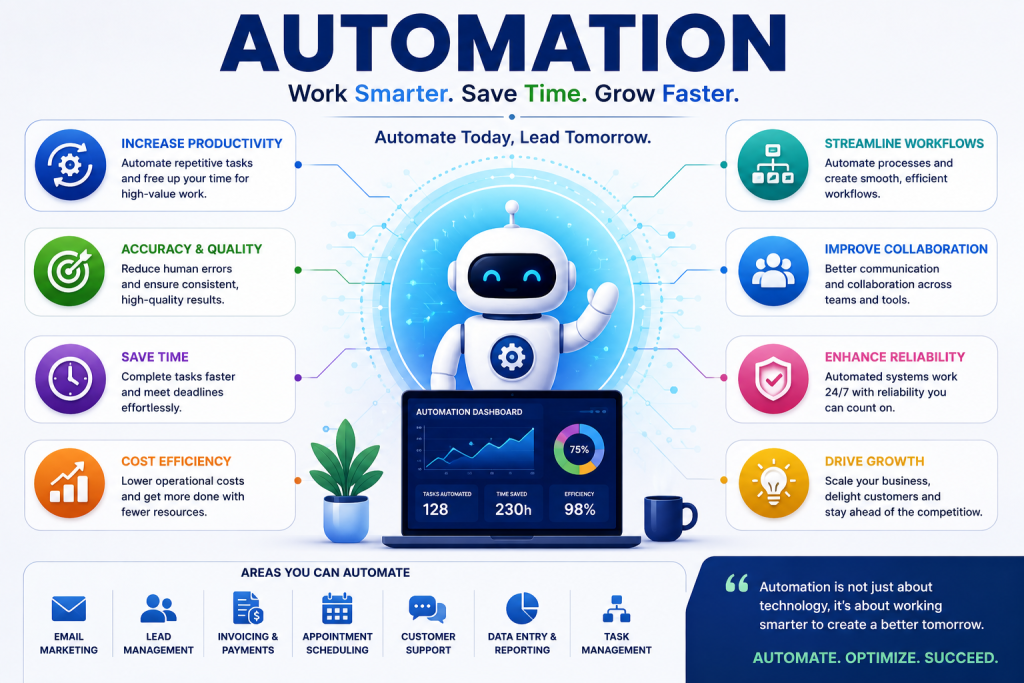
One of the most useful features of WhatsApp Business Software for marketing is automation.
Businesses can create predefined messages for common marketing situations.
For example:
“Hello! We have just launched our new collection. Would you like to see today’s offers?”
If the customer responds positively, the system can provide additional information.
Automation allows businesses to respond consistently without requiring an employee to type every message manually.
Businesses should still follow applicable WhatsApp policies and obtain appropriate customer permissions before sending marketing communications.
WhatsApp Marketing Campaigns
A business can use WhatsApp to promote products, services, events, offers, webinars, new launches, and special promotions.
With WhatsApp Business Software for marketing, campaigns can be organized and managed from a central platform.
For example, an online clothing store could create a campaign promoting a new collection.
Customers who have opted in to receive marketing messages can receive information about:
- New products
- Discounts
- Product availability
- Seasonal offers
- Delivery options
- Limited-time promotions
The business can then monitor campaign performance and identify which messages generate engagement.
Customer Segmentation
Sending the same message to every customer is not always effective.
A customer who purchased a product yesterday may need a different message from someone who has never purchased anything.
WhatsApp Business Software for marketing can help businesses organize customers into segments.
Possible segments include:
- New leads
- Existing customers
- Returning customers
- High-value customers
- Inactive customers
- Customers interested in specific products
- Customers in specific locations
- Customers who abandoned inquiries
- Event attendees
Segmentation makes marketing messages more relevant.
Personalized WhatsApp Marketing
Personalization can make marketing communication feel more relevant.
Instead of sending:
“Dear customer, we have an offer.”
A business might send:
“Hello Brian, our new men’s shoes have arrived. Would you like to see the available designs?”
With WhatsApp Business Software for marketing, businesses can use customer information to personalize conversations where appropriate.
Personalization should always be based on information customers have legitimately provided and should respect privacy requirements.
WhatsApp Lead Generation
WhatsApp can be an effective lead generation channel.
A potential customer may see an advertisement on social media or a website and click a WhatsApp button to ask for more information.
WhatsApp Business Software for marketing can immediately respond to the inquiry.
The AI or automated workflow can ask questions such as:
- What product are you interested in?
- What is your budget?
- Which location are you in?
- When would you like the service?
- What is your preferred contact method?
The answers can then be forwarded to a sales representative.
This can make lead qualification faster.
WhatsApp for E-Commerce Marketing
Online stores can use WhatsApp to promote products and communicate with customers.
A business can share product information, answer questions, provide order updates, and follow up with customers.
For example, a customer may ask:
“Do you have this shoe in size 42?”
The business can respond immediately.
With WhatsApp Business Software for marketing, automated product conversations can be connected with inventory, CRM, or e-commerce systems where appropriate.
This creates a more connected shopping experience.
WhatsApp Product Promotion
Businesses can use WhatsApp to introduce customers to new products.
For example, a technology company launching a new smartphone could send an approved promotional message to customers who have opted in.
The message could include:
- Product name
- Key features
- Price
- Availability
- Purchase instructions
- Website information
Customers can then reply if they need more information.
The conversation becomes part of the marketing journey.
WhatsApp for Real Estate Marketing
Real estate companies can benefit significantly from WhatsApp marketing.
Potential buyers and tenants frequently ask about:
- Property prices
- Locations
- Number of bedrooms
- Amenities
- Availability
- Viewing appointments
- Deposit requirements
- Lease terms
WhatsApp Business Software for marketing can help real estate companies respond to these inquiries quickly.
A chatbot can collect basic requirements and forward qualified leads to an agent.
For example:
“Are you looking for a house or apartment?”
“Which location do you prefer?”
“What is your monthly budget?”
“How many bedrooms do you need?”
This information helps sales teams focus on serious prospects.
WhatsApp Marketing for Hotels
Hotels can use WhatsApp to promote rooms, packages, events, restaurants, and special offers.
A customer may ask:
“Do you have rooms available this weekend?”
The business can respond with information about available options, subject to its reservation system.
WhatsApp Business Software for marketing can also support pre-arrival communication, booking inquiries, promotional campaigns, and post-stay engagement.
Hotels can build relationships with customers before and after their stay.
WhatsApp Marketing for Schools
Educational institutions can use WhatsApp to communicate with prospective students and parents.
Marketing messages can promote:
- New courses
- Admissions
- Application deadlines
- Open days
- Training programs
- Scholarships
- Events
A WhatsApp Business Software for marketing platform can also answer common admissions questions and route complex inquiries to the appropriate department.
This can reduce the workload on admissions teams.
WhatsApp Marketing for Financial Services
Banks, SACCOs, insurance companies, fintech businesses, and other financial organizations can use WhatsApp for customer communication and marketing.
Possible use cases include:
- Product information
- Service announcements
- Educational content
- Customer onboarding
- Appointment requests
- General inquiries
Because financial information is sensitive, organizations must use appropriate security, authentication, consent, and data protection procedures.
Marketing automation should never compromise customer security.
WhatsApp Marketing for Healthcare Businesses
Healthcare providers can use WhatsApp to share general information about services, appointment procedures, clinic hours, and health programs.
For example, a clinic can inform customers about:
- New services
- Opening hours
- Appointment availability
- General health education
- Location information
WhatsApp Business Software for marketing can help organize inquiries and automate administrative communication.
However, healthcare organizations should be careful with sensitive patient information and should not use automated marketing conversations as a substitute for professional medical advice.
Automated Follow-Ups
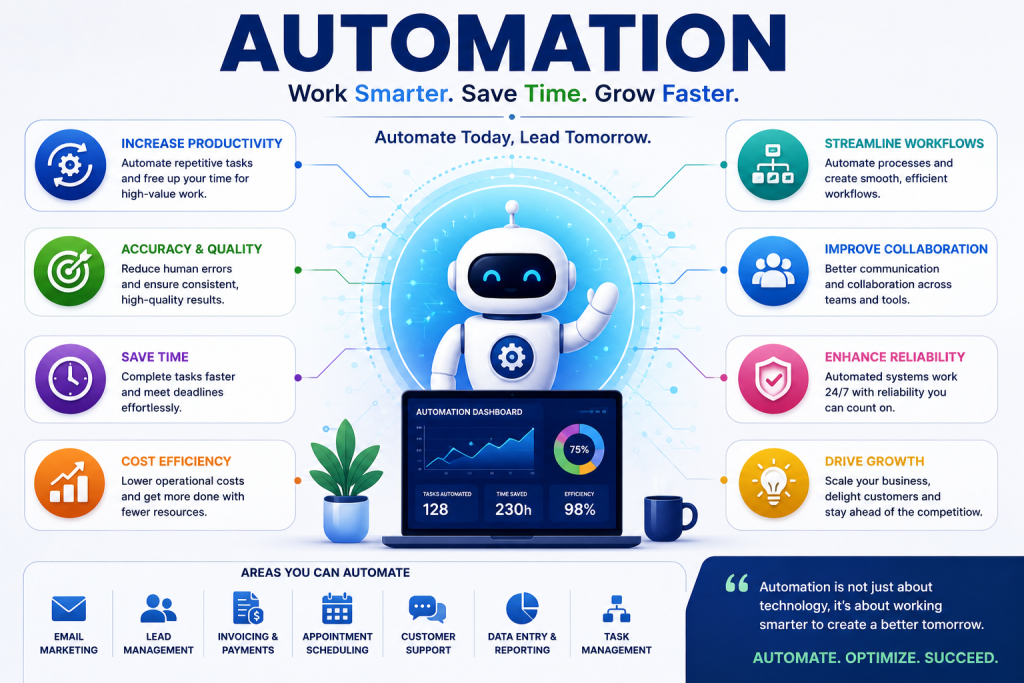
Many leads are lost because businesses fail to follow up.
A customer may ask about a service but not make a purchase immediately.
A sales representative may forget to contact the customer again.
Automation can help solve this problem.
With WhatsApp Business Software for marketing, a business can create follow-up workflows.
For example:
Day 1: Thank the customer for their inquiry.
Day 2: Share additional information.
Day 4: Ask whether they have questions.
Day 7: Send a relevant offer if appropriate.
Follow-ups should be useful rather than excessive. Customers should also have a clear way to opt out of marketing communications.
WhatsApp Customer Retention
Marketing should not stop after a customer makes a purchase.
Existing customers are valuable because they have already demonstrated interest in the business.
Businesses can use WhatsApp to maintain relationships through:
- Product recommendations
- New product announcements
- Loyalty offers
- Educational content
- Customer appreciation messages
- Service reminders
WhatsApp Business Software for marketing can help businesses create structured customer retention campaigns.
Shared Team Inbox
A growing business may have several employees responding to WhatsApp conversations.
Using a shared inbox allows authorized team members to access and manage conversations from one place.
For example:
- Sales handles sales inquiries.
- Support handles complaints.
- Finance handles payment questions.
- Marketing handles campaigns.
This reduces the risk of multiple employees responding to the same customer or leaving messages unanswered.
AI Chatbots for WhatsApp Marketing
Artificial intelligence can make WhatsApp marketing more powerful.
An AI chatbot can understand customer questions and provide relevant responses based on approved business information.
For example:
Customer: “How much is your premium package?”
AI: “Our premium package is available at the current listed price. Would you like me to explain what is included?”
The customer can continue the conversation.
WhatsApp Business Software for marketing can combine AI with human support, allowing the chatbot to handle routine questions while human agents manage complex conversations.
WhatsApp Marketing and CRM Integration
Customer relationship management systems contain valuable information about leads and customers.
Integrating WhatsApp with a CRM can connect conversations with customer profiles.
For example, when a customer sends a WhatsApp inquiry, the business can record:
- Name
- Phone number
- Product interest
- Lead source
- Sales stage
- Previous conversations
- Follow-up date
This gives sales teams more context.
Measuring WhatsApp Marketing Performance
Marketing campaigns need measurement.
A business should know whether its campaigns are generating meaningful results.
Important metrics include:
- Messages delivered
- Messages read
- Customer responses
- Leads generated
- Sales generated
- Conversion rate
- Campaign engagement
- Opt-outs
- Response time
With WhatsApp Business Software for marketing, businesses can use analytics to identify which campaigns perform best.
For example, if one campaign generates many inquiries but very few sales, the business may need to improve the offer or sales process.
Benefits of WhatsApp Business Software
The advantages of WhatsApp Business Software for marketing include:
1. Faster Communication
Businesses can respond to customers more quickly.
2. Better Lead Management
Leads can be captured and organized.
3. Marketing Automation
Routine marketing tasks can be automated.
4. Improved Customer Engagement
Customers can communicate through a familiar channel.
5. Better Follow-Up
Automated workflows reduce missed opportunities.
6. Centralized Conversations
Teams can manage conversations from one platform.
7. Better Reporting
Businesses can measure campaign performance.
8. Increased Productivity
Employees can focus on high-value tasks.
9. Personalized Marketing
Customer segments can receive more relevant messages.
10. Scalability
Businesses can manage larger volumes of conversations.
WhatsApp Marketing for Kenyan SMEs
Small and medium-sized businesses in Kenya can benefit from WhatsApp automation because many SMEs rely heavily on direct customer communication.
Restaurants, boutiques, salons, travel companies, property agencies, professional service providers, online stores, and technology companies can use WhatsApp to engage customers.
For an SME, WhatsApp Business Software for marketing can provide capabilities that would otherwise require several separate tools.
Instead of using one application for customer conversations, another for lead tracking, and another for marketing campaigns, businesses can create a more centralized workflow.
How to Implement WhatsApp Marketing Software
Businesses should begin with clear goals.
Ask:
What do we want to achieve?
Possible objectives include:
- Generate leads
- Increase sales
- Improve customer support
- Promote products
- Reduce response times
- Recover abandoned inquiries
- Improve customer retention
Next, identify the most common customer conversations.
Then create automated workflows for appropriate situations.
After deployment, monitor results and make improvements.
Best Practices
Successful WhatsApp marketing requires more than automation.
Businesses should follow several best practices.
Get Customer Consent
Only send marketing messages to customers through appropriate, consent-based communication processes.
Provide Value
Messages should offer useful information, relevant offers, or meaningful updates.
Avoid Spam
Sending too many messages can frustrate customers.
Personalize Carefully
Use customer information responsibly.
Make Opt-Out Easy
Customers should be able to stop receiving marketing communications.
Monitor Performance
Use analytics to understand what works.
Keep Information Accurate
Outdated product prices or policies can damage trust.
Common Mistakes to Avoid
One of the biggest mistakes is treating WhatsApp as a simple broadcasting tool.
Modern customers expect conversations.
Another mistake is sending excessive promotional messages.
Businesses should also avoid using outdated customer lists without proper consent.
Poorly designed chatbots can create frustration if they do not understand customer questions or provide a clear path to human support.
A successful WhatsApp Business Software for marketing strategy combines automation with human assistance.
The Future of WhatsApp Marketing
The future of business messaging will become increasingly automated and intelligent.
Artificial intelligence, customer data, automation, CRM integration, payment technology, and analytics are likely to become more closely connected.
Businesses will be able to create customer journeys that begin with an advertisement and continue through WhatsApp conversation, lead qualification, payment, delivery, and post-purchase support.
For Kenyan businesses, this creates a major opportunity.
Companies that use WhatsApp strategically can turn customer conversations into measurable marketing and sales processes.
Frequently Asked Questions
What is WhatsApp Business Software for marketing ?
It is software that helps businesses manage WhatsApp communication, marketing, sales, customer service, automation, and customer relationships.
Can WhatsApp be used for marketing?
Yes. Businesses can use WhatsApp for customer engagement, product promotion, lead generation, follow-ups, retention, and other marketing activities, subject to applicable WhatsApp policies and customer consent.
Can WhatsApp Business Software for marketing be automated?
Yes. Businesses can automate appropriate messages, workflows, customer responses, lead qualification, and follow-ups.
Can WhatsApp Business Software integrate with CRM systems?
Yes, depending on the platform. CRM integration can connect WhatsApp conversations with customer profiles and sales processes.
Can AI be used with WhatsApp?
Yes. Businesses can implement AI-powered conversational assistants through appropriate WhatsApp business integrations.
Is WhatsApp marketing suitable for SMEs?
Yes. SMEs can use WhatsApp to communicate with customers, generate leads, promote products, and improve follow-up.
Can businesses send bulk marketing messages?
Businesses can send approved marketing communications through the appropriate WhatsApp business solutions, but they must comply with applicable policies, templates, consent requirements, and messaging rules.
Conclusion
The rise of WhatsApp Business Software for marketing is changing how businesses communicate with customers.
WhatsApp is no longer simply a messaging application for personal conversations. For businesses, it can become a powerful channel for lead generation, marketing, sales, customer engagement, and retention.
The biggest advantage is convenience.
Customers can communicate with businesses through a familiar channel, while companies can automate repetitive processes and organize conversations more effectively.
A strong WhatsApp marketing strategy can help businesses capture leads, promote products, qualify prospects, follow up with customers, answer questions, and measure campaign performance.
However, technology alone does not guarantee success.
Businesses need good marketing content, accurate customer data, clear communication strategies, appropriate consent, effective automation, and a reliable human support process.
The most successful companies will use automation to make customer communication faster while maintaining the human connection that customers value.
For Kenyan businesses looking to modernize their marketing operations, WhatsApp Business Software for marketing offers an opportunity to combine direct communication with automation and measurable business results.
Whether you operate an online store, real estate agency, hotel, school, financial service, healthcare business, professional services company, or growing SME, WhatsApp can become an important part of your digital marketing strategy.
Start by identifying the customer questions and marketing activities that consume the most time. Then determine which processes can be automated and which should remain under human control.
With the right strategy and technology, WhatsApp Business Software for marketing can help your business reach customers faster, manage leads more effectively, improve follow-up, and create stronger long-term customer relationships.
Turn conversations into opportunities. Automate your marketing, engage customers faster, and build a smarter WhatsApp-powered business.