
WhatsApp CRM vs Traditional CRM: Which Customer Management Solution Is Best for Modern Businesses?
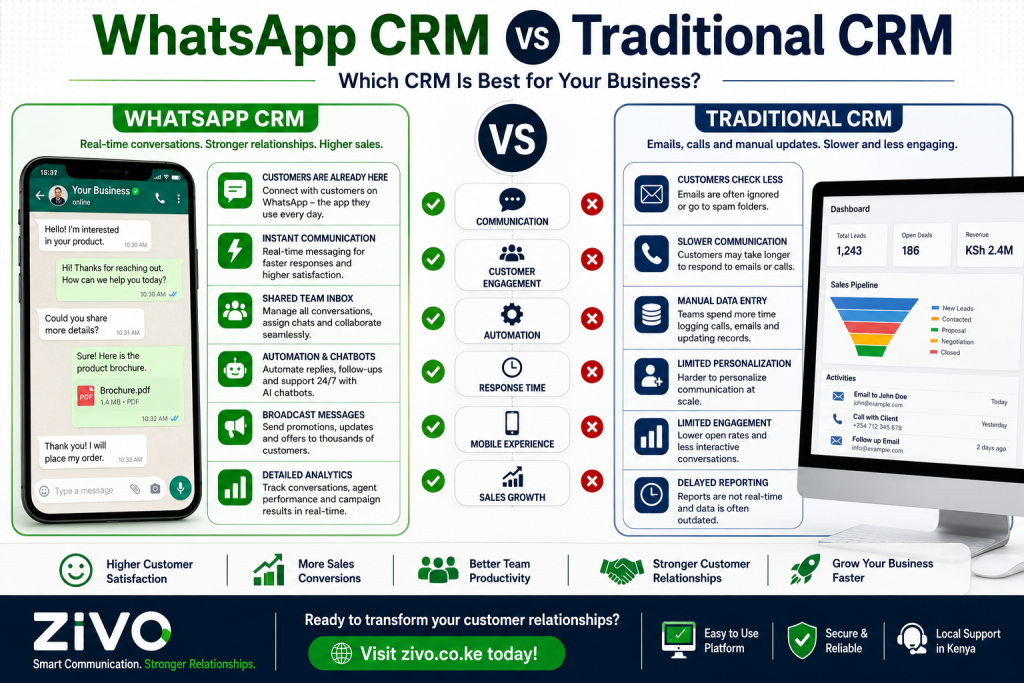
Customer relationship management (CRM) has evolved dramatically over the past decade. Businesses no longer rely solely on phone calls, emails, and spreadsheets to manage customer interactions. Today, instant messaging has become the preferred communication channel, especially in markets like Kenya, where WhatsApp is one of the most widely used business communication platforms.
This shift has created an important discussion among businesses: WhatsApp CRM vs Traditional CRM. Which solution offers better customer engagement, faster response times, and improved sales performance?
For companies looking to strengthen customer relationships and streamline operations, understanding the differences between these two approaches is essential. While traditional CRM systems have served businesses well for many years, WhatsApp CRM introduces real-time communication, automation, and personalized customer experiences that modern consumers expect.
In this guide, we compare WhatsApp CRM vs Traditional CRM to help businesses determine which solution best fits their growth strategy.
What Is a WhatsApp CRM?
A WhatsApp CRM is a customer relationship management system integrated with WhatsApp, allowing businesses to manage conversations, customer profiles, sales opportunities, and support tickets from one centralized platform.
Instead of switching between multiple devices and applications, businesses can communicate with customers directly through WhatsApp while maintaining complete customer records.
A WhatsApp CRM typically includes:
- Shared team inbox
- Customer contact management
- Automated replies
- Chat assignment
- Sales pipeline management
- Customer segmentation
- Broadcast messaging
- AI chatbot integration
- Conversation history
- Analytics and reporting
As businesses embrace conversational commerce, WhatsApp CRM vs Traditional CRM has become a key consideration for improving customer experience.
What Is a Traditional CRM?
A traditional CRM is software designed to organize customer information, manage sales opportunities, track leads, and maintain business relationships.
These systems generally focus on:
- Customer databases
- Sales tracking
- Email communication
- Phone call logging
- Meeting scheduling
- Opportunity management
- Reporting dashboards
Traditional CRM platforms have long been valuable for enterprise sales teams. However, they often rely on communication channels that today’s customers use less frequently than messaging apps.
This changing customer behavior has intensified the debate around WhatsApp CRM vs Traditional CRM.
Why Businesses Are Comparing WhatsApp CRM vs Traditional CRM
Consumer expectations have changed significantly.
Today’s customers expect businesses to:
- Respond quickly
- Provide personalized service
- Communicate through familiar channels
- Resolve issues efficiently
- Be available beyond office hours
Since WhatsApp is already part of customers’ daily lives, businesses are increasingly using it as their primary communication channel.
This shift explains why WhatsApp CRM vs Traditional CRM has become one of the most important technology comparisons for customer-focused businesses.
WhatsApp CRM vs Traditional CRM: Key Differences
| Feature | WhatsApp CRM | Traditional CRM |
|---|---|---|
| Communication | WhatsApp messaging | Email & phone |
| Customer Response Speed | Instant | Usually slower |
| Customer Engagement | Very High | Moderate |
| Automation | Advanced | Advanced |
| Mobile Experience | Excellent | Good |
| Team Collaboration | Shared Inbox | CRM Dashboard |
| Customer Familiarity | High | Depends on channel |
| AI Chatbots | Easy Integration | Platform-dependent |
| Broadcast Messaging | Yes | Limited |
| Conversation History | Complete | Mostly notes & emails |
This comparison highlights why many organizations are evaluating WhatsApp CRM vs Traditional CRM when modernizing customer communication.
Customer Communication
Communication is the heart of every CRM system.
Traditional CRM solutions typically rely on:
- Emails
- Phone calls
- Contact forms
- Internal notes
While these channels remain useful, response times can be slower, and customers may ignore emails or miss calls.
WhatsApp CRM allows businesses to communicate instantly using a platform customers already trust and check frequently.
With WhatsApp CRM, businesses can:
- Answer inquiries immediately
- Share images, videos, PDFs, and invoices
- Confirm appointments
- Send payment reminders
- Provide order updates
- Offer customer support in real time
This makes WhatsApp CRM vs Traditional CRM a compelling comparison for businesses seeking faster, more engaging customer interactions.
Customer Engagement
Engaged customers are more likely to:
- Make purchases
- Return for repeat business
- Recommend your company
- Respond to promotions
Traditional CRM systems often depend on email campaigns, which may have lower open rates.
WhatsApp messages, on the other hand, are typically viewed much faster, making them ideal for time-sensitive communication.
Businesses using WhatsApp CRM can engage customers through:
- Personalized messages
- Product recommendations
- Promotional broadcasts
- Interactive conversations
- Customer feedback requests
For companies focused on building stronger customer relationships, WhatsApp CRM vs Traditional CRM often favors WhatsApp-based communication.
Sales Pipeline Management
Both CRM types help businesses manage sales opportunities, but the customer experience differs significantly.
With traditional CRM, sales representatives may:
- Log calls manually
- Record meeting notes
- Send follow-up emails
- Update customer records
WhatsApp CRM enhances this process by allowing sales teams to:
- Chat with leads instantly
- Track conversations automatically
- Assign leads to team members
- Monitor deal progress
- Respond without switching applications
This streamlined workflow helps sales teams close deals faster.
It is one of the strongest reasons businesses compare WhatsApp CRM vs Traditional CRM before investing in a CRM solution.
Automation Capabilities
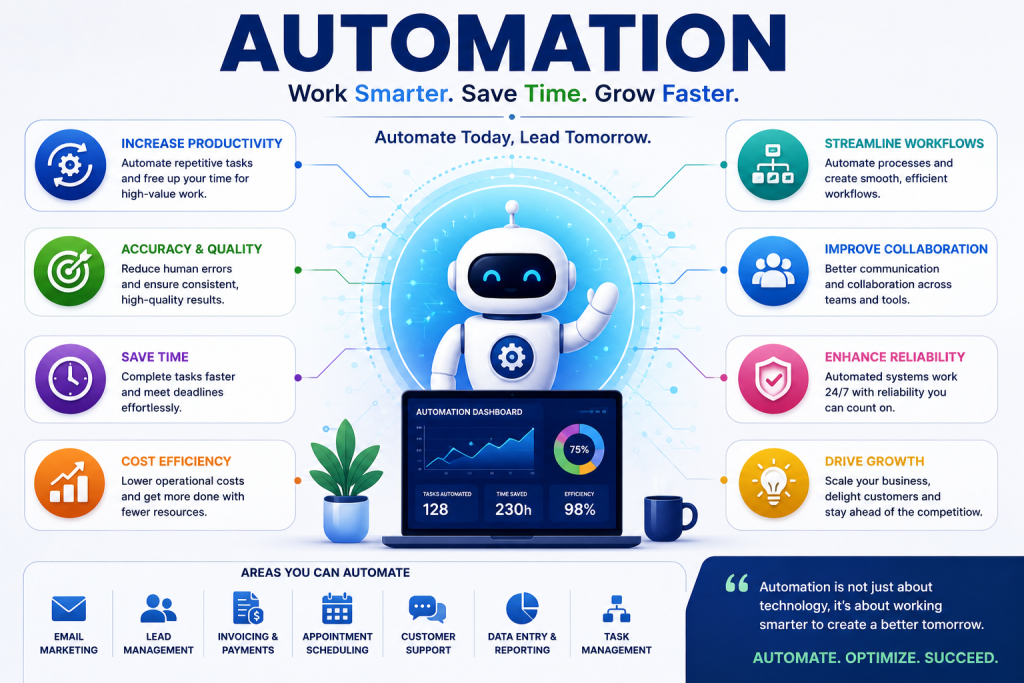
Automation improves productivity by eliminating repetitive tasks.
Traditional CRM platforms commonly automate:
- Email campaigns
- Lead assignments
- Task reminders
- Opportunity updates
WhatsApp CRM extends automation into real-time messaging.
Businesses can automate:
- Welcome messages
- Frequently asked questions
- Lead qualification
- Appointment confirmations
- Payment reminders
- Customer satisfaction surveys
- Order notifications
- Follow-up messages
This combination of automation and instant messaging makes WhatsApp CRM vs Traditional CRM a significant consideration for companies seeking greater operational efficiency.
Customer Support Experience
Excellent customer support drives customer loyalty.
Traditional CRM systems help support teams organize tickets and customer information, but interactions often occur via email or phone.
WhatsApp CRM delivers support where customers are already active.
Support teams can:
- Resolve issues quickly
- Share multimedia instructions
- Escalate conversations
- Assign chats internally
- Maintain a complete conversation history
Customers appreciate receiving support through a familiar messaging app rather than waiting on hold or monitoring email inboxes.
This improved support experience is another reason why WhatsApp CRM vs Traditional CRM increasingly favors WhatsApp-enabled solutions for modern businesses.
WhatsApp CRM vs Traditional CRM: Collaboration and Team Productivity
One of the biggest advantages of modern CRM platforms is enabling teams to work together efficiently. In the comparison of WhatsApp CRM vs Traditional CRM, collaboration is an area where WhatsApp CRM often provides a more seamless experience.
Traditional CRM systems usually require employees to:
- Log customer interactions manually
- Switch between email, phone, and CRM software
- Update customer notes after every conversation
- Search through multiple communication channels
This process can be time-consuming and may result in incomplete customer records.
A WhatsApp CRM centralizes all customer conversations in one shared inbox, allowing team members to:
- View complete conversation history
- Assign chats to specific agents
- Leave internal notes
- Transfer conversations without losing context
- Monitor response times
- Collaborate on complex customer requests
This streamlined workflow reduces confusion and improves customer satisfaction. For businesses with sales and support teams, WhatsApp CRM vs Traditional CRM clearly demonstrates the productivity benefits of centralized messaging.
Speed of Customer Response
Speed matters in today’s competitive business environment. Customers expect quick responses, and businesses that respond first often win the sale.
With traditional CRM systems, communication may involve:
- Sending emails
- Waiting for replies
- Scheduling phone calls
- Following up manually
These delays can cause businesses to lose potential customers.
A WhatsApp CRM enables businesses to respond almost instantly through:
- Live chat
- Automated greetings
- AI-powered responses
- Quick reply templates
- Smart routing to available agents
Whether a customer is asking about pricing, requesting a quotation, or seeking support, faster responses improve the customer experience.
This is another reason why many organizations evaluating WhatsApp CRM vs Traditional CRM choose WhatsApp as their primary communication channel.
Analytics and Reporting
Data-driven decisions help businesses improve sales, marketing, and customer service.
Traditional CRM systems provide reports such as:
- Sales forecasts
- Lead conversion rates
- Revenue reports
- Customer activity logs
WhatsApp CRM includes these capabilities while also offering messaging-specific analytics, including:
- First response time
- Average resolution time
- Conversation volume
- Agent performance
- Message delivery status
- Customer engagement metrics
- Broadcast campaign performance
These insights help businesses optimize customer communication strategies and improve operational efficiency.
When comparing WhatsApp CRM vs Traditional CRM, advanced messaging analytics give WhatsApp CRM an important advantage.
Customer Personalization
Customers appreciate businesses that understand their needs and communicate personally.
Traditional CRM systems allow businesses to store customer details, purchase history, and preferences. However, communication often remains formal and less interactive.
WhatsApp CRM enhances personalization by enabling businesses to:
- Address customers by name
- Send tailored product recommendations
- Share personalized offers
- Follow up after purchases
- Respond based on previous conversations
Because WhatsApp conversations feel more natural and conversational, customers are more likely to engage.
For businesses focused on customer relationships, WhatsApp CRM vs Traditional CRM demonstrates how messaging platforms create more meaningful interactions.
Integration with Business Systems
Modern businesses rely on multiple software solutions, including:
- Accounting software
- ERP systems
- E-commerce platforms
- Payment gateways
- Marketing tools
A robust WhatsApp CRM can integrate with these systems to create a unified workflow.
For example, businesses can:
- Send order confirmations automatically
- Notify customers of payment status
- Share invoices through WhatsApp
- Update customer records after every interaction
- Trigger marketing campaigns based on customer activity
Traditional CRM systems also support integrations, but they may not provide the same level of conversational automation.
This flexibility strengthens the case for WhatsApp CRM vs Traditional CRM, particularly for businesses embracing digital transformation.
Security and Data Protection
Protecting customer information is essential for maintaining trust and complying with data protection regulations.
Traditional CRM platforms typically include:
- User access controls
- Data encryption
- Activity logs
- Secure backups
Modern WhatsApp CRM solutions offer these same security features while adding secure messaging capabilities through official integrations.
Businesses can benefit from:
- Role-based access permissions
- Secure cloud storage
- Encrypted conversations
- Conversation audit trails
- Automatic backups
When implemented correctly, both systems provide strong security. However, WhatsApp CRM vs Traditional CRM shows that businesses can enjoy secure customer communication without sacrificing convenience.
Cost Comparison
Cost is a significant factor when selecting a CRM solution.
Traditional CRM Costs
Businesses may need to budget for:
- Software licensing
- User subscriptions
- Email marketing tools
- Phone systems
- Staff training
- System maintenance
WhatsApp CRM Costs
A WhatsApp CRM may include:
- Platform subscription
- WhatsApp Business API usage
- Automation features
- AI chatbot integration
- Team collaboration tools
Although pricing varies depending on business size and usage, many organizations find that WhatsApp CRM delivers higher value by improving customer engagement and reducing manual work.
When assessing return on investment, WhatsApp CRM vs Traditional CRM often favors WhatsApp CRM due to faster response times, improved conversion rates, and greater customer satisfaction.
Industry Use Cases in Kenya
Businesses across Kenya are increasingly adopting WhatsApp CRM to improve customer communication.
Retail
Retailers use WhatsApp CRM to:
- Confirm orders
- Share promotions
- Answer product inquiries
- Notify customers about deliveries
Real Estate
Property companies use WhatsApp CRM to:
- Respond to inquiries
- Schedule property viewings
- Share property brochures
- Follow up with potential buyers
Healthcare
Clinics and hospitals use WhatsApp CRM for:
- Appointment reminders
- Patient follow-ups
- General inquiries
- Service updates
Education
Schools and colleges use WhatsApp CRM to:
- Handle admissions inquiries
- Share fee reminders
- Communicate with parents
- Provide student support
Hospitality
Hotels and restaurants use WhatsApp CRM for:
- Booking confirmations
- Customer support
- Promotional offers
- Feedback collection
These examples show why WhatsApp CRM vs Traditional CRM is becoming an important consideration for businesses in Kenya looking to deliver faster and more convenient customer service.
Case Study: How a Kenyan Business Increased Sales with WhatsApp CRM
A growing electronics retailer in Nairobi managed customer interactions using a traditional CRM combined with email and phone calls.
The business faced several challenges:
- Slow response times
- Missed customer inquiries
- Low email engagement
- Difficulty tracking conversations
- Limited team collaboration
After implementing a WhatsApp CRM solution from Zivo, the company experienced significant improvements within six months:
- Customer response times reduced by 75%.
- Lead conversion rates increased by 32%.
- Customer satisfaction scores improved substantially.
- Sales representatives handled more inquiries daily.
- Follow-up messages became automated.
- Team collaboration improved through a shared inbox.
- Customer records were automatically updated after every conversation.
This real-world example demonstrates how WhatsApp CRM vs Traditional CRM can impact business performance when communication shifts to the channels customers already use every day.
Customer Testimonials
Businesses that have adopted WhatsApp CRM often report significant improvements in customer engagement, operational efficiency, and sales performance.
Testimonial 1 – Retail Business
“Before implementing Zivo’s WhatsApp CRM, we struggled to keep track of customer conversations across multiple phones. Now every conversation is organized in one place, and our team responds much faster. Sales have increased because customers receive instant replies.”
Testimonial 2 – Real Estate Agency
“The difference between WhatsApp CRM vs Traditional CRM became obvious after just a few weeks. Our agents can now manage leads, send property brochures instantly, and follow up automatically without switching between different applications.”
Testimonial 3 – Online Store
“Our customers prefer WhatsApp over email. Since moving to Zivo, our response time has improved dramatically, and repeat purchases have increased because communication feels more personal.”
Why Businesses Are Choosing WhatsApp CRM Over Traditional CRM
Customer expectations continue to evolve. People want businesses to be available where they already spend their time, and for many, that platform is WhatsApp.
When comparing WhatsApp CRM vs Traditional CRM, businesses consistently choose WhatsApp CRM because it offers:
- Faster customer communication
- Higher engagement rates
- Better customer experiences
- Improved sales efficiency
- Centralized conversation management
- Automation that saves time
- Easy collaboration between teams
- Real-time customer support
- Mobile-first accessibility
- Better conversion opportunities
Rather than replacing CRM functionality, WhatsApp CRM enhances it by bringing conversations directly into the customer relationship management process.
Why Choose Zivo for Your WhatsApp CRM?
If you’re looking for a powerful WhatsApp CRM solution in Kenya, Zivo provides businesses with the tools they need to manage customer conversations efficiently and grow faster.
Zivo Features
Shared Team Inbox
Allow multiple agents to manage WhatsApp conversations from one centralized dashboard without sharing a single phone.
Contact Management
Store complete customer profiles, conversation history, and important notes in one secure location.
Sales Pipeline Management
Track every lead from the first inquiry to the final sale and never lose an opportunity.
Automated Workflows
Automate:
- Welcome messages
- Lead qualification
- Follow-ups
- Appointment reminders
- Payment reminders
- Customer satisfaction surveys
AI Chatbot Integration
Provide instant responses to common questions 24/7, ensuring customers receive assistance even outside business hours.
Broadcast Messaging
Send promotional campaigns, announcements, and updates to thousands of customers while maintaining compliance with WhatsApp Business messaging guidelines.
Analytics Dashboard
Monitor:
- Agent performance
- Customer response times
- Conversation volume
- Campaign performance
- Lead conversion rates
Secure Cloud Platform
Access your customer conversations securely from anywhere while protecting sensitive business information.
These features make Zivo the ideal solution for businesses evaluating WhatsApp CRM vs Traditional CRM and looking to modernize customer engagement.
Frequently Asked Questions
What is the difference between WhatsApp CRM and Traditional CRM?
The primary difference is communication. A WhatsApp CRM allows businesses to manage customer relationships directly through WhatsApp, while a traditional CRM mainly focuses on email, phone calls, and customer databases. This distinction is central to WhatsApp CRM vs Traditional CRM.
Is WhatsApp CRM suitable for small businesses?
Yes. Small businesses can benefit from faster customer communication, automation, and improved lead management without requiring large customer support teams.
Can WhatsApp CRM integrate with other business systems?
Yes. Modern WhatsApp CRM platforms like Zivo integrate with payment systems, CRMs, ERP software, e-commerce platforms, and other business applications.
Does WhatsApp CRM improve customer response times?
Absolutely. Features such as automated replies, shared inboxes, and AI chatbots enable businesses to respond significantly faster than traditional communication methods.
Is WhatsApp CRM secure?
Yes. When implemented through the official WhatsApp Business Platform with secure cloud infrastructure, WhatsApp CRM provides encrypted communication and strong access controls.
Final Verdict: WhatsApp CRM vs Traditional CRM
The debate around WhatsApp CRM vs Traditional CRM reflects the changing expectations of today’s customers. While traditional CRM systems remain valuable for organizing customer information and managing sales pipelines, they often rely on communication channels that are no longer customers’ first choice.
WhatsApp CRM combines the strengths of traditional CRM with real-time messaging, automation, and personalized engagement. It allows businesses to respond faster, collaborate more effectively, and build stronger customer relationships on a platform customers already use every day.
For organizations focused on improving customer experience, increasing sales, and streamlining communication, WhatsApp CRM vs Traditional CRM clearly shows that WhatsApp CRM is the more agile and customer-centric solution.
As digital transformation accelerates across Kenya and beyond, adopting a WhatsApp CRM is no longer just a competitive advantage—it is becoming a business necessity.
Transform Your Customer Communication with Zivo
Your customers are already on WhatsApp. The question is: Is your business ready to meet them there?
With Zivo, you can:
- Manage all WhatsApp conversations in one shared inbox
- Automate customer support and follow-ups
- Track leads through every stage of the sales pipeline
- Improve team collaboration
- Increase response speed
- Enhance customer satisfaction
- Generate detailed analytics and reports
- Scale your customer engagement with confidence
Whether you’re in retail, healthcare, education, hospitality, real estate, finance, or professional services, Zivo provides the tools you need to turn WhatsApp into your most powerful customer relationship channel.
Visit zivo.co.ke today and discover how Zivo can help your business communicate smarter, sell faster, and build lasting customer relationships.