
WhatsApp Customer Service Software Kenya: The Complete Guide for Better Customer Support
Customer service has changed dramatically in recent years. Customers no longer want to wait for hours or days to receive answers to simple questions. They want businesses to respond quickly, conveniently, and through communication channels they already use every day.
In Kenya, WhatsApp has become one of the most popular communication channels for businesses and customers. Companies use WhatsApp to answer questions, receive orders, provide updates, handle complaints, share documents, and communicate with customers.
However, managing customer conversations through a normal WhatsApp account can become difficult when a business receives hundreds or thousands of messages.
This is where WhatsApp Customer Service Software Kenya can help.
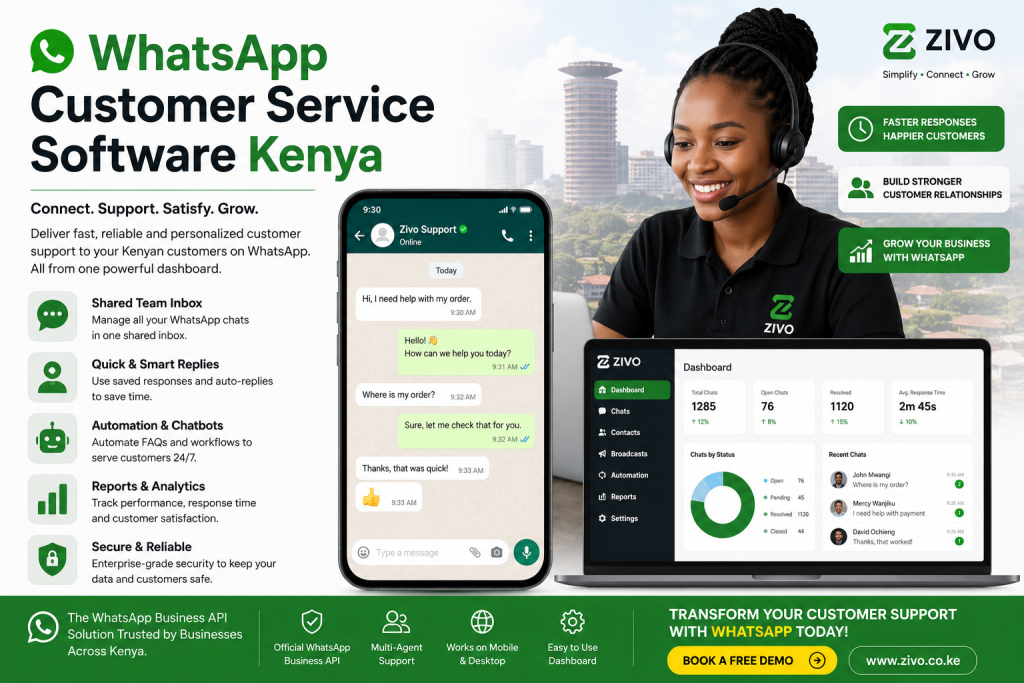
A dedicated solution can give businesses the tools they need to organize WhatsApp conversations, automate responses, manage customer inquiries, assign conversations to agents, track support tickets, and monitor customer service performance.
Instead of allowing customer messages to become scattered across individual phones, businesses can create a more structured and professional customer support operation.
What Is WhatsApp Customer Service Software Kenya?
WhatsApp Customer Service Software Kenya refers to software solutions designed to help Kenyan businesses manage customer support and communication through WhatsApp.
The software can connect WhatsApp conversations with customer service processes.
Depending on the platform, businesses can use features such as:
- Shared team inboxes
- Automated responses
- Chatbots
- Customer profiles
- Ticket management
- Agent assignment
- Conversation history
- Customer notifications
- Templates
- Analytics
- CRM integration
- Automated follow-ups
- Lead management
Instead of relying on one employee to manage every conversation, multiple customer service agents can work from a centralized platform.
This makes it easier to handle high message volumes while maintaining a consistent customer experience.
Why WhatsApp Is Important for Customer Service in Kenya
WhatsApp is already part of everyday communication for many Kenyan consumers.
Customers use it to communicate with friends, family members, businesses, schools, service providers, landlords, banks, hospitals, shops, and organizations.
For businesses, this creates a major opportunity.
Customers may be more comfortable sending a WhatsApp message than calling a company or filling out a long online form.
Businesses that provide customer support through WhatsApp can therefore meet customers where they already spend their time.
However, using WhatsApp successfully for customer service requires more than simply having a business phone number.
Companies need a structured system for managing conversations.
This is why WhatsApp Customer Service Software Kenya is becoming increasingly relevant for businesses that want to improve their support operations.
Problems With Manual WhatsApp Customer Service
Many businesses begin WhatsApp customer service with one phone and one employee.
This approach may work when message volumes are low.
But as the company grows, several problems can appear.
Missed Messages
A customer may send a message while the employee is serving another customer.
The message can easily be overlooked.
Slow Responses
When one person manages hundreds of conversations, customers may wait too long for a response.
No Shared Visibility
If only one employee has access to the WhatsApp account, other employees cannot easily see conversations.
Poor Follow-Up
A customer may ask for a quotation today and never receive a follow-up tomorrow.
No Conversation History
Important customer information may be buried inside old chats.
Difficult Reporting
Business owners may have no reliable way to determine how many customer inquiries were received or how quickly agents responded.
A professional customer service platform addresses these challenges.
How WhatsApp Customer Service Software Works
A typical system connects a business WhatsApp channel with a customer service platform.
When a customer sends a message, the conversation enters the centralized inbox.
Customer service agents can then view and respond to the message.
The conversation can be assigned to a specific employee or department.
For example:
Customer message → Shared inbox → Department assignment → Agent response → Resolution → Follow-up
Automation can handle common questions before a human agent becomes involved.
For example, a customer may ask:
“Where are your offices?”
The system can automatically provide the relevant location information.
Another customer may ask:
“What are your opening hours?”
The chatbot can provide the answer immediately.
More complex questions can then be transferred to a human agent.
Key Features of WhatsApp Customer Service Software Kenya
The features available will depend on the software provider, but businesses should look for tools that improve efficiency and customer experience.
Shared Team Inbox
A shared inbox allows multiple employees to manage customer conversations from one centralized platform.
This eliminates the need for every employee to use a separate WhatsApp account.
Managers can also see which agent is handling each conversation.
Automated Responses
Businesses receive many repetitive questions.
Customers may frequently ask about:
- Prices
- Opening hours
- Locations
- Delivery
- Payment methods
- Product availability
- Services
- Booking procedures
Automated responses can answer these questions instantly.
This saves agents time and improves response speed.
WhatsApp Chatbots
Chatbots can guide customers through predefined conversations.
For example, a customer may be presented with:
1. Product Information
2. Place an Order
3. Speak to an Agent
4. Make a Complaint
5. Check Order Status
The customer selects an option and follows the appropriate process.
Complex issues can then be transferred to a human agent.
Ticket Management
Customer complaints and requests can be converted into support tickets.
Each ticket can have a status such as:
- New
- Open
- Assigned
- In Progress
- Waiting for Customer
- Resolved
- Closed
This prevents important issues from being forgotten.
Agent Assignment
Incoming conversations can be assigned to specific employees.
For example:
Sales inquiries can go to the sales team.
Technical questions can go to technical support.
Billing issues can go to accounts.
Complaints can go to the customer service manager.
This creates a more organized support process.
Customer Profiles
A customer profile can contain useful information such as:
- Name
- Phone number
- Previous conversations
- Purchase history
- Support requests
- Customer category
- Assigned agent
This allows agents to provide more personalized support.
Automated Notifications
Businesses can send notifications about:
- Orders
- Deliveries
- Appointments
- Payments
- Bookings
- Service updates
- Account changes
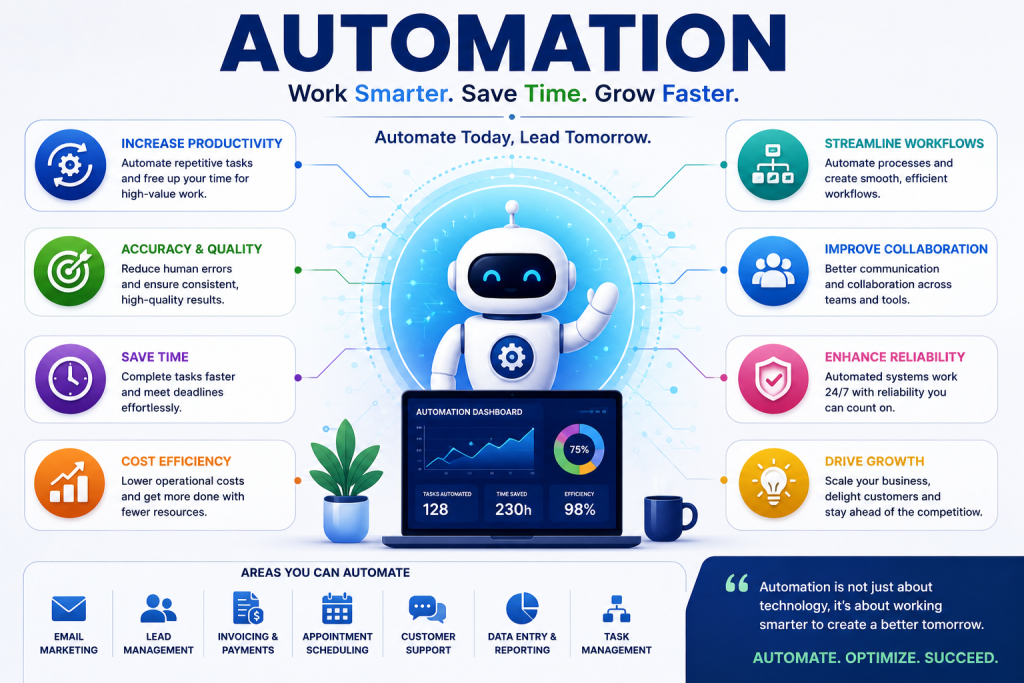
Automated notifications reduce the need for customers to repeatedly contact the business for updates.
Analytics and Reports
Businesses need to understand how their customer service team is performing.
Analytics can show:
- Number of conversations
- Response times
- Resolution times
- Agent performance
- Open tickets
- Closed tickets
- Frequently asked questions
- Customer response patterns
This data can help management identify areas for improvement.
Benefits of WhatsApp Customer Service Software Kenya
Implementing WhatsApp Customer Service Software Kenya can provide several advantages for businesses.
Faster Customer Responses
Automation can provide instant answers to common questions.
Human agents can then focus on more complex inquiries.
Improved Productivity
Agents do not need to repeatedly answer the same questions manually.
They can use templates and automated workflows.
Better Team Collaboration
A shared inbox allows customer service teams to work together.
Managers can also monitor conversations.
Fewer Missed Conversations
Centralizing customer messages makes it easier to ensure inquiries are handled.
Better Customer Experience
Customers receive faster and more organized support.
Better Follow-Up
The system can help teams remember customers who require additional assistance.
Improved Accountability
Managers can see which agent handled a conversation and whether an issue was resolved.
More Efficient Scaling
Businesses can manage increasing message volumes without relying entirely on additional manual labor.
WhatsApp Customer Service Software Kenya for Small Businesses
Small businesses often have limited staff.
One employee may handle sales, customer service, orders, and administration.
When customer inquiries increase, that employee can quickly become overwhelmed.
WhatsApp Customer Service Software Kenya can help small businesses automate repetitive customer interactions.
For example, an online clothing store may receive questions about prices, sizes, colors, delivery, and payment methods.
A chatbot can answer basic questions while employees focus on orders and more complicated customer requests.
This allows a small business to provide a more professional support experience without creating a large customer service department.
WhatsApp Customer Service Software Kenya for E-Commerce
E-commerce businesses depend heavily on communication.
Customers may want to know:
- Is the product available?
- How much does it cost?
- How long will delivery take?
- Can I change my order?
- Has my order been shipped?
- How can I pay?
WhatsApp can become an important customer support channel.
With WhatsApp Customer Service Software Kenya, an e-commerce company can automate order updates and customer notifications.
Customers can also contact the business directly when they need assistance.
This can improve customer confidence and reduce abandoned purchases caused by unanswered questions.
WhatsApp Customer Service Software Kenya for Real Estate
Real estate businesses receive many inquiries.
Potential customers may ask about:
- Available properties
- Rental prices
- Property locations
- Viewing appointments
- Property features
- Payment options
- Documentation
Instead of manually answering every inquiry, real estate companies can use automation.
A customer can select the type of property they want and receive relevant information.
A sales agent can then take over when the customer is ready to book a viewing.
This creates a faster lead response process.
WhatsApp Customer Service Software Kenya for Hotels
Hotels can use WhatsApp to communicate with guests before, during, and after their stay.
Customers may ask about:
- Room availability
- Prices
- Check-in times
- Restaurant services
- Airport transfers
- Hotel facilities
- Reservations
Automation can answer common questions.
Human agents can handle special requests.
Hotels can also send booking confirmations and reminders through WhatsApp.
WhatsApp Customer Service Software Kenya for Healthcare
Healthcare organizations receive many administrative inquiries.
Patients may ask about:
- Appointment availability
- Opening hours
- Services
- Locations
- Booking procedures
- Payment information
A WhatsApp-based customer service system can help manage these interactions.
Organizations should, however, implement appropriate privacy and security controls when handling sensitive information.
WhatsApp Customer Service Software Kenya for Financial Services
Financial organizations need efficient communication channels.
Customers may require assistance with:
- Account questions
- Payment information
- Service requests
- Transaction inquiries
- Product information
Automated workflows can help direct customers to the correct department.
For sensitive financial matters, human agents and appropriate authentication processes should remain available.
Case Study: Kenyan E-Commerce Business
Consider a hypothetical Kenyan online retailer receiving 500 WhatsApp inquiries every week.
Before implementing a customer service platform, three employees shared responsibility for answering customers.
Customers often waited several hours for responses.
Some inquiries were missed completely.
The company implemented WhatsApp Customer Service Software Kenya with a shared inbox, automated FAQs, agent assignment, and order notifications.
Common questions were automated.
The support team could see all conversations in one place.
Messages were assigned to appropriate employees.
The business also introduced automated order updates.
The result was a more structured customer support operation.
The team spent less time answering repetitive questions and more time helping customers with complex requests.
Case Study: Property Management Company
Imagine a property management company managing hundreds of tenants.
Tenants regularly send WhatsApp messages about rent payments, maintenance issues, balances, and property information.
Previously, these conversations were handled through individual employee phones.
Important maintenance requests were sometimes missed.
The company introduced a centralized WhatsApp customer service system.
Tenant inquiries could be converted into tickets.
Maintenance requests could be assigned to specific employees.
Managers could monitor unresolved issues.
This created better accountability and improved communication between tenants and property management staff.
Case Study: Hotel in Mombasa
Consider a hotel in Mombasa receiving inquiries from local and international guests.
Customers frequently asked about room prices, availability, check-in times, and hotel services.
The hotel implemented automated WhatsApp responses.
Customers could receive basic information immediately.
More detailed questions were transferred to reservation agents.
The hotel also used WhatsApp to send booking confirmations.
This helped create a smoother communication experience.
The case studies above are illustrative examples. Businesses should replace them with verified customer results before publishing them as factual case studies.
Customer Testimonials
“We stopped losing customer messages.”
“Before using a centralized WhatsApp system, messages were spread across different phones. Now our team can see conversations in one place and respond more efficiently.”
— Customer Service Manager, Nairobi
“Automation saves our team time.”
“We receive many questions every day. Automated answers handle the simple questions while our agents focus on customers who need personal assistance.”
— E-Commerce Business Owner, Kenya
“Follow-up is much easier.”
“The system helps our team keep track of customer requests. We can see which conversations are still open and which ones have been resolved.”
— Operations Manager, Kenya
These testimonials are illustrative examples and should be replaced with verified customer testimonials before publication.
Service Description
A complete WhatsApp Customer Service Software Kenya service should help businesses manage customer communication from one centralized platform.
The service can include:
WhatsApp Integration
Connect the business WhatsApp communication channel to the customer service platform.
Shared Inbox
Allow multiple agents to manage conversations.
Chatbot Development
Create automated workflows for common customer questions.
Customer Support Automation
Automate repetitive customer interactions.
Ticket Management
Convert complaints and service requests into trackable tickets.
Agent Management
Assign conversations to the appropriate employees.
Customer Database
Store useful customer information and conversation history.
Automated Notifications
Send order, appointment, payment, and service updates.
Analytics
Measure response times, ticket volumes, agent performance, and customer service activity.
CRM Integration
Connect WhatsApp conversations with customer relationship management systems where supported.
Training and Support
Provide staff with training and ongoing assistance to maximize the value of the platform.
How to Choose WhatsApp Customer Service Software
Not every platform will be suitable for every business.
Before choosing a solution, consider the following.
Scalability
The platform should support your current customer volume and future growth.
Ease of Use
Employees should be able to learn the system quickly.
Automation
Look for flexible automation tools that can handle repetitive questions.
Team Inbox
Ensure multiple agents can work together.
Reporting
Management should have access to useful customer service data.
Integrations
Consider whether the platform integrates with CRM, e-commerce, payment, or other business systems.
Security
Customer information should be handled securely.
Customer Support
Choose a provider that offers reliable technical assistance.
WhatsApp Customer Service Software vs Normal WhatsApp
Normal WhatsApp can be useful for small-scale communication.
However, it may not provide the advanced tools required by a growing customer service team.
| Feature | Normal WhatsApp | Customer Service Software |
|---|---|---|
| Basic messaging | Yes | Yes |
| Shared team inbox | Limited | Yes |
| Automated workflows | Limited | Yes |
| Ticket management | No | Yes |
| Agent assignment | Limited | Yes |
| Analytics | Limited | Yes |
| Customer history | Basic | Advanced |
| Automated notifications | Limited | Yes |
| CRM integration | Limited | Often available |
| Team accountability | Limited | Stronger |
For businesses handling significant message volumes, dedicated software can provide better organization.
Improving Customer Service With Automation
Automation should not be viewed as a replacement for human customer service.
Instead, it should handle repetitive tasks while human agents focus on conversations that require understanding, empathy, judgment, or problem-solving.
For example, a chatbot can answer:
“What time do you close?”
But a customer complaining about a delayed order may need a human agent.
The ideal approach combines automation with human support.
Measuring Customer Service Performance
Businesses cannot improve what they do not measure.
Customer service software can provide important metrics.
First Response Time
How long does it take before a customer receives an initial response?
Resolution Time
How long does it take to solve a customer issue?
Ticket Volume
How many support requests are received?
Resolution Rate
What percentage of tickets are successfully resolved?
Agent Performance
How many conversations does each agent handle?
Customer Satisfaction
How do customers rate their support experience?
These metrics can help managers identify bottlenecks and improve operations.
Common Mistakes Businesses Should Avoid
Automating Everything
Not every conversation should be handled by a chatbot.
Customers should have an easy way to reach a human agent.
Creating Complicated Chatbots
Customers should not have to navigate endless menus.
Keep automated conversations simple.
Ignoring Response Times
Even with automation, human agents should respond promptly to complex inquiries.
Failing to Train Staff
Employees need to understand how conversations are assigned, escalated, and resolved.
Not Reviewing Analytics
Businesses should regularly review performance data.
Sending Too Many Messages
Automated communication should provide value rather than overwhelm customers.
Future of WhatsApp Customer Service
Customer service will continue becoming more automated and personalized.
Artificial intelligence can help businesses understand customer questions and provide more relevant answers.
AI-powered systems may identify customer intent, summarize conversations, recommend responses, and route inquiries automatically.
Businesses may also connect WhatsApp with CRM, payment, inventory, booking, and e-commerce systems.
This means a customer could potentially begin and complete a business process through WhatsApp.
The future is therefore not simply about sending messages.
It is about creating complete customer journeys.
Why Kenyan Businesses Should Invest in WhatsApp Customer Service
Kenyan businesses compete in an increasingly digital marketplace.
Customers expect speed and convenience.
A business that takes two days to respond to a question may lose a customer to a competitor that responds within minutes.
WhatsApp provides an opportunity to improve this experience.
But businesses need the right technology to manage conversations professionally.
WhatsApp Customer Service Software Kenya can help companies move from informal messaging to structured customer service.
It can bring automation, collaboration, reporting, and accountability into the WhatsApp communication process.
Getting Started
Businesses can begin by identifying their most common customer service questions.
These might include:
- Pricing
- Product information
- Opening hours
- Delivery
- Booking
- Payment methods
- Location
- Returns
- Complaints
Next, identify which questions can be automated and which require human assistance.
Then create workflows for routing conversations.
Finally, establish metrics to measure performance.
A gradual approach allows businesses to improve customer service without overwhelming their teams.
Frequently Asked Questions
What is WhatsApp Customer Service Software Kenya?
It is a customer support solution that helps Kenyan businesses manage customer conversations through WhatsApp using tools such as shared inboxes, automation, chatbots, ticket management, and analytics.
Is it suitable for small businesses?
Yes. Small businesses can use automation to reduce repetitive support work and provide faster responses.
Can multiple employees use one WhatsApp channel?
A suitable business customer service platform can allow multiple authorized agents to manage conversations through a shared interface.
Can WhatsApp customer service be automated?
Yes. Businesses can automate FAQs, notifications, routing, reminders, and other repetitive interactions.
Can it manage complaints?
Yes. Customer complaints can be converted into tickets and assigned to appropriate employees.
Can it integrate with a CRM?
Depending on the platform, WhatsApp customer service systems can integrate with CRM and other business applications.
Can WhatsApp Customer Service Software Kenya be used for sales?
Yes. WhatsApp conversations can support lead generation, qualification, follow-up, and sales communication.
Is iWhatsApp Customer Service Software Kenya useful for Kenyan e-commerce businesses?
Yes. E-commerce companies can use it for product inquiries, orders, delivery updates, customer support, and follow-up.
Conclusion
Customer expectations are changing.
People want businesses to respond quickly, provide accurate information, and make communication convenient.
WhatsApp has become an important channel for achieving this in Kenya.
However, managing customer conversations manually can become difficult as message volumes increase.
WhatsApp Customer Service Software Kenya gives businesses a way to bring structure, automation, and accountability into WhatsApp customer support.
With features such as shared inboxes, chatbots, automated responses, ticket management, customer profiles, agent assignment, notifications, and analytics, businesses can improve how they communicate with customers.
The technology can benefit e-commerce companies, hotels, real estate businesses, healthcare organizations, financial companies, educational institutions, retailers, professional service providers, and many other organizations.
The goal is not simply to answer more messages.
The goal is to provide better customer experiences while helping employees work more efficiently.
Ready to Improve Your WhatsApp Customer Service?
If your business is currently managing customer messages through a single WhatsApp phone, scattered employee accounts, or manual follow-ups, it may be time to upgrade your customer service process.
A professional WhatsApp Customer Service Software Kenya solution can help you centralize conversations, automate repetitive questions, assign chats to agents, track complaints, send notifications, and measure customer service performance.
With the right system, your team can spend less time searching for messages and more time solving customer problems.
Take the Next Step
Modernize your customer support with a centralized WhatsApp customer service solution.
Visit Zivo today to explore how you can automate customer support, manage WhatsApp conversations, improve response times, and deliver a better customer experience.
Turn WhatsApp conversations into organized, efficient customer service.
Start improving your customer support today.