
WhatsApp E-commerce Integration: The Complete Guide to Boosting Online Sales in 2026
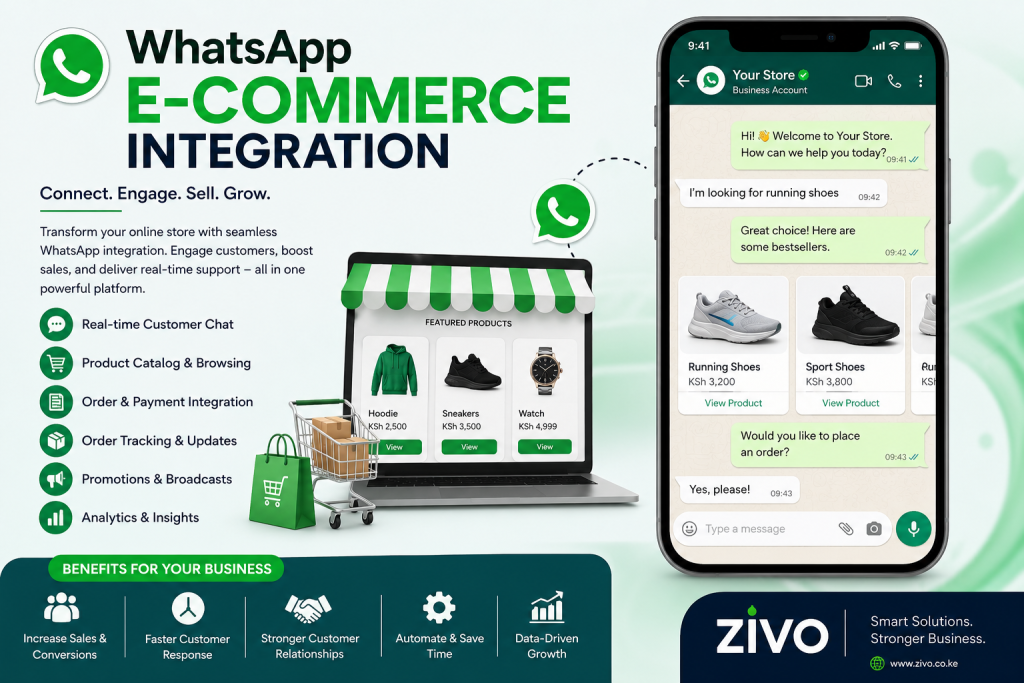
The world of online shopping has changed dramatically over the past few years. Customers no longer want to switch between multiple apps, fill out lengthy forms, or wait hours for responses. Instead, they expect instant communication, personalized service, and seamless purchasing experiences. This is where WhatsApp E-commerce Integration is transforming businesses across Kenya, Africa, and the world.
Businesses that adopt WhatsApp E-commerce Integration can engage customers where they already spend their time. With over 2 billion WhatsApp users globally, integrating your online store with WhatsApp helps automate customer service, simplify ordering, recover abandoned carts, and increase conversions.
Whether you run a Shopify store, WooCommerce website, Magento store, or custom e-commerce platform, WhatsApp E-commerce Integration enables you to deliver a faster, more personalized shopping experience.
In this comprehensive guide, you’ll learn everything you need to know about WhatsApp E-commerce Integration, including its benefits, features, implementation process, best practices, and why businesses should adopt it today.
What is WhatsApp E-commerce Integration?
WhatsApp E-commerce Integration is the process of connecting your online store with WhatsApp Business or the WhatsApp Business Platform to enable automated customer interactions throughout the buying journey.
Instead of customers filling complicated forms or waiting for email responses, they can:
- Browse products
- Ask questions
- Receive recommendations
- Track orders
- Make payments
- Get shipping updates
- Contact support
—all through WhatsApp.
Modern WhatsApp E-commerce Integration creates a unified shopping experience that combines messaging, automation, CRM, inventory management, and payment systems.
Why Businesses Need WhatsApp E-commerce Integration
Online shoppers expect convenience.
Research consistently shows that customers abandon purchases when:
- Checkout is complicated
- Customer support is slow
- Product information is unavailable
- Shipping questions remain unanswered
WhatsApp E-commerce Integration solves these challenges by enabling businesses to communicate instantly with shoppers.
Benefits include:
- Higher customer engagement
- Faster response times
- Increased trust
- Better customer retention
- More completed sales
- Reduced abandoned carts
How WhatsApp E-commerce Integration Works
The process is straightforward.
- Customer visits your website.
- Customer clicks the WhatsApp button.
- WhatsApp opens automatically.
- Customer chats with your business.
- Chatbot or sales team assists.
- Customer confirms order.
- Payment instructions are shared.
- Order status updates are sent automatically.
- Delivery notifications follow.
- Customer receives after-sales support.
This seamless journey is why WhatsApp E-commerce Integration has become essential for modern online businesses.
Key Features of WhatsApp E-commerce Integration
1. Product Catalog Integration
Customers can browse products directly inside WhatsApp.
Instead of sending PDFs or website links, businesses display:
- Product images
- Prices
- Descriptions
- Variants
- Availability
This makes shopping faster and easier.
2. Automated Customer Support
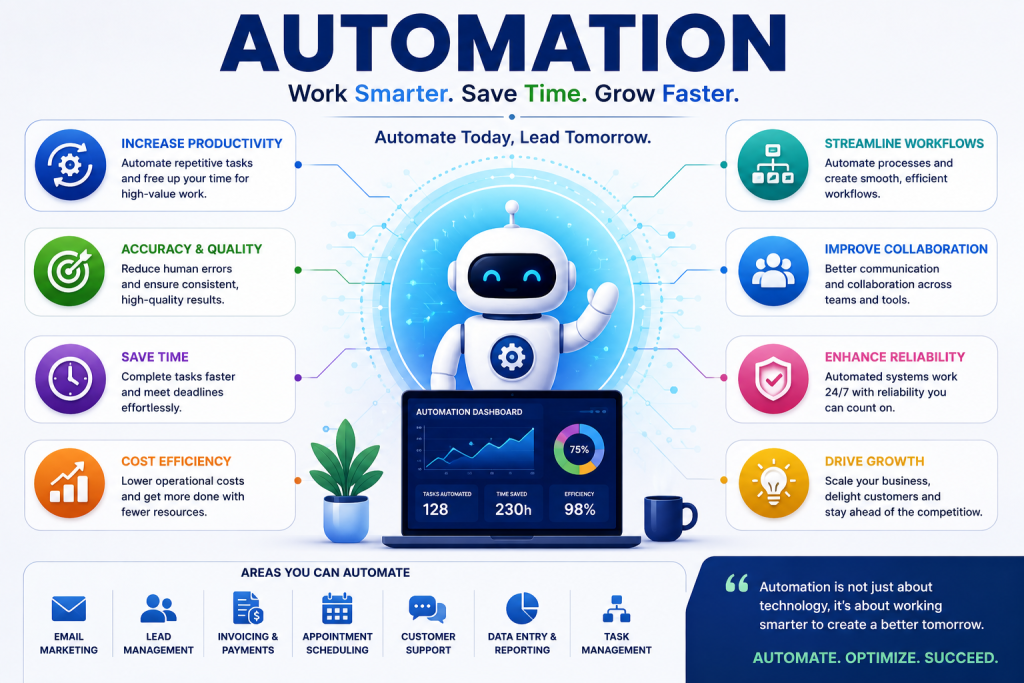
One of the biggest advantages of WhatsApp E-commerce Integration is automation.
AI-powered chatbots can answer:
- Product availability
- Shipping costs
- Delivery timelines
- Return policies
- Payment methods
- Business hours
This reduces workload while improving customer satisfaction.
3. Order Notifications
Customers appreciate timely updates.
Automatic messages include:
- Order confirmation
- Payment confirmation
- Dispatch notification
- Delivery updates
- Successful delivery confirmation
These updates build trust and reduce support inquiries.
4. Shopping Cart Recovery
Cart abandonment is one of the biggest challenges in e-commerce.
With WhatsApp E-commerce Integration, businesses automatically remind customers to complete their purchases.
Example:
“Hi Sarah! You left these items in your cart. Complete your order today and enjoy free delivery.”
This simple automation significantly improves conversions.
5. Personalized Marketing
Businesses can send:
- Promotions
- Flash sales
- New arrivals
- Discount codes
- Loyalty rewards
- Holiday campaigns
Personalized messages generate much higher engagement than email marketing.
Benefits of WhatsApp E-commerce Integration
Higher Conversion Rates
Customers are more likely to buy when they receive immediate assistance.
Real-time communication removes buying hesitation.
Faster Customer Service
Instant replies improve the shopping experience while reducing response times from hours to seconds.
Increased Customer Trust
Customers trust businesses that communicate openly.
WhatsApp offers:
- Verified business profiles
- Professional branding
- Secure messaging
These factors increase confidence.
Better Customer Retention
Existing customers continue purchasing when businesses maintain ongoing communication.
WhatsApp E-commerce Integration helps nurture long-term relationships.
Lower Support Costs
Automation handles repetitive questions, allowing customer service teams to focus on complex issues.
Industries Benefiting from WhatsApp E-commerce Integration
Many industries now rely on WhatsApp E-commerce Integration.
These include:
- Fashion
- Electronics
- Beauty
- Grocery
- Furniture
- Healthcare
- Pharmaceuticals
- Automotive
- Real estate
- Hospitality
- Travel
- Food delivery
WhatsApp E-commerce Integration for Small Businesses
Small businesses often struggle with limited staff and resources.
Fortunately, WhatsApp E-commerce Integration enables them to compete with larger retailers.
Advantages include:
- Affordable automation
- Professional communication
- Quick order processing
- Customer engagement
- Easy setup
Even a single-person business can automate customer interactions.
WhatsApp E-commerce Integration for Large Enterprises
Enterprise businesses benefit from:
- Multi-agent support
- CRM integration
- ERP connectivity
- Advanced analytics
- AI automation
- Team collaboration
- Omnichannel communication
Large organizations handle thousands of customer conversations efficiently.
Integrating WhatsApp with Shopify
Shopify users can connect WhatsApp to:
- Product catalog
- Shopping cart
- Customer database
- Order management
- Marketing campaigns
Customers enjoy seamless purchasing experiences.
Integrating WhatsApp with WooCommerce
WooCommerce stores benefit through:
- Instant customer chats
- Automated checkout assistance
- Product inquiries
- Shipping updates
- Promotional campaigns
Integrating WhatsApp with Magento
Magento stores use WhatsApp E-commerce Integration for:
- Customer engagement
- Order automation
- Customer support
- Marketing automation
- Lead nurturing
WhatsApp Payments and E-commerce
Payment integration creates smoother shopping experiences.
Customers receive:
- Payment links
- Mobile money instructions
- Card payment options
- Invoice notifications
Businesses experience faster payment collection.
AI and WhatsApp E-commerce Integration
Artificial Intelligence is transforming customer service.
AI chatbots provide:
- Product recommendations
- Personalized shopping
- Automatic FAQs
- Upselling
- Cross-selling
- Order tracking
AI operates 24/7 without human intervention.
CRM Integration
A CRM connected to WhatsApp stores customer interactions automatically.
Benefits include:
- Customer history
- Purchase records
- Preferences
- Marketing segmentation
- Sales tracking
Sales teams become more productive.
Inventory Synchronization
Stock updates happen automatically.
Customers only see products currently available.
This reduces order cancellations.
Shipping Integration
Customers receive automated shipping updates.
Messages include:
- Order dispatched
- Courier assigned
- Estimated arrival
- Delivery confirmation
Transparency increases customer satisfaction.
Security Features
Modern WhatsApp E-commerce Integration includes:
- End-to-end encryption
- Secure APIs
- Verified business accounts
- Access controls
- Data protection
Businesses maintain customer trust.
Analytics and Reporting
Businesses gain valuable insights including:
- Message delivery rates
- Response times
- Sales conversions
- Campaign performance
- Customer engagement
- Chat volume
These reports support data-driven decision-making.
Customer Journey Using WhatsApp E-commerce Integration
A typical journey looks like this:
- Customer discovers product.
- Clicks WhatsApp button.
- Receives instant greeting.
- Browses products.
- Asks questions.
- Places order.
- Makes payment.
- Receives shipping updates.
- Gets delivery confirmation.
- Leaves feedback.
Every stage happens inside WhatsApp.
Best Practices for WhatsApp E-commerce Integration
To maximize results:
- Respond quickly.
- Personalize conversations.
- Automate repetitive tasks.
- Use verified business profiles.
- Keep product catalogs updated.
- Send relevant promotions.
- Respect customer privacy.
- Analyze campaign performance.
- Train customer service agents.
- Continuously optimize workflows.
Common Challenges
Some businesses face:
- Poor API implementation
- Lack of automation
- Outdated product catalogs
- Slow responses
- Limited integrations
Working with experienced implementation partners helps avoid these issues.
Case Study: Online Fashion Store
A Kenyan fashion retailer implemented WhatsApp E-commerce Integration.
Results after four months:
- 48% increase in online orders
- 60% faster customer response time
- 35% reduction in abandoned carts
- 41% higher repeat purchases
- Improved customer satisfaction ratings
The retailer attributed much of the growth to automated order updates and personalized WhatsApp communication.
Customer Testimonials
⭐⭐⭐⭐⭐ Mary W., Online Boutique Owner
“Our customers now complete purchases much faster because they receive instant support through WhatsApp. Sales have grown significantly.”
⭐⭐⭐⭐⭐ Brian K., Electronics Retailer
“Integrating WhatsApp with our online store reduced support tickets while increasing customer satisfaction.”
⭐⭐⭐⭐⭐ Susan N., Cosmetics Business
“Order confirmations and delivery updates through WhatsApp have transformed our customer experience.”
Why Choose Zivo for WhatsApp E-commerce Integration?
Zivo helps businesses deploy reliable WhatsApp E-commerce Integration solutions tailored to their workflows. With Zivo, you can:
- Integrate with e-commerce platforms
- Automate customer conversations
- Connect CRM and ERP systems
- Enable AI-powered chatbots
- Recover abandoned carts
- Send order notifications
- Manage shared team inboxes
- Access detailed analytics
- Scale customer engagement securely
Whether you’re a startup or an enterprise, Zivo can help you streamline sales and support through WhatsApp.
Advanced Marketing Strategies with WhatsApp E-commerce Integration
Once your business has implemented WhatsApp E-commerce Integration, the next step is to maximize its value through advanced marketing automation. Businesses that use automation intelligently can generate more leads, increase customer loyalty, and improve lifetime customer value.
Here are some proven strategies.
1. Personalized Product Recommendations
One of the biggest advantages of WhatsApp E-commerce Integration is the ability to recommend products based on customer preferences and purchase history.
For example:
- Customers who bought laptops receive accessory recommendations.
- Fashion shoppers receive matching clothing suggestions.
- Grocery buyers receive reminders to reorder frequently purchased items.
Personalized recommendations increase average order value while improving customer satisfaction.
2. Automated Promotional Campaigns
Businesses can schedule WhatsApp campaigns for:
- Holiday promotions
- Black Friday offers
- Flash sales
- Birthday discounts
- Loyalty rewards
- New product launches
Because customers actively use WhatsApp, promotional messages often achieve much higher engagement rates than traditional email marketing.
3. Customer Loyalty Programs
WhatsApp E-commerce Integration makes loyalty programs much easier to manage.
Customers can receive:
- Reward point updates
- Exclusive offers
- VIP promotions
- Coupon codes
- Anniversary discounts
- Referral rewards
This keeps customers engaged and encourages repeat purchases.
4. Abandoned Cart Recovery
Many shoppers add products to their cart but never complete checkout.
With WhatsApp E-commerce Integration, automated reminders can recover a significant percentage of abandoned carts.
Example message:
“Hello James! You left items in your shopping cart. Complete your purchase today and enjoy a 10% discount.”
These reminders often outperform email reminders because WhatsApp messages are opened quickly.
5. Customer Feedback Collection
After every successful delivery, businesses can automatically request feedback.
Questions may include:
- How was your shopping experience?
- Was delivery on time?
- Would you recommend us?
- How can we improve?
Collecting feedback helps businesses improve their products and services while demonstrating that customer opinions matter.
Common Mistakes to Avoid
Although WhatsApp E-commerce Integration offers numerous benefits, businesses should avoid these common mistakes.
Sending Too Many Messages
Over-messaging customers may lead them to block your business.
Instead:
- Send relevant updates.
- Personalize communications.
- Respect customer preferences.
Ignoring Customer Queries
Automation is valuable, but human support remains important.
Customers with complex questions should always have the option to speak with a support representative.
Poor Integration
An incomplete implementation may result in:
- Missing orders
- Duplicate messages
- Inventory mismatches
- Payment errors
Professional implementation helps ensure smooth operations.
Outdated Product Catalogs
Nothing frustrates customers more than ordering unavailable products.
Regularly synchronize inventory with your online store to maintain accurate product information.
Lack of Analytics
Businesses should continuously monitor:
- Message open rates
- Conversion rates
- Customer satisfaction
- Sales generated
- Campaign performance
These insights help optimize WhatsApp E-commerce Integration for better results.
Future Trends in WhatsApp E-commerce Integration
The future of WhatsApp E-commerce is promising as messaging, artificial intelligence, and automation continue to evolve.
Emerging trends include:
AI Shopping Assistants
AI-powered assistants will provide highly personalized product recommendations based on browsing history, purchase behavior, and customer preferences.
Voice Commerce
Customers will increasingly use voice messages to:
- Search for products
- Place orders
- Track deliveries
- Request support
Businesses will use AI to process and respond to voice requests automatically.
Predictive Customer Support
Artificial intelligence will anticipate customer needs before they ask questions.
For example:
- Shipping delay notifications
- Product replenishment reminders
- Maintenance reminders
- Personalized offers
Omnichannel Integration
Future WhatsApp E-commerce Integration solutions will connect seamlessly with:
- Websites
- Mobile apps
- Social media platforms
- CRM systems
- ERP software
- Payment gateways
Customers will enjoy a consistent experience across every touchpoint.
Advanced Business Analytics
Businesses will gain deeper insights into:
- Customer behavior
- Purchase trends
- Campaign ROI
- Customer lifetime value
- Sales forecasting
This data will support better business decisions.
Frequently Asked Questions
What is WhatsApp E-commerce ?
WhatsApp E-commerce Integration connects your online store with WhatsApp so customers can browse products, ask questions, place orders, receive updates, and communicate with your business from a single messaging platform.
Which businesses benefit most?
Businesses of all sizes can benefit, including:
- Retail stores
- Fashion brands
- Electronics shops
- Pharmacies
- Restaurants
- Supermarkets
- Beauty businesses
- Travel agencies
- Real estate companies
- Automotive dealers
Can it integrate with Shopify?
Yes. WhatsApp E-commerce Integration supports Shopify and many other leading e-commerce platforms, enabling automated messaging and order management.
Is WhatsApp secure for e-commerce?
Yes. WhatsApp provides end-to-end encryption and secure business messaging. When implemented correctly using the WhatsApp Business Platform, it offers a secure communication channel for customers and businesses.
Does it support automation?
Absolutely. Businesses can automate:
- Customer support
- Order confirmations
- Delivery notifications
- Promotional campaigns
- Cart recovery
- Frequently asked questions
Can small businesses use it?
Yes. Even startups and small businesses can implement WhatsApp E-commerce Integration to improve customer communication and compete with larger brands.
Conclusion
In today’s digital marketplace, customers expect fast responses, personalized experiences, and convenient shopping. WhatsApp E-commerce Integration meets these expectations by bringing customer communication, product discovery, ordering, payment updates, and after-sales support into one familiar platform.
Whether you’re a small online retailer or a large enterprise, WhatsApp E-commerce Integration can help increase sales, reduce customer support costs, improve operational efficiency, and strengthen customer relationships. By combining automation, AI, CRM connectivity, and real-time messaging, businesses create a smoother buying journey that drives conversions and loyalty.
Investing in WhatsApp E-commerce Integration is no longer just a competitive advantage—it is becoming an essential part of modern e-commerce success.
Call to Action
Ready to transform your online store with WhatsApp E-commerce Integration?
Zivo provides end-to-end WhatsApp Business solutions that help businesses:
- Integrate WhatsApp with their e-commerce platform
- Automate customer conversations
- Recover abandoned carts
- Send real-time order notifications
- Connect CRM, ERP, and payment systems
- Deploy AI-powered chatbots
- Improve customer support and boost online sales
Contact Zivo today to discover how WhatsApp E-commerce Integration can streamline your operations, enhance customer experiences, and accelerate your business growth.
Why Choose Zivo for WhatsApp E-commerce Integration?
Choosing the right technology partner is just as important as selecting the right platform. At Zivo, we specialize in delivering reliable, scalable, and secure WhatsApp E-commerce Integration solutions that help businesses increase sales and improve customer engagement.
Whether you operate a startup, SME, or large enterprise, our team customizes every WhatsApp E-commerce Integration project to fit your business processes and goals.
Our WhatsApp E-commerce Integration Services
We offer a complete suite of services, including:
- WhatsApp Business Platform setup
- Online store integration
- CRM integration
- ERP integration
- AI chatbot development
- Shared team inbox implementation
- Order automation
- Inventory synchronization
- Payment gateway integration
- Marketing automation
- Customer support automation
- API integration
- Analytics and reporting
- Staff training
- Ongoing technical support
Our objective is to ensure your WhatsApp E-commerce Integration delivers measurable business results from day one.
Why Businesses Trust Zivo
Businesses choose Zivo because we provide:
- Experienced implementation specialists
- Secure and scalable solutions
- Fast deployment
- Custom integrations
- Affordable pricing
- Dedicated customer support
- Continuous system optimization
- Local expertise for African businesses
We understand the unique challenges businesses face and build solutions that simplify operations while enhancing customer experiences.
Measuring the Success of WhatsApp E-commerce Integration
After implementing WhatsApp Integration, it is important to track performance using key metrics.
Monitor:
- Conversion rate
- Customer response time
- Average order value
- Customer satisfaction score (CSAT)
- Repeat purchase rate
- Cart recovery rate
- Campaign click-through rate
- Revenue generated through WhatsApp
- Customer retention rate
- Return on investment (ROI)
Regular performance reviews help identify opportunities to improve automation, messaging, and customer engagement.
Best Practices for Long-Term Success
To maximize the value of WhatsApp Integration, follow these best practices:
- Keep your product catalog updated with accurate pricing and availability.
- Personalize messages using customer names and purchase history.
- Respond promptly to inquiries that require human assistance.
- Segment customers for targeted marketing campaigns.
- Test automated workflows regularly to ensure they function correctly.
- Monitor analytics and optimize campaigns based on performance.
- Ensure compliance with privacy regulations and obtain customer consent before sending promotional messages.
- Continuously update chatbots with new products, FAQs, and business policies.
Following these practices ensures that your WhatsApp E-commerce Integration remains effective as your business grows.
Final Thoughts
Customer expectations continue to evolve, and businesses must provide convenient, fast, and personalized shopping experiences to stay competitive. WhatsApp E-commerce Integration enables businesses to communicate with customers on one of the world’s most popular messaging platforms, creating a seamless journey from product discovery to after-sales support.
By implementing WhatsApp E-commerce Integration, businesses can automate repetitive tasks, improve customer satisfaction, reduce operational costs, and increase online sales. Whether you’re selling fashion, electronics, groceries, travel services, or digital products, integrating your e-commerce platform with WhatsApp can become a powerful driver of growth.
As conversational commerce becomes the norm, investing in WhatsApp E-commerce Integration today positions your business for long-term success in the digital economy.