
WhatsApp for Hospitals Kenya: 15 Proven Ways to Improve Patient Care and Hospital Efficiency
Table of Contents
WhatsApp for Hospitals Kenya: The Future of Patient Communication
The healthcare industry in Kenya is rapidly embracing digital transformation. Patients now expect hospitals to offer quick responses, online appointment booking, digital prescriptions, laboratory result notifications, and instant customer support. Traditional communication channels such as phone calls and emails are becoming less effective because patients increasingly prefer messaging platforms.
This is where WhatsApp for Hospitals Kenya is transforming healthcare communication.
WhatsApp has become Kenya’s most widely used messaging application. Nearly every smartphone user relies on it daily for personal and business communication. Hospitals can now leverage WhatsApp to communicate with patients faster, automate routine inquiries, improve patient satisfaction, and reduce operational costs.
Whether you operate a private hospital, county referral hospital, maternity clinic, dental practice, diagnostic laboratory, physiotherapy center, eye clinic, or specialist medical center, WhatsApp Business can streamline patient interactions while improving overall healthcare delivery.
Why Hospitals in Kenya Need WhatsApp
Healthcare communication is changing.
Patients no longer want to:
- Wait several minutes on phone calls
- Visit hospitals just to book appointments
- Queue for laboratory updates
- Keep calling reception desks
- Miss appointment reminders
- Travel unnecessarily for simple consultations
Instead, patients expect hospitals to respond through WhatsApp because it is:
- Fast
- Convenient
- Familiar
- Secure
- Accessible from anywhere
Hospitals that embrace WhatsApp communication create a better patient experience while reducing administrative workload.
What is WhatsApp for Hospitals Kenya?
WhatsApp for Hospitals Kenya refers to the use of WhatsApp Business and the WhatsApp Business API to manage patient communication throughout the healthcare journey.
Instead of relying solely on reception staff, hospitals can automate many interactions such as:
- Appointment booking
- Appointment reminders
- Prescription notifications
- Laboratory result alerts
- Billing notifications
- Customer support
- Doctor availability
- Follow-up reminders
- Patient feedback collection
- Health awareness campaigns
The result is improved patient satisfaction and more efficient hospital operations.
Why WhatsApp is Popular in Kenya
WhatsApp has become Kenya’s preferred communication platform because it offers:
- Free messaging over internet connections
- Voice calls
- Video consultations
- Image sharing
- Document sharing
- Location sharing
- Group communication
- End-to-end encryption
Patients already use WhatsApp every day, making it unnecessary for them to learn another application.
Meeting patients where they already are increases engagement and response rates.
Challenges Facing Kenyan Hospitals
Many healthcare facilities still struggle with communication challenges including:
Missed Appointments
Patients often forget appointments.
Without reminders, hospitals lose revenue while doctors experience scheduling gaps.
Long Reception Queues
Receptionists spend hours answering repetitive questions such as:
- What are your opening hours?
- Is Dr. Kamau available?
- How much is consultation?
- Can I book today?
- Where are you located?
This consumes valuable staff time.
Delayed Responses
Patients expect immediate answers.
Slow responses often push patients to competing hospitals.
Poor Follow-Up
Many hospitals rarely follow up with patients after treatment.
This affects patient satisfaction and continuity of care.
High Call Costs
Phone support can be expensive for both hospitals and patients.
WhatsApp significantly reduces communication costs.
Benefits of WhatsApp for Hospitals Kenya
1. Online Appointment Booking
Patients can book appointments directly through WhatsApp without making phone calls.
Example:
Patient:
I’d like to see a pediatrician tomorrow.
Automated reply:
Thank you for contacting ABC Hospital. Please choose:
- Pediatrics
- General Clinic
- Dental
- Laboratory
The booking process becomes simple and fast.
2. Automated Appointment Reminders
Appointment reminders reduce missed visits dramatically.
Example:
Dear Mary,
This is a reminder that you have an appointment tomorrow at 10:30 AM with Dr. Otieno.
Patients can reply:
- Confirm
- Reschedule
- Cancel
This helps hospitals optimize scheduling.
3. Faster Customer Support
Patients can instantly ask questions such as:
- Consultation charges
- Insurance accepted
- Doctor availability
- Opening hours
- Laboratory services
- Pharmacy hours
Automated replies provide immediate answers.
4. Laboratory Result Notifications
Instead of asking patients to call repeatedly, hospitals can notify them.
Example:
Your laboratory results are ready.
Kindly visit the hospital or log into the patient portal.
This saves time for both patients and staff.
5. Medication Reminders
Hospitals can improve medication adherence.
Example:
Good morning.
Kindly remember to take your medication as prescribed.
We wish you a quick recovery.
Such reminders improve treatment outcomes.
6. Patient Follow-Ups
Following up after treatment improves patient care.
Example:
Hello James.
We hope you’re recovering well after your procedure.
Kindly let us know if you have any concerns.
Patients appreciate personalized communication.
7. Health Education Campaigns
Hospitals can educate patients through WhatsApp broadcasts.
Topics include:
- Diabetes awareness
- Hypertension management
- Maternal health
- Child immunization
- Nutrition
- Cancer screening
- Mental health
- Vaccination campaigns
Educational messaging builds trust and encourages preventive care.
Features of WhatsApp Business for Hospitals
Business Profile
Hospitals can display:
- Hospital name
- Address
- Website
- Working hours
- Services
- Contact information
Patients immediately access essential details.
Quick Replies
Receptionists can respond instantly using saved replies.
Examples:
- Consultation fees
- Insurance information
- Location directions
- Appointment procedures
- Pharmacy contacts
This improves response consistency and reduces typing time.
Labels
Hospitals can organize patient conversations using labels such as:
- New Patient
- Returning Patient
- Appointment Booked
- Follow-Up Required
- Laboratory Results Ready
- Billing Pending
- Emergency
Organization becomes much easier.
Automated Greeting Messages
Patients contacting the hospital after hours receive instant responses.
Example:
Welcome to ABC Hospital.
Thank you for contacting us.
We’ll respond shortly.
For emergencies, please call 999.
This reassures patients even when staff are unavailable.
Away Messages
Hospitals can automatically notify patients outside operating hours.
Example:
Our offices are currently closed.
Working Hours:
Monday-Friday
8 AM – 5 PMWe’ll respond during business hours.
WhatsApp Business API for Large Hospitals
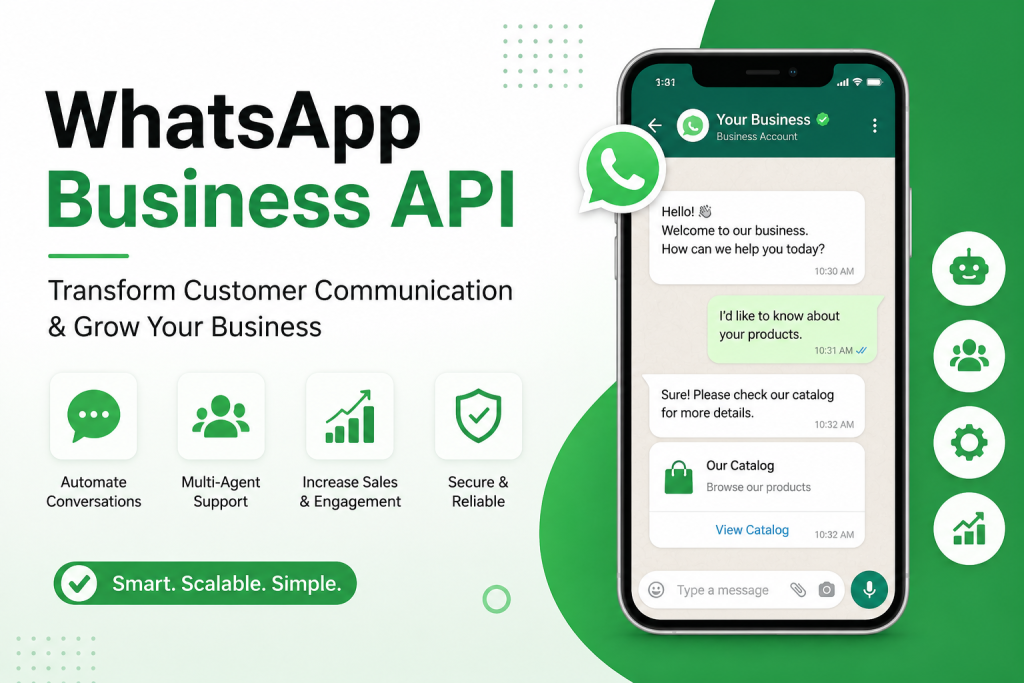
While WhatsApp Business works well for small clinics, larger hospitals require the WhatsApp Business API.
The API enables:
- Multiple staff members using one WhatsApp number
- CRM integration
- Hospital Management System integration
- Automated workflows
- AI-powered chatbots
- Secure messaging
- Analytics and reporting
- High-volume messaging
- Centralized communication
- Integration with appointment systems
This makes it ideal for hospitals handling thousands of patient interactions each month.
How a Patient Journey Works on WhatsApp
A typical patient experience using WhatsApp for Hospitals Kenya might look like this:
- Patient sends a WhatsApp message.
- An automated greeting is sent instantly.
- The chatbot presents service options.
- The patient books an appointment.
- The hospital confirms the booking.
- A reminder is sent before the appointment.
- The patient attends the consultation.
- Laboratory updates are shared through WhatsApp.
- Prescription reminders are sent.
- Follow-up messages are delivered.
- The hospital requests patient feedback.
This seamless journey improves communication, reduces delays, and enhances the overall patient experience.
AI Chatbots for Hospitals in Kenya
One of the biggest advantages of WhatsApp for Hospitals Kenya is the ability to deploy AI-powered chatbots that work around the clock. Unlike human receptionists who operate during working hours, chatbots can respond to patient inquiries 24/7.
Hospitals receive hundreds of repetitive questions every day. Automating these responses frees healthcare workers to focus on patient care.
Common chatbot functions include:
- Appointment booking
- Doctor availability
- Hospital directions
- Insurance inquiries
- Consultation fees
- Laboratory operating hours
- Pharmacy information
- Vaccination schedules
- Emergency contacts
- Frequently asked questions
For example:
Patient: Hello
Bot: Welcome to Green Valley Hospital.
Please choose a service:
- Book Appointment
- Laboratory Services
- Pharmacy
- Find a Doctor
- Emergency Contacts
- Billing
Patients receive immediate assistance without waiting for a receptionist.
Departments That Benefit from WhatsApp
Nearly every hospital department can improve communication through WhatsApp for Hospitals Kenya.
General Outpatient Clinic
Patients can:
- Book consultations
- Receive reminders
- Ask about consultation charges
- Reschedule appointments
Maternity Services
Expectant mothers can receive:
- Antenatal appointment reminders
- Pregnancy health tips
- Vaccination reminders
- Delivery preparation information
- Postnatal follow-up messages
Pediatrics
Parents appreciate timely reminders for:
- Child immunization
- Growth monitoring
- Pediatric appointments
- Nutrition advice
- Follow-up consultations
Dental Clinic
Dental practices can use WhatsApp to:
- Confirm appointments
- Send oral hygiene tips
- Share treatment estimates
- Remind patients about reviews
Eye Clinic
Eye hospitals can notify patients about:
- Vision screening appointments
- Surgical reviews
- Prescription collection
- Glasses collection
Laboratory
Laboratories benefit by sending:
- Sample collection reminders
- Test preparation instructions
- Result notifications
- Billing updates
Pharmacy
Hospital pharmacies can notify patients when:
- Medication is ready
- Prescriptions are due for refill
- Medicines are available
- New stock arrives
Specialist Clinics
Specialists such as cardiologists, dermatologists, orthopedic surgeons, gynecologists, neurologists, and ENT doctors can manage appointments more efficiently using WhatsApp.
Hospital Appointment Automation
One of the strongest use cases for WhatsApp for Hospitals Kenya is appointment automation.
Instead of calling the reception desk, patients can complete the booking process within minutes.
Example workflow:
Patient sends:
Book appointment
System replies:
Which department would you like to visit?
- General Clinic
- Pediatrics
- Dental
- Eye Clinic
- Maternity
- Orthopedics
Patient selects:
Dental
System:
Choose your preferred date.
Patient:
Friday
System:
Available slots:
9:00 AM
10:30 AM
2:00 PM
Patient selects:
10:30 AM
System:
Your appointment has been confirmed.
Everything happens automatically without staff intervention.
Automated Appointment Reminders
Missed appointments are a major source of lost revenue for hospitals.
WhatsApp reminders significantly reduce no-shows.
Example:
Dear John,
This is a reminder of your appointment tomorrow at 9:00 AM with Dr. Wanjiku.
Reply:
- Confirm
- Reschedule
- Cancel
Patients appreciate these reminders because they help them plan ahead.
Digital Patient Registration
Hospitals can simplify registration by collecting patient information before arrival.
Patients can submit:
- Full name
- Phone number
- National ID
- Insurance provider
- Date of birth
- Gender
- Next of kin
- Medical history
- Preferred doctor
By the time the patient arrives, much of the paperwork is already complete.
Insurance Verification
Hospitals can automate insurance inquiries.
Patients simply send:
Do you accept SHA?
The chatbot immediately responds with accepted insurers, required documents, and verification procedures.
This reduces unnecessary phone calls and speeds up admissions.
Emergency Communication
Hospitals can use WhatsApp to provide emergency guidance.
Examples include:
- Emergency hotline numbers
- Ambulance contacts
- Location pins
- First aid information
- Nearest emergency center
Although WhatsApp should not replace emergency phone lines, it can improve access to critical information.
Patient Feedback Collection
Quality healthcare depends on patient feedback.
After each visit, hospitals can automatically request reviews.
Example:
Thank you for visiting City Care Hospital.
Kindly rate your experience.
⭐⭐⭐⭐⭐
Patients are more likely to respond via WhatsApp than through paper surveys.
Hospitals can use this feedback to improve service delivery.
Broadcasting Health Campaigns
Hospitals regularly conduct awareness campaigns.
Using WhatsApp for Hospitals Kenya, they can reach thousands of patients instantly.
Examples include:
- Breast cancer awareness
- Cervical cancer screening
- Blood donation drives
- Diabetes awareness
- Malaria prevention
- Child immunization
- Nutrition education
- Mental health awareness
- World AIDS Day campaigns
- Vaccination drives
Broadcast messaging increases community engagement while promoting preventive healthcare.
Integrating WhatsApp with Hospital Management Systems
The real power of WhatsApp for Hospitals Kenya comes from integrating it with a Hospital Management System (HMS).
Once integrated, hospitals can automate communication based on real-time patient data.
Possible integrations include:
- Appointment scheduling
- Electronic Medical Records (EMR)
- Patient portals
- Billing systems
- Laboratory Information Systems (LIS)
- Pharmacy systems
- Queue management
- CRM platforms
- Payment gateways
- Staff scheduling systems
For example:
A patient books an appointment through the HMS.
↓
The system automatically sends a WhatsApp confirmation.
↓
One day before the appointment, a reminder is sent.
↓
After the consultation, the patient receives a follow-up message.
↓
When laboratory results are ready, another notification is sent.
↓
The patient receives a payment receipt and feedback request.
All these communications happen automatically, reducing manual work and improving efficiency.
AI-Powered Patient Support
Artificial Intelligence is changing healthcare communication.
An AI assistant connected to WhatsApp can:
- Understand natural language questions
- Guide patients to the right department
- Recommend available appointment slots
- Answer common medical service questions
- Escalate complex inquiries to hospital staff
- Operate 24 hours a day
This reduces waiting times while improving the patient experience.
Secure Communication and Patient Privacy
Healthcare providers handle sensitive patient information, so privacy is essential when implementing WhatsApp for Hospitals Kenya.
Hospitals should follow these best practices:
- Obtain patient consent before sending messages.
- Avoid sharing detailed medical records through chat unless appropriate safeguards are in place.
- Restrict access to authorized staff only.
- Use role-based permissions for shared inboxes.
- Maintain audit logs of conversations.
- Integrate with secure hospital systems rather than storing sensitive data in chat histories alone.
- Train staff on patient confidentiality and cybersecurity.
Using the official WhatsApp Business Platform also provides more robust controls and integrations than relying on personal WhatsApp accounts.
Key Performance Indicators (KPIs)
Hospitals can measure the success of their WhatsApp implementation using metrics such as:
- Appointment booking rate
- Appointment confirmation rate
- No-show reduction
- Average response time
- Patient satisfaction score
- Resolution time
- Number of automated conversations
- Follow-up completion rate
- Broadcast message engagement
- Cost savings from reduced phone support
Tracking these KPIs helps hospitals continuously improve communication and patient care.
Case Study: How a Private Hospital in Kenya Improved Patient Communication with WhatsApp
A medium-sized private hospital in Kenya was experiencing several operational challenges:
- High numbers of missed appointments
- Long waiting times at the reception desk
- Hundreds of daily phone calls
- Delays in responding to patient inquiries
- Low patient engagement after treatment
The hospital implemented WhatsApp for Hospitals Kenya by integrating the WhatsApp Business Platform with its Hospital Management System.
Before Implementation
- Reception staff answered repetitive questions throughout the day.
- Patients often forgot appointment dates.
- Doctors experienced gaps in their schedules due to no-shows.
- Laboratory staff spent significant time responding to calls about test results.
After Implementation
The hospital introduced:
- Automated appointment booking
- Appointment confirmations
- Reminder messages
- Laboratory result notifications
- AI-powered FAQs
- Post-treatment follow-up messages
- Patient satisfaction surveys
Results After Six Months
- Appointment attendance improved significantly due to automated reminders.
- Phone calls to the reception desk decreased.
- Response times dropped from several minutes to near-instant replies for common inquiries.
- Patient satisfaction scores increased.
- Administrative staff spent more time on complex patient needs instead of repetitive tasks.
This example demonstrates how WhatsApp for Hospitals Kenya can enhance efficiency while delivering a better patient experience.
Return on Investment (ROI)
Investing in WhatsApp for Hospitals Kenya delivers measurable returns across multiple areas.
Reduced Administrative Costs
Automation reduces the need for staff to answer repetitive questions, allowing receptionists to focus on higher-value responsibilities.
Fewer Missed Appointments
Automated reminders help patients remember their appointments, improving doctor utilization and reducing lost revenue.
Higher Patient Satisfaction
Patients value quick responses, convenient booking, and timely updates. Better experiences often lead to stronger patient loyalty and positive referrals.
Faster Communication
Instead of relying on phone calls, hospitals can communicate instantly using text, images, PDFs, and location sharing.
Improved Staff Productivity
Automation enables staff to spend more time on patient care rather than repetitive administrative tasks.
How to Successfully Implement WhatsApp for Hospitals Kenya
Successful implementation requires careful planning.
Step 1: Define Your Goals
Identify what you want to achieve, such as:
- Reduce missed appointments
- Improve response times
- Increase patient satisfaction
- Automate appointment scheduling
- Improve follow-up care
Step 2: Register a WhatsApp Business Account
Small clinics may begin with the WhatsApp Business app, while larger hospitals should adopt the WhatsApp Business Platform for advanced automation and integrations.
Step 3: Create Automated Workflows
Examples include:
- Welcome messages
- Appointment booking
- Appointment reminders
- Billing notifications
- Laboratory updates
- Follow-up surveys
Step 4: Integrate with Your Hospital Management System
Integration ensures that patient data, appointments, billing, and notifications remain synchronized.
Step 5: Train Staff
Receptionists, nurses, administrators, and customer support teams should understand:
- How to manage WhatsApp conversations
- Patient privacy requirements
- Escalation procedures
- Response standards
Step 6: Monitor Performance
Track metrics regularly to identify opportunities for improvement.
Best Practices for WhatsApp in Healthcare
To maximize the benefits of WhatsApp for Hospitals Kenya, hospitals should:
- Obtain patient consent before sending messages.
- Keep communication professional and clear.
- Avoid sending confidential medical information unless appropriate safeguards are in place.
- Respond promptly to patient inquiries.
- Use automation for repetitive tasks while ensuring staff are available for complex cases.
- Personalize messages where appropriate.
- Review analytics to improve workflows.
- Keep patient records synchronized with hospital systems.
- Regularly update chatbot content.
- Ensure compliance with applicable healthcare and data protection regulations.
Common Mistakes to Avoid
Avoid these common pitfalls:
- Using personal WhatsApp numbers for hospital operations.
- Sending excessive promotional messages.
- Ignoring patient responses.
- Failing to update automated messages.
- Delaying replies to urgent inquiries.
- Not training staff on proper communication.
- Over-automating without providing access to human support.
- Failing to monitor message delivery and performance.
Future Trends for WhatsApp in Kenyan Healthcare
The future of WhatsApp for Hospitals Kenya is expected to include:
- AI-powered virtual health assistants
- Voice-enabled chatbots
- Multilingual patient support
- Telemedicine integration
- Online prescription renewals
- Digital patient onboarding
- Secure document sharing
- Electronic consent forms
- Integration with wearable health devices
- Predictive appointment scheduling using AI
Hospitals that adopt these innovations early will be well-positioned to meet evolving patient expectations.
Frequently Asked Questions (FAQs)
What is WhatsApp for Hospitals Kenya?
It is the use of WhatsApp Business or the WhatsApp Business Platform to communicate with patients, automate appointments, send reminders, provide customer support, and improve healthcare service delivery.
Is WhatsApp suitable for hospitals?
Yes. When implemented responsibly with appropriate privacy measures, WhatsApp provides a convenient channel for patient communication, appointment management, and follow-up care.
Can hospitals automate appointment booking?
Yes. Hospitals can use chatbots and workflow automation to allow patients to book, confirm, reschedule, or cancel appointments.
Can WhatsApp integrate with Hospital Management Systems?
Yes. Integration can automate notifications, synchronize appointments, send billing updates, and improve patient communication.
Is WhatsApp for Hospitals Kenya secure for healthcare communication?
WhatsApp offers end-to-end encryption for messages. However, hospitals should also implement strong internal policies, limit access to authorized staff, obtain patient consent, and comply with applicable healthcare and data protection requirements.
Can hospitals send laboratory result notifications?
Yes. Hospitals can notify patients when results are ready while avoiding unnecessary disclosure of sensitive medical information within the chat.
Does WhatsApp for Hospitals Kenya reduce missed appointments?
Yes. Automated reminders and confirmations can significantly reduce appointment no-shows.
Why should Kenyan hospitals adopt WhatsApp for Hospitals Kenya?
Because it improves communication, enhances patient satisfaction, reduces administrative workload, supports automation, and streamlines healthcare operations.
Conclusion
The healthcare industry is becoming increasingly digital, and patients now expect convenient, responsive, and personalized communication. WhatsApp for Hospitals Kenya provides an effective way for hospitals, clinics, diagnostic centers, maternity facilities, and specialist practices to meet these expectations.
By implementing WhatsApp for Hospitals Kenya, healthcare providers can automate appointment scheduling, send timely reminders, deliver laboratory notifications, support follow-up care, answer frequently asked questions, and improve overall patient engagement. The result is a better patient experience alongside greater operational efficiency.
Whether you manage a small clinic or a large referral hospital, WhatsApp for Hospitals Kenya can help modernize communication, reduce manual workloads, and strengthen relationships with patients.
As healthcare technology continues to evolve, organizations that embrace digital communication today will be better equipped to deliver accessible, efficient, and patient-centered care in the years ahead.