
WhatsApp Software for Logistics Companies: The Complete Guide to Faster Deliveries, Better Customer Service, and Automated Operations
Why Logistics Companies Need WhatsApp Software
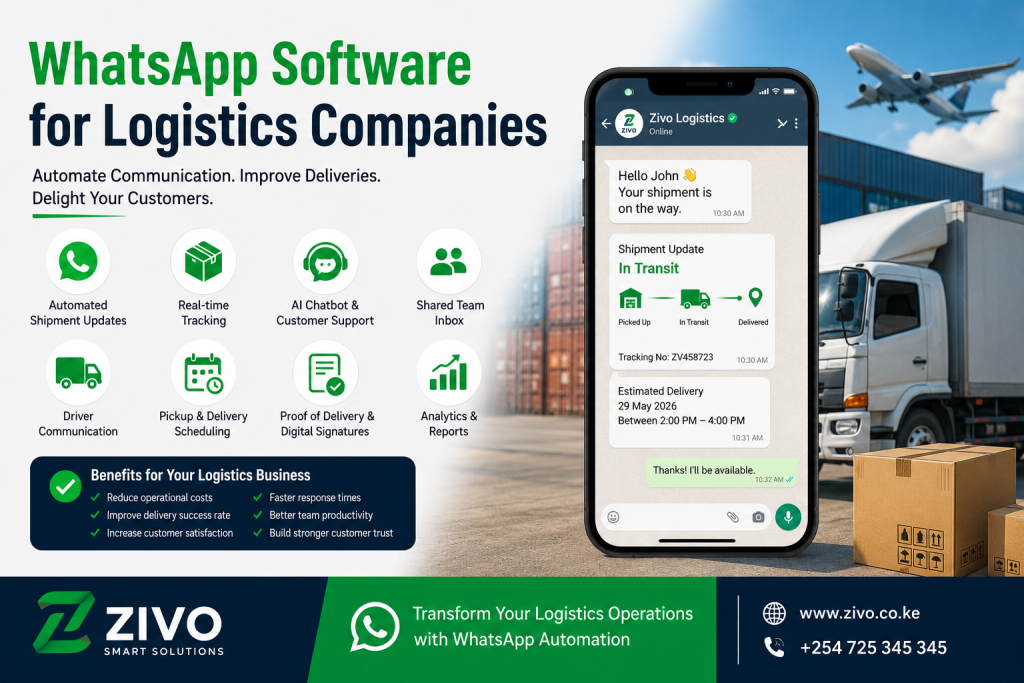
The logistics industry has become one of the most competitive sectors in today’s digital economy. Customers expect instant updates, accurate delivery timelines, quick responses to inquiries, and seamless communication throughout the shipping process. Traditional communication methods such as phone calls, emails, and SMS are no longer sufficient to meet these expectations.
WhatsApp Software for Logistics Companies has emerged as the preferred communication solution because it combines automation, real-time messaging, AI-powered customer support, and business integrations into one platform. With over two billion users worldwide, WhatsApp has become the communication channel customers already trust and use daily.
Whether you’re running a courier company, freight forwarding business, transport company, e-commerce delivery service, or third-party logistics (3PL) provider, implementing WhatsApp Software for Logistics Companies can significantly improve operational efficiency while reducing customer service costs.
Businesses using WhatsApp automation report:
- Faster customer response times
- Reduced operational costs
- Improved customer satisfaction
- Increased delivery success rates
- Better driver coordination
- Automated shipment notifications
- Higher customer retention
If your logistics company still relies heavily on manual phone calls and emails, it’s time to embrace automation.
What is WhatsApp Software for Logistics Companies?
WhatsApp Software for Logistics Companies is a business communication platform built on the WhatsApp Business API that enables logistics providers to automate customer communication, manage conversations, track deliveries, coordinate drivers, and provide real-time shipment updates.
Instead of manually replying to every customer inquiry, the software automates repetitive communication while allowing support agents to step in whenever necessary.
Typical functions include:
- Shipment tracking
- Delivery notifications
- Pickup scheduling
- Driver communication
- Customer support
- Automated reminders
- Delivery confirmations
- Customer feedback collection
- Team collaboration
- AI-powered chatbot assistance
Rather than juggling multiple communication channels, logistics companies centralize all customer interactions within one powerful platform.
Common Challenges Logistics Companies Face
Many logistics businesses struggle with communication bottlenecks.
Some of the biggest challenges include:
Customers Calling Repeatedly
Customers frequently ask:
- Where is my package?
- Has my shipment left?
- What time will delivery happen?
- Can I reschedule?
Without automation, customer service teams spend most of their day answering repetitive questions.
Delayed Communication
Late notifications often result in:
- Missed deliveries
- Customer frustration
- Increased operational costs
- More failed delivery attempts
Real-time WhatsApp updates eliminate these issues.
Poor Driver Coordination
Drivers often communicate through:
- Personal WhatsApp accounts
- Phone calls
- SMS
This creates confusion and makes tracking conversations difficult.
High Customer Service Costs
Hiring more customer support agents is expensive.
Automation handles repetitive tasks so your staff can focus on complex customer issues.
Lack of Visibility
Customers want transparency.
Without automated shipment updates, they lose confidence in your logistics services.
How WhatsApp Software Solves These Problems
Modern WhatsApp Software for Logistics Companies automates communication across the entire delivery journey.
Example workflow:
Customer places an order
↓
Order confirmation sent automatically
↓
Package collected
↓
Customer receives pickup notification
↓
Package dispatched
↓
Live tracking shared
↓
Driver approaching destination
↓
Customer receives estimated arrival
↓
Delivery completed
↓
Proof of delivery shared
↓
Customer receives satisfaction survey
Everything happens automatically without requiring manual intervention.
Key Features of WhatsApp Software for Logistics Companies
1. Automated Shipment Notifications
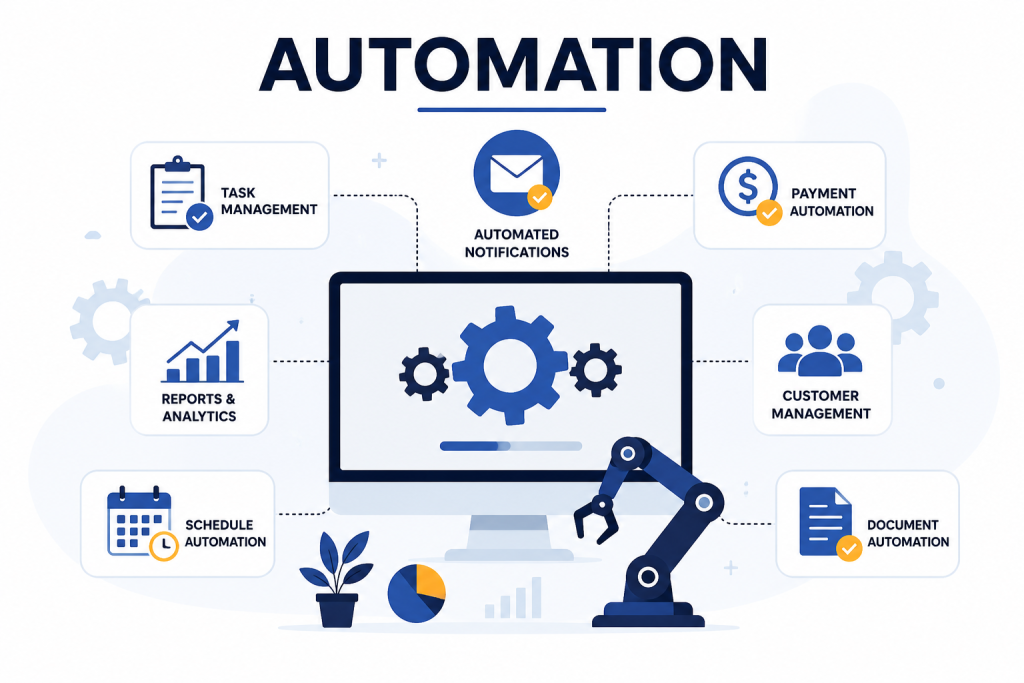
Customers receive updates whenever shipment status changes.
Examples include:
- Order received
- Package collected
- In transit
- Out for delivery
- Delivered
- Delivery delayed
These automated notifications reduce customer anxiety and dramatically lower incoming support calls.
2. Live Shipment Tracking
Instead of calling customer support, customers simply send:
Track my package
The WhatsApp chatbot instantly returns:
- Current shipment status
- Current location
- Estimated delivery date
- Tracking number
- Driver information (optional)
This self-service capability improves customer satisfaction while reducing workload.
3. AI Customer Support
Artificial Intelligence enables logistics companies to answer customer questions 24/7.
Common automated responses include:
- Delivery status
- Pickup requests
- Pricing information
- Service locations
- Business hours
- Frequently asked questions
- Shipping rates
- Delivery timelines
Complex conversations are seamlessly transferred to human agents.
4. Shared Team Inbox
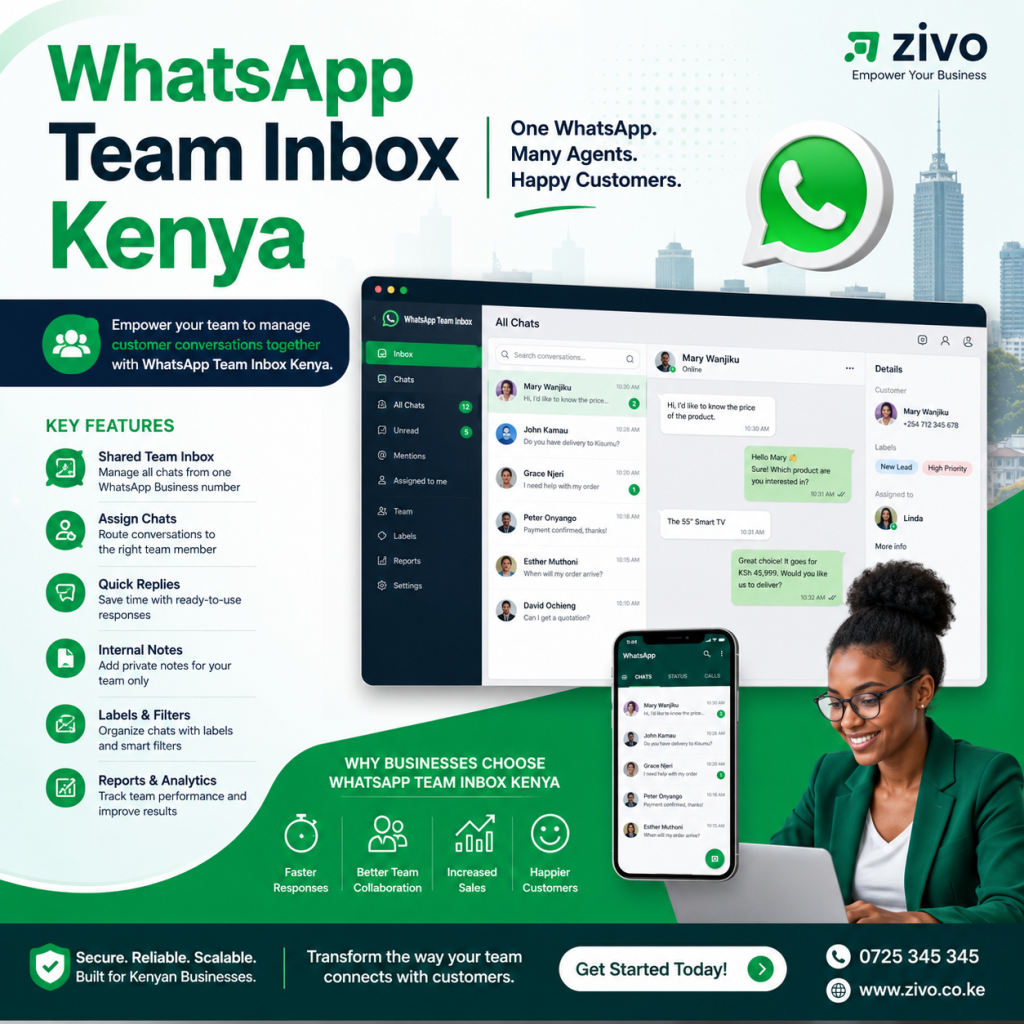
Instead of using personal WhatsApp numbers, the entire customer service team works from one shared inbox.
Benefits include:
- Multiple agents replying simultaneously
- Conversation history preserved
- Internal notes
- Team assignments
- Faster responses
- Better accountability
Managers can monitor performance in real time.
5. Delivery Confirmation
Customers automatically receive messages confirming successful delivery.
Delivery confirmation may include:
- Date
- Time
- Driver details
- Digital signature
- Photo proof
- Feedback request
This reduces disputes while increasing transparency.
6. Driver Communication
Drivers receive automatic notifications including:
- Pickup location
- Delivery address
- Customer phone number
- Special delivery instructions
- Updated schedules
Drivers no longer depend entirely on dispatch phone calls.
7. Automated Pickup Booking
Customers can schedule pickups directly through WhatsApp.
Example:
Customer:
“I want to schedule a pickup.”
Bot:
“What city are you located in?”
Customer:
“Nairobi”
Bot:
“Please choose your preferred pickup time.”
The booking is automatically created in the logistics management system.
8. Broadcast Messaging
Inform thousands of customers about:
- Holiday schedules
- Service interruptions
- New routes
- Delivery delays
- Promotions
- Policy updates
Unlike SMS campaigns, WhatsApp enjoys significantly higher engagement rates.
9. Customer Feedback Collection
After every delivery:
“Thank you for choosing us.
Please rate your delivery experience.”
⭐⭐⭐⭐⭐
The system automatically collects customer satisfaction scores for reporting and service improvement.
10. CRM Integration
Your WhatsApp platform integrates with existing systems including:
- CRM software
- ERP systems
- Delivery management software
- Warehouse management systems
- Fleet management platforms
- Accounting software
Customer information stays synchronized across departments.
Industries That Benefit from WhatsApp Software
WhatsApp Software for Logistics Companies is ideal for:
Courier Companies
Manage parcel deliveries efficiently while keeping customers informed.
Freight Forwarders
Provide international shipment updates and customs clearance notifications.
E-commerce Delivery Services
Automate order confirmations, tracking, and delivery updates.
Moving Companies
Coordinate moving schedules, customer communications, and service confirmations.
Transport Companies
Keep clients updated on cargo movement and estimated arrival times.
Cold Chain Logistics
Monitor temperature-sensitive deliveries and notify customers instantly if any issues arise.
Third-Party Logistics Providers (3PL)
Coordinate communication between warehouses, drivers, retailers, and customers from a single platform.
Benefits of WhatsApp Software for Logistics Companies
Implementing WhatsApp Software for Logistics Companies delivers measurable advantages:
- Faster customer communication
- Lower support costs
- Fewer missed deliveries
- Improved delivery success rates
- Better fleet coordination
- Increased customer trust
- Higher customer satisfaction
- Reduced manual work
- Enhanced operational visibility
- Greater employee productivity
For logistics companies handling hundreds or thousands of shipments each month, these improvements translate into significant cost savings and a better customer experience.
Advanced Automation Workflows for Logistics Companies
As logistics businesses grow, manually managing customer communication becomes increasingly difficult. A logistics company processing hundreds or thousands of deliveries daily requires automation to maintain speed, accuracy, and customer satisfaction. WhatsApp Software for Logistics Companies provides intelligent workflows that eliminate repetitive tasks while keeping customers informed at every stage of the delivery journey.
Order Confirmation Automation
The customer journey begins the moment an order is placed.
Instead of waiting for a customer service representative to confirm the booking, the system instantly sends a personalized WhatsApp message.
Example:
Hello James,
Your shipment has been successfully booked.
Tracking Number: ZV458723
Pickup Date: 29 July 2026
Estimated Delivery: 30 July 2026
You will receive automatic updates throughout the delivery process.
This immediate confirmation reassures customers that their shipment has been received and is being processed.
Pickup Scheduling Automation
Coordinating pickups manually often results in delays and scheduling conflicts.
With WhatsApp Software for Logistics Companies, customers can request pickups directly through WhatsApp.
The automated workflow typically follows these steps:
- Customer requests pickup.
- The chatbot asks for the pickup location.
- The customer selects a preferred date and time.
- Pickup details are confirmed.
- The dispatch team is notified automatically.
- The assigned driver receives the pickup request instantly.
This streamlined process minimizes phone calls and accelerates service delivery.
Driver Assignment Notifications
Dispatch managers no longer need to contact drivers individually.
Once a shipment is assigned, the system automatically sends the driver all relevant details, including:
- Pickup address
- Delivery address
- Customer contact information
- Parcel description
- Special instructions
- Expected delivery deadline
Drivers receive everything they need in one WhatsApp conversation, reducing confusion and improving efficiency.
Real-Time Delivery Updates
Customers appreciate transparency. Rather than wondering where their package is, they receive proactive updates throughout the delivery process.
Typical notifications include:
- Package collected
- Shipment dispatched
- Package in transit
- Delivery vehicle approaching
- Delivered successfully
- Delivery delayed (if applicable)
Providing real-time updates reduces inbound support requests and builds trust.
Failed Delivery Management
Sometimes customers are unavailable when the driver arrives.
Instead of relying on repeated phone calls, automated WhatsApp messages allow customers to:
- Schedule another delivery time
- Update their delivery address
- Contact customer support
- Leave delivery instructions
This automation reduces failed deliveries and improves operational efficiency.
Cash-on-Delivery Notifications
For logistics companies offering Cash on Delivery (COD), WhatsApp automation simplifies communication.
Customers receive reminders such as:
- Amount payable
- Accepted payment methods
- Expected delivery time
- Digital receipt after payment
If M-Pesa or other mobile payment systems are integrated, payment confirmation can also be sent automatically.
Warehouse Notifications
Warehouse teams can also benefit from automated communication.
Internal alerts may include:
- Parcel received
- Parcel sorted
- Shipment dispatched
- Inventory updates
- Urgent delivery requests
These notifications help synchronize warehouse operations with delivery teams.
Customer Self-Service Through AI Chatbots
One of the most valuable features of WhatsApp Software for Logistics Companies is AI-powered self-service.
Instead of waiting in long customer service queues, customers can instantly access information by sending simple messages.
Examples include:
Customer: Where is my package?
Bot: Your package is currently in transit and is expected to arrive today between 2:00 PM and 4:00 PM.
Customer: Can I change my delivery address?
Bot: Yes. Please share your new delivery location.
Customer: How much does express delivery cost?
Bot: Please provide your pickup and delivery locations for an instant quotation.
The chatbot handles routine inquiries around the clock while transferring more complex issues to human agents when necessary.
Integration with Existing Business Systems
A major advantage of WhatsApp Software for Logistics Companies is its ability to integrate with existing software platforms.
These integrations create a seamless flow of information across the organization.
Fleet Management Systems
Drivers receive updated routes automatically while dispatchers monitor vehicle progress in real time.
Warehouse Management Systems
Shipment status changes trigger automatic WhatsApp notifications without requiring manual intervention.
CRM Systems
Customer profiles, communication history, and shipment records remain synchronized across departments.
ERP Systems
Order information, invoices, inventory updates, and delivery confirmations are connected through one centralized workflow.
E-commerce Platforms
Businesses using platforms such as WooCommerce, Shopify, Magento, or custom online stores can automatically send:
- Order confirmations
- Shipping notifications
- Tracking information
- Delivery confirmations
Customers remain informed throughout the purchasing process.
Security and Compliance
Communication security is essential in logistics.
Professional WhatsApp Business API solutions offer:
- End-to-end encrypted messaging
- Secure user authentication
- Role-based employee access
- Conversation history
- Audit trails
- Business verification
- Secure cloud infrastructure
These features help protect customer information while supporting operational accountability.
Case Study 1: Regional Courier Company
A courier company delivering parcels across Kenya experienced several operational challenges:
- High customer support workload
- Frequent calls requesting shipment updates
- Slow response times
- Missed deliveries
After implementing WhatsApp Software for Logistics Companies, they achieved measurable improvements within four months:
- Customer inquiries reduced by 58%
- Average response time decreased from 18 minutes to under 2 minutes
- Delivery success rate increased by 22%
- Customer satisfaction improved significantly due to proactive shipment updates
The business also reduced customer service costs because AI automation handled thousands of routine conversations each month.
Case Study 2: E-commerce Delivery Partner
An online retailer delivering products nationwide struggled with delayed customer communication.
By integrating WhatsApp automation into their order fulfillment process, they automated:
- Order confirmations
- Shipping notifications
- Delivery reminders
- Customer feedback requests
Within six months:
- Customer complaints declined by 46%
- Repeat purchases increased because customers trusted the delivery experience
- Customer support agents handled more complex issues instead of repetitive tracking requests
- Delivery transparency became a competitive advantage
Customer Testimonials
Grace W., Logistics Operations Manager
“Before implementing Zivo’s WhatsApp platform, our support team spent most of the day answering the same tracking questions. Today, customers receive updates automatically, and our team focuses on solving real customer issues instead of repetitive inquiries.”
Brian K., Courier Company Director
“Our drivers receive delivery assignments instantly through WhatsApp, reducing delays and improving coordination. Customer satisfaction has increased dramatically since we automated shipment notifications.”
Sarah M., E-commerce Business Owner
“Integrating WhatsApp into our delivery process transformed our customer experience. Buyers appreciate receiving updates without needing to call customer support.”
David O., Transport Company Manager
“The shared inbox has completely changed how our support team works. Every conversation is tracked, supervisors have visibility, and no customer message goes unanswered.”
Why Choose Zivo?
At Zivo.co.ke, we help logistics companies modernize customer communication using the official WhatsApp Business API.
Our solution is designed to support businesses of all sizes—from growing courier services to large transport and freight organizations.
Our platform includes:
- Official WhatsApp Business API integration
- AI-powered chatbots
- Shared team inbox
- Automated shipment notifications
- Driver communication workflows
- CRM integration
- ERP integration
- Delivery tracking automation
- Customer support automation
- Analytics and reporting dashboard
- Secure cloud deployment
- Multi-agent collaboration
- Custom workflow development
- Ongoing technical support and training
Whether your business handles hundreds or thousands of deliveries each month, Zivo can tailor a solution to your operational needs.
Measuring the Return on Investment (ROI) of WhatsApp Software for Logistics Companies
Investing in WhatsApp Software for Logistics Companies is not just about improving communication—it is about generating measurable business value. Companies that implement automation often see improvements in efficiency, customer satisfaction, and profitability within the first few months.
Here are some key performance indicators (KPIs) you can monitor:
- Average customer response time
- Number of customer inquiries handled automatically
- Delivery success rate
- Customer satisfaction (CSAT)
- Number of failed deliveries
- Average delivery time
- Customer retention rate
- Support team productivity
- Operational costs
- Revenue growth
By monitoring these metrics, logistics companies can continuously optimize their operations and maximize the value of their WhatsApp communication platform.
How to Successfully Implement WhatsApp Software for Logistics Companies
A successful implementation involves more than simply connecting WhatsApp to your business. It requires planning, integration, and staff training.
Step 1: Analyze Current Communication
Identify:
- Common customer questions
- Manual communication processes
- Existing software systems
- Customer pain points
This helps determine which workflows should be automated first.
Step 2: Connect the WhatsApp Business API
Using the official WhatsApp Business API ensures:
- Verified business profile
- Higher message reliability
- Better security
- Scalability
- Compliance with WhatsApp policies
Step 3: Integrate Existing Systems
Connect WhatsApp with:
- Delivery management software
- Fleet management systems
- CRM
- ERP
- Inventory management
- Accounting software
- Customer databases
These integrations allow customer information and shipment updates to flow automatically.
Step 4: Configure Automation
Create automated workflows such as:
- Booking confirmations
- Pickup reminders
- Shipment tracking
- Delivery notifications
- Payment reminders
- Customer feedback requests
- Support ticket creation
Automation saves valuable employee time while ensuring customers remain informed.
Step 5: Train Your Team
Employees should understand:
- Using the shared inbox
- Escalating conversations
- Managing chatbot handovers
- Customer communication best practices
- Reporting and analytics
Proper training ensures the software delivers its full value.
Step 6: Monitor Performance
Review analytics regularly to measure:
- Response times
- Customer satisfaction
- Agent productivity
- Delivery performance
- Automation success rates
Continuous improvement leads to better customer experiences and increased operational efficiency.
Best Practices for Using WhatsApp Software for Logistics Companies
To maximize the benefits of WhatsApp Software for Logistics Companies, consider these best practices:
- Use personalized messages with customer names and tracking details.
- Keep updates timely and relevant.
- Avoid sending unnecessary promotional messages.
- Ensure chatbot responses are clear and accurate.
- Provide an easy option to speak with a human agent.
- Monitor analytics to improve workflows.
- Regularly update automated responses.
- Keep customer data secure and comply with privacy regulations.
- Use message templates for consistency.
- Continuously gather customer feedback to refine your service.
Frequently Asked Questions (FAQs)
1. What is WhatsApp Software for Logistics Companies?
It is a communication platform built on the WhatsApp Business API that enables logistics businesses to automate customer communication, shipment tracking, delivery notifications, customer support, and internal team collaboration.
2. Can customers track shipments through WhatsApp?
Yes. Customers can request shipment updates directly through WhatsApp and receive real-time tracking information automatically.
3. Does the software support multiple customer service agents?
Absolutely. A shared team inbox allows multiple agents to manage conversations simultaneously while maintaining a complete conversation history.
4. Can WhatsApp integrate with our logistics software?
Yes. Zivo’s solution can integrate with CRM systems, ERP platforms, fleet management software, warehouse management systems, e-commerce platforms, and custom logistics applications.
5. Is the WhatsApp Business API secure?
Yes. The official WhatsApp Business API provides enterprise-grade security, encrypted communication, business verification, and controlled user access.
6. Can AI answer customer questions automatically?
Yes. AI-powered chatbots can respond instantly to frequently asked questions, shipment tracking requests, delivery schedules, pricing inquiries, and much more.
7. Can the software send bulk customer notifications?
Yes. Businesses can send approved broadcast messages for shipment updates, delivery reminders, service announcements, and promotional campaigns while following WhatsApp’s messaging guidelines.
8. Is the solution suitable for small logistics companies?
Yes. Whether you operate a local courier service or a large international logistics company, the platform can scale to meet your business needs.
Why Zivo is the Right Partner
At Zivo.co.ke, we understand that logistics companies require more than messaging—they need a complete communication ecosystem that improves efficiency, customer satisfaction, and business growth.
Our experienced team works closely with each client to design customized WhatsApp solutions that fit existing operations and future expansion plans.
With Zivo, you benefit from:
- Official WhatsApp Business API implementation
- AI-powered customer support automation
- Shared inbox for customer service teams
- Automated shipment notifications
- Delivery confirmation workflows
- Driver coordination automation
- CRM and ERP integrations
- Custom chatbot development
- Reporting and analytics dashboards
- Secure cloud-based infrastructure
- Ongoing technical support
- Staff onboarding and training
Whether you are managing local deliveries, nationwide courier services, freight forwarding, or third-party logistics operations, Zivo can help you streamline communication and deliver exceptional customer experiences.
Conclusion
The future of logistics is built on speed, transparency, and exceptional customer communication. Businesses that embrace WhatsApp Software for Logistics Companies are better equipped to meet growing customer expectations while improving operational efficiency and reducing manual workloads. Whether your business manages local deliveries, nationwide courier services, freight forwarding, or third-party logistics, WhatsApp Software for Logistics Companies provides the tools needed to automate communication and keep every stakeholder informed.
By implementing WhatsApp Software for Logistics Companies, logistics providers can eliminate repetitive customer inquiries, automate shipment tracking, streamline driver coordination, and deliver real-time updates throughout the delivery journey. These capabilities not only improve customer satisfaction but also help businesses reduce operational costs and increase team productivity. As customer expectations continue to evolve, WhatsApp Software for Logistics Companies becomes an essential investment rather than an optional technology.
One of the greatest strengths of WhatsApp Software for Logistics Companies is its ability to integrate with existing business systems, including CRM platforms, warehouse management systems, fleet management software, and ERP solutions. This seamless connectivity ensures that information flows automatically between departments, allowing logistics companies to provide faster, more accurate, and more reliable services. With WhatsApp Software for Logistics Companies, customers always know where their shipments are, while employees spend less time handling routine inquiries and more time focusing on high-value tasks.
Businesses that invest in WhatsApp Software for Logistics Companies also gain a competitive advantage by delivering a modern customer experience. Automated booking confirmations, instant delivery notifications, AI-powered customer support, proof of delivery, and personalized messaging help build trust and strengthen long-term customer relationships. As logistics operations continue to expand, WhatsApp Software for Logistics Companies offers the scalability required to support increasing shipment volumes without significantly increasing staffing costs.
At Zivo.co.ke, we specialize in delivering enterprise-grade WhatsApp Software for Logistics Companies tailored to the unique needs of logistics providers.
Our solutions include official WhatsApp Business API integration, intelligent chatbots, shared team inboxes, workflow automation, CRM and ERP integrations, analytics dashboards, and dedicated technical support. Whether you’re looking to improve customer service, automate logistics operations, or increase delivery efficiency, WhatsApp Software for Logistics Companies from Zivo is designed to help your business grow.
Now is the perfect time to transform your logistics operations with WhatsApp Software for Logistics Companies. By choosing WhatsApp Software for Logistics Companies, you can improve communication, increase delivery success rates, enhance customer satisfaction, and position your business for sustainable growth in an increasingly competitive logistics industry.
Contact Zivo.co.ke today to discover how WhatsApp Software for Logistics Companies can revolutionize your operations and help your business achieve long-term success.
Ready to Modernize Your Logistics Operations?
Zivo specializes in implementing WhatsApp Software for Logistics Companies that helps businesses automate communication, improve customer service, and streamline logistics workflows.
Whether you’re a courier company, freight forwarder, transport provider, e-commerce delivery service, or third-party logistics business, our experts can design a solution tailored to your needs.
Contact Zivo Today
- Website: zivo.co.ke
- Phone: +254 725 345 345
- Email: info@zivo.co.ke
Book a free consultation and discover how WhatsApp Software for Logistics Companies can help your business deliver faster responses, happier customers, and smarter logistics operations.