
Customer Relationship Management Software Kenya: Complete Guide for Growing Businesses
Managing customers becomes difficult when important information is scattered across WhatsApp chats, notebooks, spreadsheets, email accounts, payment messages and individual employees’ phones. Customer Relationship Management Software Kenya gives businesses a structured way to bring customer information, sales activities, communication, follow-ups and payment-related records into one connected workflow.
For a growing Kenyan business, this matters because winning a customer is only the beginning. The business must remember the enquiry, respond on time, send a quotation, follow up, issue an invoice, receive payment, deliver the product or service and maintain the relationship afterward. This guide explains how CRM software can support that entire journey, what features to look for, how it can fit Kenyan business operations, and how to choose a practical solution without paying for unnecessary complexity.
What Is Customer Relationship Management Software?
Customer Relationship Management Software Kenya refers to software designed to help businesses organise information about customers and manage interactions throughout the sales and service journey.
At its simplest, CRM software answers questions such as:
- Who is this customer?
- What did they enquire about?
- When did they last contact the business?
- Who is responsible for following up?
- Has a quotation been sent?
- Has the customer accepted the quotation?
- Has an invoice been issued?
- Has payment been received?
- What product or service does the customer normally buy?
- What should the sales team do next?
Instead of relying on memory, CRM software creates a structured customer record.
This becomes especially useful as a business grows. A business with ten customers may manage relationships informally. A company with hundreds or thousands of customers needs a more reliable process.
Customer Relationship Management Software Kenya can therefore be viewed as both a customer database and a workflow management tool. Modern CRM systems may include contact management, lead management, sales pipelines, communication histories, reminders, quotations, invoices, customer statements, reporting and integrations.
The most useful systems do not simply store names and telephone numbers. They connect customer information to actual business activity.
Why Kenyan Businesses Need Better Customer Management
Customer Relationship Management Software Kenya becomes increasingly valuable when customer interactions happen through several channels.
A typical Kenyan customer might discover a business through Google, Facebook, Instagram, a referral or WhatsApp. They may then call the business, request a quotation through WhatsApp, receive an invoice, pay using M-Pesa and communicate with a different employee during delivery.
Without a central customer record, important information can easily become fragmented.
Consider a Nairobi-based installation company. A potential customer sends a WhatsApp message asking about CCTV installation. A salesperson responds and discusses the requirements. The customer then requests a quotation. If that conversation remains on the salesperson’s personal phone, management may have no visibility into the opportunity.
If the salesperson leaves, the company could lose the customer history as well.
Customer Relationship Management Software Kenya helps reduce this dependency on individual memory by creating a shared record that authorised team members can access.
This can improve:
- Lead visibility
- Sales follow-up
- Customer service
- Internal accountability
- Reporting
- Repeat sales
- Communication consistency
- Customer retention
The goal is not to make a business more complicated. The goal is to make customer information easier to find and act upon.
Customer Management Challenges Facing Kenyan SMEs
Customer Relationship Management Software Kenya is particularly relevant to SMEs because smaller teams often rely heavily on manual processes.
Common challenges include:
Customer information stored in different places
One employee may have customer contacts on a phone, another may use Excel, while the accounts department keeps invoices separately.
Missed follow-ups
A salesperson may promise to call a customer tomorrow but become busy with other work. Without a reminder or task system, the opportunity can disappear.
No clear sales pipeline
Business owners may know total sales but not know how many enquiries are currently being converted into customers.
Poor visibility across employees
If customer conversations happen through individual phones, managers may struggle to know what has been promised to customers.
Difficult reporting
Creating weekly sales reports manually can take hours, especially when information comes from spreadsheets, notebooks and messaging applications.
Repeated data entry
Customer information may have to be entered separately into a quotation, invoice, spreadsheet and accounting record.
Customer Relationship Management Software Kenya can help address these problems by creating a more organised operating record.
Key Features to Look for in CRM Software
Not every CRM platform is suitable for every business. Before choosing one, identify the activities that consume the most time.
Important features include the following.
1. Customer and Contact Management
Customer Relationship Management Software Kenya should provide a central place for customer information.
A useful customer profile may include:
- Customer name
- Telephone number
- Email address
- Business name
- Location
- Customer category
- Assigned employee
- Previous enquiries
- Quotations
- Invoices
- Payments
- Notes
- Follow-up activities
The purpose is to make the customer record useful rather than simply storing contact details.
2. Lead Management
Customer Relationship Management Software Kenya should help businesses track prospects before they become paying customers.
For example, a lead could move through stages such as:
- New enquiry
- Contacted
- Requirement confirmed
- Quotation sent
- Negotiation
- Won
- Lost
This provides a clearer view of the sales pipeline.
A manager can then identify opportunities that have remained untouched for too long.
3. Sales Pipeline Management
Customer Relationship Management Software Kenya can give sales teams a visual way to understand potential revenue.
For example:
| Stage | Number of Leads | Potential Value |
|---|---|---|
| New enquiry | 25 | KES 750,000 |
| Qualified | 18 | KES 610,000 |
| Quotation sent | 12 | KES 480,000 |
| Negotiation | 7 | KES 310,000 |
| Won | 5 | KES 205,000 |
The exact figures will vary by business, but the principle is important: management should be able to see where prospects are within the sales process.
4. Follow-Up Reminders
Customer Relationship Management Software Kenya should make follow-up easier.
A salesperson might record:
Call customer on Friday after quotation review.
The system can then associate the activity with the customer and opportunity.
This is much safer than relying on memory.
5. Communication History
Customer Relationship Management Software Kenya becomes more valuable when customer communication is connected to the customer record.
A customer may interact with:
- Sales
- Accounts
- Support
- Delivery
- Management
Each department should understand the relevant customer history without forcing the customer to repeat the same information.
WhatsApp and CRM in Kenya
WhatsApp is an important communication channel for many Kenyan businesses. Customers often use it to ask questions, request prices, send documents and confirm payments.
Customer Relationship Management Software Kenya can support businesses that want to move WhatsApp communication from informal conversations into a structured workflow.
A shared inbox can allow several authorised employees to handle customer conversations while maintaining ownership and context.
For example:
A customer asks about a solar installation.
The sales team records the enquiry.
A quotation is prepared.
The customer receives the quotation.
The customer confirms.
An invoice is issued.
Payment is received.
The installation is assigned.
The job is completed.
This is more powerful than simply storing the original WhatsApp conversation.
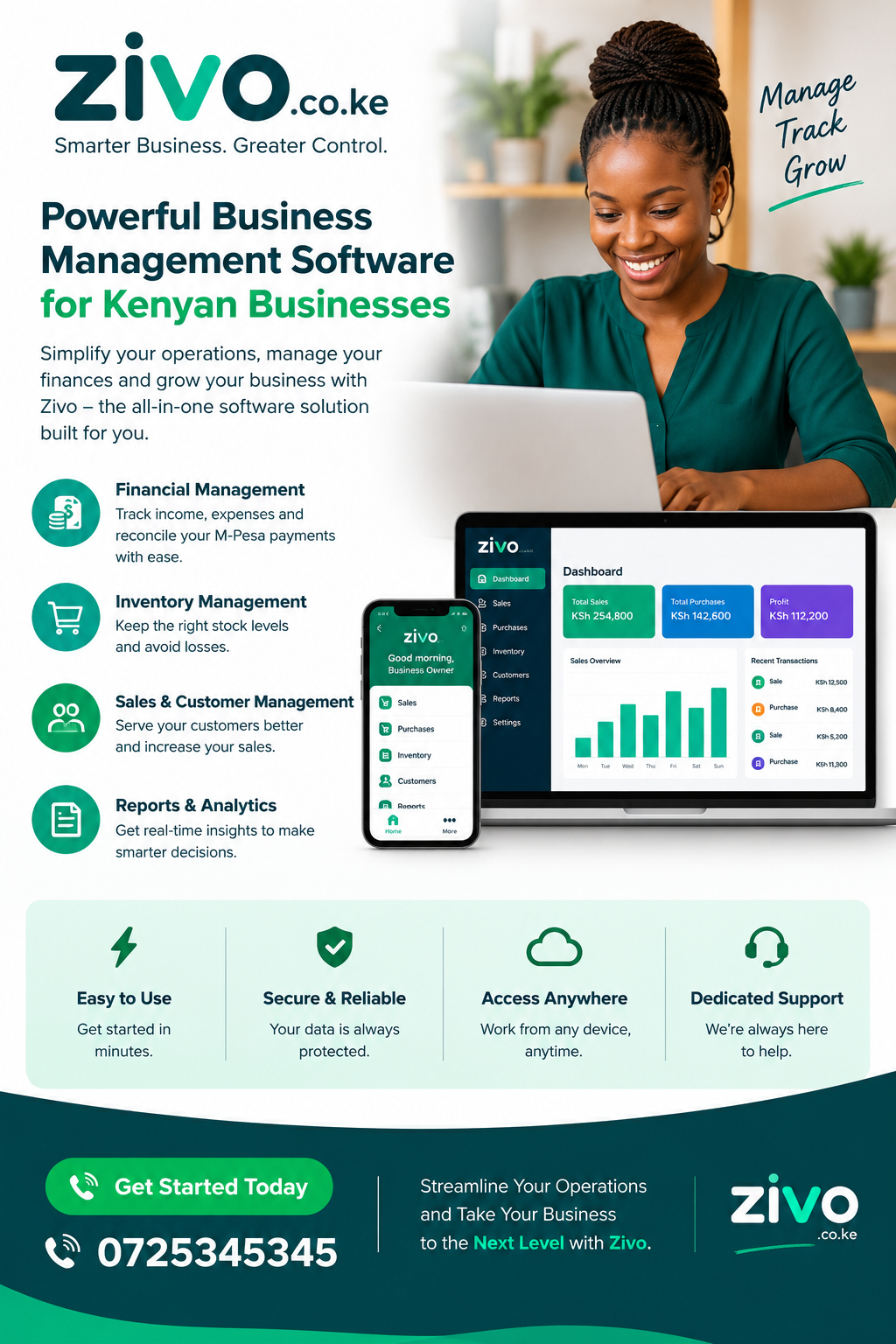
Zivo describes its WhatsApp workflow as a shared inbox that can include conversation history, assignment, saved replies, attachments and internal collaboration.
M-Pesa and Customer Relationship Management
Customer Relationship Management Software Kenya should make sense within the Kenyan payment environment.
M-Pesa is widely used for business payments, but collecting a payment is only one part of the process.
The business also needs to know:
- Which customer paid?
- What invoice was being settled?
- How much was expected?
- How much was received?
- Was the payment matched correctly?
- Is there still an outstanding balance?
- Was the customer given a receipt?
A connected customer management workflow can reduce the amount of manual reconciliation required.
Zivo publicly describes workflows involving invoices, payment links, M-Pesa STK prompts, receipts, statements, collection follow-up and reconciliation.
This can be especially useful for service companies, schools, agencies, wholesalers, retailers and other organisations receiving frequent customer payments.
Customer Relationship Management for Sales Teams
Customer Relationship Management Software Kenya can help sales teams move away from informal follow-up.
A strong sales workflow may look like this:
Step 1: Capture the enquiry
Record the customer’s basic information and what they need.
Step 2: Qualify the opportunity
Determine whether the customer is genuinely interested, what their budget may be and what solution they require.
Step 3: Assign responsibility
Make sure one employee owns the opportunity.
Step 4: Prepare a quotation
Send a professional quotation and record when it was sent.
Step 5: Schedule follow-up
Create a follow-up activity instead of depending on memory.
Step 6: Record the outcome
If the customer buys, move the opportunity forward. If they decline, record the reason.
Step 7: Continue the relationship
A lost opportunity today may become a customer later.
This process provides management with a better understanding of sales performance.
CRM for Customer Service
Customer Relationship Management Software Kenya is not only about selling.
Existing customers need support after purchasing.
A customer service record can help employees see:
- Previous purchases
- Previous complaints
- Open issues
- Previous communication
- Assigned support employee
- Resolution status
- Important customer notes
This prevents situations where a customer contacts a company repeatedly and has to explain the entire issue from the beginning.
For businesses with recurring customers, service history can also reveal patterns. If the same customer repeatedly reports a problem, management can investigate the underlying cause instead of treating every complaint separately.
CRM for Different Types of Kenyan Businesses
Customer Relationship Management Software Kenya can be adapted to many types of organisations.
Service businesses
Consultancies, agencies, repair companies, installers and professional firms can use CRM tools to track enquiries, quotations, jobs and payments.
Retail businesses
Retailers can connect customer records with sales, stock, invoices and payment activity.
Wholesalers and distributors
Distributors can track customers, pricing, orders, invoices, payment status and delivery activities.
Salons and beauty businesses
Salons can maintain client records, appointment history, service purchases, reminders and payment information.
Schools and training businesses
Schools and training organisations can manage customer or parent enquiries, invoices, payments and communication.
Property businesses
Property managers may use customer records for landlords, tenants, prospects, maintenance requests and payment follow-up.
Lending businesses
Lenders can use customer records to manage borrower communication, follow-ups and collection workflows.
Zivo’s public business-type information describes CRM and customer workflows across standard businesses, lending, salons and digital businesses.
How CRM Helps Business Owners
Customer Relationship Management Software Kenya gives owners better visibility into customer activity.
A business owner should not need to call five employees just to understand what is happening with sales.
Useful management questions include:
- How many new leads came in this week?
- Which salesperson has the most active opportunities?
- How many quotations are awaiting decisions?
- Which customers have outstanding balances?
- Which opportunities are overdue for follow-up?
- Which customers have not purchased recently?
- Which products or services generate the most enquiries?
When the answers are available from the system, management can spend less time collecting information and more time acting on it.
CRM and Business Reporting
Customer Relationship Management Software Kenya becomes more useful when customer information can be converted into reports.
Possible reports include:
- New leads by period
- Leads by source
- Sales by employee
- Conversion rates
- Open opportunities
- Lost opportunities
- Customer balances
- Repeat customers
- Outstanding invoices
- Follow-up activities
- Sales by product
- Sales by location
Reports should not exist simply because software can generate them. Each report should help answer a business question.
For example, if sales have declined, management may want to know whether fewer enquiries are coming in or whether the conversion rate has fallen.
Those are different problems requiring different solutions.
Connecting CRM With Invoicing
Customer Relationship Management Software Kenya is more effective when customer information does not stop at the sales pipeline.
Suppose a customer accepts a quotation.
The next steps may involve:
- Creating an invoice.
- Sending the invoice.
- Recording payment.
- Issuing a receipt.
- Scheduling delivery.
- Completing the order.
- Updating the customer history.
If these processes are disconnected, staff may duplicate information.
A connected workflow allows the customer story to continue from enquiry to payment and fulfilment.
Zivo describes this principle as keeping customer, payment and work records connected rather than scattering them across separate tools.
CRM and Customer Retention
Customer Relationship Management Software Kenya can support customer retention by making customer history easier to understand.
Retention does not always require complicated loyalty programmes.
Sometimes the basics matter most:
- Remembering previous purchases
- Responding quickly
- Following up after service
- Resolving complaints
- Sending relevant offers
- Recognising repeat customers
- Keeping promises
For example, a business selling office equipment could record which products a customer previously purchased. When the customer is likely to need replacement supplies, the sales team can follow up with a relevant offer.
The purpose is not to send more messages. It is to make communication more relevant.
Data Protection and Customer Records in Kenya
Customer Relationship Management Software Kenya should be selected with customer-data protection in mind.
CRM systems can contain names, telephone numbers, email addresses, purchase history, payment information and communication records. Businesses therefore need to think carefully about who can access information and why.
Kenya’s data protection framework includes the Data Protection Act, 2019, while the Office of the Data Protection Commissioner provides guidance on data controllers, data processors and data-subject rights.
The ODPC states that data subjects have rights including being informed about how personal data is used, accessing their data, objecting to processing and requesting correction or deletion of certain inaccurate data.
For a business choosing CRM software, practical questions include:
- What information will be stored?
- Who can access customer records?
- Can access be restricted by role?
- How are accounts protected?
- How is customer data handled?
- Can business information be exported?
- What happens when an employee leaves?
- What security controls are available?
These questions are important regardless of company size.
Role-Based Access
Customer Relationship Management Software Kenya should give businesses appropriate control over employee access.
A salesperson may need customer and opportunity information.
An accounts employee may need invoices and payments.
A manager may need reporting.
A technician may only need customer information related to assigned jobs.
Giving every employee unrestricted access to everything creates unnecessary risk.
Role-based access helps organisations limit information according to job responsibilities.
Zivo states that its business workspace uses role-based staff access and separates business workspaces.
CRM for Small Businesses
Customer Relationship Management Software Kenya does not have to mean buying a large enterprise system.
Small businesses should start with the problems they actually experience.
For example, a five-person company may only need:
- Customer records
- Lead tracking
- Follow-up reminders
- Quotes
- Invoices
- Payment records
- Basic reporting
Buying dozens of advanced features that nobody uses can create unnecessary cost and confusion.
A practical approach is to start small and expand as business needs increase.
Zivo’s public pricing currently describes a free starting option for invoices, expenses, customer balances and essential cashflow reporting, with paid options adding features such as WhatsApp and M-Pesa workflows.
Businesses should always confirm current pricing and limits directly with the provider before making a purchasing decision.
How Much Does CRM Software Cost in Kenya?
Customer Relationship Management Software Kenya can come with different pricing structures.
Some systems charge per user. Others charge based on features, transaction volume, modules or business size.
Before comparing prices, calculate the actual cost of the current manual process.
For example, consider a company where employees spend several hours every week:
- Searching for customer information
- Rebuilding sales reports
- Following up manually
- Matching payments
- Preparing customer statements
- Finding old conversations
The business is already paying for that work through employee time.
A CRM solution should therefore be evaluated on value, not simply monthly subscription price.
Ask:
- How many employees need access?
- Which features are essential?
- Are integrations included?
- Are there transaction limits?
- Is training included?
- Is support available?
- Can the system scale?
- Are additional charges applied for messaging or payment services?
How to Choose the Right CRM
Customer Relationship Management Software Kenya should be evaluated according to the business workflow rather than the length of its feature list.
Use this checklist.
1. Define the main problem
Do you need better lead management, customer service, payment follow-up or reporting?
2. Map the customer journey
Write down what happens from first enquiry to completed sale.
3. Identify manual steps
Mark every point where employees copy information or search through multiple systems.
4. Prioritise integrations
If customers communicate through WhatsApp or pay through M-Pesa, check whether those workflows are supported.
5. Test usability
A powerful system is not useful if employees cannot use it consistently.
6. Check access controls
Confirm that managers can control what different users can see and do.
7. Review reporting
Check whether the dashboards answer the questions management actually asks.
8. Consider future growth
Choose a system that can accommodate additional employees, customers and business processes.
Common CRM Implementation Mistakes
Customer Relationship Management Software Kenya cannot fix a poorly designed business process by itself.
Several implementation mistakes are common.
Buying before defining the workflow
A company may purchase software without deciding what it expects the software to accomplish.
Trying to automate everything immediately
Automation should come after the underlying process is understood.
Failing to train employees
Even intuitive software requires clear expectations.
Allowing inconsistent data entry
If one employee records “Nairobi” and another records “Nrb,” reports may become messy.
Keeping unnecessary spreadsheets
If the CRM becomes the main customer record but employees continue maintaining separate unofficial spreadsheets, data can become inconsistent.
Ignoring management adoption
The owner and managers should use the reports themselves. Otherwise employees may not take the system seriously.
A Practical CRM Implementation Plan
Customer Relationship Management Software Kenya can be introduced gradually.
Week 1: Define the process
Document how enquiries, quotations, sales, payments and support are currently handled.
Week 2: Clean customer information
Remove duplicates and standardise names, telephone numbers and other important fields.
Week 3: Configure the workflow
Set up customer records, sales stages, user roles and required activities.
Week 4: Train employees
Demonstrate the workflow using real business scenarios.
Week 5: Monitor usage
Check whether employees are recording information consistently.
Week 6: Improve
Identify unnecessary steps and refine the process.
The objective is not simply to “install CRM.” It is to establish a repeatable way of managing customer relationships.
Example: CRM Workflow for a Kenyan Service Company
Customer Relationship Management Software Kenya can be illustrated with a practical example.
Imagine a company that provides CCTV, networking and electrical installation services.
A customer sends a WhatsApp enquiry asking for CCTV installation.
The company creates a customer record and records the requirement.
A salesperson qualifies the enquiry and schedules a site visit.
The site visit is completed.
A quotation is prepared for KES 85,000.
The customer accepts.
An invoice is created.
The customer pays a deposit through M-Pesa.
The payment is matched to the invoice.
The installation is assigned to a technician.
The technician completes the work.
The final payment is recorded.
The customer remains in the system with a complete history.
Months later, the customer contacts the business about adding more cameras.
The salesperson does not need to start from zero.
They can review the previous installation and continue the relationship.
That is the real value of connected customer management.
CRM and Business Growth
Customer Relationship Management Software Kenya can support growth because growth increases the number of relationships a business must manage.
When a business has a small number of customers, the owner can personally remember many details.
As the customer base grows, this becomes impossible.
The company therefore needs processes that allow employees to work consistently.
CRM can provide the structure for that transition.
It can help turn customer management from an individual responsibility into an organisational process.
That is particularly important when a company adds:
- New employees
- New branches
- New products
- New sales channels
- New customer segments
- New payment methods
The larger the operation becomes, the more valuable a central customer record can be.
Why Connected Business Software Matters
Customer Relationship Management Software Kenya is most useful when customer management is connected to the other parts of the business.
A customer relationship does not exist separately from finance and operations.
A customer places an order.
The business creates an invoice.
The customer pays.
The business delivers.
The accounts team records the transaction.
Management reviews the results.
When these processes share information, employees spend less time reconstructing what happened.
Zivo’s platform describes this connected approach across customers, payments, expenses, jobs and operational workflows.
Measuring CRM Success
Customer Relationship Management Software Kenya should be evaluated using business outcomes rather than software activity alone.
Useful measures include:
Lead response time
How quickly does the business respond to new enquiries?
Conversion rate
What percentage of qualified leads become customers?
Follow-up completion
How many scheduled follow-ups are completed?
Sales cycle
How long does it take to move from enquiry to purchase?
Customer retention
How many customers continue buying?
Outstanding balances
How much money remains unpaid?
Sales visibility
Can management see the current sales pipeline without requesting manual reports?
These measurements can reveal whether the system is improving business performance.
When a Business Should Consider CRM
Customer Relationship Management Software Kenya may be appropriate when any of the following situations occur:
- Customer information is becoming difficult to manage.
- Leads are being forgotten.
- Salespeople maintain separate customer lists.
- Managers cannot easily see the sales pipeline.
- Customers repeatedly ask the business for information it should already have.
- Staff spend too much time preparing manual reports.
- Payment follow-up is inconsistent.
- WhatsApp conversations contain important sales information.
- The company is expanding its team.
- The owner wants better visibility into customer activity.
A business does not have to be large before these problems appear.
CRM and Customer Experience
Customer Relationship Management Software Kenya can improve customer experience by helping employees provide more informed service.
Customers generally do not care which department owns a record. They care whether the business understands their situation.
For example, if a customer calls about an unpaid invoice, the employee should be able to identify the relevant invoice.
If the customer asks about an order, the employee should know whether it has been delivered.
If the customer reports a previous issue, support should be able to see the relevant history.
A good CRM therefore supports customer experience indirectly by giving employees better information.
Frequently Asked Questions
What is CRM software used for in Kenya?
Customer Relationship Management Software Kenya is used to organise customer information, manage leads, track sales opportunities, schedule follow-ups, record communication and improve customer service. Depending on the platform, it can also connect customer records with quotations, invoices, payments and operational activities.
Is CRM software suitable for small Kenyan businesses?
Yes. Customer Relationship Management Software Kenya can be useful for small businesses when customer enquiries and follow-ups are becoming difficult to manage manually. Small businesses should start with essential functions and add more capabilities as their needs grow.
Can CRM software work with WhatsApp?
Many modern systems support WhatsApp-based customer workflows. Customer Relationship Management Software Kenya can be particularly useful for businesses that receive many sales or support enquiries through WhatsApp. Businesses should confirm whether the specific CRM uses an official integration and what messaging charges apply.
Can CRM software integrate with M-Pesa?
Some platforms support M-Pesa-related payment workflows. Customer Relationship Management Software Kenya can help businesses connect customer records with invoices and payment processes where the platform provides the required integration. Always confirm the exact M-Pesa features and transaction workflow before purchasing.
What information should a CRM store?
Customer Relationship Management Software Kenya should store information that is genuinely needed for customer management. This may include contact details, communication history, enquiries, opportunities, quotations, invoices, payments, service history and follow-up activities. Businesses should avoid collecting unnecessary personal information.
Is customer data protected in a CRM?
Protection depends on both the software provider and how the business configures and uses the system. Customer Relationship Management Software Kenya should be evaluated for access controls, authentication, data handling, security practices and administrative controls. Kenyan businesses should also consider applicable data-protection obligations.
How does CRM improve sales?
Customer Relationship Management Software Kenya can improve sales by helping teams capture leads, assign opportunities, schedule follow-ups, track quotations and identify prospects that require attention. It does not replace good selling; it gives salespeople a more organised process.
How much does CRM software cost in Kenya?
Pricing varies depending on users, features, integrations and transaction limits. Customer Relationship Management Software Kenya should be compared based on total business value rather than subscription price alone. Review all recurring charges, implementation costs and third-party messaging or payment fees.
What is the best CRM for a Kenyan business?
There is no single CRM that is automatically best for every organisation. Customer Relationship Management Software Kenya should be selected according to the company’s customer journey, team size, communication channels, payment methods, reporting needs and budget.
How long does CRM implementation take?
Implementation can range from a simple setup completed quickly to a larger project involving data migration, integrations and staff training. Customer Relationship Management Software Kenya should be introduced in stages when possible, beginning with the most important customer workflow.
Final Thoughts
Customer Relationship Management Software Kenya is ultimately about giving a business a reliable way to remember, understand and serve its customers.
The technology matters, but the process matters even more.
A successful CRM implementation should help a business answer basic questions quickly: who the customer is, what they need, what has already happened, what they have been promised, what they owe, what has been paid and what needs to happen next.
For Kenyan SMEs, the strongest solution is usually one that fits the way customers already interact with the business. If customers use WhatsApp, the workflow should account for WhatsApp. If customers pay through M-Pesa, payment workflows should be considered. If employees manage quotations, invoices, deliveries or support, those processes should connect to the customer record.
Zivo publicly presents this connected approach through customer records, CRM and website leads, WhatsApp workflows, invoices, M-Pesa payments, jobs, finance and operational tools.
The right system should reduce scattered information, make follow-up more consistent, give managers better visibility and allow employees to serve customers with better context.
For a growing Kenyan business, that can turn customer management from a collection of individual tasks into a clear, repeatable and measurable business process.
Customer Relationship Management Software Kenya is therefore best understood not simply as a database of contacts, but as part of a broader system for managing the customer journey from first enquiry through sale, payment, fulfilment and ongoing service.