
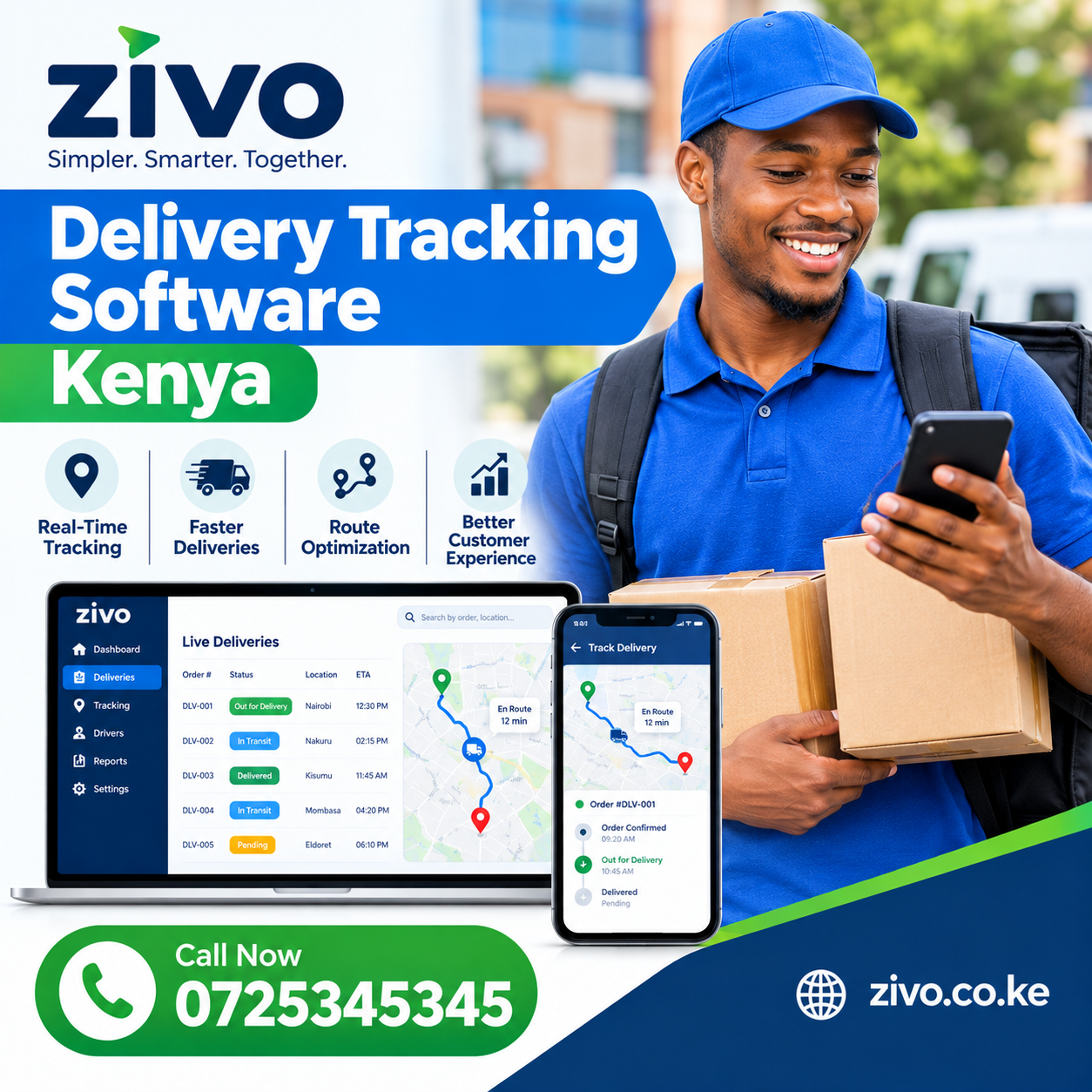
Delivery Tracking Software Kenya: How to Manage Orders, Deliveries and Customers Efficiently
For Kenyan businesses that sell products, distribute goods, deliver customer orders, install equipment or provide field services, Delivery Tracking Software Kenya can provide a structured way to manage work from payment and order confirmation through assignment, fulfilment and completion. Instead of relying on calls, WhatsApp messages, paper notes and disconnected spreadsheets, businesses can create a clearer delivery workflow. This guide explains what delivery tracking software is, why it matters, which features to consider, how it can support Kenyan operations, and how to choose a solution that fits your business.
A delivery is more than moving an item from one location to another. It represents a promise made to a customer. Once a customer has paid for an order, the business needs to know what was purchased, where it needs to go, who is responsible, what stage the delivery has reached and whether the customer has received the goods or service.
That becomes increasingly difficult as order volumes increase. A small business may initially manage deliveries using a phone and a notebook. As customers increase, however, staff members begin asking questions such as: Has this order been paid? Who is taking it? Has the driver left? Did the customer receive it? Was the delivery completed? Why is this order still pending?
A connected delivery workflow helps answer those questions from one operational record.
What Is Delivery Tracking Software?
Delivery Tracking Software Kenya refers to software designed to help businesses organise, assign, monitor and complete deliveries. Depending on the platform, it may connect customer records, orders, invoices, payments, staff assignments, delivery statuses and reporting.
The purpose is not simply to show where a vehicle is located. For many SMEs, the more important question is whether every paid or confirmed order has been properly assigned and completed.
A practical delivery tracking system can help a business move through a workflow such as:
- Customer places an order.
- Business confirms the order.
- Invoice or payment is recorded.
- Delivery job is created.
- Job is assigned to a staff member or delivery team.
- Staff member updates the delivery status.
- Customer receives the goods or service.
- Manager sees the completed record.
This approach creates accountability around fulfilment.
Delivery Tracking Software Kenya can therefore be useful for retailers, wholesalers, distributors, hardware businesses, pharmacies, agrovets, online sellers, restaurants, equipment suppliers, installers, repair companies and other organisations where customer work must physically reach its destination.
The exact features vary between providers, so businesses should distinguish between simple delivery status tracking and a broader business workflow that connects orders, customers, payments and delivery operations.
Why Delivery Management Is Becoming More Important for Kenyan SMEs
Delivery Tracking Software Kenya becomes particularly useful when a company moves beyond a handful of daily deliveries. At that point, informal processes can become difficult to control.
Kenyan businesses often operate in environments where customers communicate through several channels. An order may begin through WhatsApp, a phone call, social media, a physical shop or a salesperson. Payment may happen through M-Pesa. Delivery instructions may then be sent to another employee through a separate chat.
Each step may work individually, but the information becomes fragmented.
Consider a hardware business in Nairobi. A customer orders construction materials in the morning, receives an invoice and pays through M-Pesa. The salesperson informs the storekeeper. The storekeeper prepares the goods and calls a driver. The driver receives the delivery location through WhatsApp.
If there is no central record, management may have difficulty answering a simple question later: “Which paid orders have not yet been delivered?”
Delivery Tracking Software Kenya helps create a single operational trail for this type of process. The value comes from making the delivery visible alongside the information that caused the delivery to exist in the first place.
This is particularly important for growing businesses because delivery mistakes can affect customer satisfaction, cash flow and staff productivity at the same time.
How Delivery Tracking Works
Delivery Tracking Software Kenya generally works by turning each delivery into a trackable operational record. The record can contain information such as the customer, order, destination, assigned employee, status, notes and completion details.
A basic workflow might use statuses such as:
- Pending
- Confirmed
- Assigned
- Preparing
- Out for delivery
- Delivered
- Failed
- Rescheduled
- Cancelled
The business can decide which statuses make sense for its operations.
For example, an online retailer may need “Packed,” “Dispatched” and “Delivered.” An installation company may need “Assigned,” “Technician En Route,” “On Site,” “Installed” and “Completed.”
Delivery Tracking Software Kenya becomes more valuable when these statuses reflect actual responsibilities rather than being used merely as labels.
A manager should be able to look at the operational queue and understand what needs attention. A delivery employee should know which jobs belong to them. An accounts employee should be able to identify whether an order has been paid. Customer-facing staff should be able to provide an update without calling several people.
That is the difference between recording deliveries and managing deliveries.
Key Benefits of Delivery Tracking Software
Delivery Tracking Software Kenya can help businesses improve visibility across the fulfilment process. The benefits are not limited to delivery teams because sales, accounts, management and customer service may all depend on delivery information.
1. Better delivery visibility
When orders are recorded in one workflow, management can see what has been completed and what remains open.
This reduces dependence on memory and scattered conversations.
2. Clear staff responsibility
Delivery Tracking Software Kenya can help assign jobs to specific staff members or departments. This makes it easier to determine who is responsible for the next action.
Clear ownership can reduce situations where several employees assume someone else is handling an order.
3. Faster customer updates
Customers frequently want to know whether their order has been dispatched or delivered. A structured status system gives staff information they can use when responding.
4. Fewer missed deliveries
Delivery Tracking Software Kenya can help highlight open and overdue work. Instead of discovering a missed delivery after the customer complains, managers can review outstanding jobs earlier.
5. Better connection between payment and fulfilment
For businesses that require payment before delivery, connecting invoices and payment records to delivery jobs can reduce confusion.
6. Easier management reporting
Managers can review completed and outstanding deliveries rather than building reports manually from several spreadsheets or message threads.
Delivery Tracking for Retail Businesses
Delivery Tracking Software Kenya can be particularly useful for retailers that receive orders from customers and then arrange fulfilment.
A retail operation may involve products, stock, sales orders, payments and deliveries. If these activities are handled separately, employees may need to enter the same information multiple times.
A connected workflow can begin when the sale is created.
For example:
Customer order → payment → stock preparation → delivery assignment → delivery → completion
This approach allows the delivery record to remain connected to the original transaction.
Zivo’s retail workflow includes point-of-sale sales, product catalogues, stock, customer orders, M-Pesa payments and reporting, while its delivery workflow can help move an order toward fulfilment.
Delivery Tracking Software Kenya can therefore be useful for businesses where delivery is part of the sales process rather than a completely separate operation.
Delivery Tracking for Wholesalers and Distributors
Delivery Tracking Software Kenya is also relevant to wholesalers and distributors that handle several orders each day.
Distribution businesses often face a different challenge from small retailers. One customer may place multiple orders, several customers may require deliveries in different locations, and multiple employees may be involved in preparation and fulfilment.
For example, a distributor serving shops around Nairobi may have deliveries going to:
- Eastlands
- Industrial Area
- Westlands
- Embakasi
- Ruaka
- Kiambu
- Thika
- Ruiru
As the delivery schedule grows, verbal instructions become harder to manage.
A structured system can make each delivery an identifiable task with a customer, location, order context, assigned person and current status.
Delivery Tracking Software Kenya can also help managers identify delivery work that remains incomplete. This is important when an organisation has several staff members handling fulfilment simultaneously.
Delivery Tracking for Online Businesses
Delivery Tracking Software Kenya can support online businesses that receive orders digitally and then need to fulfil physical products.
An online customer journey can involve:
- Product discovery.
- Customer enquiry.
- Order creation.
- Payment.
- Order preparation.
- Dispatch.
- Delivery.
- Customer confirmation.
If the business handles each stage in a different application, staff may spend significant time transferring information.
For a Kenyan online business, M-Pesa can also be part of the workflow. When payment and fulfilment are disconnected, staff may need to verify payment manually before releasing an order.
Zivo’s M-Pesa workflow supports invoices, payment attempts, receipts and payment status, and a paid invoice can be converted into delivery or service work when the relevant workflow is enabled.
Delivery Tracking Software Kenya can therefore help online sellers create a clearer connection between what the customer purchased, whether it was paid for and whether it was delivered.
Delivery Tracking and M-Pesa Payments
Delivery Tracking Software Kenya is especially relevant to Kenyan businesses because payment collection and delivery often occur within the same customer journey.
Suppose a customer orders equipment worth KES 18,000. The business sends an invoice and receives payment through M-Pesa. The customer then expects delivery.
If the payment record sits in one place and the delivery instructions sit in another, staff must manually connect the two.
A connected workflow can associate payment with the customer transaction and then move the paid work into delivery.
This does not mean every business should automatically dispatch every paid order. Businesses may still need stock checks, approvals, address confirmation or other controls.
The important point is visibility.
Delivery Tracking Software Kenya can help managers understand which customer work is ready for fulfilment and which work still requires action.
For example, a dashboard might show:
| Status | Example |
|---|---|
| Paid | Customer has completed payment |
| Pending assignment | Delivery team has not yet been assigned |
| Assigned | Staff member owns the delivery |
| In progress | Delivery is being handled |
| Completed | Customer work has been completed |
| Exception | Delivery requires attention |
This type of visibility can reduce unnecessary follow-up.
The Importance of Delivery Statuses
Delivery Tracking Software Kenya is only useful when delivery statuses reflect the actual business process.
Too few statuses may provide insufficient information. Too many can create unnecessary administration.
A business should therefore design statuses around meaningful operational decisions.
For example, an appliance installation business could use:
New → Assigned → Scheduled → Technician En Route → On Site → Completed
A distributor might use:
Order Confirmed → Picking → Ready → Assigned → Out for Delivery → Delivered
An online retailer might use:
Paid → Processing → Packed → Dispatched → Delivered
Delivery Tracking Software Kenya should make it easier for staff to understand what happens next.
The objective is not to create complicated workflows. The objective is to make the current state of each delivery obvious.
Assigning Delivery Jobs to Staff
Delivery Tracking Software Kenya can help create accountability by associating jobs with specific employees or teams.
Without clear assignment, delivery work can become a shared responsibility that nobody actively owns.
Imagine a business with five field employees. Ten customer orders are waiting. If all five employees can see a general WhatsApp message saying “these deliveries need to go out today,” management may not know who is handling each order.
An assigned-job approach is clearer.
Each job can have:
- Customer
- Contact details
- Order information
- Location
- Notes
- Assigned employee
- Status
- Payment context
- Completion state
Zivo’s Jobs and Delivery workflow includes an assigned “My Jobs” view, department assignment, customer and payment context, delivery status tracking and reporting for paid-but-undelivered work.
Delivery Tracking Software Kenya can therefore support businesses where delivery responsibilities need to be distributed across a team.
Managing Paid but Undelivered Orders
Delivery Tracking Software Kenya can be particularly valuable for identifying one of the most important exceptions in fulfilment: work that has been paid for but has not yet been delivered.
This situation deserves attention because the financial transaction may already be complete while the operational promise remains outstanding.
A manager may want to know:
- How many paid orders remain undelivered?
- How old are those orders?
- Who is responsible?
- Which customers are waiting?
- Are there stock problems?
- Are there delivery capacity issues?
- Have customers been contacted?
Zivo specifically describes paid-but-undelivered reporting as part of its Jobs and Delivery workflow.
Delivery Tracking Software Kenya can help businesses make these exceptions visible rather than allowing them to disappear into a general list of transactions.
This is especially useful when a company has many customer orders and cannot realistically depend on managers remembering each one.
Delivery Tracking for Field Service Businesses
Delivery Tracking Software Kenya is not limited to businesses that deliver physical packages.
Many service companies have work that behaves like a delivery workflow.
Examples include:
- CCTV installation
- Appliance installation
- Equipment servicing
- Repairs
- Cleaning services
- Maintenance visits
- Internet installation
- Event equipment delivery
- Technical callouts
In these cases, the customer may have paid for a service rather than a box.
The business still needs to assign a person, communicate the work, track progress and confirm completion.
Delivery Tracking Software Kenya can therefore be part of a wider field-service management process where the final outcome is a completed customer job.
Zivo describes its Jobs and Delivery workflow as suitable for orders, installations, repairs, bookings, field service and other customer work represented as jobs.
Delivery Tracking for Installations and Repairs
Delivery Tracking Software Kenya can also support installation and repair workflows where location and staff responsibility matter.
Consider a customer who pays for CCTV installation in Kitengela.
The business needs to know:
- Which customer requested the service?
- What equipment or service was sold?
- Has payment been confirmed?
- Which technician is assigned?
- What date is planned?
- Has the technician started?
- Was the work completed?
- Is there anything still outstanding?
A system that keeps these details connected can reduce the need to reconstruct the customer story from multiple applications.
The same principle applies to repairs.
A repair company may receive a WhatsApp request, create a quotation, issue an invoice, receive payment and then assign a technician. Zivo describes a connected workflow where WhatsApp requests can move into quotes, invoices, payment and assigned jobs.
Delivery Tracking Software Kenya can therefore support both physical deliveries and customer service operations.
Customer Communication and Delivery Updates
Delivery Tracking Software Kenya can help businesses improve internal visibility, but customer communication remains equally important.
Customers usually do not need access to every internal detail. They want straightforward answers:
- Has my order been confirmed?
- Has it been dispatched?
- Who is handling it?
- When should I expect it?
- Has it been delivered?
- Is there a problem?
A delivery workflow makes it easier for customer service staff to answer these questions using the current operational record.
For businesses using WhatsApp, the connection between conversations and customer records can be particularly useful. Zivo’s WhatsApp workflow allows teams to share customer history, assign conversations and keep quotes, invoices, payment status and jobs connected.
Delivery Tracking Software Kenya can support this kind of customer communication by making the delivery status available to the people who need it.
The business should still establish communication policies. Not every status change needs to trigger a message. Customers should receive relevant information without being overwhelmed by automated updates.
Reducing Delivery Delays
Delivery Tracking Software Kenya can help reduce delays by making outstanding work visible.
A delay can happen for many reasons:
- Stock is unavailable.
- Payment has not cleared.
- The address is incomplete.
- The assigned employee is unavailable.
- The customer requested another date.
- The vehicle has a problem.
- The order requires approval.
- The customer could not be reached.
- The job needs additional equipment.
Software cannot automatically eliminate all these problems.
What it can do is give the business a place to record and monitor them.
A manager can then distinguish between a normal pending delivery and an exception that requires intervention.
Delivery Tracking Software Kenya can be most useful when the business defines clear escalation rules around overdue or blocked deliveries.
For example, an order that remains unassigned for several hours may require a supervisor to intervene. A job marked “customer unavailable” may need a rescheduling action.
Delivery Reporting and Management Decisions
Delivery Tracking Software Kenya can provide management information that is difficult to obtain from informal processes.
Useful delivery reports may include:
- Number of deliveries completed
- Number of pending deliveries
- Paid but undelivered orders
- Deliveries by employee
- Deliveries by department
- Failed deliveries
- Rescheduled deliveries
- Delivery completion rates
- Outstanding customer work
- Orders awaiting assignment
The purpose of reporting is not to produce reports for their own sake.
A useful report should answer a business question.
For example:
Question: Why are customers waiting?
Possible report: Paid orders that remain undelivered.
Question: Which employee has the most open jobs?
Possible report: Assigned jobs grouped by staff member.
Question: Which branch has the highest delivery workload?
Possible report: Open jobs grouped by branch or department.
Delivery Tracking Software Kenya can therefore turn delivery information into an operational management tool rather than a simple list of completed orders.
Connecting Delivery with Inventory
Delivery Tracking Software Kenya is particularly useful when inventory affects fulfilment.
A delivery cannot be completed if the required goods are unavailable.
For businesses selling physical products, the workflow may therefore involve:
Sale → stock check → picking → packing → delivery → completion
Zivo’s retail and POS workflow connects products, stock, sales orders, payments and fulfilment, helping businesses keep the commercial and operational sides of the transaction connected.
Delivery Tracking Software Kenya can be considered alongside inventory management when selecting software for a distribution or retail operation.
Businesses should ask whether the delivery system understands the order it is delivering. A delivery record that contains no product or order context may force employees to check another system before they can do their jobs.
Delivery Tracking and Business Finance
Delivery Tracking Software Kenya can also support financial visibility when delivery jobs remain connected to invoices and payments.
This connection matters because management often needs to understand both sides of a transaction:
Has the customer paid?
and
Has the business fulfilled its obligation?
A paid invoice without completed fulfilment may require attention. A completed delivery with an unpaid invoice may require collection follow-up.
Zivo’s accounting workflow connects invoices, payments, receipts, expenses, customer statements and jobs, allowing businesses to review the financial and operational context together.
Delivery Tracking Software Kenya can therefore form part of a broader business management platform instead of becoming another isolated system.
Choosing the Right Delivery Tracking System
Delivery Tracking Software Kenya should be selected according to the actual delivery process of the business.
Do not begin by asking, “Which software has the most features?”
Begin with:
“What happens between a customer placing an order and the business confirming that the order has been fulfilled?”
Map that process.
Then identify the points where information is lost.
For example:
| Business problem | Useful software capability |
|---|---|
| Orders are forgotten | Central order queue |
| Staff do not know assignments | Job assignment |
| Customers ask for updates | Delivery status |
| Paid orders remain open | Paid-but-undelivered reporting |
| Payment is difficult to verify | Payment integration |
| Managers lack visibility | Delivery reports |
| Stock and orders are disconnected | Inventory and fulfilment connection |
| Staff use several chats | Shared customer workflow |
Delivery Tracking Software Kenya should solve real operational problems rather than introduce unnecessary complexity.
Questions to Ask a Software Provider
Delivery Tracking Software Kenya buyers should ask practical questions before adopting a system.
Does it support our delivery workflow?
A system designed for parcel logistics may not work the same way as one designed for installations or field service.
Can we assign jobs to staff?
If responsibility matters to your operation, assignment should be clear.
Can managers see open deliveries?
Visibility into pending work is one of the main reasons businesses adopt delivery management software.
Can delivery connect to orders and payments?
This can reduce duplicate data entry and make customer history easier to understand.
Does it support Kenyan payment workflows?
If M-Pesa is central to your operation, confirm exactly how payments are handled.
Can staff use it easily?
A technically capable system is not useful if employees avoid using it.
Delivery Tracking Software Kenya should be evaluated with real business scenarios rather than a generic feature checklist.
Implementation: Start with One Delivery Workflow
Delivery Tracking Software Kenya does not have to be introduced across every department on the first day.
A controlled rollout can be easier.
Start with one workflow such as:
Customer order → payment → assignment → delivery → completion
Document who handles each step.
Then identify:
- Who creates the order?
- Who confirms payment?
- Who prepares goods?
- Who assigns delivery?
- Who updates the status?
- Who handles exceptions?
- Who confirms completion?
- Who reviews the report?
Once responsibilities are clear, configure the software around them.
Delivery Tracking Software Kenya can be introduced gradually as employees become familiar with the workflow.
Zivo itself recommends defining a contained workflow, preparing clean starting data, configuring access and responsibilities, running a real pilot and training staff by role before expanding the system.
Preparing Your Data Before Implementation
Delivery Tracking Software Kenya works better when the information entering the system is accurate.
Before migration or setup, businesses should review customer records.
Look for:
- Duplicate customers
- Missing phone numbers
- Incorrect locations
- Inconsistent business names
- Old contacts
- Duplicate products
- Incomplete order details
For delivery operations, address information deserves particular attention.
A customer record that simply says “Nairobi” may not be sufficient for a driver or technician.
Where appropriate, businesses should capture useful delivery information such as building names, estate names, landmarks, contact instructions and other details required for successful fulfilment.
Delivery Tracking Software Kenya should make customer information easier to use, not simply store inaccurate data in another database.
Role-Based Access for Delivery Teams
Delivery Tracking Software Kenya can be more effective when each employee sees the information required for their role.
A delivery employee may need:
- Assigned jobs
- Customer contact information
- Delivery location
- Order details
- Notes
- Status controls
A manager may need:
- All jobs
- Staff assignments
- Exceptions
- Reports
- Financial context
An accounts employee may need:
- Invoices
- Payments
- Customer balances
- Receipts
Role-based access can help organisations avoid giving every employee unrestricted access.
Zivo states that its workspaces use role-based access so staff can be limited to the areas they need.
Delivery Tracking Software Kenya should therefore be evaluated not only for convenience but also for access control and operational accountability.
Security Considerations
Delivery Tracking Software Kenya may handle customer names, phone numbers, addresses, invoices, payment information and operational records. Security should therefore be part of the buying decision.
Businesses should ask providers about:
- User permissions
- Account security
- Data separation
- Secure payment pages
- Backups
- Audit trails
- Data export
- Account recovery
- Third-party integrations
- Incident handling
Zivo’s published Trust Center describes workspace separation, role-based access, payment integrity and other security controls, while also stating that an independent penetration-test report or security certification is not currently published.
Delivery Tracking Software Kenya should therefore be assessed using the provider’s current documentation and the specific security requirements of the business.
Common Mistakes When Managing Deliveries
Delivery Tracking Software Kenya can solve several operational problems, but software alone does not guarantee successful implementation.
One common mistake is failing to define ownership.
If nobody is responsible for updating a delivery status, the system quickly becomes outdated.
Another mistake is creating too many statuses. Staff may become confused about which status to select.
A third mistake is failing to record exceptions. If a customer was unavailable, the system should capture that information rather than leaving the delivery indefinitely open.
Other common mistakes include:
- Using inconsistent customer names
- Allowing duplicate orders
- Failing to update completed work
- Not reviewing overdue deliveries
- Giving too many users excessive permissions
- Launching without staff training
- Trying to automate a poorly defined process
Delivery Tracking Software Kenya should support a process that the organisation understands before automation is expanded.
Manual Delivery Tracking vs Software
Delivery Tracking Software Kenya may seem unnecessary to a small business that handles only a few deliveries each week.
For very small operations, a simple manual system may be sufficient.
The problem usually appears when the volume increases.
| Manual process | Software-based process |
|---|---|
| Paper delivery notes | Digital job records |
| Phone-based assignments | Assigned jobs |
| WhatsApp status updates | Structured statuses |
| Manual reports | Operational reports |
| Separate payment records | Connected payment context |
| Memory-based follow-up | Outstanding work queue |
The objective is not to eliminate every manual action.
It is to reduce unnecessary manual coordination.
Delivery Tracking Software Kenya becomes increasingly useful when delivery volume, staff numbers or customer expectations make informal tracking difficult.
How Small Businesses Can Measure Improvement
Delivery Tracking Software Kenya should produce measurable operational improvements.
Businesses can establish a baseline before implementation.
For example, record:
- Number of deliveries per week
- Number of delayed deliveries
- Number of missed deliveries
- Number of customer follow-up calls
- Average time from payment to assignment
- Number of paid orders still open
- Number of delivery-related complaints
After implementation, compare the same measures.
The goal is not to create impressive-looking statistics. The goal is to understand whether the new workflow is actually reducing administrative work and improving visibility.
Delivery Tracking Software Kenya should make it easier to answer practical management questions with reliable operational records.
Delivery Tracking in Nairobi and Beyond
Delivery Tracking Software Kenya can be useful for businesses operating in Nairobi as well as companies serving towns and counties across Kenya.
Delivery conditions vary widely.
A Nairobi business may deal with traffic, estates, office buildings, malls, apartments and changing access instructions.
A distributor serving rural areas may deal with longer distances, fewer delivery runs and different scheduling constraints.
Businesses should therefore avoid assuming that one delivery process fits every location.
The software should be configured around the company’s service area and operational model.
Delivery Tracking Software Kenya can support a standardised process while still allowing staff to record practical delivery information relevant to different locations.
Delivery Tracking for Multi-Branch Businesses
Delivery Tracking Software Kenya can become particularly important when a company operates multiple branches.
Suppose a retailer has branches in Nairobi, Nakuru and Mombasa.
Orders may be created at one location but fulfilled from another. Stock may need to be transferred before delivery. Different employees may own different parts of the process.
Without central visibility, management may struggle to determine which branch is responsible for an outstanding order.
A connected system can help establish ownership around orders, stock and delivery.
Delivery Tracking Software Kenya can therefore support businesses that are moving from a single-location operation into a multi-branch model.
The exact setup depends on the software and the organisation’s internal processes.
Delivery Tracking and Customer Experience
Delivery Tracking Software Kenya can contribute to customer experience by helping employees provide accurate information.
Customers generally do not expect a business to provide a complicated explanation. They want confidence that the business knows what is happening.
For example:
Customer: “Has my order been delivered?”
Weak response: “Let me check with the driver.”
Better operational process: Staff checks the customer record and sees the current delivery status.
That difference may seem small, but repeated across hundreds of transactions it can significantly affect how organised the business appears.
Delivery Tracking Software Kenya can give customer service teams the operational information required to respond without repeatedly contacting other departments.
Using Delivery Data to Improve Operations
Delivery Tracking Software Kenya can generate information that businesses use to identify recurring operational problems.
Suppose reports show that many deliveries are delayed because orders remain unassigned for several hours.
The problem may not be the driver.
It may be the assignment process.
Similarly, if many deliveries fail because customers cannot be reached, the business may need better contact information or confirmation procedures.
If deliveries are delayed because goods are unavailable, the problem may be inventory planning.
This illustrates why delivery reporting should be connected to broader business operations.
Delivery Tracking Software Kenya can help provide the evidence needed to investigate these patterns rather than relying solely on assumptions.
Delivery Tracking and Automation
Delivery Tracking Software Kenya can support automation where the business has clearly defined rules.
Examples might include:
- Automatically creating a job after payment
- Assigning work to a department
- Updating a customer record after completion
- Generating a receipt after confirmed payment
- Highlighting paid but undelivered work
Automation should be introduced carefully.
If the underlying process is unclear, automation can simply make mistakes happen faster.
Zivo’s M-Pesa workflow states that a paid invoice can create a delivery, installation or service job when that workflow is enabled.
Delivery Tracking Software Kenya should therefore be configured around clear business rules and reviewed regularly.
What Makes a Delivery Tracking System User-Friendly?
Delivery Tracking Software Kenya should be easy enough for employees to use during normal working conditions.
A delivery employee may be busy. A storekeeper may be preparing several orders. A manager may be reviewing dozens of open jobs.
The system should make common actions straightforward.
Important usability questions include:
- Can staff quickly find their assigned work?
- Can they update status without unnecessary steps?
- Can managers filter outstanding work?
- Can customer information be found easily?
- Can payment information be viewed in context?
- Are reports understandable?
- Does the system work well for the team’s actual workflow?
Delivery Tracking Software Kenya should reduce administrative friction rather than create another complicated process.
How Zivo Approaches Jobs and Delivery
Delivery Tracking Software Kenya positions Jobs and Delivery as part of a connected business workflow rather than as an isolated delivery application.
The platform describes a process where customer requests can become paid work, jobs can be assigned, staff can update progress and managers can close the loop.
This approach is useful for businesses that want delivery information connected with customers, invoices and payments.
For example:
Customer request → quote → invoice → M-Pesa payment → job → assigned staff → delivery status → completion
That sequence can help reduce the number of times employees need to re-enter the same information.
Delivery Tracking Software Kenya can be particularly useful within this kind of connected business workflow when fulfilment is part of the overall customer journey.
Who Can Benefit from Delivery Tracking Software?
Delivery Tracking Software Kenya may be suitable for a wide range of Kenyan businesses.
Potential users include:
Retailers
Businesses selling products directly to customers can connect sales, stock and fulfilment.
Distributors
Distribution companies can organise multiple customer deliveries and assignments.
Wholesalers
Wholesalers can manage customer orders and delivery responsibilities.
Online sellers
E-commerce businesses can connect customer orders with payment and fulfilment.
Hardware businesses
Hardware suppliers can manage orders for customers who need products delivered to sites.
Equipment suppliers
Businesses selling equipment can track deliveries and installation jobs.
Repair companies
Repair teams can manage customer jobs and field assignments.
Installation companies
Installation businesses can track technicians and completed work.
Delivery Tracking Software Kenya is therefore relevant beyond traditional courier operations.
A Practical Example for a Kenyan SME
Delivery Tracking Software Kenya can be understood through a simple example.
Imagine a Nairobi-based supplier of office equipment.
A customer contacts the business through WhatsApp and requests ten office chairs.
The salesperson creates a quotation.
The customer approves the quotation.
An invoice is issued.
The customer pays through M-Pesa.
The order is then prepared.
The delivery job is assigned to an employee.
The employee sees the customer details and delivery instructions.
The status changes as the work progresses.
Once the customer receives the chairs, the job is marked complete.
Management can then see that the invoice was paid and the delivery was completed.
Delivery Tracking Software Kenya can support this kind of process when the software connects the relevant customer, payment and operational records.
The important benefit is not merely that the delivery has a status. The important benefit is that the status belongs to a meaningful customer transaction.
How to Evaluate Costs
Delivery Tracking Software Kenya should be evaluated based on the business value it provides, not only its monthly subscription.
Potential costs can include:
- Subscription fees
- User charges
- Setup
- Training
- Data migration
- Integrations
- Hardware
- Internet connectivity
- Support
At the same time, businesses should consider the cost of the existing manual process.
How much staff time is spent searching for orders?
How many customer calls are made simply to determine delivery status?
How often are paid orders forgotten?
How much time does management spend preparing delivery reports?
A software investment should be considered alongside these operational costs.
Delivery Tracking Software Kenya can be valuable when it reduces recurring administrative work and gives managers better control over customer fulfilment.
Questions to Ask Before Buying
Delivery Tracking Software Kenya should be tested against actual business scenarios before purchase.
Create three or four realistic examples.
For example:
Scenario 1: Customer pays by M-Pesa and requests delivery.
Scenario 2: Customer cannot be reached.
Scenario 3: Order is paid but stock is unavailable.
Scenario 4: Delivery is assigned to one employee and later reassigned.
Then ask the provider to demonstrate how the system handles each scenario.
This is more useful than watching a generic product presentation.
Delivery Tracking Software Kenya should be judged according to how well it handles the exceptions your team encounters every week.
Frequently Asked Questions
What is delivery tracking software?
Delivery Tracking Software Kenya is software that helps businesses record, assign, monitor and complete deliveries or customer jobs. Depending on the platform, it can also connect orders, customers, invoices, payments, staff assignments and reporting.
Can delivery tracking software work for small businesses?
Yes. Small businesses can use delivery software when delivery coordination has become difficult to manage manually. A business does not necessarily need hundreds of deliveries per day. The relevant question is whether the current process provides enough visibility and accountability.
Can delivery tracking connect with M-Pesa?
Delivery Tracking Software Kenya can be connected to M-Pesa workflows when the selected platform supports the integration. Businesses should confirm exactly how payment confirmation, invoices, receipts and delivery jobs are connected.
Zivo provides M-Pesa payment functionality that can connect payment activity to invoices and, where enabled, create delivery or service jobs from paid work.
Can delivery software track installations and repairs?
Yes. Delivery Tracking Software Kenya can refer to broader fulfilment and field-service workflows, not only package deliveries. Installation, repair, maintenance and other customer jobs can use similar assignment and completion processes.
Does delivery tracking software replace drivers or delivery staff?
No. The software supports coordination and visibility. Employees still perform the physical delivery or service work. The system helps them know what they are responsible for and allows management to monitor progress.
Can customers see delivery status?
Delivery Tracking Software Kenya depends on the features of the selected platform. Some systems provide customer-facing updates, while others primarily provide internal status visibility for staff and managers. Businesses should confirm the exact customer notification features before purchase.
What businesses need delivery tracking software?
Retailers, wholesalers, distributors, online stores, hardware suppliers, equipment businesses, installers, repair companies, service businesses and field teams can all benefit when customer fulfilment requires coordination.
What should I look for when choosing delivery software?
Delivery Tracking Software Kenya should be evaluated for order management, job assignment, delivery statuses, customer records, payment connections, reporting, permissions, ease of use and the ability to handle exceptions.
Is delivery tracking the same as GPS tracking?
No. GPS tracking focuses on geographic location, usually of vehicles or devices. Delivery management can cover a much broader workflow, including orders, payments, assignments, statuses, customer information and completion. Some systems may offer both.
How can I introduce delivery software to my team?
Delivery Tracking Software Kenya can be introduced through a small pilot. Start with one delivery workflow, clean the relevant data, assign responsibilities, train staff and monitor adoption before expanding the system to other departments.
Final Checklist for Kenyan Businesses
Before choosing a delivery management solution, review this checklist:
- Does it support our type of delivery or field work?
- Can we create delivery jobs?
- Can we assign jobs to specific employees?
- Can staff update delivery statuses?
- Can managers see outstanding work?
- Can we identify paid but undelivered orders?
- Can customer details remain connected to the job?
- Can invoices and payments remain connected?
- Does it support our M-Pesa workflow?
- Can it connect delivery with inventory or orders?
- Does it provide useful reports?
- Does it support role-based access?
- Can our employees use it without excessive training?
- Can we test it with real scenarios?
- Can the provider explain its security practices?
- Can we export or access our business records when required?
Delivery Tracking Software Kenya becomes a stronger investment when the answer to these questions matches the way the business actually operates.
The Future of Delivery Operations for Kenyan SMEs
Delivery Tracking Software Kenya is part of a broader shift toward connected business operations.
Businesses increasingly need sales, payments, customer communication and fulfilment to work together.
A customer may begin a conversation on WhatsApp, receive a quotation, pay through M-Pesa and expect delivery without ever visiting a physical office.
That creates a requirement for the business to connect those steps internally.
The customer does not care which department holds each piece of information. They simply expect the business to know what they ordered, whether they paid and when they will receive it.
Delivery Tracking Software Kenya can help businesses build that internal continuity.
The long-term objective should not be to automate everything. It should be to create a dependable operating record that employees can use and managers can trust.
Why Connected Delivery Management Matters
Delivery Tracking Software Kenya is most useful when it becomes part of the business’s overall operating process.
A delivery should not exist as a disconnected task.
It should relate to:
- The customer
- The order
- The invoice
- The payment
- The products
- The assigned employee
- The delivery status
- The final outcome
When these records remain connected, businesses spend less time reconstructing what happened.
Zivo describes its broader platform around connected customer, payment, expense and operational records, with Jobs and Delivery forming part of that workflow.
Delivery Tracking Software Kenya can therefore be evaluated not only as a delivery tool but as part of a wider business management strategy.
Conclusion
For a growing Kenyan business, delivery management can quickly become difficult when orders, payments, staff assignments and customer communication are scattered across different tools. A structured workflow gives the business a clearer way to see what has been paid, what needs delivery, who is responsible and what remains incomplete.
The most useful system is not necessarily the one with the longest feature list. It is the one that fits the company’s real process and makes everyday work easier for employees and managers.
Delivery Tracking Software Kenya can help businesses create greater visibility around fulfilment, especially when delivery work is connected to customer records, orders, invoices and payments.
For retailers, wholesalers, distributors, online sellers and service companies, the key question is simple: can your team always tell what needs to be delivered, who owns it and whether the customer has received it?
If the answer is often unclear, it may be time to replace fragmented delivery coordination with a more structured workflow.
Delivery Tracking Software Kenya can form part of that transition when implemented around clearly defined processes, accurate customer information and appropriate staff responsibilities.
For businesses considering Zivo, the platform’s Jobs and Delivery workflow is designed to keep paid work visible until it is delivered or completed, with job assignment, delivery status tracking and paid-but-undelivered reporting among the described capabilities.
The sensible next step is to map one real customer journey—from order and payment to delivery—and test how a connected workflow handles it. That gives management a practical basis for deciding whether the system fits the business.
Delivery Tracking Software Kenya should ultimately make fulfilment easier to control, easier to report on and easier for the whole team to understand.