
Sales Performance Tracking Kenya: How Businesses Can Measure Results and Grow Revenue
Sales teams need more than a list of transactions to understand whether a business is growing. They need reliable information about revenue, sales targets, customer behaviour, conversion rates and employee productivity. Sales Performance Tracking Kenya gives businesses a practical way to understand these results, identify weaknesses and make informed decisions about their next steps. For Kenyan small and medium-sized enterprises, retailers, distributors, service providers and growing companies, effective tracking can help turn everyday sales activity into measurable business progress.
Many businesses collect sales information without turning it into useful insights. A shop owner might know the total amount received each day but have no clear picture of which products generate the highest margins. A sales manager might know how much the team has sold without knowing why one representative consistently performs better than another. A distributor might record customer orders but fail to identify accounts that are becoming less active.
These gaps make planning difficult. Managers may set unrealistic targets, stock the wrong products, overlook valuable customers or spend money on marketing that does not produce enough sales.
A structured tracking process addresses these challenges by bringing sales information together, defining meaningful performance indicators and helping teams review their results consistently. This guide explains the essential metrics, tools, processes and practical strategies Kenyan businesses can use to improve sales visibility and make better commercial decisions.
1. What Is Sales Performance Tracking?
Sales performance tracking is the process of recording, measuring and reviewing sales activities against established business goals. It helps an organisation understand what has been achieved, how efficiently sales resources are being used and what changes could improve future results.
The process covers more than the final amount of money received. It can include the number of enquiries generated, leads contacted, quotations prepared, orders completed, customers retained and payments collected.
For example, a company may set a monthly revenue target of KSh 1,000,000. At the end of the month, it discovers that it generated enough orders to exceed the target, but several customers have not paid. If management only examines booked sales, it may assume the business has more available cash than it actually does.
A useful system distinguishes between different stages of the sales process, including:
- Leads generated and qualified.
- Customer meetings and follow-up activities.
- Quotations and proposals issued.
- Orders confirmed and products delivered.
- Revenue earned and payments received.
- Returns, cancellations and discounts.
- Repeat purchases and customer retention.
Businesses using Sales Performance Tracking Kenya approaches can connect these measures to specific objectives instead of relying on scattered spreadsheets, handwritten records or estimates.
Why sales tracking matters
A tracking process helps answer practical questions:
- Are we meeting our monthly and quarterly targets?
- Which products and services generate the most revenue?
- Which sales representatives need additional support?
- How many enquiries become paying customers?
- Are customers returning after their first purchase?
- Which marketing channels generate profitable sales?
- How much outstanding customer debt remains?
- Where are deals getting delayed or lost?
These answers help managers move from assumptions to evidence. They also make it easier to explain results to business owners, finance teams and other decision-makers.
Sales activity versus sales results
Sales activity measures what employees do. Sales results measure what those activities achieve.
| Sales activity | Sales result |
|---|---|
| Number of calls made | Qualified opportunities created |
| Customer meetings held | Deals won |
| Quotations sent | Quotations converted into orders |
| Follow-up messages sent | Repeat purchases secured |
| Product demonstrations completed | Revenue generated |
| Prospects contacted | New customers acquired |
Both categories matter. A representative may make many calls without generating meaningful revenue, while another may close fewer but higher-value deals. Reviewing activities alongside outcomes helps managers understand performance more fairly.
2. Why Kenyan Businesses Need Better Sales Visibility
Kenyan businesses operate in different commercial environments, from busy retail shops and wholesale distributors to professional service firms and online sellers. Their sales processes vary, but they share a common need: accurate information about what is happening across their customer relationships and revenue streams.
For many SMEs, information is spread across point-of-sale records, mobile payment confirmations, invoices, notebooks, spreadsheets and messaging applications. This can make it difficult to produce a reliable sales report quickly.
A centralised approach to Sales Performance Tracking Kenya helps businesses organise these records and compare actual results against planned targets.
Managing changing customer demand
Customer demand can vary by season, location, product category and household purchasing patterns. A retailer may experience increased demand during school-opening periods, holidays or promotional campaigns. A supplier may see orders rise during a particular quarter and decline in another.
Historical sales records help managers recognise these patterns. They can use the information to plan stock levels, schedule sales campaigns and prepare for periods of lower demand.
Without reliable records, decisions may depend too heavily on memory. A manager might order more stock because a product sold well last week, without noticing that the earlier demand resulted from a temporary promotion.
Improving cash-flow visibility
Sales revenue and available cash are not always the same. Businesses that sell on credit must track invoices, payment deadlines, outstanding balances and overdue accounts.
A sale recorded today may not produce cash until several weeks later. If the business does not monitor collections, it may struggle to pay suppliers or cover operating expenses even when its reported sales appear strong.
Tracking payment status alongside sales performance gives managers a clearer view of the relationship between revenue and cash flow.
Supporting expansion
A business preparing to open another branch, hire additional sales representatives or introduce new products needs dependable information about its current performance.
Managers can compare branches, customer segments and product categories to identify which areas deserve more investment. They can also establish realistic expectations for a new location by examining results from similar operations.
3. The Main Sales Metrics Every Business Should Monitor
The best metrics depend on the organisation’s business model, sales cycle and objectives. A retail shop may prioritise transaction value, product margins and stock turnover, while a business-to-business supplier may focus on qualified leads, quotations, deal value and payment collection.
An effective Sales Performance Tracking Kenya process should focus on indicators that help management make decisions, rather than collecting every available number.
Revenue
Revenue measures the value of sales generated during a specified period. Businesses may track daily, weekly, monthly and quarterly revenue to assess progress.
Managers should define whether their reports show gross sales, net sales, invoiced sales, recognised revenue or cash collected. These figures serve different purposes and should not be treated as interchangeable.
For instance, a retailer may record KSh 200,000 in sales during a week. After returns and discounts, net sales may be lower. If some customers purchased on credit, cash collected during that same week may also differ.
Consistent definitions make comparisons more reliable.
Target achievement
Target achievement shows how actual performance compares with a planned goal.
The calculation is:
Target achievement (%) = Actual sales ÷ Sales target × 100
Suppose a sales representative has a monthly target of KSh 500,000 and achieves KSh 425,000.
Target achievement = 425,000 ÷ 500,000 × 100 = 85%.
The representative has achieved 85% of the target. Management can then examine the remaining gap and determine whether it resulted from insufficient leads, a long sales cycle, product availability, pricing or another issue.
Conversion rate
Conversion rate measures the percentage of prospects who complete a defined action, such as making a purchase.
Conversion rate (%) = Conversions ÷ Total eligible prospects × 100
If 200 qualified prospects result in 30 purchases, the conversion rate is 15%.
The definition of a conversion must remain consistent. Counting website enquiries in one month and qualified leads in another would make comparisons misleading.
Average transaction value
Average transaction value measures the average amount spent per completed transaction.
Average transaction value = Total sales value ÷ Number of transactions
A business that generates KSh 600,000 from 300 transactions has an average transaction value of KSh 2,000.
Management can use this figure to evaluate bundles, upselling, cross-selling and promotional offers. However, a higher average transaction value does not automatically mean better profitability if discounts and costs also increase.
Sales growth
Sales growth compares revenue over two periods.
Sales growth (%) = (Current-period sales − Previous-period sales) ÷ Previous-period sales × 100
If monthly sales increase from KSh 800,000 to KSh 920,000, growth is 15%.
Comparisons should account for seasonal changes, one-off orders and differences in the length of reporting periods.
Gross profit margin
Revenue shows how much a business sells, but gross profit helps show what remains after the direct costs of the goods sold.
Gross profit = Net sales revenue − Cost of goods sold
Gross profit margin (%) = Gross profit ÷ Net sales revenue × 100
A product generating substantial revenue may contribute relatively little profit if its purchase or production cost is high. Monitoring margins helps prevent sales targets from rewarding volume at the expense of profitability.
4. Setting Realistic Sales Targets
Targets give employees a clear direction and provide management with a basis for measuring progress. Poorly designed targets, however, can encourage unhelpful behaviour, create frustration and weaken customer relationships.
A practical Sales Performance Tracking Kenya framework connects targets to historical performance, available resources, market conditions and the organisation’s financial objectives.
Start with historical results
Review previous sales periods before setting a new target. Examine revenue, seasonality, customer numbers, average transaction values and the performance of different product categories.
A business that consistently sells KSh 700,000 per month may not be able to double its sales immediately without increasing marketing investment, staffing, inventory or distribution capacity.
Historical results are not a guarantee of future performance, but they provide a more useful starting point than arbitrary figures.
Break annual goals into smaller targets
A company with an annual sales objective can break it down into quarterly, monthly and weekly milestones. These smaller targets make it easier to identify problems before the reporting period ends.
The breakdown should reflect the business’s sales cycle. A company selling expensive equipment may need several weeks or months to close a deal, while a supermarket records transactions throughout the day.
Set targets at the right level
Targets can be established for:
- The entire organisation.
- Individual branches or regions.
- Sales teams and representatives.
- Product categories.
- Customer segments.
- New customer acquisition.
- Repeat purchases and account growth.
Individual targets should reflect differences in territory, customer potential, experience and available resources. Comparing employees without considering these factors may produce unfair conclusions.
Use leading and lagging indicators
Lagging indicators show outcomes that have already occurred, such as revenue and deals closed. Leading indicators measure activities that may influence future outcomes, such as qualified leads, demonstrations and follow-ups.
Monitoring both helps managers respond earlier. If a sales team is generating fewer qualified opportunities than usual, management can investigate before the revenue shortfall becomes severe.
5. Essential Features of a Sales Tracking System
A useful tracking system should make sales information accurate, accessible and easy to interpret. Its features should reflect the actual way the business operates.
Centralised sales records
A central record of customers, products, orders and transactions reduces duplication and makes it easier to review performance across the organisation.
With Sales Performance Tracking Kenya practices supported by an appropriate system, managers can reduce dependence on disconnected records and establish consistent reporting procedures.
Centralisation also helps when an employee leaves, changes roles or hands a customer account to another representative.
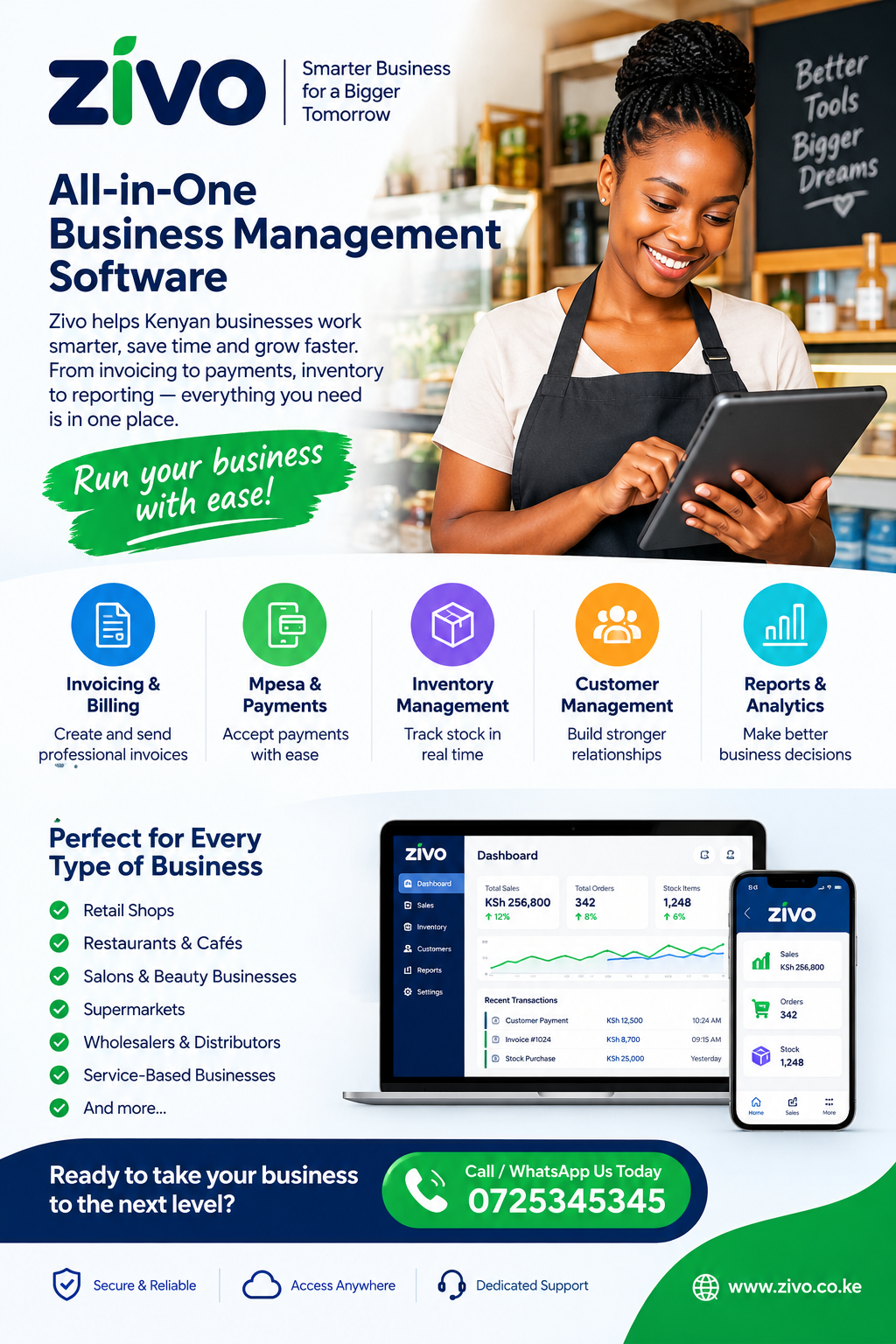
Dashboards and reports
Dashboards summarise important indicators in a form that managers can review quickly. A sales dashboard might display:
- Actual revenue against target.
- Sales by representative or branch.
- Daily and monthly trends.
- Conversion rates.
- Outstanding orders.
- Best-performing products.
- Overdue customer payments.
Detailed reports should remain available for investigating unusual results. A dashboard may reveal that revenue has fallen, while the underlying report helps identify the affected product category or location.
Customer relationship management
Customer relationship management features organise contact details, enquiries, interactions, follow-ups and purchasing history.
These records help sales teams understand customer needs and avoid repeating conversations unnecessarily. They also make it easier to identify inactive accounts and opportunities for repeat business.
Inventory and product information
For retailers and distributors, sales performance depends partly on product availability. A representative cannot sell an item that is out of stock, and a manager may misinterpret low sales if inventory shortages are not recorded.
Connecting sales records with inventory information helps distinguish weak demand from limited product availability.
Payment and invoice tracking
Businesses should be able to review invoices issued, payments received, balances outstanding and overdue accounts. Where relevant, a system may support reconciliation of bank transfers, card payments and M-Pesa transactions.
Payment information should be recorded consistently, with appropriate checks to prevent duplicate entries or inaccurate balances.
Exporting and sharing reports
Management may need reports for finance teams, branch supervisors, business owners or board members. Exportable reports and controlled sharing can reduce time spent preparing the same figures repeatedly.
Access should be limited to authorised users, especially when reports contain customer details, employee information or commercially sensitive data.
6. Using Sales Data to Improve Team Productivity
Sales performance is influenced by skills, product knowledge, customer relationships, territory coverage and the quality of the sales process. A good reporting system helps managers understand these factors without reducing employee performance to a single number.
Compare results with opportunity levels
Two representatives may have different sales results because they handle different customer groups or territories. One may manage established accounts that generate repeat orders, while another spends more time building a new market.
An informed Sales Performance Tracking Kenya process considers both results and the opportunities available to each representative.
Managers can compare qualified leads, average deal value, conversion rates and sales-cycle length to identify meaningful differences.
Identify training needs
If a representative generates many enquiries but closes few deals, the issue may involve qualification, communication, product demonstrations or negotiation.
If proposals regularly remain unanswered, the team may need better follow-up procedures. If customers frequently object to the same product limitation, the business may need to improve its offering or sales materials.
Training is more effective when it responds to a clearly identified gap.
Recognise strong performance fairly
Recognition can motivate employees, but the criteria should be transparent. Managers may acknowledge target achievement, customer retention, profitable sales, collaboration or improvement over time.
Reward systems should not encourage employees to promise unrealistic delivery dates, conceal customer complaints or offer excessive discounts merely to meet a target.
Hold regular review meetings
Short weekly reviews help teams identify immediate issues, while monthly reviews provide a broader view of trends.
A productive meeting should focus on:
- What was expected?
- What actually happened?
- Which factors influenced the result?
- What support or corrective action is needed?
- Who is responsible for the next step?
The purpose is to improve performance, not simply to read figures aloud.
7. Understanding the Sales Pipeline
A sales pipeline shows the stages a potential customer passes through before becoming a paying customer. It helps managers estimate future sales and identify opportunities that need attention.
A typical business-to-business pipeline may include:
- New enquiry received.
- Lead qualified.
- Customer needs assessed.
- Proposal or quotation submitted.
- Negotiation or approval.
- Deal won or lost.
- Delivery, payment and follow-up.
The exact stages depend on the industry. A retail shop may need a simpler process, while a supplier serving large organisations may have a longer approval cycle.
Measure pipeline conversion
Suppose a company receives 100 qualified leads. Forty proceed to a proposal stage, and 12 eventually become customers.
The company can measure conversion between stages to discover where prospects are dropping out. If many proposals are submitted but few are accepted, management can investigate pricing, proposal quality, decision-maker access or follow-up timing.
A pipeline report should also distinguish genuine opportunities from speculative prospects that have shown little buying interest.
Monitor deal age
An opportunity that remains open for much longer than the typical sales cycle may need attention. It could be delayed by procurement, missing information, a budget decision or a change in customer priorities.
Managers should review these deals and update their status rather than treating every open opportunity as a likely sale.
Improve sales forecasting
Forecasts estimate future sales based on available opportunities, historical conversion rates, expected order dates and other evidence.
Forecasts should include assumptions and uncertainty. A proposal worth KSh 1,000,000 is not equivalent to a confirmed order worth the same amount.
Separating confirmed sales from potential opportunities produces a more realistic view of expected business activity.
8. Tracking Sales Across Branches and Regions
Businesses with multiple branches need consistent reporting definitions. Otherwise, a manager may compare figures that were calculated differently.
For example, one branch might record sales when an order is placed, while another records them when payment is received. The resulting report would not provide a fair comparison.
A standardised Sales Performance Tracking Kenya process should define reporting periods, transaction categories, discount treatment, return handling and target calculations across all locations.
Compare branches fairly
Branch comparisons should consider factors such as customer traffic, opening hours, product availability, territory size and the maturity of each location.
A newer branch may have lower total revenue but show stronger growth. A larger branch may generate more sales but operate with higher costs. Management should examine several indicators before deciding which location performs best.
Identify local demand patterns
Different towns, neighbourhoods and customer groups may favour different products. Branch-level reporting can help businesses identify these variations.
A distributor could use local demand data to adjust product assortments. A service business could identify which locations generate the strongest demand for particular services.
Support mobile and field sales teams
Field representatives often work away from the main office. Their records should capture customer visits, orders, follow-ups and payment information in a consistent format.
Where internet access is unreliable, businesses should assess whether the selected system supports suitable offline workflows and reliable synchronisation.
9. The Role of M-Pesa and Digital Payments
Digital payment methods are important to many Kenyan businesses. M-Pesa, bank transfers, cards and other payment channels can generate transaction records that support reconciliation and reporting.
However, a payment notification should not automatically be treated as proof that every associated sale has been recorded correctly. The business needs a process for matching payments to invoices, orders or customer accounts.
Reconcile payments with sales
A practical reconciliation process should establish:
- Which customer or order a payment belongs to.
- The amount received.
- The transaction reference.
- The date of payment.
- Whether the invoice has been fully or partly settled.
- Whether a refund, reversal or correction is required.
These checks help prevent duplicate entries and reduce uncertainty around outstanding balances.
Avoid confusing sales with collections
A business may record a sale before receiving payment, particularly when it sells on credit. Conversely, a customer may settle an invoice issued in a previous reporting period.
Management should therefore report sales and collections separately while maintaining a clear connection between the two.
Choose integrations carefully
When evaluating Sales Performance Tracking Kenya solutions, businesses should check which payment integrations are actually supported, how transactions are matched and what happens when a payment fails or requires manual review.
An integration should be evaluated through practical testing rather than assumptions based on a product description.
10. How Sales Tracking Supports Marketing Decisions
Marketing activities generate costs and opportunities. Sales data helps businesses understand which activities produce customers and whether those customers generate sufficient value.
A campaign may attract many enquiries but very few paying customers. Another may attract fewer prospects but produce more profitable orders. Counting enquiries alone would not reveal the difference.
Track the customer journey
Businesses should record, where practical, how an enquiry was generated and what happened afterwards. Sources might include referrals, organic search, paid advertising, social media, events, walk-in traffic or existing customers.
Source information should be collected consistently. If employees assign leads to marketing channels based on guesses, the resulting report may be misleading.
Measure customer acquisition cost
Customer acquisition cost estimates the cost of gaining new customers.
Customer acquisition cost = Relevant acquisition costs ÷ Number of new customers acquired
If a campaign costs KSh 60,000 and generates 30 new customers, the acquisition cost is KSh 2,000 per customer.
The calculation should specify which costs are included. A narrow advertising-only calculation may differ from a broader calculation that includes agency fees, staff time and other sales expenses.
Assess profitability, not just volume
A campaign that produces many discounted sales may generate less profit than a smaller campaign aimed at customers who purchase higher-margin products.
Businesses should compare acquisition costs with gross profit and customer retention. This provides a more useful basis for deciding whether to continue, adjust or stop a campaign.
11. Common Sales Tracking Mistakes to Avoid
Even businesses with reporting tools can make poor decisions if the underlying process is inconsistent.
Recording incomplete transactions
Missing product details, customer names, quantities or payment references can reduce the usefulness of reports. Establishing mandatory fields for essential information improves data quality.
Using inconsistent definitions
If employees calculate revenue, conversion rates or targets differently, management may receive contradictory reports.
Document the calculation for each key metric and make sure everyone uses the same reporting rules.
Measuring too many indicators
A report containing dozens of metrics can make it difficult to identify what requires attention. Start with a manageable set of indicators connected to business goals, then add others when they answer a clear question.
Ignoring returns and discounts
Recording sales without adjusting for returns, cancellations or discounts can overstate performance. Reporting should distinguish gross transaction values from the measures management actually uses to assess results.
Treating every employee identically
Different roles may have different responsibilities. A representative focused on acquiring new customers should not necessarily be assessed using the same criteria as one managing established accounts.
Failing to act on reports
Producing a dashboard is not the same as improving performance. Each review should lead to a decision, an investigation or a clearly assigned action when a meaningful issue is identified.
Allowing poor data access controls
Customer and employee records should not be available to everyone by default. Businesses should establish permissions, review access regularly and remove access when staff leave or change roles.
12. How to Choose the Right Sales Tracking Software
Selecting a suitable platform begins with understanding the business’s requirements. The most expensive system is not necessarily the best option, and a simple tool may be insufficient for a company with complex sales operations.
A structured Sales Performance Tracking Kenya evaluation should consider functionality, ease of use, reporting quality, integration options, support and total cost.
Identify the current problem
Before comparing products, write down the issues that need solving. These may include delayed reports, duplicated customer records, missed follow-ups, inconsistent branch reporting or poor visibility into unpaid invoices.
Prioritise the problems that affect daily operations and financial decisions.
Check essential functionality
Consider whether the software supports:
- Sales targets and performance dashboards.
- Customer and lead management.
- Product, order and transaction records.
- Pipeline tracking and follow-up reminders.
- Branch and employee reporting.
- Invoice and payment monitoring.
- User roles and access controls.
- Data export and reporting.
- Required integrations.
- Reliable backups and recovery procedures.
Not every business needs every feature. The right combination depends on its processes.
Evaluate usability
A powerful system is less valuable if employees find it difficult to use. Test common tasks such as recording a sale, updating a customer, checking target achievement and producing a monthly report.
Include the people who will use the system every day in the evaluation.
Understand the full cost
Pricing may include subscriptions, user licences, onboarding, training, customisation, data migration and integrations.
Ask for a clear explanation of recurring and one-time charges. Where possible, estimate the total cost over a year or longer instead of comparing subscription prices alone.
Verify support and data handling
Confirm how support requests are handled, how frequently backups are performed, what security measures are available and whether the business can export its records.
Businesses should also understand the provider’s policies for data access, retention, deletion and service termination before committing.
13. A Practical Implementation Plan for Kenyan SMEs
Introducing a tracking process does not have to involve a complicated transformation. Businesses can begin with a focused implementation and improve it as their needs become clearer.
Step 1: Audit existing sales records
Identify where sales information currently resides. This may include a point-of-sale system, spreadsheets, invoices, mobile payment records or notebooks.
Look for duplicate customers, missing dates, inconsistent product names and unclear payment statuses.
Step 2: Define the key metrics
Select a small set of indicators tied to the business’s objectives. A starting list might include net sales, target achievement, conversion rate, average transaction value, gross profit margin and overdue receivables.
Write down the definition, data source and reporting frequency for each measure.
Step 3: Establish reporting responsibilities
Decide who records transactions, who checks data quality, who prepares reports and who approves corrections.
Clear responsibilities reduce duplication and make it easier to investigate errors.
Step 4: Select and configure the system
Choose a tool that fits the required workflow and configure relevant products, branches, users, targets and reporting periods.
Test the system using realistic scenarios before moving all operations into it.
Step 5: Train employees
Provide practical training based on daily tasks. Employees should know how to record sales accurately, update opportunities, handle corrections and report technical issues.
A short reference guide can support the training and improve consistency.
Step 6: Run a pilot
Start with one branch, team or product category if the business’s size and operations permit it. Compare the results with existing records and resolve discrepancies before expanding.
Step 7: Review results regularly
Use daily checks for transaction completeness, weekly reviews for operational issues and monthly reviews for wider performance trends.
The reporting frequency should match the speed at which decisions need to be made.
Step 8: Improve the process
After implementation, ask employees and managers which reports are useful, which fields are difficult to maintain and which decisions remain unsupported.
Remove unnecessary complexity and improve the process based on actual experience.
14. Measuring Sales Performance in Retail and Wholesale Businesses
Retail and wholesale businesses often need to connect sales results with stock availability, supplier arrangements, margins and customer demand.
A retailer may generate strong revenue while losing profit through excessive discounts, stock losses or high operating costs. A wholesaler may receive substantial orders but face cash-flow pressure because customers pay late.
A practical Sales Performance Tracking Kenya process can bring these different measures into a consistent reporting framework.
Retail sales indicators
Retailers may monitor:
- Daily sales and transaction count.
- Average basket value.
- Sales by product category.
- Gross profit margin.
- Returns and discounts.
- Stockouts and slow-moving products.
- Repeat customer purchases.
These measures can help a shop owner decide which products to reorder, which promotions to review and where staff support is required.
Wholesale sales indicators
Wholesalers may focus on order value, order frequency, customer credit limits, outstanding invoices, delivery completion and product margins.
They may also compare the performance of sales territories and customer accounts to identify opportunities for growth.
Product-level analysis
A product that sells frequently is not necessarily the most profitable. Managers should compare units sold, revenue, cost and margin.
For example, a business may sell 500 units of Product A at a small margin and 100 units of Product B at a larger margin. Comparing gross profit helps determine which product contributes more to the business.
15. Sales Tracking for Service Businesses
Service providers have different measurement needs from retailers. Their results may depend on appointments, proposals, billable work, project completion, renewals and recurring contracts.
Examples include consultancies, maintenance companies, agencies, training providers and professional service firms.
Track enquiries and proposals
Service businesses should record enquiries, qualification outcomes, consultations, proposals and signed agreements. These records reveal whether growth is limited by lead generation, proposal acceptance or delivery capacity.
Measure recurring revenue
Where services are billed regularly, businesses can monitor new contracts, renewals, cancellations and changes in recurring revenue.
Renewal figures should be interpreted alongside customer satisfaction, contract size and the timing of renewal dates.
Connect sales with delivery capacity
Winning additional contracts is useful only if the business can deliver the promised service. Managers should compare expected sales with staff availability, project workloads and other operational constraints.
This helps prevent overcommitment and protects customer relationships.
16. Sales Performance, Customer Retention and Repeat Purchases
Acquiring a new customer is only one part of sustainable growth. Many businesses depend on customers returning, renewing contracts or recommending their services to others.
A tracking system should therefore capture repeat transactions and meaningful customer history.
Measure repeat purchase behaviour
Businesses can monitor how many customers make a second purchase, how often established customers buy and how much revenue comes from repeat business.
The right time window depends on the product. A supermarket may see frequent repeat purchases, while a company selling industrial equipment may have a much longer interval between transactions.
Identify inactive customers
Customer records can help teams identify accounts that have not purchased within their usual buying cycle. Representatives can then investigate whether the customer has changed suppliers, reduced demand or simply delayed an order.
Follow-up should be relevant and respectful rather than automatic messaging without regard to customer needs.
Use complaints as performance information
Returns, complaints and cancellations can reveal product problems, unclear expectations or service delays.
Recording the reasons behind these outcomes helps management distinguish between issues caused by the sales process and those caused by fulfilment, pricing or product quality.
17. Protecting Sales Data and Maintaining Accuracy
Sales information can include customer contacts, transaction details, employee results and commercially sensitive figures. Businesses should protect this information while ensuring authorised staff can access what they need.
Establish access controls
Give employees access based on their responsibilities. A sales representative may need to view their assigned accounts, while a manager may require a broader team report.
Administrative privileges should be restricted and reviewed periodically.
Maintain reliable records
Document corrections to important transactions and establish procedures for handling duplicate entries, refunds and disputed payments.
Regular checks can reveal inconsistencies before they affect management reports.
Back up important information
Businesses should understand how their records are backed up, how restoration works and how they can recover information after an accidental deletion or technical failure.
A backup policy is useful only if recovery can be carried out successfully when required.
Consider applicable legal requirements
Kenyan businesses handling personal information should assess their obligations under applicable data protection law, including the Data Protection Act, 2019, where relevant. They should understand what information they collect, why it is needed, who can access it and how long it should be retained.
For compliance decisions, consult authoritative guidance from the Office of the Data Protection Commissioner or a qualified professional rather than assuming that using software alone ensures compliance.
18. Using Reports to Make Better Decisions
A report should help answer a business question. Its value comes from the decisions it supports, not from the number of charts it contains.
For example, if revenue is below target, management can investigate whether the problem comes from fewer transactions, lower average order value, reduced conversion, product shortages or delayed payments.
A Sales Performance Tracking Kenya approach makes this investigation more structured by encouraging managers to connect outcomes with underlying drivers.
Compare actual results with expectations
A report should show the target, actual result and difference. Where useful, include the previous period and the same period in an earlier year.
This provides context for deciding whether a change is significant.
Investigate unusual patterns
An unexpected increase in revenue may result from a large one-off order rather than broad growth. A sudden drop could reflect a reporting error, temporary stock shortage or genuine loss of demand.
Before changing strategy, confirm the accuracy of the figures and identify the likely cause.
Assign follow-up actions
If the report reveals a problem, define the next action, responsible person and review date.
For instance, a manager may ask the sales team to review overdue quotations within two days, while the stock manager investigates repeated shortages of a high-demand product.
Review whether actions worked
After a corrective action, compare later results with the original problem. If conversion improves after staff training, assess whether the improvement is sustained and whether other factors contributed.
This closes the loop between measurement and action.
19. The Future of Sales Tracking and Business Reporting
Sales reporting tools continue to develop, with many platforms offering automated dashboards, integrations, forecasting and AI-assisted analysis. These capabilities can reduce manual work, but their usefulness depends on data quality and sound business processes.
Automated reporting
Automation can prepare routine summaries and reduce repetitive copying between spreadsheets. Businesses should still check that the underlying transactions are complete and that the reports use correct definitions.
Forecasting and pattern recognition
Analytical tools may identify seasonal patterns, changes in customer purchasing or opportunities requiring attention.
Forecasts remain estimates, not guarantees. Managers should consider uncertainty, unusual events and market conditions before relying on them.
Responsible use of AI
AI-generated summaries can help managers review large amounts of information, but they may misinterpret incomplete records or produce unsupported explanations.
Important conclusions should be checked against the underlying data. Sensitive customer or employee information should only be shared with tools that have been reviewed and approved for the intended use.
Keep the process practical
A smaller business does not need every advanced feature. It should first establish reliable records, meaningful indicators and regular review habits. Additional automation becomes valuable when it solves a defined problem.
20. Frequently Asked Questions About Sales Performance Tracking
What is sales performance tracking?
Sales performance tracking is the process of measuring sales activity and results against business objectives. It commonly covers revenue, targets, conversion rates, customer acquisition, margins and sales-team productivity.
Why is sales tracking important for Kenyan SMEs?
It helps small and medium-sized businesses understand their revenue, identify sales problems, monitor customer payments and make better decisions about stock, marketing and staffing. Consistent reporting can also reduce dependence on incomplete manual records.
Which metrics should a small business track first?
Start with net sales, target achievement, transaction count, average transaction value and gross profit margin. If the business relies on enquiries or proposals, include conversion rate. If it sells on credit, monitor outstanding and overdue invoices as well.
Can sales tracking software work with M-Pesa?
Some business systems support M-Pesa integrations or workflows for recording and reconciling mobile payments. Businesses should confirm the exact integration available, test transaction matching and establish procedures for handling reversals, errors and unmatched payments.
How often should sales performance be reviewed?
Transaction records may need daily checks, while team activity and pipeline reports are often reviewed weekly. Monthly reviews can assess targets, revenue, profitability and longer-term trends. The ideal schedule depends on how quickly the business needs to respond.
How do you calculate sales target achievement?
Divide actual sales by the target and multiply by 100. For example, sales of KSh 450,000 against a KSh 600,000 target represent 75% achievement.
What is the difference between sales revenue and cash collected?
Sales revenue measures sales according to the business’s applicable accounting and reporting basis. Cash collected measures payments received during a period. They can differ because of credit sales, advance payments, outstanding invoices and collections relating to earlier sales.
Is a spreadsheet enough for sales tracking?
A spreadsheet can work for a small team with straightforward needs, provided records are maintained consistently and access is controlled. As transaction volumes, staff numbers or reporting requirements increase, a dedicated system may provide better automation, customer history and consolidated reporting.
How can sales managers improve employee performance?
They can set clear targets, monitor both activity and outcomes, provide coaching, recognise strong work and investigate obstacles such as poor lead quality or product shortages. Performance measures should account for differences in roles and sales opportunities.
How do I choose the right sales tracking system?
Identify the problems you need to solve, define essential metrics, test the system with realistic tasks, check integrations and security, assess ease of use, and compare the full cost. Include employees who will use the software in the evaluation.
Conclusion: Turn Sales Information into Business Growth
Sustainable sales growth requires more than setting ambitious targets. Businesses need dependable records, meaningful performance indicators and a consistent process for understanding why results change.
For Kenyan SMEs, retailers, distributors and service providers, a structured tracking process can improve visibility into revenue, customer relationships, employee productivity, product demand and payment collection. It can also help managers recognise problems earlier, allocate resources more effectively and make decisions based on evidence.
Start with a small number of relevant metrics. Define how each one is calculated, assign responsibility for accurate records and review results at a frequency that matches the business’s needs. Choose software that supports the actual workflow rather than paying for features that will not be used.
Most importantly, treat reporting as the beginning of a decision-making process. The figures matter because of what they help the business understand and improve. When measurement, coaching and practical action work together, sales tracking becomes a useful foundation for stronger customer relationships, better operational control and sustainable growth.
Sales Performance Tracking Kenya
Sales Performance Tracking Kenya
Sales Performance Tracking Kenya
Sales Performance Tracking Kenya
Sales Performance Tracking Kenya
Sales Performance Tracking Kenya
Sales Performance Tracking Kenya
Sales Performance Tracking Kenya
Sales Performance Tracking Kenya
Sales Performance Tracking Kenya
Sales Performance Tracking Kenya
Sales Performance Tracking Kenya
Sales Performance Tracking Kenya
Sales Performance Tracking Kenya
Sales Performance Tracking Kenya
Sales Performance Tracking Kenya
Sales Performance Tracking Kenya
Sales Performance Tracking Kenya
Sales Performance Tracking Kenya
Sales Performance Tracking Kenya
Sales Performance Tracking Kenya
Sales Performance Tracking Kenya
Sales Performance Tracking Kenya
Sales Performance Tracking Kenya
Sales Performance Tracking Kenya
Sales Performance Tracking Kenya
Sales Performance Tracking Kenya
Sales Performance Tracking Kenya
Sales Performance Tracking Kenya
Sales Performance Tracking Kenya
Sales Performance Tracking Kenya
Sales Performance Tracking Kenya
Sales Performance Tracking Kenya
Sales Performance Tracking Kenya
Sales Performance Tracking Kenya
Sales Performance Tracking Kenya
Sales Performance Tracking Kenya
Sales Performance Tracking Kenya
Sales Performance Tracking Kenya
Sales Performance Tracking Kenya
Sales Performance Tracking Kenya
Sales Performance Tracking Kenya
Sales Performance Tracking Kenya
Sales Performance Tracking Kenya
Sales Performance Tracking Kenya
Sales Performance Tracking Kenya
Sales Performance Tracking Kenya
Sales Performance Tracking Kenya
Sales Performance Tracking Kenya
Sales Performance Tracking Kenya
Sales Performance Tracking Kenya
Sales Performance Tracking Kenya
Sales Performance Tracking Kenya
Sales Performance Tracking Kenya